Passa alle stampe
 Espandi i dettagli







































 Per opere d'arte o riproduzioni con un lato superiore a 105 cm (circa 41 pollici), la cornice verrà spedita in forma di kit smontato. Questo metodo garantisce una consegna sicura e previene danni durante il trasporto.


The Essence of Dawn: Unveiling “Morning”
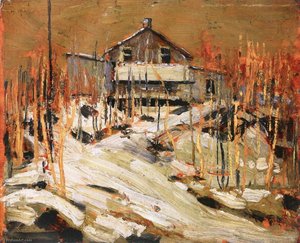
Tom Thomson’s “Morning,” painted in 1915, isn't merely a landscape; it’s a distilled moment of profound serenity captured on wood-pulp board. This evocative piece, now readily available as a meticulously crafted reproduction at OriginalUniqueArt.com, transports the viewer to the heart of Ontario's wilderness – a place where the air is crisp with anticipation and the promise of a new day hangs heavy in the mist.
(Image of Tom Thomson - Morning)
A Pioneer’s Palette: Style and Technique
Thomson, a pivotal figure in Canadian art, forged his distinctive style through a masterful blend of observation and emotion. “Morning” exemplifies this approach perfectly. His brushstrokes are not delicate or precise; instead, they're bold, confident sweeps that convey movement and energy. Notice how the blues and greens – dominant hues in the painting – aren’t simply applied; they’re layered and textured, creating a shimmering effect reminiscent of water reflecting the sky. The composition itself is carefully balanced: the distant mountains provide a grounding presence while the boats on the water invite us into the scene, suggesting both tranquility and the potential for adventure.
The choice of wood-pulp board as a medium is significant. It allowed Thomson to work quickly and directly, capturing the fleeting effects of light and atmosphere with remarkable immediacy. This technique contributes to the painting’s sense of spontaneity and freshness – it feels as though you've stepped into a moment frozen in time.
Echoes of the Wilderness: Historical Context
“Morning” was created during a crucial period in Thomson’s career, just before his untimely death in 1917. It reflects his deep connection to Algonquin Park, a place he frequently visited and which profoundly influenced his artistic vision. This painting is part of the collection at the Tom Thomson Art Gallery in Ontario, standing as a testament to his contribution to Canadian art history. The gallery’s presence underscores the importance of preserving and celebrating Thomson's legacy – a legacy that continues to inspire artists and captivate audiences today.
Interestingly, the painting’s creation coincided with the burgeoning movement towards defining a distinctly “Canadian” artistic identity. Thomson’s work, alongside those of the Group of Seven, helped establish a visual language rooted in the landscapes and experiences of this vast nation. “Morning,” therefore, isn't just a beautiful depiction of nature; it’s also a symbol of Canadian pride and heritage.
Symbolism and Emotional Resonance
Beyond its technical brilliance, “Morning” is rich with symbolic meaning. The boats on the water represent human connection to nature – a desire for respite and reflection amidst the demands of daily life. The mountains in the background symbolize strength, endurance, and the timelessness of the wilderness. The diffused light and muted colors evoke a sense of peace, quiet contemplation, and the beauty of the natural world at dawn.
Perhaps most powerfully, “Morning” captures a feeling – the anticipation of a new day, the promise of possibility, and the profound connection between humanity and nature. It’s a painting that invites us to slow down, breathe deeply, and appreciate the simple beauty of our surroundings.
Domande e risposte
Chi è l'autore e in che anno è stata realizzata "Mattino"?
"Mattino" è stata creata da Tom Thomson nel 1915.
In che modo lo stile e l'epoca si incontrano in "Mattino" di Tom Thomson?
"Mattino" appartiene al movimento Gruppo dei Sette, e il suo autore ha operato nell'epoca Età Moderna.
Posso esaminare "Mattino" più nel dettaglio?
La vista a raggi X di "Mattino" di Tom Thomson è disponibile nella pagina Raggi X dell'opera: un esame interattivo dell'immagine attraverso undici strati ottici.
Maggiori informazioni su questo dipinto
 Anteprima in scala reale
 Invia
Invia Condividi
 Dettagli opera
 Guida
Guida

 Scarica
 Simili
 Radiografia
 Slideshow
 Domande e risposte
 Statistiche