Anteprima in scala reale
 Condividi
 Condividi
 Dettagli

 Scarica immagine
 Articoli simili
 Radiografia
 Slideshow
Saint Bernadine


 Leggi tutto
Riproduzione a olio fatta a mano
Olio su tela dipinto a mano nelle tue dimensioni e con la tua cornice, realizzato su ordinazione dai nostri artisti. ( Passa alla stampa Passa all'immagine)




P118B $10

P118H $10

P118W $10

P438Z $10

P508JH $12

P508YH $12

P805H $10

P805Z $10

P919BZ $10

P919G $10

P919XJ $10

P959ZH $10

P968JZ $12

W106C $8

W218G $10

W218JH $8

W218Y $10

W307PJ $10

W316G $10

W316PJ $8

W316Y $10

W398PJ $8

W4111J $10

W500HY $15

W500JH $15

W692G $12

W849H $8

W940BG $15

W953PJ $8




Scegli tra le nostre dimensioni predefinite, che rispettano le proporzioni originali dell'opera d'arte.

È possibile inserire dimensioni personalizzate per adattare l'opera a una cornice o a uno spazio specifico. Se la dimensione selezionata non corrisponde alle proporzioni dell'immagine originale, provvederemo a ritagliare l'opera o a estendere il dipinto con elementi aggiuntivi dipinti a mano. Un mockup digitale ti sarà inviato per approvazione prima dell'inizio della produzione.
Si prega di notare che l'anteprima a schermo non riflette il ritaglio o l'estensione effettivi. Solo il mockup mostrerà accuratamente la composizione finale.
Sebbene siano disponibili dimensioni personalizzate, consigliamo di selezionare una dimensione dall'elenco predefinito per preservare le proporzioni originali.
Dopo l'ordine, il team di OriginalUniqueArt.com contatterà il cliente via e-mail per le istruzioni e fornirà un'anteprima del mockup
Consegna in tutto il mondo () in 3/4 settimane anziché nelle normali 5 settimane. (10 Agosto). Nessun compromesso sulla qualità.

Spedizione espressa gratuita in tutto il mondo

Tela in lino di alta qualità

Assicurazione completa sulla spedizione

Garanzia di rimborso dei dazi doganali

Garanzia di fedeltà cromatica dell'originale

Politica di reso entro 60 giorni (solo per difetti di fabbricazione)

Garanzia di rimborso al 100%

Sconto per acquisti multipli
 L'opzione vetro è disponibile solo per dimensioni inferiori a 110 cm

Saint Bernadine
Tecnica di riproduzione
Dimensioni della riproduzione
-


Prezzo totale
$ 300
Descrizione dell'opera
The Soul in Charcoal: A Glimpse into Titian’s Intimate Vision
In the vast, luminous canon of the Italian Renaissance, where Titian is most often celebrated for his opulent oil portraits and sweeping mythological landscapes, there exists a profound, quieter dimension found within his preparatory studies. Saint Bernadine, a haunting charcoal sketch dating back to 1531, offers a rare and intimate window into the Venetian master's creative process. Unlike the finished canvases that graced the halls of royalty, this work captures the raw, unadorned essence of a spiritual figure. The drawing presents a solitary man in a deeply evocative, hunched posture, a composition that eschews grandiosity in favor of a poignant, human vulnerability. Through the deliberate use of loose and expressive lines, Titian directs our gaze toward the weight of existence, transforming a simple study of form into a profound meditation on contemplation and perhaps even spiritual distress.
The technique employed in this piece is a masterclass in the expressive potential of monochrome. Utilizing charcoal on paper, Titian utilizes a method of layering and smudging to build tonal depth, creating a sense of volume that breathes life into the central figure. The texture is intentionally rough and uneven, bearing the visible marks of the artist’s hand—strokes that convey movement and an almost palpable sense of immediacy. Light appears to descend from above and slightly to the left, casting deep, dramatic shadows that emphasize the contours of the body and the heavy folds of clothing. This interplay of light and dark, or chiaroscuro, does more than just define shape; it imbues the figure with a psychological weight, suggesting a soul lost in profound thought or navigating the complexities of faith.
For the discerning collector or interior designer, Saint Bernadine represents an opportunity to introduce a piece of immense historical gravity and understated elegance into a curated space. The artwork’s aesthetic—reminiscent of the 19th-century realism found in the works of Courbet or Daumier—makes it a versatile choice for modern environments that value texture, depth, and emotional resonance. Because the composition is dominated by a single, powerful figure against a receding, minimalist background, it possesses a quiet strength that can anchor a room without overwhelming it. A high-quality reproduction of this sketch allows one to possess not just a depiction of a saint, but a fragment of the very moment Titian breathed life into his ideas, offering a timeless sense of peace and intellectual depth to any collection.
Biografia dell'artista
Tiziano Vecellio: The Venetian Titan
Tiziano Vecellio, universally known as Titian, stands as a monumental figure of the Italian Renaissance—perhaps its most celebrated colorist and a master who redefined the possibilities of oil painting. Born around 1490 in Pieve di Cadore, nestled amidst the dramatic landscapes of the Venetian Alps, his journey from humble beginnings to international acclaim is a testament to prodigious talent and an unwavering dedication to artistic innovation. The exact date of Titian’s birth remains elusive, debated by scholars, but contemporary sources and his early stylistic development suggest that he emerged into the world sometime between 1488 and 1490.
His father, Gregorio Vecellio, was a military man—a profession that instilled in young Tiziano a disciplined spirit and an appreciation for observation. Lucia, his mother, nurtured him with a love of beauty and fostered his artistic inclinations. Recognizing their sons’ potential, the family arranged for Tiziano and Francesco to apprentice under Sebastiano Zuccato, a renowned mosaicist—a decision that would irrevocably steer them toward a path of artistic excellence.
Venice at the turn of the 16th century was a vibrant hub of commerce, culture, and artistic ferment. Titian’s initial training took place within the workshop of Giovanni Bellini—the most influential painter in Venice at the time—where he absorbed the stylistic precepts of his elder mentor. This formative experience instilled in him a profound understanding of Venetian painting traditions and established the foundation for his own distinctive style.
A Meeting with Giorgione: The Seeds of Innovation
However, it was through contact with Giorgione—a fellow Venetian painter whose work possessed an ethereal poetic quality—that Titian truly embarked on his artistic odyssey. The two artists collaborated on several ambitious projects, including the decoration of the exterior walls of the Fondaco dei Tedeschi—a bustling trading post for German merchants—and their partnership cemented a bond that would shape the trajectory of Venetian art.
Giorgione’s influence is palpable in Titian’s early canvases—characterized by hazy atmospheric effects, muted colors, and an emphasis on capturing mood rather than precise detail. Paintings like *A Man with a Quilted Sleeve* exemplify this stylistic approach, demonstrating Titian’s burgeoning talent for portraiture while simultaneously reflecting Giorgione’s pioneering exploration of perceptual illusion.
From Pastel Dreams to Bold Luminosity
As Titian matured, he gradually distanced himself from Giorgione’s delicate aesthetic and embraced a bolder, more dramatic style—one marked by vibrant hues, expressive brushstrokes, and an unwavering commitment to conveying emotion. *The Visitation of Mary and Elizabeth*, now housed in the Accademia di Venezia, exemplifies this stylistic shift, showcasing Titian’s mastery of composition and color to create a scene brimming with psychological depth.
Throughout his prolific career, Titian consistently pushed the boundaries of artistic convention—experimenting with innovative techniques and exploring diverse subjects ranging from mythological narratives to religious iconography. His portraits became renowned for their uncanny realism—capturing not only physical likeness but also subtle nuances of character and emotion—establishing him as one of the foremost portraitists of his era.
A Legacy Illuminated
Titian’s artistic legacy extends far beyond his lifetime, profoundly influencing generations of painters who followed in his footsteps. His pioneering use of color—particularly his masterful manipulation of tonal harmonies—established a new paradigm for oil painting and inspired artists across Europe to embrace luminous palettes and expressive brushwork.
From Rubens to Rembrandt to Delacroix, Titian’s influence permeated the artistic landscape of the Baroque period and beyond. His paintings continue to captivate audiences today with their breathtaking beauty—a testament to his unparalleled skill as a colorist and a painter—solidifying his place among the titans of Western art history.

Tiziano Vecellio
1490 - 1576 , Italia
Informazioni rapide
- Artistic Movement Or Style: Venetian painting
- Artists Who Influenced This Artist:
- Giovanni Bellini
- Giorgione
- Date Of Birth: c. 1490
- Date Of Death: 1576
- Full Name: Tiziano Vecellio
- Nationality: Italian
- Notable Artworks:
- A Man with a Quilted Sleeve
- The Visitation
- Bearded Young Man
- Place Of Birth: Pieve di Cadore, Italia
Articoli correlati

The Golden Light of Innovation: Exploring the Venetian Renaissance Art Movement (1430–1580)
Explore the Golden Age of Venetian art (1430–1580). Discover Giorgione, Titian & Tintoretto's techniques, the 'colorito' revolution, and lasting influence. Expert insights for collectors & enthusiasts.
Dalla Bozza all'Emozione: Esplorando il Processo Creativo di Schizzi e Concetti nella Riproduzione Artistica e nelle Commissioni Personalizzate
Esplora il processo creativo dallo schizzo alla pittura! Guide esperte su tecniche artistiche, materiali e commissioni personalizzate. Scopri come trasformare le tue idee in opere d'arte uniche.
I 10 Capolavori del Rinascimento Iniziale che Hanno Definito l'Arte: Scopri i Maestri
Esplora i 10 capolavori del Rinascimento italiano: Leonardo, Michelangelo, Raffaello e altri maestri. Scopri la storia, il simbolismo e le tecniche di queste opere iconiche. Trova riproduzioni d'arte di alta qualità su !
Raffaello Sanzio: I 25 Capolavori Immortali dell'Arte Rinascimentale | OriginalUniqueArt
Esplora i 25 capolavori immortali di Raffaello Sanzio, il maestro del Rinascimento italiano. Scopri la storia, le tecniche e l'emozione dietro dipinti iconici come 'La Scuola di Atene'. Trova riproduzioni d'arte di alta qualità per decorare casa tua su OriginalUniqueArt.com.
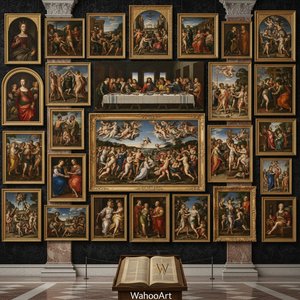
Jacopo Tintoretto: I 25 Capolavori che Definiscono un Maestro del Rinascimento Veneziano | OriginalUniqueArt
Esplora i 25 capolavori di Jacopo Tintoretto, il maestro del Rinascimento veneziano. Scopri la storia, le tecniche e l'emozione dietro ogni dipinto. Trova riproduzioni artistiche di alta qualità per decorare la tua casa su OriginalUniqueArt.com.