Neoclassicism
Othello (Thomas Stothard)
Thomas Stothard (1755–1834) ha realizzato Othello. Fa parte del movimento Neoclassicism. È realizzato in Oil.
- Oil

 Anteprima in scala reale

 Dipinto a olio fatto a mano
 Invia
 Condividi
 Scheda didattica


 Scarica
 Simili
 Radiografia
 Slideshow
 Domande e risposte

 Statistiche
Othello, in breve
- Titolo
- Othello
- Artista
- Thomas Stothard (1755–1834)
- Artista nato a
- Londra, Regno Unito
- Tecnica
- Oil
- Movimento
- Neoclassicism
- Epoca
- 19th Century
- Soggetto
- historical surrender, royal portrait, military scene, neoclassical art, formal composition, dramatic lighting
Cosa raffigura Othello?
Identification of the Artwork and Artist
Othello is a work by the British artist Thomas Stothard. The piece captures a specific moment of arrival for the central figure, translating the dramatic tension found in Shakespeare's Othello into a visual narrative.
The subject matter centers on a historical surrender or treaty signing involving royalty and military figures. This specific composition focuses on the arrival of the protagonist, utilizing the tension of the scene to establish the weight of the encounter.
The Composition and Visual Elements
The scene is densely populated with figures arranged diagonally across the frame, creating a sense of movement and tension. A central female figure, dressed in white, dominates the composition and acts as the primary focal point. She is flanked on both sides by guards, a placement that reinforces themes of authority and protection. Several men are positioned in gestures of kneeling or submission, while others stand watch, contributing to the complex arrangement of the group.
The architectural background, likely a castle or fortress, provides depth and context to the historical event. This setting utilizes a combination of organic shapes found in the human forms and geometric shapes within the building's structure. Linear perspective is employed to establish scale and distance within the grand setting. Atmospheric perspective is also used, causing distant objects to appear fainter and less detailed to enhance the illusion of depth.
Lighting is dramatic, characterized by strong contrasts between light and shadow. This chiaroscuro effect emphasizes the key figures and heightens the sense of drama within the scene. The color palette remains largely muted, relying on browns, ochres, and creams to establish a somber atmosphere. These tones are punctuated by the white of the central figure's dress and occasional touches of red in garments and shields.
Technique, Materials and Artistic Style
The work occupies a space between the Neoclassical and Romantic traditions. While the composition maintains a formal structure, the execution favors a soft, painterly approach over rigid precision. Rather than relying on sharp, defined outlines, the artist employs fluid brushwork that lends the scene a textured quality, allowing forms to emerge from the background with a sense of immediacy.
The technique appears to be oil painting, though the execution was likely achieved in oil or gouache on a flat support. The color palette is restrained, dominated by muted, earthy tones. Ochre and sallow yellows settle into deep browns and blacks, creating a somber environment. These darker shades are punctuated by highlights of white and subtle touches of red, which direct the eye toward the central interaction.
Related Works by Thomas Stothard
Stothard’s engagement with dramatic narrative is further evidenced in The Return of Othello, 'Othello,' Act II, Scene II. Created around 1799, this work captures a specific moment of arrival and the resulting tension. It utilizes a restrained palette of ochre, brown, and black tones, punctuated by highlights of white and subtle red, to focus the viewer on the central interaction between the figures.
Other compositions by the artist include A gun crew and Cupid Bound To A Tree. These works reflect his ability to translate literary and classical themes into structured, graceful arrangements. His output often balanced small-scale historical subjects with decorative designs, maintaining a consistent interest in the interplay of light and human form.
Immagini ad alta risoluzione di Othello
Pubblico dominio: l'artista è deceduto nel 1834.
Thomas Stothard, Othello. Pubblico dominio
Domande su Othello, risposte
Con quale tecnica è realizzato "Othello"?
Thomas Stothard ha utilizzato la tecnica del Oil per "Othello". La tecnica definisce la natura materica dell'opera originale.
Cosa rappresenta "Othello" di Thomas Stothard?
"Othello" di Thomas Stothard raffigura: historical surrender, royal portrait, military scene, neoclassical art, formal composition, dramatic lighting, power dynamics, surrender theme.
L'immagine di "Othello" di Thomas Stothard può essere riprodotta liberamente?
Stato del copyright per "Othello" di Thomas Stothard: l'opera è di pubblico dominio - il copyright è scaduto. Ciò determina se sia possibile effettuare liberamente riproduzioni dell'immagine.
Chi ha creato "Othello"?
"Othello" è stata creata da Thomas Stothard. Le informazioni contenute in questa pagina descrivono l'opera originale di Thomas Stothard.
A quale stile appartiene "Othello"?
"Othello" di Thomas Stothard appartiene al movimento Neoclassicism. Questo movimento fornisce il contesto stilistico dell'opera.
A quale fase della carriera di Thomas Stothard appartiene "Othello"?
All'interno della carriera di Thomas Stothard, "Othello" appartiene al Mature Period. Questa fase permette di confrontarla con le altre opere dell'artista.
Per quale motivo lo stato del copyright di "Othello" è questo?
"Othello" di Thomas Stothard è di di pubblico dominio - il copyright è scaduto. I termini del copyright si calcolano a partire dalla morte dell'artista, e Thomas Stothard è deceduto nel 1834.
In che modo "Othello" si inserisce nei temi e nello stile di Thomas Stothard?
"Othello" appartiene alla produzione Neoclassicism di Thomas Stothard, i cui temi ricorrenti includono classical antiquity influence, royal authority & power, treaty signing depiction, military surrender scene, formal, restrained style, sentimental historical art, stothard's narrative focus.
In che modo il soggetto di "Othello" si relaziona ai temi abituali di Thomas Stothard?
Tra i temi ricorrenti di Thomas Stothard - classical antiquity influence, royal authority & power, treaty signing depiction, military surrender scene, formal, restrained style, sentimental historical art, stothard's narrative focus - "Othello" pone un particolare accento su historical surrender, royal portrait, military scene, neoclassical art, formal composition, dramatic lighting, power dynamics, surrender theme.
Informazioni sull'artista, Thomas Stothard

1755–1834, Regno Unito
Thomas Stothard
Thomas Stothard: Tessitore di Sogni ed Echi Storici Nato nel vibrante cuore di Londra nel 1755, la vita di Thomas Stothard fu un arazzo tessuto con fili di delicata bellezza, apprendistato artistico e un'eterna fascinazione per l'arte del raccontare. I suoi primi anni furono segnati da una salute fragile – un'infanzia trascorsa in gran parte lontano da casa a causa della sua vulnerabilità – eppure questo periodo coltivò in lui un profondo apprezzamento per la quieta contemplazione che avrebbe successivamente informato la sua arte. Iniziò il suo percorso artistico come disegnatore di motivi per sete broccate, una competenza che gli instillò un occhio acuto per il dettaglio e una profonda comprensione della trama e del colore, qualità che in seguito avrebbe trasposto nelle sue celebri illustrazioni. La formazione formale di Stothard ebbe inizio alla Royal Academy nel 1778, un momento cruciale che lo spinse verso una carriera dedicata alla narrazione visiva.
Altre opere di Thomas Stothard
 La cena presso la fontana1820
 Ritratto del Generale Francis Marion )1732
 Prospero, Miranda e Ariel, da "La Tempesta", Atto I, scena ii1799
 Gli orrori della guerra, schizzo per il murale di Burghley House1800
Saggi su Othello
 I 25 capolavori di Sir Thomas Lawrence: l'essenza dello splendore RegencyScopri i 25 capolavori di Sir Thomas Lawrence e lo splendore dell'era Regency. Esplora la collezione su OriginalUniqueArt.com.
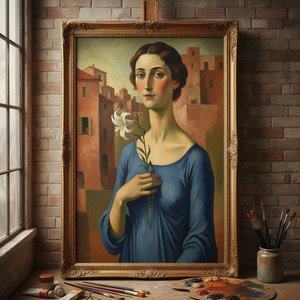 L'Eleganza della Linea: Geometria e Anima nel Ritratto di ModiglianiScopri l'essenza del ritratto di Modigliani tra geometria e anima. Esplora la sua arte oggi.
 Le 25 opere più importanti di Francesco Solimena: guida al Barocco NapoletanoScopri le 25 opere chiave di Francesco Solimena e il Barocco Napoletano. Esplora la collezione su OriginalUniqueArt.com.