Hudson River School
Gathering Sedge (Thomas Hill)
Thomas Hill (1829–1908) ha realizzato Gathering Sedge. Fa parte del movimento Hudson River School.

 Anteprima in scala reale

 Dipinto a olio fatto a mano
 Invia
 Condividi
 Scheda didattica


 Scarica
 Simili
 Radiografia
 Slideshow
 Domande e risposte

 Statistiche
Gathering Sedge, in breve
- Titolo
- Gathering Sedge
- Artista
- Thomas Hill (1829–1908)
- Artista nato a
- Birmingham, Regno Unito
- Movimento
- Hudson River School
Immagini ad alta risoluzione di Gathering Sedge

Pubblico dominio: l'artista è deceduto nel 1908.
Altre dimensioni, ritagli e citazioni →Thomas Hill, Gathering Sedge. Pubblico dominio
Domande su Gathering Sedge, risposte
"Gathering Sedge" è di pubblico dominio?
"Gathering Sedge" di Thomas Hill è di pubblico dominio - il copyright è scaduto. Questo stato determina le modalità con cui l'immagine dell'opera può essere riprodotta.
Chi ha creato "Gathering Sedge"?
"Gathering Sedge" è attribuito a Thomas Hill.
A quale stile appartiene "Gathering Sedge"?
"Gathering Sedge" di Thomas Hill appartiene al movimento Hudson River School. Questo movimento fornisce il contesto stilistico dell'opera.
Per quale motivo lo stato del copyright di "Gathering Sedge" è questo?
"Gathering Sedge" di Thomas Hill è di di pubblico dominio - il copyright è scaduto. I termini del copyright si calcolano a partire dalla morte dell'artista, e Thomas Hill è deceduto nel 1908.
Informazioni sull'artista, Thomas Hill

1829–1908, Regno Unito
Thomas Hill
Thomas Hill: Pioneer of American Tonalism Thomas Hill (September 1829 – June 30, 1908) stands as a pivotal figure in the history of American landscape painting, particularly renowned for his contribution to the movement known as Tonalism. Born in Birmingham, England, Hill emigrated to the United States in 1853 and quickly established himself as a prolific artist dedicated to capturing the sublime beauty of the Californian wilderness. His canvases are characterized by their muted palettes—primarily browns, grays, and ochres—a deliberate stylistic choice designed to evoke contemplation and convey an emotional resonance far surpassing mere visual representation. This approach distinguished him from his contemporaries who favored brighter colors and dramatic compositions, solidifying his place as a champion of a uniquely American aesthetic.
Altre opere di Thomas Hill
 Humphrey Wanley1717
 Sugar Loaf Peak, Contea di El Dorado1865
 Valle del fiume Hudson dalla Catskill Mountain House1872
 L'ultimo chiodo1881
Saggi su Gathering Sedge
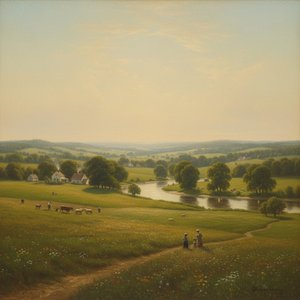 Thomas Worthington Whittredge: Catturando l'Ideale Pastorale Americano con la Luce LuministaEsplora la bellezza senza tempo di Thomas Worthington Whittredge e l'Hudson River School. Scopri come la luce luminista cattura l'essenza d…
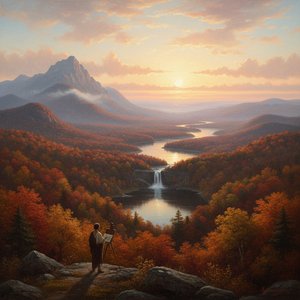 Il Paesaggio del Sublime: Natura e Visione nella Hudson River SchoolScopri la maestria della Hudson River School e il sublime di Thomas Cole. Immergiti nella grandezza del paesaggio romantico americano.
 I 25 Capolavori di Duccio di Buoninsegna: L'Anima di SienaScopri i 25 capolavori di Duccio di Buoninsegna e l'arte gotica senese. Esplora la collezione su OriginalUniqueArt.com.