

 Anteprima in scala reale
 Condividi
 Condividi
 Dettagli

 Scarica
 Articoli simili
 Radiografia
 Slideshow
 Statistiche
Huckleberry Finn


 Leggi tutto
Riproduzione a olio fatta a mano
Olio su tela dipinto a mano nelle tue dimensioni e con la tua cornice, realizzato su ordinazione dai nostri artisti. ( Passa alle stampe Passa all'immagine digitale)




P118B $10

P118H $10

P118W $10

P438Z $10

P508JH $12

P508YH $12

P805H $10

P805Z $10

P919BZ $10

P919G $10

P919XJ $10

P959ZH $10

P968JZ $12

W106C $8

W218G $10

W218JH $8

W218Y $10

W307PJ $10

W316G $10

W316PJ $8

W316Y $10

W398PJ $8

W4111J $10

W500HY $15

W500JH $15

W692G $12

W849H $8

W940BG $15

W953PJ $8




Scegli tra le nostre dimensioni predefinite, che rispettano le proporzioni originali dell'opera d'arte.

È possibile inserire dimensioni personalizzate per adattare l'opera a una cornice o a uno spazio specifico. Se la dimensione selezionata non corrisponde alle proporzioni dell'immagine originale, provvederemo a ritagliare l'opera o a estendere il dipinto con elementi aggiuntivi dipinti a mano. Un mockup digitale ti sarà inviato per approvazione prima dell'inizio della produzione.
Si prega di notare che l'anteprima a schermo non riflette il ritaglio o l'estensione effettivi. Solo il mockup mostrerà accuratamente la composizione finale.
Sebbene siano disponibili dimensioni personalizzate, consigliamo di selezionare una dimensione dall'elenco predefinito per preservare le proporzioni originali.
Dopo l'ordine, il team di OriginalUniqueArt.com contatterà il cliente via e-mail per ricevere le istruzioni e fornirà un'anteprima del mockup
Consegna in tutto il mondo () in 3/4 settimane anziché nelle normali 5 settimane. (16 Settembre). Nessun compromesso sulla qualità.

Spedizione espressa gratuita in tutto il mondo

Tela in lino di alta qualità

Assicurazione completa sulla spedizione

Garanzia di rimborso dei dazi doganali

Garanzia di perfetta fedeltà cromatica

Politica di reso entro 100 giorni (solo per difetti di fabbricazione)

Garanzia di rimborso al 100%

Sconto per acquisti multipli
 L'opzione vetro è disponibile solo per dimensioni inferiori a 110 cm

Huckleberry Finn
Tecnica di riproduzione
Dimensioni della riproduzione
-


Prezzo totale
$ 325
Thomas Hart Benton’s “Huckleberry Finn”: A Dramatic Echo of American Struggle
Thomas Hart Benton's "Huckleberry Finn," painted circa the early 20th century, isn’t merely a depiction of a rescue at sea; it’s a visceral embodiment of America’s complex and often troubled past. This monochrome print, rendered with a striking blend of Gothic realism and expressive dynamism, immediately commands attention with its powerful composition and evocative narrative. The scene unfolds on a weathered wooden platform – likely a dock or riverbank – bathed in the dramatic chiaroscuro of a full moon, casting long shadows that amplify the sense of urgency and impending danger. At the heart of the image is a young boy, his outstretched arms reaching towards an older Black man who bravely pulls him from the churning waters of a runaway steamboat.
Benton’s artistic choices are deliberate and layered. The use of monochrome – a technique reminiscent of drypoint etching – lends the work a starkness that underscores the gravity of the situation. Lines are boldly employed, defining forms with sharp precision while simultaneously conveying movement through swirling steam and the boy's desperate gestures. Geometric shapes, particularly evident in the steamboat’s structure and the surrounding landscape, provide a grounding element to the otherwise chaotic scene. Yet, organic elements – the gnarled branches of trees and the flowing river – introduce a touch of naturalism that prevents the image from becoming overly rigid or schematic. The artist masterfully balances these contrasting elements, creating a visual experience that is both intellectually stimulating and emotionally resonant.
A Gothic Narrative Rooted in Historical Context
To fully appreciate “Huckleberry Finn,” it’s crucial to understand its historical context. Benton was deeply invested in portraying the realities of American life, particularly the struggles faced by marginalized communities during a period of immense social and economic upheaval. The image subtly references the Underground Railroad and the perilous journeys undertaken by enslaved people seeking freedom. The runaway steamboat itself can be interpreted as a symbol of oppression – a force relentlessly pursuing its victims. The rescue scene, therefore, becomes an allegory for resistance and resilience, highlighting the courage and determination of those fighting against injustice.
Furthermore, Benton’s artistic style aligns with the Regionalist movement, which sought to depict American subjects and landscapes in a distinctly regional manner. He rejected European modernism, choosing instead to focus on the stories and experiences of his native Midwest. This commitment to portraying authentic American life is evident in the work's raw emotionality and its unflinching portrayal of hardship and struggle.
Symbolism Under the Moonlight
The moon plays a pivotal role in “Huckleberry Finn,” acting as both a beacon of hope and a harbinger of danger. Its stark illumination casts an ethereal glow over the scene, emphasizing the boy’s vulnerability and the urgency of his plight. Simultaneously, the moon's light reveals the shadows lurking beneath the surface – hinting at the darker aspects of American history and the ongoing struggle for equality. The steamboat, with its billowing steam and relentless forward momentum, represents the forces of oppression that threaten to consume those who dare to resist. The older Black man, a figure of strength and compassion, embodies the spirit of liberation and the promise of salvation.
A Legacy of Powerful Imagery
“Huckleberry Finn” is more than just a painting; it’s a powerful statement about American identity, social justice, and the enduring human capacity for courage. Benton's masterful use of composition, technique, and symbolism creates an image that continues to resonate with viewers today. The work’s dramatic intensity, coupled with its historical significance, makes it a compelling subject for art lovers, collectors, and interior designers seeking pieces that tell a story – a story of struggle, resilience, and the enduring hope for a better future. Reproductions of this iconic artwork offer a tangible connection to a pivotal moment in American history and a testament to Benton’s lasting legacy.
Biografia dell'artista
**Primi anni e formazione**
Thomas Hart Benton, pittore e muralista americano, nacque il 15 aprile 1889 a Neosho, nel Missouri. La sua famiglia, influente in politica, gli instillò un senso del dovere civico, ma fu sua madre, Elizabeth Wise Benton, a sostenere il suo interesse precoce per l'arte. Dopo aver frequentato la Western Military Academy, Benton si iscrisse alla School of the Art Institute di Chicago nel 1907 e successivamente si trasferì a Parigi nel 1909 per studiare all’Académie Julian.**Carriera artistica e Regionalismo**
Il lavoro di Benton è caratterizzato dalle sue figure fluide e scolpite che raffigurano persone comuni in scene della vita americana. Sebbene la sua arte sia fortemente associata al Midwest degli Stati Uniti, trascorse del tempo a New York City, Parigi e Martha's Vineyard, il che influenzò il suo stile. In quanto figura di spicco nel movimento regionalista, insieme a Grant Wood e John Steuart Curry, il lavoro di Benton riflette un approccio naturalistico e rappresentativo all'arte.- Opere chiave:
- Prodigal Son 1 (regionalismo), una rivisitazione della parabola biblica, che mostra la capacità di Benton di raccontare storie attraverso l'arte.
- Flood (Nelson-Atkins Museum of Art, Kansas City), a dimostrazione della sua maestria nel catturare scene americane.
- Musei che espongono le sue opere:
- Mostre notevoli:
- I murales America Today alla New School for Social Research (1930-31), ora ospitati al Metropolitan Museum of Art.
**Evoluzione artistica e influenze**
L'arte di Benton si è evoluta nel corso della sua carriera, passando attraverso diverse fasi stilistiche prima di stabilirsi in un linguaggio distintivo che combinava elementi del cubismo, del futurismo e dell’art déco con una forte attenzione alla narrazione e al realismo sociale. Le sue prime opere mostrano influenze europee, ma gradualmente si allontanò da queste per sviluppare uno stile più personale e radicato nella cultura americana. L'esperienza di Benton nel Midwest, in particolare la sua osservazione della vita rurale e dei lavoratori agricoli, ebbe un impatto profondo sul suo lavoro. La sua capacità di catturare il movimento e l’energia delle scene quotidiane è evidente nelle sue rappresentazioni dinamiche di balli popolari, corse di cavalli e altri eventi sociali.**Eredità e vita successiva**
Benton sposò Rita Piacenza nel 1922, con cui ebbe due figli. Il suo attivo impegno in politica di sinistra e le sue vaste opere regionaliste culminarono nei murales America Today. Benton morì il 19 gennaio 1975, lasciando dietro di sé un'eredità nell’arte americana che continua a ispirare. Esplora altre opere di Thomas Hart Benton e altri maestri su OriginalUniqueArt.com
Thomas Hart Benton
1889 - 1975 , Stati Uniti d'America
Informazioni rapide
- Artisti Influenti:
- Grant Wood
- John Steuart Curry
- Data Di Nascita: 15 aprile 1889
- Luogo Di Nascita: Neosho, Stati Uniti
- Movimento Artistico: Regionalismo americano
- Nazionalità: Americana
- Nome Completo: Thomas Hart Benton
- Opere Notevoli:
- Prodigal Son 1
- Flood
- America Today murals
Articoli correlati

American Regionalism: The Soul of the Heartland and the Mastery of Grant Wood
Explore the profound history of American Regionalism. Discover how Grant Wood captured the heart of the Midwest through masterpieces like American Gothic. An expert guide to the movement, its cultural impact, and the enduring beauty of American Realism.

Grant Wood e il Regionalismo Americano: Identità, Mito e Paesaggio Rurale
Esplora il Regionalismo Americano con Grant Wood e i suoi capolavori. Analisi approfondita di 'American Gothic', contesto storico, influenze artistiche e l'eredità di questo movimento iconico. Scopri la vera essenza dell'arte rurale americana.
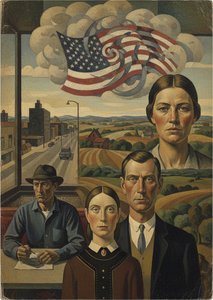
Echoes of Place: Regionalism & American Identity in Interwar Art
Explore the rise of American Regionalism in interwar art! Discover Grant Wood, Thomas Hart Benton & the movement's impact on American identity. Expert analysis & historical context.
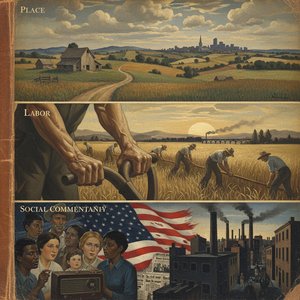
American Regionalism: A Crucible of Identity – Exploring Themes of Place, Labor & Social Commentary
Explore American Regionalism's powerful depiction of the American heartland during the Great Depression. Discover Grant Wood, Thomas Hart Benton & more. Expert analysis & high-quality art reproductions at OriginalUniqueArt.

Regionalism: Celebrating the Heart and Soul of Local Identity Through Art
Explore the profound impact of Regionalism in art history. Discover how iconic painters captured local identity, rural resilience, and the American heartland through evocative landscapes and social commentary in this expert-led journey through art's most soulful movement.


