

 Anteprima in scala reale
 Condividi
 Condividi
 Dettagli
 Guida stampabile

 Scarica
 Articoli simili
 Radiografia
 Slideshow
 Statistiche
Weda Cook


 Leggi tutto
Giclée / Stampe d'arte
Stampa giclée o su tela di qualità museale, con produzione rapida e diverse opzioni di finitura. ( Ordina la riproduzione dipinta a mano Passa all'immagine digitale)




P118B €10

P118H €10

P118W €10

P438Z €10

P508JH €12

P508YH €12

P805H €10

P805Z €10

P919BZ €10

P919G €10

P919XJ €10

P959ZH €10

P968JZ €12

W106C €8

W218G €10

W218JH €8

W218Y €10

W307PJ €10

W316G €10

W316PJ €8

W316Y €10

W398PJ €8

W4111J €10

W500HY €15

W500JH €15

W692G €12

W849H €8

W940BG €15

W953PJ €8




Scegli tra le nostre dimensioni predefinite, che rispettano le proporzioni originali dell'opera d'arte.

È possibile inserire dimensioni personalizzate per adattare l'opera a una cornice o a uno spazio specifico. Se la dimensione selezionata non corrisponde alle proporzioni dell'immagine originale, procederemo al ritaglio dell'opera o all'estensione dell'immagine con un bordo specchiato o a tinta unita. Un mockup digitale ti verrà inviato per approvazione prima dell'inizio della produzione.
Si prega di notare che l'anteprima a schermo non riflette il ritaglio o l'estensione effettivi. Solo il mockup mostrerà accuratamente la composizione finale.
Sebbene siano disponibili dimensioni personalizzate, si raccomanda di selezionare una dimensione dall'elenco predefinito per preservare le proporzioni originali.
Consegna in tutto il mondo () in 2 settimane invece delle normali 4/5 settimane. (10 Ottobre)

Spedizione espressa gratuita in tutto il mondo

Tela in lino di alta qualità

Assicurazione completa sulla spedizione

Garanzia di rimborso dei dazi doganali

Garanzia di perfetta fedeltà cromatica

Politica di reso entro 100 giorni (solo per difetti di fabbricazione)

Garanzia di rimborso al 100%

Sconto per acquisti multipli
 L'opzione vetro è disponibile solo per dimensioni inferiori a 110 cm

Weda Cook
Giclée / Stampe d'arte
Dimensioni della riproduzione
-


Prezzo totale
€ 69
The Unflinching Gaze: Capturing Modernity in Thomas Eakins' Weda Cook
To stand before Thomas Eakins’ Weda Cook is not merely to observe a portrait; it is to confront a moment of profound, unvarnished reality. Painted in 1891, this oil on canvas transcends the simple act of likeness, offering instead a deep psychological study wrapped in the elegance of late Victorian fashion. Eakins, the master of American realism, possessed an almost scientific dedication to capturing the human form and spirit with breathtaking accuracy. The subject herself, Weda Cook, is rendered with a poise that seems both natural and meticulously composed. Her long hair cascades around her shoulders, framing a face that meets the viewer’s gaze with an intensity that refuses easy interpretation. It is this directness—this refusal to simply smile for posterity—that makes the painting such a compelling piece of art history.
Technique and The Art of Realism
Eakins' technical mastery in Weda Cook is evident in every visible brushstroke. He was a proponent of realism, eschewing the romantic flourishes that sometimes characterized his contemporaries for something far more grounded: truth. Observe the texture of the pink dress; Eakins has managed to convey the weight and drape of the fabric while simultaneously suggesting its delicate nature. The handling of light across her skin is masterful, giving her complexion a luminous quality that seems almost alive. This attention to detail—the subtle shading around the eyes, the precise rendering of the hair strands—speaks to an artist who studied anatomy as rigorously as he studied composition. For those interested in acquiring a reproduction, understanding this commitment to visible technique allows one to appreciate the painstaking effort required to translate such depth onto canvas.
Historical Echoes and Social Portraiture
The late 19th century was a period of immense social flux in America, and Eakins chronicled that change through his subjects. Weda Cook serves as a beautiful artifact from this era, capturing the societal expectations placed upon women while simultaneously celebrating their individual presence. The seriousness etched into her expression suggests a woman of substance, perhaps navigating the complex currents of turn-of-the-century society. Unlike idealized portraits meant solely for vanity, Eakins’ work feels engaged with the world around him—a testament to the dignity found in everyday American life. It invites us to consider not just who she was, but what it meant to be a woman of her standing during that transformative time.
Emotional Resonance and Interior Placement
Emotionally, the painting resonates with a quiet power. There is an undeniable gravity emanating from Weda Cook that draws the viewer in, compelling them to look closer, to decipher the meaning behind that steady gaze. For collectors or interior designers seeking art that anchors a space with intellectual weight, Weda Cook offers more than mere decoration; it offers conversation. Imagine this piece gracing a formal drawing-room or a sophisticated study—its presence would lend an air of cultivated history and thoughtful depth to the surroundings. It is a work that demands contemplation, rewarding the viewer with layers of observation upon every viewing.
Domande e risposte
Quanti anni aveva Thomas Eakins quando è stata creata "Weda Cook"?
Quando "Weda Cook" fu creata nel 1891, Thomas Eakins - nato nel 1844 - aveva 47 anni.
"Weda Cook" di Thomas Eakins è un dipinto, un disegno o una stampa?
"Weda Cook" è un'opera di tipo WallArt.
Quale uso e quale spazio si consigliano per "Weda Cook" di Thomas Eakins?
"Weda Cook" di Thomas Eakins è consigliato per Focal, idealmente in un Lounge. L'uso e lo spazio aiutano a individuare l'ambiente ideale per una riproduzione.
In che anno è stata realizzata "Weda Cook"?
"Weda Cook" risale al 1891. La data colloca l'opera all'interno della carriera di Thomas Eakins e della sua epoca.
Chi è l'artista dietro "Weda Cook"?
L'artista che ha creato "Weda Cook" è Thomas Eakins. L'opera è catalogata sotto il nome di Thomas Eakins.
Dove posso acquistare una stampa di "Weda Cook" di Thomas Eakins?
Per ordinare una stampa di "Weda Cook" di Thomas Eakins, ti basta procedere con l'ordine su questa pagina: una stampa fine art su tela di cotone o carta canvas d'archivio.
A quale stile appartiene "Weda Cook"?
"Weda Cook" di Thomas Eakins appartiene al movimento American Realism. Questo movimento fornisce il contesto stilistico dell'opera.
Biografia dell'artista
La Vita e l'Opera di Thomas Eakins
Thomas Cowperthwait Eakins, nato a Philadelphia il 25 luglio 1844 e morto nella stessa città il 25 giugno 1916, è stato un pittore, fotografo, scultore ed educatore artistico americano. È considerato uno dei più importanti esponenti del realismo americano del XIX secolo. La sua opera si distingue per la rappresentazione accurata e spesso cruda della realtà, con particolare attenzione all'anatomia umana e alla vita quotidiana dell’epoca.Formazione e Primi Anni
Eakins dimostrò fin da giovane un talento eccezionale per il disegno. Studiò presso la Pennsylvania Academy of the Fine Arts, dove si concentrò sull'anatomia grazie alle lezioni al Jefferson Medical College. Questo studio approfondito del corpo umano influenzò profondamente il suo stile pittorico, permettendogli di rappresentare figure con una precisione e un realismo senza precedenti. Nel 1866-1869, Eakins si recò in Europa, principalmente a Parigi, dove studiò sotto la guida di Jean-Léon Gérôme all'École des Beaux-Arts. L’influenza di Gérome fu significativa, ma Eakins sviluppò rapidamente un suo stile distintivo, rifiutando l'idealizzazione romantica e abbracciando una visione più diretta e veritiera della realtà.Lo Stile Realista e le Opere Principali
Il realismo di Eakins si manifesta nella sua attenzione ai dettagli, nell’uso di colori sobri e nella rappresentazione onesta dei suoi soggetti. I suoi ritratti, numerosi e vari, offrono uno spaccato della società americana del suo tempo, raffigurando intellettuali, atleti, scienziati e membri della classe media. Tra le sue opere più celebri si annoverano:- Max Schmitt in a Single Scull (1871): Un'icona del realismo americano che cattura l’energia e la grazia di un vogatore durante una competizione.
- The Gross Clinic (1875): Una rappresentazione cruda e senza compromessi di un intervento chirurgico in pubblico, considerata una delle opere più importanti della storia dell'arte americana.
- Homeody at Canoe Street (1874): Un ritratto che esplora la vita quotidiana e l’ambiente urbano di Philadelphia.
- The Agony of Carceri (1882): Una rappresentazione potente della prigionia e della sofferenza umana, ispirata a un racconto di Edgar Allan Poe.
Insegnamento e Controversie
Eakins fu anche un influente insegnante presso la Pennsylvania Academy of the Fine Arts dal 1876 al 1886. Il suo metodo didattico, incentrato sullo studio del corpo umano dal vivo e sull'uso della fotografia per l’anatomia, era innovativo ma spesso controverso. Nel 1886, fu costretto a dimettersi dalla sua posizione dopo aver utilizzato un modello nudo in una lezione mista di uomini e donne, scatenando indignazione pubblica.Eredità e Significato Storico
Nonostante le difficoltà incontrate durante la sua vita, Thomas Eakins è oggi riconosciuto come uno dei più grandi pittori americani. La sua opera ha influenzato generazioni di artisti e continua ad essere ammirata per il suo realismo impietoso, la sua maestria tecnica e la sua capacità di catturare l'essenza della vita americana del XIX secolo. Eakins è stato un pioniere nel rappresentare la realtà senza filtri, aprendo la strada a nuove forme di espressione artistica e contribuendo in modo significativo alla storia dell’arte americana. La sua eredità risiede nella sua capacità di osservazione acuta e nella sua volontà di rappresentare il mondo così com'era, con tutte le sue imperfezioni e complessità.
Thomas Eakins
1844 - 1916 , Stati Uniti d'America
Informazioni rapide
- Artisti Influenti: ['Jean-Léon Gérôme']
- Data Di Nascita: 25 luglio 1844
- Luogo Di Nascita: Filadelfia, Stati Uniti
- Movimento Artistico: Realismo americano
- Nazionalità: Americana
- Nome Completo: Thomas Cowperthwait Eakins
- Opere Notevoli:
- Max Schmitt in a Single Scull
- La Clinica Gross
Articoli correlati

Realismo Americano: 10 Capolavori che Hanno Definito un'Epoca | OriginalUniqueArt
Esplora i 10 capolavori del Realismo Americano con OriginalUniqueArt. Scopri Andrew Wyeth, Edward Hopper e George Bellows. Quadri iconici, storie uniche e riproduzioni di alta qualità per la tua casa. Esplora la collezione online!

American Realism: Social Commentary & Artistic Representation in Early 20th-Century Painting
Explore the powerful social commentary & artistic representation of American Realism. Discover key artists like Bellows & Sloan, and understand the movement's lasting impact on 20th-century art history.
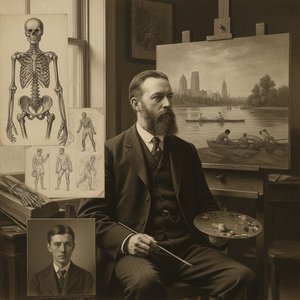
Thomas Eakins: Realismo Anatomico e lo Spirito Americano – Un'Esplorazione Completa di Vita e Legacy
Esplora la vita e l'opera di Thomas Eakins, il maestro del realismo americano. Approfondisci la sua tecnica anatomica, i ritratti intensi e l'impatto duraturo sulla storia dell'arte. Scopri le sue opere più significative.

The Unvarnished Truth: A Cultural Journey Through the Soul of American Realism
Explore the profound beauty of American Realism. From the Ashcan School's urban grit to intimate portraits, discover how artists captured the authentic soul of a nation through unvarnished truth and masterful observation.

American Realism: Capturing the Raw Soul of a Nation Through the Lens of Art History
Explore the profound depth of American Realism. From the gritty Ashcan School to poignant social landscapes, discover how masters captured the raw soul of a nation through evocative oil paintings and timeless art history.


