Hudson River School · 1847
Prometheus Bound (Thomas Cole, 1847)
Thomas Cole (1801–1848) ha realizzato Prometheus Bound. Risale al 1847. Fa parte del movimento Hudson River School. È realizzato in Pittura a olio. È conservata presso il Fine Arts Museums of San Francisco a San Francisco, Stati Uniti d'America. Le dimensioni sono 162 × 243 cm.
- 1847
- Pittura a olio
- 162 × 243 cm
- Fine Arts Museums of San Francisco

 Anteprima in scala reale

 Dipinto a olio fatto a mano
 Invia
 Condividi
 Scheda didattica


 Scarica
 Simili
 Radiografia
 Slideshow
 Domande e risposte

 Statistiche
Prometheus Bound, in breve
- Titolo
- Prometheus Bound
- Artista
- Thomas Cole (1801–1848)
- Artista nato a
- Bolton, Regno Unito
- Date
- 1847
- Tecnica
- Pittura a olio
- Dimensioni
- 162 × 243 cm
- Dove vederlo
- Fine Arts Museums of San Francisco, San Francisco, Stati Uniti d'America
- Movimento
- Hudson River School
Cosa raffigura Prometheus Bound?
The Weight of Myth: Thomas Cole’s “Prometheus Bound”
Thomas Cole's "Prometheus Bound," painted in 1847, isn’t merely a landscape; it’s a profound meditation on defiance, punishment, and the enduring human spirit. This monumental canvas, now residing within the Fine Arts Museums of San Francisco, transcends its subject matter to become a powerful allegory for the struggles inherent in challenging authority and forging one's own destiny. Cole, a pivotal figure in the Hudson River School movement, masterfully blends Romanticism with an underlying moral urgency, creating an image that continues to resonate deeply with viewers today.
The scene depicts Prometheus, chained to a towering rock formation amidst a desolate, snow-laden mountainscape. The composition is strikingly dramatic – a vast expanse of jagged peaks dominates the background, dwarfing the solitary figure of the Titan and emphasizing his isolation and vulnerability. A vulture circles overhead, a constant reminder of Zeus’s relentless retribution, while a subtle hint of Jupiter, the Roman equivalent of Zeus, watches from above, embodying the cold indifference of divine power. Cole's use of light is particularly masterful; a diffused, almost ethereal glow illuminates the scene, casting long shadows and creating an atmosphere of both grandeur and despair. The color palette—primarily cool blues, grays, and whites—reinforces this sense of bleakness, punctuated by the fiery red underpaint used to render the snow-covered mountains – a deliberate choice that subtly hints at Prometheus’s stolen fire.
A Myth Made Manifest: Exploring the Narrative
The painting draws directly from Aeschylus's Greek tragedy, “Prometheus Bound,” a story of rebellion against the gods. Prometheus, in this narrative, is not simply a titan but a symbol of humanity’s relentless pursuit of knowledge and progress. He steals fire from Mount Olympus, gifting it to mankind – an act of defiance that ultimately earns him eternal torment at the hands of Zeus. Cole doesn't shy away from the brutality of the punishment; the stark depiction of Prometheus’s chains and the looming threat of the vulture vividly convey the weight of his transgression. However, within this scene of suffering, there is also a palpable sense of resilience. Prometheus’s gaze, fixed upon the viewer, exudes an almost defiant serenity—a refusal to succumb to despair.
The inclusion of the chorus, comprised of figures emerging from the depths of the mountains, adds another layer of complexity to the narrative. They represent the forces of nature, witnesses to Prometheus's plight, and perhaps even a subtle acknowledgment of his heroic struggle. Their hesitant approach, marked by curiosity and apprehension, suggests that even those seemingly untouched by divine wrath recognize the significance of Prometheus’s actions.
The Hudson River School: A New American Vision
“Prometheus Bound” is a quintessential example of the Hudson River School's artistic philosophy. Unlike earlier European landscape paintings that often focused on idyllic pastoral scenes, Cole sought to capture the raw power and sublime beauty of the American wilderness. He employed a technique known as “atmospheric perspective,” subtly blurring distant elements to create a sense of depth and vastness. This approach wasn’t simply about replicating reality; it was about conveying an emotional response—a feeling of awe and reverence for nature's grandeur.
Cole’s work also reflects the burgeoning American identity of the mid-19th century, grappling with themes of independence, self-reliance, and the relationship between humanity and the natural world. The painting can be interpreted as a metaphor for America’s own struggle to assert its sovereignty against established powers – a sentiment particularly relevant in the context of westward expansion and the nation's growing tensions with European empires.
A Timeless Masterpiece: Reproduction & Beyond
Reproductions of “Prometheus Bound” offer an exceptional opportunity to bring this powerful image into any setting. The meticulous detail, evocative atmosphere, and profound symbolism ensure that a high-quality reproduction will serve as both a beautiful work of art and a compelling conversation piece. Consider framing the artwork in a manner that complements its dramatic scale and reinforces its thematic resonance – perhaps within a contemporary interior space to juxtapose the ancient myth with modern life.
For those seeking an authentic experience, exploring the original painting at the Fine Arts Museums of San Francisco is highly recommended. It’s a truly immersive encounter with one of America's most significant artistic achievements—a testament to Thomas Cole’s genius and a timeless exploration of human courage in the face of overwhelming adversity.
In quale museo si trova Prometheus Bound?
Fine Arts Museums of San Francisco
San Francisco, Stati Uniti d'America
La storia dei Fine Arts Museums of San Francisco La storia dei Fine Arts Museums of San Francisco affonda le sue radici nell'anno 1871. Nel corso dei decenni, l'istituzione ha saputo espandersi e consolidarsi, segnando tappe fondamentali con l'apertura del de Young Museum nel 1895 e della Legion of Honor nel 1924. Per diverse decadi, queste due entità hanno operato come istituzioni indipendenti, prima di confluire formalmente in un'unica, grande realtà nel 1972, sotto la guida di Ian McKibbin White.


Immagini ad alta risoluzione di Prometheus Bound

Pubblico dominio: l'artista è deceduto nel 1848.
Altre dimensioni, ritagli e citazioni →Thomas Cole, Prometheus Bound (1847), Fine Arts Museums of San Francisco. Pubblico dominio
Domande su Prometheus Bound, risposte
Dove posso ammirare l'originale di "Prometheus Bound" di Thomas Cole?
L'originale di "Prometheus Bound" di Thomas Cole è conservato presso Fine Arts Museums of San Francisco, San Francisco, Stati Uniti d'America. Una riproduzione permette di esporre l'opera in casa propria.
In che anno è stata creata "Prometheus Bound" di Thomas Cole?
L'opera "Prometheus Bound" di Thomas Cole risale al 1847.
Con quale tecnica è realizzato "Prometheus Bound"?
Thomas Cole ha utilizzato la tecnica del Pittura a olio per "Prometheus Bound". La tecnica definisce la natura materica dell'opera originale.
Quali sono le dimensioni dell'originale "Prometheus Bound" di Thomas Cole?
L'originale "Prometheus Bound" di Thomas Cole misura 243 x 162 cm.
"Prometheus Bound" è di pubblico dominio?
Per quanto riguarda il copyright, "Prometheus Bound" è di pubblico dominio - il copyright è scaduto.
A quale artista è attribuito "Prometheus Bound"?
L'artista che ha creato "Prometheus Bound" è Thomas Cole. L'opera è catalogata sotto il nome di Thomas Cole.
A quale corrente artistica appartiene "Prometheus Bound" di Thomas Cole?
"Prometheus Bound" di Thomas Cole appartiene al movimento Hudson River School. Questo movimento fornisce il contesto stilistico dell'opera.
A quale periodo della carriera di Thomas Cole appartiene "Prometheus Bound"?
"Prometheus Bound" rappresenta il Late Period di Thomas Cole.
Quanti anni aveva Thomas Cole quando ha creato "Prometheus Bound" nel 1847?
Thomas Cole aveva 46 anni quando ha creato "Prometheus Bound" nel 1847. L'età è calcolata sulla base dell'anno di nascita dell'artista, 1801.
Informazioni sull'artista, Thomas Cole

1801–1848, Regno Unito
Thomas Cole
La vita e l'arte di Thomas Cole Nato il 1° febbraio 1801 a Bolton le Moors, nel Lancashire, in Inghilterra, Thomas Cole iniziò il suo cammino lontano dai paesaggi che avrebbero infine reso immortale il suo nome. La sua famiglia emigrò negli Stati Uniti nel 1818, alla ricerca di un nuovo inizio in una terra di vasti territori ancora inesplorati. In quegli anni formativi, fu un uomo dalle molteplici abilità: lavorò come incisore e, a partire dal 1822, trovò una stabilità come ritrattista. Essendo in gran parte autodidatta, sviluppò il suo sguardo attraverso l'osservazione diretta e lo studio meticoloso dei libri, piuttosto che attraverso una formazione accademica formale.
Altre opere di Thomas Cole
 L'Oxbow
 Il sogno dell'architetto1840
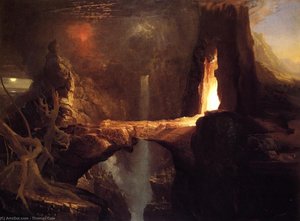 Espulsione. Luna e Luce del Fuoco1828
 Vista di Firenze da San Miniato1837

Saggi su Prometheus Bound
 I 25 Capolavori di Duccio di Buoninsegna: L'Anima della Luce SieneseScopri i 25 capolavori di Duccio di Buoninsegna e l'arte senese. Esplora la collezione su OriginalUniqueArt.com.
 Nature's Nation: The Hudson River School and the Art of the American SublimeExplore the spiritual depth of the Hudson River School through its masters. Discover the power of the American Sublime today.
 I 10 Capolavori del Rinascimento Maturo che Hanno Definito l'Arte: Scopri i MaestriEsplora i 10 capolavori del Rinascimento Maturo con ! Scopri Leonardo, Michelangelo, Raffaello e altri maestri. Dipinti iconici, storie aff…