

 Anteprima in scala reale
 Condividi
 Condividi
 Dettagli

 Scarica
 Articoli simili
 Radiografia
 Slideshow
 Statistiche
The reading girl


 Leggi tutto
Giclée / Stampe d'arte
Stampa giclée o su tela di qualità museale, con produzione rapida e diverse opzioni di finitura. ( Ordina la riproduzione dipinta a mano Passa all'immagine digitale)




P118B $10

P118H $10

P118W $10

P438Z $10

P508JH $12

P508YH $12

P805H $10

P805Z $10

P919BZ $10

P919G $10

P919XJ $10

P959ZH $10

P968JZ $12

W106C $8

W218G $10

W218JH $8

W218Y $10

W307PJ $10

W316G $10

W316PJ $8

W316Y $10

W398PJ $8

W4111J $10

W500HY $15

W500JH $15

W692G $12

W849H $8

W940BG $15

W953PJ $8




Scegli tra le nostre dimensioni predefinite, che rispettano le proporzioni originali dell'opera d'arte.

È possibile inserire dimensioni personalizzate per adattare l'opera a una cornice o a uno spazio specifico. Se la dimensione selezionata non corrisponde alle proporzioni dell'immagine originale, procederemo al ritaglio dell'opera o all'estensione dell'immagine con un bordo specchiato o a tinta unita. Un mockup digitale ti verrà inviato per approvazione prima dell'inizio della produzione.
Si prega di notare che l'anteprima a schermo non riflette il ritaglio o l'estensione effettivi. Solo il mockup mostrerà accuratamente la composizione finale.
Sebbene siano disponibili dimensioni personalizzate, si raccomanda di selezionare una dimensione dall'elenco predefinito per preservare le proporzioni originali.
Consegna in tutto il mondo () in 2 settimane invece delle normali 4/5 settimane. (17 Settembre)

Spedizione espressa gratuita in tutto il mondo

Tela in lino di alta qualità

Assicurazione completa sulla spedizione

Garanzia di rimborso dei dazi doganali

Garanzia di perfetta fedeltà cromatica

Politica di reso entro 100 giorni (solo per difetti di fabbricazione)

Garanzia di rimborso al 100%

Sconto per acquisti multipli
 L'opzione vetro è disponibile solo per dimensioni inferiori a 110 cm

The reading girl
Giclée / Stampe d'arte
Dimensioni della riproduzione
-


Prezzo totale
$ 80
A Moment of Quiet Introspection
In the soft, amber glow of a world captured in 1886, Théodore Roussel invites us into a sanctuary of profound stillness. The Reading Girl is not merely a portrait; it is an immersive experience of solitude and intellectual pursuit. At the heart of the composition sits a nude woman, her form rendered with a delicate balance of classical grace and raw vulnerability. She is lost in the pages of a book, her concentration so absolute that the surrounding world seems to fade into a mere whisper. This singular focus creates a magnetic pull for the viewer, drawing us into her private orbit where time itself appears to have paused.
The scene is rich with an atmospheric depth that speaks to the mastery of Roussel’s technique. While the central figure commands our attention, the artist subtly populates the periphery with life. A shadowy figure stands behind her, acting as a silent sentinel to her privacy, while another presence lingers in the distance, adding a layer of narrative mystery. The placement of everyday objects—the wooden backrest of her chair and the scattered handbags resting on the floor—grounds this ethereal moment in a tangible, domestic reality. These details suggest a lived-in space, a room where the echoes of daily movement have settled into a peaceful, scholarly quietude.
The Mastery of Light and Realism
Roussel, a self-taught artist who found his true voice later in life, utilizes light not just to illuminate, but to sculpt. In The Reading Girl, the dramatic interplay of light and shadow—often referred to as chiaroscuro—serves to emphasize the soft contours of the subject's skin against the darker, more textured elements of the room. The technique is a beautiful marriage of classical realism and a burgeoning interest in the symbolic depth found in late 19th-century works. Every brushstroke contributes to a sense of weight and texture, from the grain of the wooden chair to the heavy, silent air of the chamber.
For the discerning collector or interior designer, this piece offers an unparalleled emotional resonance. It possesses a quiet authority that can anchor a room, providing a focal point that encourages contemplation rather than mere observation. The painting’s palette, rich with earthy tones and warm highlights, makes it a versatile masterpiece for sophisticated spaces. Whether placed in a sunlit library or a moody, contemporary study, the artwork brings with it an aura of timeless elegance and a profound respect for the beauty found in life's most quiet, unobserved moments.
Biografia dell'artista
A Late Bloomer’s Journey: The Life and Art of Théodore Roussel
Théodore Casimir Roussel, a name perhaps less instantly recognizable than some of his contemporaries, occupies a fascinating niche in the landscape of late 19th and early 200th-century art. Born in Orléans, France, in 1847, his path to becoming a painter was decidedly unconventional. Unlike artists who demonstrated precocious talent from youth, Roussel embarked on his artistic journey relatively late, around 1872, after fulfilling his military service. Entirely self-taught, he initially explored scenes of everyday life, grounding himself in the techniques of the Old Masters—a foundation that would later be brilliantly transformed by a unique and deeply personal vision. This early work, while skillful, lacked the distinctive voice that would eventually set him apart, hinting at the potential within but not yet revealing the artist he was destined to become.Early Influences and Artistic Foundations
Roussel’s formative years were marked by an unwavering dedication to mastering traditional painting methods. Rejecting the prevailing trends of Impressionism—which favored fleeting impressions of light and color—he sought inspiration in the works of artists like Jean-Auguste Dominique Ingres and Eugène Delacroix, absorbing their compositional rigor and expressive brushwork. This deliberate choice reflected a conviction that beauty resided not merely in capturing momentary sensations but in conveying enduring emotional truths. He meticulously studied anatomy and perspective, honing his skills through diligent practice—a testament to the discipline characteristic of artists who prioritize craft alongside artistic vision. These influences would permeate his subsequent oeuvre, shaping his stylistic preferences and informing his approach to portraying the natural world.London’s Embrace: Whistler and Artistic Transformation
A pivotal moment arrived in 1878 with Roussel’s relocation to London—a move that irrevocably altered the trajectory of his artistic career. Recognizing the dynamism and intellectual ferment of British society, he sought opportunities for collaboration and engagement within the burgeoning art scene. It was during this period that he encountered James McNeill Whistler, an artist whose aesthetic philosophy profoundly resonated with Roussel’s sensibilities. Whistler championed a concept known as “harmony,” advocating for artworks that prioritized visual balance and tonal unity—a stance diametrically opposed to Impressionism's emphasis on capturing fleeting moments of color. This encounter sparked a lifelong friendship and mentorship, fostering intellectual exchange and shaping Roussel’s artistic perspective. Whistler encouraged him to experiment with etching—specifically "free etching"—drawing directly onto the copper plate from nature, preserving spontaneity and lightness.“The Reading Girl”: Controversy and Critical Recognition
Roussel’s debut at the New English Art Club exhibition in 1887 cemented his reputation as a provocateur within the art world. His painting *“The Reading Girl,”* depicting a nude woman absorbed in reading, immediately ignited controversy—and not of the entirely favorable kind. Critics denounced it as “realism of the worst kind,” accusing it of vulgarity and crudeness. Yet, this very backlash proved to be fortuitous for Roussel’s burgeoning career. Sir William Orpen famously declared it "the best nude painting of its period"—a testament to the enduring power and artistic merit that transcended initial critical disapproval. The model for “The Reading Girl” was Hetty Pettigrew, alongside her sisters Rose and Lily—all prominent figures in London's art world who had posed for artists like Whistler, Holman Hunt, and Millais. Roussel continued his artistic explorations, delving into landscapes and genre scenes alike—always striving to capture the essence of human experience within a framework of refined aesthetic sensibility.Landscapes and Etching: A Singular Artistic Voice
Roussel’s artistic output spanned decades, characterized by an unwavering commitment to exploring the beauty of the natural world through meticulous observation and expressive technique. He excelled particularly in landscape painting—creating atmospheric vistas imbued with subtle tonal gradations and luminous color palettes. His canvases often depict scenes along the River Thames—capturing the misty mornings and golden sunsets that define the English countryside. Simultaneously, he became a pioneer of color etching in England—a medium he embraced wholeheartedly, skillfully blending Impressionistic principles with his own distinctive style. He regularly exhibited at prestigious institutions such as the Royal Society of British Artists and the Royal Scottish Academy—establishing himself as a respected figure within the artistic establishment. Roussel’s legacy rests not merely on his prolific output but on his unwavering dedication to artistic integrity—a conviction that beauty resided in capturing enduring emotional truths rather than fleeting sensory impressions. He passed away peacefully in Hastings, England, in 1926, leaving behind a body of work that continues to inspire admiration for its originality and understated elegance.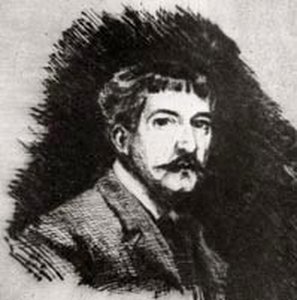
Théodore Roussel
1847 - 1926 , Francia
Informazioni rapide
- Artistic Movement Or Style: Impressionismo, Incisone a colori
- Artists Who Influenced This Artist: ['James McNeill Whistler']
- Date Of Birth: 1847
- Date Of Death: 1926
- Full Name: Théodore Casimir Roussel
- Nationality: Francese-Inglese
- Notable Artworks:
- La Ragazza che Legge
- Veduta del Puy de Dome e Royat
- Nel Frutteto
- Place Of Birth: Orléans, Francia
Articoli correlati

The Enduring Allure of the Nude: A Historical & Artistic Exploration of the Human Form
Explore the captivating history of nude art! Discover iconic paintings & artists from classical to modern eras. Uncover symbolism, techniques & find museum-quality reproductions at OriginalUniqueArt.

Oil on Canvas: A Historical & Technical Exploration of a Timeless Artistic Medium
Explore the rich history & enduring techniques of oil painting on canvas. Discover the science behind its longevity, conservation practices, and contemporary relevance. Expert insights for art enthusiasts.

The Enduring Power of Painting: A Historical & Contemporary Exploration of Form and Emotion
Explore the rich history & enduring techniques of oil painting with OriginalUniqueArt. Discover masterpieces, learn about art collecting, and find authentic handmade reproductions crafted by skilled artists.

The Enduring Legacy of Oil on Canvas: Technique, History & Aesthetic Impact
Explore the rich history & techniques of oil painting – from Renaissance masters to Impressionism. Discover pigments, layering methods, and why this timeless medium endures. Expert insights for artists & art enthusiasts.

I 10 Capolavori del Realismo Romantico che hanno Incantato la Storia dell'Arte
Esplora l'emozione del Realismo Romantico attraverso 10 capolavori senza tempo. Scopri la storia di maestri come Constable e Friedrich e lasciati ispirare da opere iconiche per il tuo arredamento. Trova riproduzioni d'arte di qualità museale su OriginalUniqueArt.com.