

 Anteprima in scala reale
 Condividi
 Condividi
 Dettagli
 Guida stampabile

 Scarica
 Articoli simili
 Radiografia
 Slideshow
 Statistiche
Card players
 Acrylic On Canvas
- WallArt
- Neoplasticism / De Stijl
 1917
1917 1562.0 x 1262.0 cm
 Kunstmuseum
 Leggi tutto
Riproduzione a olio fatta a mano
Olio su tela dipinto a mano nelle tue dimensioni e con la tua cornice, realizzato su ordinazione dai nostri artisti. ( Passa alle stampe Passa all'immagine digitale)




P118B €10

P118H €10

P118W €10

P438Z €10

P508JH €12

P508YH €12

P805H €10

P805Z €10

P919BZ €10

P919G €10

P919XJ €10

P959ZH €10

P968JZ €12

W106C €8

W218G €10

W218JH €8

W218Y €10

W307PJ €10

W316G €10

W316PJ €8

W316Y €10

W398PJ €8

W4111J €10

W500HY €15

W500JH €15

W692G €12

W849H €8

W940BG €15

W953PJ €8




Scegli tra le nostre dimensioni predefinite, che rispettano le proporzioni originali dell'opera d'arte.

È possibile inserire dimensioni personalizzate per adattare l'opera a una cornice o a uno spazio specifico. Se la dimensione selezionata non corrisponde alle proporzioni dell'immagine originale, provvederemo a ritagliare l'opera o a estendere il dipinto con elementi aggiuntivi dipinti a mano. Un mockup digitale ti sarà inviato per approvazione prima dell'inizio della produzione.
Si prega di notare che l'anteprima a schermo non riflette il ritaglio o l'estensione effettivi. Solo il mockup mostrerà accuratamente la composizione finale.
Sebbene siano disponibili dimensioni personalizzate, consigliamo di selezionare una dimensione dall'elenco predefinito per preservare le proporzioni originali.
Dopo l'ordine, il team di OriginalUniqueArt.com contatterà il cliente via e-mail per ricevere le istruzioni e fornirà un'anteprima del mockup
Consegna in tutto il mondo () in 3/4 settimane anziché nelle normali 5 settimane. (7 Ottobre). Nessun compromesso sulla qualità.

Spedizione espressa gratuita in tutto il mondo

Tela in lino di alta qualità

Assicurazione completa sulla spedizione

Garanzia di rimborso dei dazi doganali

Garanzia di perfetta fedeltà cromatica

Politica di reso entro 100 giorni (solo per difetti di fabbricazione)

Garanzia di rimborso al 100%

Sconto per acquisti multipli
 L'opzione vetro è disponibile solo per dimensioni inferiori a 110 cm

Card players
Tecnica di riproduzione
Dimensioni della riproduzione
-


Prezzo totale
€ 258
The Genesis of Abstraction: Van Doesburg’s “Card Players”
Theo van Doesburg's "Card Players," painted in the spring of 1917, isn’t merely a depiction of a game; it’s a pivotal moment in the evolution of modern art. Emerging from the fertile ground of early 20th-century experimentation, this work embodies the core tenets of De Stijl and Neoplasticism – a radical departure from representational painting towards pure abstraction. The canvas itself is a carefully constructed stage, dominated by a stark white background that serves to amplify the geometric forms and their interplay. Van Doesburg, deeply influenced by Bart van der Leck’s earlier explorations of fragmented figures, took this concept to its logical extreme, dissolving human form into a series of interlocking, simplified shapes – circles, squares, and lines – arranged with meticulous precision.

Image: Card Players by Theo van Doesburg (Kunstmuseum Den Haag)
Deconstructing the Human Form: A Geometric Language
The figures within “Card Players” are not portraits in the traditional sense. Instead, they’ve been meticulously broken down and rebuilt using a vocabulary of pure geometry. The seated man, leaning forward with an air of focused concentration, is rendered as a collection of overlapping rectangles and circles. His posture, his hands – even the suggestion of his face – are conveyed through these abstracted shapes, creating a sense of both familiarity and detachment. The other figures share this treatment, their bodies dissolving into a dynamic arrangement of lines and forms that suggest movement and interaction without explicitly depicting action. This deliberate fragmentation reflects Van Doesburg’s belief that art should transcend the limitations of imitation and instead communicate directly through its formal elements – color, line, shape.
The painting's composition is remarkably balanced, achieved through a careful consideration of negative space and the relationships between the geometric forms. The stark contrast between the white background and the dark shapes creates a powerful visual impact, drawing the viewer’s eye to the intricate arrangement of elements on the canvas. It’s a testament to Van Doesburg's mastery of abstraction – a demonstration that beauty and meaning can be found not in representation but in the precise manipulation of form.
Historical Context: The Birth of De Stijl
“Card Players” was created during a period of intense artistic ferment, as European artists grappled with the challenges of modernity. The rise of industrialization, urbanization, and new technologies were profoundly impacting society, leading to a questioning of traditional values and aesthetics. Van Doesburg, along with Piet Mondrian and other members of De Stijl, sought to create a new visual language that reflected this changing world – one based on clarity, simplicity, and geometric harmony. The movement’s core principles extended beyond painting to encompass architecture, design, and even music, aiming for a total synthesis of art and life.
Van Doesburg's encounter with Bart van der Leck’s earlier work in 1916 proved crucial to the development of this aesthetic. Van der Leck’s fragmented figures provided a springboard for Van Doesburg’s own explorations, leading him to embrace abstraction as a means of expressing universal truths and spiritual values. “Card Players” stands as a direct result of this intellectual and artistic dialogue – a culmination of these ideas into a single, powerful image.
Symbolism and Emotional Resonance
While seemingly simple in its composition, "Card Players" is rich with symbolic meaning. The game itself represents human interaction, competition, and the pursuit of pleasure. The abstracted figures suggest a detachment from individual identity, inviting viewers to contemplate the universal themes of social dynamics and the nature of reality. The stark white background symbolizes purity and clarity, while the geometric forms represent order and harmony – values that were central to De Stijl’s philosophy.
Ultimately, “Card Players” is a work of profound emotional resonance. Despite its abstract form, it evokes a sense of quiet contemplation and intellectual curiosity. It's an invitation to engage with the complexities of modern life through the lens of geometric abstraction – a timeless masterpiece that continues to inspire artists and art lovers alike.
Domande e risposte
Che livello di saturazione e intensità presenta "Card players" di Theo van Doesburg?
Il colore di "Card players" presenta una saturazione di Subtle Color e un'intensità di Balanced.
Quale tecnica è stata utilizzata per "Card players" di Theo van Doesburg?
Theo van Doesburg ha utilizzato la tecnica del Acrylic On Canvas per "Card players". La tecnica definisce la natura materica dell'opera originale.
Quali sono i diritti di riproduzione di "Card players" presso il Kunstmuseum?
Lo stato del copyright di "Card players" di Theo van Doesburg è chiaro: l'opera è di pubblico dominio - il suo copyright è scaduto. La sua presenza presso Kunstmuseum non ne cambia lo stato.
A che età Theo van Doesburg ha realizzato "Card players"?
Theo van Doesburg aveva 34 anni quando ha creato "Card players" nel 1917. L'età è calcolata sulla base dell'anno di nascita dell'artista, 1883.
Chi è l'artista dietro "Card players"?
"Card players" è stata creata da Theo van Doesburg. Le informazioni contenute in questa pagina descrivono l'opera originale di Theo van Doesburg.
In che anno è stata realizzata l'opera "Card players" di Theo van Doesburg?
"Card players" risale al 1917. La data colloca l'opera all'interno della carriera di Theo van Doesburg e della sua epoca.
"Card players" di Theo van Doesburg è di pubblico dominio?
Per quanto riguarda il copyright, "Card players" è di pubblico dominio - il suo copyright è scaduto.
Biografia dell'artista
Primi anni e carriera
Theo van Doesburg, artista olandese, nacque il 30 agosto 1883 a Utrecht, nei Paesi Bassi. È noto soprattutto come fondatore e leader di De Stijl, un movimento artistico del neoplasticismo. I primi lavori di Van Doesburg furono influenzati da Vincent van Gogh, sia nello stile che nel soggetto.La nascita del Neoplasticismo
Nel 1913, dopo aver letto "Rückblicke" di Wassily Kandinsky, Van Doesburg si rese conto che esisteva un livello più elevato e spirituale nella pittura che originava dalla mente piuttosto che dalla vita quotidiana. Ciò portò allo sviluppo del neoplasticismo, noto anche come De Stijl. Il movimento sosteneva l'astrazione pura e l'universalità attraverso la riduzione agli elementi essenziali di forma e colore.Opere notevoli e collaborazioni
- Studio per composizioni simultanee xxii, uno studio a matita per composizioni simultanee, è un esempio di arte neoplasticista. (Situato nel Kröller-Müller Museum, Otterlo, Paesi Bassi)
- Van Doesburg collaborò con Piet Mondrian su vari progetti, tra cui la rivista De Stijl.
- Lavorò anche con Georges Vantongerloo e Sophie Taeuber-Arp nella progettazione di case per artisti.
Eredità e influenza
Il lavoro di Van Doesburg ebbe un impatto significativo sullo sviluppo dell'arte moderna. La sua eredità può essere vista in vari aspetti dell'arte, dall'architettura alla pittura. Il movimento neoplasticista continua a influenzare gli artisti oggi.- Visualizza le opere di Theo van Doesburg su OriginalUniqueArt
- Leggi di più su Theo van Doesburg su Wikipedia
- Esplora le opere di Piet Mondrian su OriginalUniqueArt
- 30 agosto 1883: nacque Theo van Doesburg
- 1913: sviluppò il neoplasticismo
- 7 marzo 1931: morì

Theo van Doesburg
1883 - 1931 , Paesi Bassi
Informazioni rapide
- Artistic Movement Or Style: De Stijl, Neoplasticismo
- Artists Or Movements Influenced By This Artist: ['Neoplasticismo']
- Artists Who Influenced This Artist:
- Vincent van Gogh
- Wassily Kandinsky
- Date Of Birth: 30 agosto 1883
- Date Of Death: 7 marzo 1931
- Full Name: Theo van Doesburg
- Nationality: Olandese
- Notable Artworks: ['Studio per composizioni simultanee xxii']
- Place Of Birth (City And Country): Utrecht, Paesi Bassi
Articoli correlati

Goya: I 25 Capolavori Immortali dell'Anima Spagnola | OriginalUniqueArt
Esplora i 25 capolavori di Francisco Goya, il genio spagnolo tra Romanticismo e Realismo. Ritratti iconici, 'Los Caprichos' e le toccanti 'Disastri della Guerra'. Trova stampe su tela e riproduzioni artistiche di alta qualità per la tua casa su OriginalUniqueArt.com.

I 10 Capolavori della Pittura Fiamminga Antica: Arte, Storia e Stile per la Tua Casa
Esplora i 10 capolavori della pittura fiamminga antica! Jan van Eyck, Rogier van der Weyden e altri maestri rinascimentali. Scopri storia, tecnica e simbolismo di questi dipinti iconici. Trova riproduzioni d'arte di alta qualità per la tua casa su OriginalUniqueArt.com.

Riguardo a noi
Scopri la nostra storia! Portiamo l'arte di livello mondiale nella tua vita grazie a una selezione esperta, creazioni personalizzate e anteprime gratuite. Approvato da privati e aziende dal 2000.

Rembrandt van Rijn: I 25 Capolavori Immortali da Ammirare | OriginalUniqueArt
Esplora i 25 capolavori di Rembrandt van Rijn, da 'La Ronda di Notte' ai suoi intensi autoritratti. Scopri la storia, le tecniche e l'arte barocca del maestro olandese. Riproduzioni di alta qualità su OriginalUniqueArt.com.
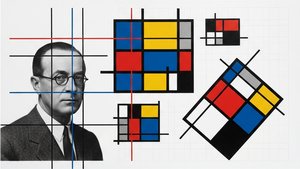
Theo van Doesburg e il Neoplasticismo: Pionieri dello Stijl e l'Evoluzione dell'Astrattismo
Esplora il rivoluzionario movimento De Stijl e l'influenza di Theo van Doesburg sul Neoplasticismo. Analisi approfondita, storia, principi e impatto sull'arte moderna.


