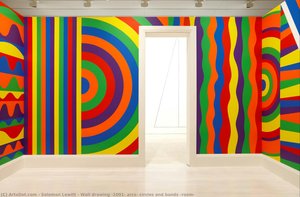
Anteprima in scala reale
 Condividi
 Condividi
 Dettagli
 Guida stampabile

 Scarica
 Articoli simili
 Radiografia
 Slideshow
 Statistiche
Vertical Lines, Not Touching


 Leggi tutto
L'opera d'arte visualizzata in questa pagina è protetta dalle leggi sul diritto d'autore, il che significa che non possiamo legalmente creare o vendere una riproduzione identica. Tale protezione è garantita da accordi internazionali quali la Convenzione di Berna e dalle leggi nazionali, incluse quelle stabilite da Legge sul copyright degli Stati Uniti - Titolo 17. Tutti i diritti riservati. Le immagini presenti su questo sito sono protette da copyright e non possono essere riprodotte o utilizzate senza l'autorizzazione scritta di WahooArt.com o dei rispettivi proprietari del copyright.
Questo metodo è pienamente conforme alle normative sul diritto d'autore poiché non prevede la copia o la duplicazione dell'opera protetta. Si tratta invece di una rielaborazione creativa: un nuovo dipinto che trae ispirazione dall'originale, senza tuttavia esserne identico.
Giclée / Stampe d'arte
Stampa giclée o su tela di qualità museale, con produzione rapida e diverse opzioni di finitura. ( Ordina la riproduzione dipinta a mano Passa all'immagine digitale)




P118B €10

P118H €10

P118W €10

P438Z €10

P508JH €12

P508YH €12

P805H €10

P805Z €10

P919BZ €10

P919G €10

P919XJ €10

P959ZH €10

P968JZ €12

W106C €8

W218G €10

W218JH €8

W218Y €10

W307PJ €10

W316G €10

W316PJ €8

W316Y €10

W398PJ €8

W4111J €10

W500HY €15

W500JH €15

W692G €12

W849H €8

W940BG €15

W953PJ €8




Scegli tra le nostre dimensioni predefinite, che rispettano le proporzioni originali dell'opera d'arte.

Inserisci la larghezza e l'altezza desiderate, per adattarle alla tua cornice o alla tua parete. Una stampa può essere solo ritagliata, mai resa più grande dell'immagine originale; pertanto, un formato con una forma differente comporterà la perdita di una parte dell'opera. Ti invieremo un mockup digitale da approvare prima di procedere con la stampa. L'immagine mostrata in questa pagina non rappresenta il ritaglio reale — solo il mockup lo mostra.
Consegna in tutto il mondo () in 2 settimane invece delle normali 4/5 settimane. (21 Ottobre)

Spedizione espressa gratuita in tutto il mondo

Tela in lino di alta qualità

Assicurazione completa sulla spedizione

Garanzia di rimborso dei dazi doganali

Garanzia di perfetta fedeltà cromatica

Politica di reso entro 100 giorni (solo per difetti di fabbricazione)

Garanzia di rimborso al 100%

Sconto per acquisti multipli
 L'opzione vetro è disponibile solo per dimensioni inferiori a 110 cm

Vertical Lines, Not Touching
Giclée / Stampe d'arte
Dimensioni della riproduzione
-


Prezzo totale
€ 70
Sol LeWitt’s “Vertical Lines, Not Touching” – A Study in Order and Minimalism
Solomon Lewitt's "Vertical Lines, Not Touching," created in 1970, isn’t merely a drawing; it’s an architectural meditation rendered in graphite on paper. This deceptively simple work embodies the core tenets of minimalism—a movement that sought to strip art down to its essential elements, prioritizing process and concept over ornamentation or representational imagery. The piece immediately commands attention not through vibrant color or dramatic form, but through a profound sense of order and contained energy. It’s an invitation to contemplate the beauty found within repetition and the quiet power of geometric precision.
The Geometry of Restraint
At first glance, “Vertical Lines, Not Touching” presents a starkly minimalist composition: a square defined by a grid of closely spaced vertical lines. The meticulous execution is key to its impact; each line is drawn with deliberate control, creating a surface that subtly suggests texture through the density of its markings. The choice of monochromatic gray reinforces this sense of austerity and focuses attention entirely on the structure itself. Lewitt’s approach was deeply rooted in mathematics and geometry – disciplines he studied extensively early in his career – reflecting a belief that art could be understood and appreciated through rational, logical systems. The title, “Vertical Lines, Not Touching,” isn't just descriptive; it’s a statement of principle, highlighting the fundamental constraint upon which the entire piece is built.
A Conceptual Foundation: Minimalism and Beyond
Created during a pivotal moment in art history – the late 1960s and early 70s – “Vertical Lines, Not Touching” aligns perfectly with the burgeoning minimalist movement. Artists like Donald Judd and Carl Andre were pushing against traditional notions of sculpture, favoring industrial materials and geometric forms. However, Lewitt’s approach differed subtly; he often employed a ‘wall drawing’ technique, creating works that could be executed by multiple assistants simultaneously, emphasizing the collaborative nature of art-making and blurring the lines between artist and participant. This concept – the idea that the process itself is as important as the finished product – became central to Lewitt's practice and profoundly influenced subsequent generations of conceptual artists.
Symbolism in Simplicity: Order, Repetition, and Contemplation
While seemingly devoid of overt symbolism, “Vertical Lines, Not Touching” invites a deeper interpretation. The strict grid evokes notions of order, control, and even confinement – perhaps reflecting the anxieties of a rapidly changing world. The repetition of the lines creates a hypnotic effect, drawing the viewer into a state of quiet contemplation. It’s a work that rewards patient observation, revealing subtle variations in tone and texture that suggest depth and complexity beneath its surface simplicity. The “not touching” aspect reinforces this sense of restraint, suggesting a deliberate avoidance of conflict or disruption – a powerful statement about harmony and balance.
A Legacy of Precision: Reproduction and Interior Design
Today, "Vertical Lines, Not Touching" remains a significant work in the canon of minimalist art. Its clean lines and understated elegance make it an ideal choice for contemporary interior design, adding a touch of sophisticated restraint to any space. High-quality reproductions capture the subtle nuances of Lewitt’s technique, allowing viewers to appreciate the meticulous detail that defines this iconic piece. When considering a reproduction, remember that the essence of the work lies not just in its visual appearance but also in the conceptual framework it represents – a testament to the power of simplicity and the enduring appeal of geometric abstraction.
Learn more about this piece at MoMA
Domande e risposte
A quale movimento artistico appartiene "Vertical Lines, Not Touching" di Sol Lewitt?
Il movimento associato a "Vertical Lines, Not Touching" di Sol Lewitt è Minimalist Sculpture. Questa classificazione colloca l'opera tra artisti e opere d'arte correlati.
In che modo "Vertical Lines, Not Touching" bilancia luci e ombre?
"Vertical Lines, Not Touching" ha una luminosità complessiva di brilliant, con una luminanza pari a Luminous.
Come può essere utilizzato "Vertical Lines, Not Touching" di Sol Lewitt nell'arredamento d'interni?
L'uso (Geometry) e lo spazio (Hotel Lobby) sono le due raccomandazioni indicate per "Vertical Lines, Not Touching" di Sol Lewitt.
Biografia dell'artista
L'Architetto delle Idee: La Vita e l'Eredità di Sol LeWitt
Nel vasto panorama del modernismo del XX secolo, poche figure proiettano un'ombra così lunga o intellettualmente profonda come Solomon LeWitt. Nato il 9 settembre 1928 a Hartford, nel Connecticut, da una famiglia di immigrati ebrei dalla Russia, il percorso di LeWitt fu definito dalla ricerca del pensiero puro rispetto alla mera esecuzione fisica. I suoi primi anni furono plasmati da una rigorosa curiosità analitica, un tratto coltivato durante gli studi presso l'Università di Syracuse tra il 1945 e il 1949. Questa base accademica in matematica e geometria sarebbe diventata in seguito il cuore pulsante del suo linguaggio artistico, permettendogli di spogliare l'arte tradizionale dai suoi eccessi decorativi per rivelare la bellezza scheletrica della logica e della struttura.
L'evoluzione di LeWitt come artista non fu una rottura improvvisa, ma una migrazione deliberata dal tangibile al concettuale. Sebbene le sue prime esplorazioni coinvolgessero la natura tattile della pittura e del disegno, si ritrovò presto sempre più attratto dall'idea> che sottende il segno, piuttosto che il segno stesso. Questo cambiamento segnò la nascita di un pioniere capace di colmare il divario tra Minimalismo e Arte Concettuale. Egli iniziò a vedere l'artista non come un artigiano vincolato dalla mano, ma come un architetto di istruzioni. Privilegiando il progetto mentale rispetto all'oggetto finito, LeWitt sfidò la stessa definizione di autorialità, suggerendo che una volta concepita un'idea, la sua manifestazione fisica sia solo una conseguenza secondaria.
La Rivoluzione del Wall Drawing
La fine degli anni '60 fu testimone di una delle trasformazioni più radicali nell'arte contemporanea con l'emergere degli iconici wall drawings di LeWitt. Rifiutando la permanenza e la preziosità della scultura tradizionale, egli introdusse le "strutture" — un termine che preferiva a "sculture" per enfatizzarne l'essenza matematica — e una serie di istruzioni che potevano essere eseguite da chiunque fosse addestrato a seguirle. Queste opere non erano semplici decorazioni, ma esperienze vissute, spesso composte da precisi schemi geometrici, archi e forme intrecciate che infondevano vita agli spazi architettonici che abitavano.
Contemplare un wall drawing di LeWitt significa vedere la logica trasformarsi in poesia. Che si trattasse della nuda e ritmica ripetizione presente in Black with White Lines, Vertical Not Touching o della vibrante ed esuberante energia di Wall Drawing #1091: arcs, circles and bands, la sua opera utilizzava il potere della linea per dominare lo spazio. Questi pezzi si basavano spesso su un sistema di istruzioni logiche, e spesso matematiche, che guidavano assistenti o installatori museali nella loro produzione. Questo metodo ha democratizzato l'atto della creazione, elevando simultaneamente l'importanza del concetto e garantendo che l'opera d'arte esistesse fondamentalmente come scintilla intellettuale prima ancora di toccare una parete.
Un'Impronta Indelebile sulla Modernità
Nel corso della sua prolifica carriera, che si è estesa per decenni includendo la maestria nell'incisione, nella fotografia e nell'installazione, LeWitt è rimasto costante nel suo impegno verso la chiarezza e la precisione. La sua capacità di trovare una bellezza profonda nelle forme più semplici — come la suggestiva Piramide bianca o i complessi e colorati ritmi dei suoi lavori murali a pastello — ha ridefinito i confini estetici della fine del XX secolo. Egli ha dimostrato che l'arte può essere spogliata dell'ego e dell'ornamento, pur mantenendo un'anima capace di risuonare profondamente con il desiderio umano di ordine e scoperta.
L'importanza storica di Sol LeWitt non può essere sopravvalutata. Egli ha fornito il vocabolario affinché generazioni di artisti potessero esplorare i confini tra pensiero e materia. La sua eredità vive in ogni museo e galleria dove la linea tra creatore ed esecutore si sfuma, e dove la forza di un'idea viene riconosciuta come il mezzo supremo. Guardando indietro alla sua vita, dai suoi inizi a Hartford ai suoi ultimi giorni a New York nel 2007, vediamo un uomo che non ha solo creato arte, ma che ci ha insegnato come vedere la profonda architettura del pensiero stesso.

Sol Lewitt
1928 - 2007 , Stati Uniti d'America
Informazioni rapide
- Artistic Movement Or Style: Minimalismo
- Artists Who Influenced This Artist: ['Frank Lloyd Wright']
- Date Of Birth: 9 settembre 1928
- Full Name: Solomon Lewitt
- Nationality: Americano
- Notable Artworks:
- Distorte Cubi
- Progetto Pubblico Kaldor 11
- Place Of Birth: Hartford, Stati Uniti d'America
Articoli correlati

L'Arte sulla Scrivania Esecutiva: Un Simbolo di Prestigio e Riconoscimento per i Leader d'Eccellenza
Trasforma il tuo ufficio con l'arte! Scopri come scegliere opere di prestigio per un ambiente che ispira successo e fiducia. Consulenza esperta e soluzioni personalizzate.
Fernand Léger: I 25 Capolavori che Hanno Definito l'Arte Moderna | OriginalUniqueArt
Esplora i 25 capolavori di Fernand Léger, pioniere del cubismo e del tubismo. Scopri la storia, le tecniche e l'impatto dell'arte moderna francese. Stampe d'arte e riproduzioni su OriginalUniqueArt.com.

Dalla parete al portafoglio: il ritorno sull'investimento del gifting artistico nelle relazioni aziendali e nell'equità del marchio
Scopri come trasformare il gifting aziendale in un investimento strategico con l'arte. Guide esperte su branding, ROI e collezioni d'arte corporate per relazioni durature e brand equity.
Minimalismo nell'Arte: 10 Capolavori per una Casa Elegante e Raffinata
Esplora 10 capolavori di arte minimalista, da Mondrian a Rothko. Scopri la storia, i colori e le tecniche che rendono queste opere iconiche. Trova stampe artistiche online e arredamento elegante su OriginalUniqueArt.com.

Simple Elegance: Transform Your New Home with the Timeless Beauty of Minimalist Art
Elevate your first home with stunning minimalist art from OriginalUniqueArt.com. From geometric abstracts to custom wedding portraits hand-painted on canvas, discover elegant decor designed to inspire. Transform your new space into a timeless sanctuary with our expert curation and bespoke beauty.