

 Anteprima in scala reale
 Condividi
 Condividi
 Dettagli
 Guida stampabile

 Scarica
 Articoli simili
 Radiografia
 Slideshow
 Statistiche
Landscape with Water Mill
 Acrylic On Canvas
- WallArt
- Romantic Landscape
 1803
1803 71.0 x 91.0 cm
 Manchester Art Gallery
 Leggi tutto
Giclée / Stampe d'arte
Stampa giclée o su tela di qualità museale, con produzione rapida e diverse opzioni di finitura. ( Ordina la riproduzione dipinta a mano Passa all'immagine digitale)




P118B $10

P118H $10

P118W $10

P438Z $10

P508JH $12

P508YH $12

P805H $10

P805Z $10

P919BZ $10

P919G $10

P919XJ $10

P959ZH $10

P968JZ $12

W106C $8

W218G $10

W218JH $8

W218Y $10

W307PJ $10

W316G $10

W316PJ $8

W316Y $10

W398PJ $8

W4111J $10

W500HY $15

W500JH $15

W692G $12

W849H $8

W940BG $15

W953PJ $8




Scegli tra le nostre dimensioni predefinite, che rispettano le proporzioni originali dell'opera d'arte.

È possibile inserire dimensioni personalizzate per adattare l'opera a una cornice o a uno spazio specifico. Se la dimensione selezionata non corrisponde alle proporzioni dell'immagine originale, procederemo al ritaglio dell'opera o all'estensione dell'immagine con un bordo specchiato o a tinta unita. Un mockup digitale ti verrà inviato per approvazione prima dell'inizio della produzione.
Si prega di notare che l'anteprima a schermo non riflette il ritaglio o l'estensione effettivi. Solo il mockup mostrerà accuratamente la composizione finale.
Sebbene siano disponibili dimensioni personalizzate, si raccomanda di selezionare una dimensione dall'elenco predefinito per preservare le proporzioni originali.
Consegna in tutto il mondo () in 2 settimane invece delle normali 4/5 settimane. (25 Settembre)

Spedizione espressa gratuita in tutto il mondo

Tela in lino di alta qualità

Assicurazione completa sulla spedizione

Garanzia di rimborso dei dazi doganali

Garanzia di perfetta fedeltà cromatica

Politica di reso entro 100 giorni (solo per difetti di fabbricazione)

Garanzia di rimborso al 100%

Sconto per acquisti multipli
 L'opzione vetro è disponibile solo per dimensioni inferiori a 110 cm

Landscape with Water Mill
Giclée / Stampe d'arte
Dimensioni della riproduzione
-


Prezzo totale
$ 80
A Serene Vision of Rural England: Augustus Wall Callcott’s ‘Landscape with Water Mill’
Augustus Wall Callcott's “Landscape with Water Mill,” painted in 1803, is more than just a picturesque depiction of the English countryside; it’s a carefully constructed evocation of Romantic ideals and a subtle meditation on humanity’s relationship to nature. Housed within the esteemed Manchester Art Gallery, this work offers a glimpse into a world where tranquility reigns supreme, yet hints at an underlying drama – a quiet storm brewing in the sky mirroring perhaps the complexities of human experience.
The scene unfolds with remarkable clarity and detail. A modest water mill, constructed from weathered stone and topped with a charming thatched roof, dominates the foreground. Its wooden wheel, perpetually turning, represents not just mechanical industry but also the relentless passage of time. The river flowing alongside is rendered with a delicate touch, reflecting the overcast sky above – a subtle indication of an impending change. The artist’s brushwork is loose and expressive, capturing the movement of water and foliage with a captivating sense of dynamism. Notice how Callcott utilizes varying shades of green to create depth and texture within the surrounding trees, suggesting a dense, vibrant woodland.
Romanticism and the Sublime
“Landscape with Water Mill” firmly resides within the Romantic tradition, a movement that prioritized emotion, imagination, and the beauty of nature over strict academic rules. Callcott’s work embodies this shift by emphasizing atmosphere and feeling rather than precise representation. The dramatic clouds in the sky are not merely decorative; they contribute to the painting's overall sense of drama and the sublime – that awe-inspiring experience when confronted with something vast and powerful, like a storm or a grand landscape.
The inclusion of figures—a solitary man standing by the riverbank and another seated in contemplation—adds an element of human scale to the scene. These individuals are not imposing rulers but rather humble observers, inviting us to share their moment of quiet reflection amidst the grandeur of nature. They serve as a reminder of our own smallness within the vastness of the world.
Technical Details and Artistic Influence
Callcott’s technique is characterized by his masterful use of light and shadow. He skillfully employs atmospheric perspective, creating a sense of distance by subtly diminishing the colors and details of objects in the background. The muted palette—dominated by earthy tones—contributes to the painting's overall mood of serenity and contemplation. It’s evident that Callcott was influenced by artists like Thomas Gainsborough and John Constable, both masters of capturing the beauty of the English countryside with a sensitive eye for detail and an appreciation for light.
The signature “A.W. Callcott” in the lower right corner confirms the artist's identity and adds to the painting’s historical significance. The image itself, likely reproduced from an original source, further emphasizes its status as a treasured work of art.
Symbolism and Emotional Resonance
Beyond its aesthetic qualities, “Landscape with Water Mill” carries symbolic weight. The water mill represents both progress and tradition – the harnessing of natural power for human benefit. The river symbolizes life’s flow, while the solitary figures suggest themes of introspection and connection to nature. The impending storm hints at uncertainty and change, reminding us that even in moments of tranquility, disruption is always possible.
Ultimately, this painting invites viewers to pause, reflect, and appreciate the simple beauty of the natural world. It’s a testament to Callcott's skill as an artist and his ability to capture not just a landscape but also the emotions it evokes – a serene vision of rural England that continues to resonate with audiences today.
Biografia dell'artista
Primi anni e formazione
Sir Augustus Wall Callcott, un rinomato pittore paesaggista inglese, nacque il 20 febbraio 1779 a Kensington Gravel Pits, un villaggio ai margini occidentali di Londra. La sua prima vita fu segnata da una passione per la musica, che lo portò a cantare nel coro dell'Abbazia di Westminster per diversi anni. Successivamente, divenne studente della Royal Academy, dove iniziò la sua carriera artistica come ritrattista sotto la guida di John Hoppner.Ascesa alla ribalta
La preferenza di Callcott per la pittura paesaggistica divenne presto evidente e, dopo il 1804, espose esclusivamente paesaggi. La sua abilità, l'elegante design e le affascinanti qualità tonali portarono a una costante crescita della sua reputazione. Nel 1806 fu eletto associato della Royal Academy e nel 1810 divenne accademico di merito.Opere notevoli ed esposizioni
Tra le opere più importanti di Callcott si annoverano:- L'ingresso al Pool of London (1816)
- La foce del Tyne (1818)
- Una calma piatta sul Medway (1820)
- Rochester (1824)
- Raffaello e la Fornarina (1837) – un raro esempio delle sue pitture figurative, che si possono trovare nel South Kensington Museum (collezione Sheepshanks), ora parte del V&A.
Eredità e vita successiva
Callcott ricevette il titolo di cavaliere nel 1837 all'ascesa al trono della regina Vittoria. Succedette a William Seguier come Custode dei quadri della Regina nel 1843. Callcott morì il 25 novembre 1844 e fu sepolto nel cimitero di Kensal Green. Visualizza altre opere di Sir Augustus Wall Callcott su OriginalUniqueArt.com: Esplora di più su Wikipedia:
Sir Augustus Wall Callcott
1779 - 1844 , Regno Unito
Informazioni rapide
- Data Di Nascita: 20 febbraio 1779
- Luogo Di Nascita: Kensington, Regno Unito
- Movimento Artistico: Romanticismo inglese
- Nazionalità: Britannico
- Nome Completo: Sir Augustus Wall Callcott
- Opere Notevoli:
- The Entrance to the Pool of London
- The Mouth of the Tyne
- A Dead Calm on the Medway
- Raffaelle and the Fornarina
Articoli correlati

Evocations of Place: A Historical Journey Through Landscape Art
Explore the rich history of landscape art with OriginalUniqueArt. Discover renowned artists, movements like Impressionism & Romanticism, and expert guidance for collecting timeless pieces. Find your perfect serene escape today!
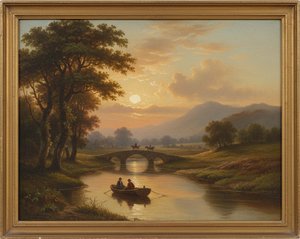
Sir Augustus Wall Callcott: Luce e Atmosfera nella Pittura Paesaggistica Inglese
Esplora la vita e le opere di Sir Augustus Wall Callcott, maestro della pittura paesaggistica inglese. Scopri l'influenza italiana sul suo stile romantico e le sue tecniche innovative per catturare luce e atmosfera.
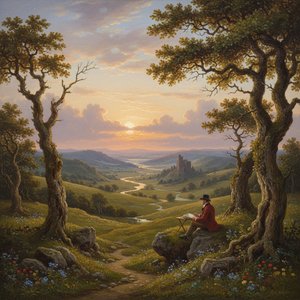
John Varley I: Intimate Observation & the British Romantic Landscape
Explore the serene landscapes of John Varley I, a key figure in British Romanticism. Discover his unique watercolour style, collaboration with William Blake & lasting artistic legacy. Learn about collecting Varley's work.

I 10 Capolavori del Paesaggio Romantico: Arte, Storia e Decorazioni di Lusso
Esplora i 10 capolavori del Paesaggio Romantico con OriginalUniqueArt.com! Caspar David Friedrich, Turner e altri maestri: storia, tecnica e colori che definiscono un'epoca. Trova riproduzioni d'arte di lusso per la tua casa. Scopri la collezione completa online!

John Constable: I 25 Capolavori che Celebrano la Bellezza della Campagna Inglese
Esplora i 25 capolavori di John Constable, il maestro del Romanticismo inglese. Paesaggi suggestivi, luce naturale e colori vibranti ti aspettano. Acquista riproduzioni d'arte di alta qualità su OriginalUniqueArt.com e porta la bellezza della campagna inglese nella tua casa.

