Anteprima in scala reale
 Condividi
 Condividi
 Dettagli
 Guida stampabile

 Scarica
 Articoli simili
 Radiografia
 Slideshow
 Statistiche
Gaucher de Châtillon, Connétable
 Oil On Canvas
- WallArt
- Baroque Painting
 1632
1632 218.0 x 137.0 cm
 Musée du Louvre
 Leggi tutto
Riproduzione a olio fatta a mano
Olio su tela dipinto a mano nelle tue dimensioni e con la tua cornice, realizzato su ordinazione dai nostri artisti. ( Passa alle stampe Passa all'immagine digitale)




P118B €10

P118H €10

P118W €10

P438Z €10

P508JH €12

P508YH €12

P805H €10

P805Z €10

P919BZ €10

P919G €10

P919XJ €10

P959ZH €10

P968JZ €12

W106C €8

W218G €10

W218JH €8

W218Y €10

W307PJ €10

W316G €10

W316PJ €8

W316Y €10

W398PJ €8

W4111J €10

W500HY €15

W500JH €15

W692G €12

W849H €8

W940BG €15

W953PJ €8




Scegli tra le nostre dimensioni predefinite, che rispettano le proporzioni originali dell'opera d'arte.

Inserisci la larghezza e l'altezza di cui hai bisogno, per adattarle alla tua cornice o alla tua parete. Trattandosi di un'opera dipinta a mano, in caso di dimensioni con una forma differente, l'artista può dipingere un po' più oltre i bordi dell'immagine o ritagliare leggermente — la scelta spetta a te. Ti invieremo un mockup digitale da approvare prima che la pittura abbia inizio. L'immagine mostrata in questa pagina non rappresenta il risultato reale — solo il mockup lo fa.
Dopo l'ordine, il team di OriginalUniqueArt.com contatterà il cliente via e-mail per ricevere le istruzioni e fornirà un'anteprima del mockup
Consegna in tutto il mondo () in 3/4 settimane anziché nelle normali 5 settimane. (21 Ottobre). Nessun compromesso sulla qualità.

Spedizione espressa gratuita in tutto il mondo

Tela in lino di alta qualità

Assicurazione completa sulla spedizione

Garanzia di rimborso dei dazi doganali

Garanzia di perfetta fedeltà cromatica

Politica di reso entro 100 giorni (solo per difetti di fabbricazione)

Garanzia di rimborso al 100%

Sconto per acquisti multipli
 L'opzione vetro è disponibile solo per dimensioni inferiori a 110 cm

Gaucher de Châtillon, Connétable
Tecnica di riproduzione
Dimensioni della riproduzione
-


Prezzo totale
€ 262
A Noble Portrait in Baroque Grace: Simon Vouet’s Gaucher de Châtillon
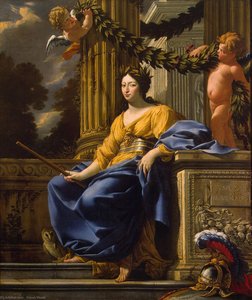
Simon Vouet's "Gaucher de Châtillon, Connétable" – painted in 1632 – is more than just a portrait; it’s a meticulously crafted window into the heart of 17th-century French nobility and the burgeoning Baroque artistic movement. The painting depicts Gaucher V de Châtillon, a pivotal figure in French history as Constable of Champagne and later Constable of France, rendered with an arresting blend of realism and idealized elegance. Vouet, a key figure in transitioning French art from Mannerism to the dramatic flair of the Baroque, masterfully captures not just the subject’s likeness but also his status, bearing, and a subtle air of contemplative dignity.
The composition itself is carefully orchestrated. Gaucher dominates the frame, positioned slightly off-center, lending him an approachable yet undeniably regal presence. His gaze, directed towards the viewer with a quiet intensity, invites engagement. The rich fabrics – the deep blue doublet and flowing orange robe – are rendered with astonishing detail, showcasing Vouet’s skill in capturing texture and light. Notice how the folds of the garments seem to ripple and move, creating a dynamic sense of volume that elevates the portrait beyond a static representation.
The Baroque Palette and Painterly Technique
Vouet's mastery lies not only in his ability to depict form but also in his innovative use of color and technique. He moved away from the flat, stylized approaches of earlier Renaissance portraiture, embracing a more atmospheric and luminous style influenced by his time spent in Italy. The painting’s palette is dominated by earthy tones – ochres, browns, and deep reds – creating a sense of warmth and gravitas. However, these are punctuated with vibrant blues and subtle greens, particularly in the landscape backdrop, adding depth and visual interest.
Vouet employed a technique known as “alla prima,” meaning he painted directly onto the canvas without extensive underdrawing or layering. This resulted in a remarkably smooth surface and a sense of immediacy. The brushstrokes are visible yet controlled, contributing to the painting’s overall richness and texture. He skillfully used light and shadow – *chiaroscuro* – to sculpt Gaucher's features and create a three-dimensional effect, further enhancing his presence within the scene.
Historical Context: A Nobleman in Turbulent Times
To fully appreciate “Gaucher de Châtillon,” it’s essential to understand its historical context. The painting was created during a period of significant political and social upheaval in France – the reign of Louis XIII and the rise of Cardinal Richelieu, who commissioned many portraits for his collection. Gaucher himself played a crucial role in French politics, serving as Constable during a time of war and instability. His position demanded both military prowess and diplomatic skill.
The inclusion of a landscape – rolling hills under a cloudy sky – subtly reinforces this historical setting. It’s not merely decorative; it provides a sense of place and suggests the challenges faced by Gaucher in his role as a protector of the realm. The painting, therefore, becomes a visual testament to both an individual's life and the broader currents of French history.
Symbolism and Emotional Resonance
Beyond its historical significance, “Gaucher de Châtillon” is rich in symbolic meaning. The noble attire signifies his status and authority, while the contemplative expression suggests a man burdened by responsibility yet possessing inner strength. The composition itself – with Gaucher centrally positioned – conveys a sense of dignity and importance.
Ultimately, Vouet’s portrait transcends mere likeness; it captures something deeper—the essence of a nobleman navigating a complex world. It's a powerful image that speaks to themes of leadership, duty, and the enduring legacy of a remarkable figure in French history. Reproductions of this masterpiece offer a captivating glimpse into a bygone era, inviting viewers to contemplate the artistry and historical significance of this exceptional work.
Domande e risposte
"Gaucher de Châtillon, Connétable" di Simone Vouet è tra le opere più ricercate del Baroque Painting?
All'interno del movimento Baroque Painting, "Gaucher de Châtillon, Connétable" ha un livello di popolarità Recognized.
Qual è l'identità cromatica di "Gaucher de Châtillon, Connétable" di Simone Vouet?
"Gaucher de Châtillon, Connétable" di Simone Vouet utilizza una tavolozza Earthy, con Gray (#826c5b) come colore dominante.
Esistono opere simili a "Gaucher de Châtillon, Connétable"?
La pagina Opere simili di "Gaucher de Châtillon, Connétable" di Simone Vouet presenta opere correlate.
Biografia dell'artista
Simon Vouet: Un Ponte tra l'Arte Italiana e Francese
- Nato: 9 gennaio 1590, Parigi, Francia
- Morto: 30 giugno 1649, Parigi, Francia
Simon Vouet fu una figura fondamentale nella transizione della pittura francese dal Manierismo allo stile Barocco. Nato in una famiglia di artisti – suo padre Laurent era un pittore e suo fratello Aubin si dedicò anch'egli all’arte – Vouet ricevette una formazione precoce che pose le basi per il suo futuro successo. Suo nipote, Ludovico Dorigny, avrebbe continuato l'eredità artistica della famiglia.
Primi Anni e Influenze Italiane (1608-1627)
- Ritrattistica Iniziale: Vouet iniziò la sua carriera come ritrattista, dimostrando un talento precoce.
- Viaggio in Inghilterra (1608): All'età di soli 14 anni, viaggiò in Inghilterra per dipingere un ritratto su commissione, mostrando così la sua nascente reputazione.
- Impero Ottomano e Venezia: Nel 1611, Vouet si unì alla scorta del barone de Sancy, ambasciatore francese nell'Impero Ottomano, nuovamente per lavori di ritrattistica. Questo viaggio lo portò attraverso Costantinopoli e poi a Venezia nel 1612.
- Roma (1614-1627): Il suo periodo a Roma si rivelò trasformativo. Vi rimase per tredici anni, immergendosi nella vivace scena artistica del nascente periodo Barocco.
Durante il suo soggiorno italiano, Vouet assorbì una vasta gamma di influenze. Studiò le tecniche di illuminazione drammatica pioniere da Caravaggio, abbracciò elementi del Manierismo italiano e analizzò meticolosamente le palette cromatiche e la tecnica dello sotto in su (prospettiva accorciata) impiegata da Paolo Veronese. Si ispirò anche alle opere di Carracci, Guercino, Lanfranco e Guido Reni, sintetizzando questi diversi stili in una visione artistica unica.
Sviluppo dello Stile Distintivo di Vouet
- Elezione all'Accademia di San Luca (1624): Il suo successo a Roma culminò nella sua elezione a presidente della prestigiosa Accademia di San Luca, una testimonianza della sua abilità e del riconoscimento ottenuto nel mondo dell’arte italiana.
- Sintesi delle Influenze: Lo stile di Vouet fu caratterizzato dalla sua capacità di assorbire e distillare varie influenze artistiche. Non si limitò a copiare; integrò questi elementi in un'estetica Barocca distintamente italianizzante e coesa.
- Introduzione del Barocco in Francia: Al suo ritorno in Francia nel 1627, Vouet svolse un ruolo cruciale nell’introdurre lo stile Barocco italiano alla pittura francese, influenzando significativamente il panorama artistico del paese.
Realizzazioni Importanti e Eredità
- Premier Peintre du Roi: Vouet fu nominato Premier peintre du Roi (Primo Pittore del Re) – una posizione di notevole prestigio e influenza.
- Laboratorio Produttivo: Mantené un laboratorio ampio e attivo, formando numerosi artisti che avrebbero plasmato la generazione successiva di pittori francesi.
- Discepoli Notabili: Tra i suoi discepoli più influenti figurarono Charles Le Brun (che in seguito organizzò tutta la pittura decorativa a Versailles), Valentin de Boulogne, Charles Alphonse du Fresnoy, Pierre Mignard, Eustache Le Sueur e Claude Mellan.
- Influenza sull'Arte Francese: L’impatto di Vouet si estese oltre le sue opere; i suoi studenti diffusero il suo stile e le sue tecniche in tutta la Francia, stabilendo una scuola distintamente Barocca della pittura. La sua influenza è particolarmente evidente nei grandiosi schemi decorativi commissionati da Luigi XIV.
Significato Storico
L'eredità di Simon Vouet si fonda sul suo ruolo fondamentale come ponte tra l’arte italiana e quella francese. Importò con successo il dinamismo e la grandiosità del Barocco italiano, trasformandolo in uno stile che risuonava con i gusti della corte e dell'aristocrazia francese. La sua influenza è innegabile nello sviluppo della pittura francese durante il XVII secolo, e i suoi contributi continuano ad essere riconosciuti dagli storici dell’arte oggi.

Simone Vouet
1590 - 1649 , Francia
Informazioni rapide
- Artistic Movement Or Style: Barocco
- Artists Or Movements Influenced By This Artist:
- Charles Le Brun
- Valentin de Boulogne
- Pittura Barocca Francese
- Artists Who Influenced This Artist:
- Caravaggio
- Paolo Veronese
- Carracci
- Guercino
- Lanfranco
- Guido Reni
- Date Of Birth: 9 gennaio 1590
- Date Of Death: 30 giugno 1649
- Full Name: Simon Vouet
- Nationality: Francese
- Notable Artworks:
- Gaucher de Châtillon
- La Ricchezza
- Venere e Adone
- L'Apothéose di San Luigi
- Place Of Birth: Parigi, Francia
Articoli correlati

Il Dramma Barocco: Portare Splendore ed Emozione negli Interni Contemporanei
Scopri come portare il dramma e lo splendore dell'arte barocca nei tuoi interni con . Riproduzioni di alta qualità, consulenza d'arte personalizzata e ispirazione per uno stile unico.

I 10 Capolavori Barocchi che Hanno Definito un'Epoca | Arte e Decorazioni di Lusso
Esplora i 10 capolavori barocchi di Caravaggio, Bernini e Rembrandt che hanno rivoluzionato l'arte. Scopri storie, tecniche e colori iconici. Trova riproduzioni d'arte di alta qualità per la tua casa su !

Goya: I 25 Capolavori Immortali dell'Anima Spagnola | OriginalUniqueArt
Esplora i 25 capolavori di Francisco Goya, il genio spagnolo tra Romanticismo e Realismo. Ritratti iconici, 'Los Caprichos' e le toccanti 'Disastri della Guerra'. Trova stampe su tela e riproduzioni artistiche di alta qualità per la tua casa su OriginalUniqueArt.com.

Riguardo a noi
Scopri la nostra storia! Portiamo l'arte di livello mondiale nella tua vita grazie a una selezione esperta, creazioni personalizzate e anteprime gratuite. Approvato da privati e aziende dal 2000.
Simon Vouet: A Baroque Master's Journey from Italian Influence to French Classicism
Explore the life & art of Simon Vouet, a pivotal French Baroque painter who introduced Italian styles to France. Discover his masterpieces and lasting influence on 17th-century art.