

 Anteprima in scala reale
 Invia
Invia Condividi
 Dettagli opera

 Scarica immagine
 Simili
 Radiografia
 Slideshow
The Magic Crystal (Study: Male Figure)
 Oil On Canvas
- WallArt
- Baroque
 1878
1878- 19th Century
 32.0 x 18.0 cm
 Manchester Art Gallery
 Espandi i dettagli
Giclée / Stampe d'arte
Stampa giclée o su tela di qualità museale, con produzione rapida e diverse opzioni di finitura. ( Acquista il dipinto realizzato a mano Acquista immagine)




P118B $10

P118H $10

P118W $10

P438Z $10

P508JH $12

P508YH $12

P805H $10

P805Z $10

P919BZ $10

P919G $10

P919XJ $10

P959ZH $10

P968JZ $12

W106C $8

W218G $10

W218JH $8

W218Y $10

W307PJ $10

W316G $10

W316PJ $8

W316Y $10

W398PJ $8

W4111J $10

W500HY $15

W500JH $15

W692G $12

W849H $8

W940BG $15

W953PJ $8




Scegli tra le nostre dimensioni predefinite, che rispettano le proporzioni originali dell'opera d'arte.

È possibile inserire dimensioni personalizzate per adattare l'opera a una cornice o a uno spazio specifico. Se la dimensione selezionata non corrisponde alle proporzioni dell'immagine originale, procederemo al ritaglio dell'opera o all'estensione dell'immagine con un bordo specchiato o a tinta unita. Un mockup digitale ti verrà inviato per approvazione prima dell'inizio della produzione.
Si prega di notare che l'anteprima a schermo non riflette il ritaglio o l'estensione effettivi. Solo il mockup mostrerà accuratamente la composizione finale.
Sebbene siano disponibili dimensioni personalizzate, si raccomanda di selezionare una dimensione dall'elenco predefinito per preservare le proporzioni originali.
Consegna in tutto il mondo () in 2 settimane invece delle normali 4/5 settimane. (26 Agosto)

Spedizione espressa gratuita in tutto il mondo

Tela in lino di alta qualità

Assicurazione completa sulla spedizione

Garanzia di rimborso dei dazi doganali

Garanzia di fedeltà cromatica

Politica di reso entro 60 giorni (solo per difetti di fabbricazione)

Garanzia di rimborso al 100%

Offerta per acquisti multipli
 L'opzione vetro è disponibile solo per dimensioni inferiori a 110 cm

The Magic Crystal (Study: Male Figure)
Giclée / Stampe d'arte
Dimensioni riproduzione
-


Prezzo totale calcolato
$ 80
Descrizione del pezzo
The Magic Crystal (Study: Male Figure) – A Victorian Echo of Baroque Drama
Simeon Solomon’s “The Magic Crystal” stands as a haunting testament to the Pre-Raphaelite movement's fascination with biblical narratives and psychological exploration, achieved through masterful oil painting technique and imbued with profound symbolic resonance. Completed in 1878, this artwork transcends mere visual representation; it delves into themes of suffering, contemplation, and spiritual yearning—a characteristic preoccupation of Victorian artists grappling with anxieties surrounding faith and morality.- Subject Matter: The piece depicts a nude male figure – ostensibly an angel or saint – positioned against a dark, textured surface reminiscent of weathered stone or ancient wood. Beside him rests a small bowl and a crimson object—likely representing blood—underscoring the imagery’s solemnity and hinting at sacrifice. Above all, however, is a subtle depiction of a starry night sky, adding an element of ethereal beauty to the scene’s melancholic core.
- Style: Solomon's work firmly anchors itself within Baroque painting conventions. The dramatic chiaroscuro—the stark contrast between light and shadow—dominates the composition, channeling the theatrical grandeur favored by artists like Caravaggio. This stylistic choice isn’t merely decorative; it serves to heighten emotional intensity and draw the viewer’s gaze directly to the central figure’s torso, emphasizing his vulnerability and inner turmoil.
- Technique: Solomon employed impasto—thickly applied paint—to create a tactile surface that captures the texture of the stone-like background and contributes significantly to the artwork's overall mood. The artist meticulously layered pigments, achieving remarkable depth and volume through painstaking brushwork. This technique lends itself beautifully to capturing the subtle nuances of emotion and conveying a sense of palpable stillness.
- Historical Context: Created during Victorian England—a period marked by religious revivalism and societal anxieties regarding sexuality—the painting reflects broader cultural concerns about morality and spiritual redemption. Solomon’s exploration of biblical themes aligns with the Pre-Raphaelites' desire to recapture the expressive fervor of Renaissance art, rejecting academic conventions in favor of emotionally charged imagery.
- Symbolism: The bowl symbolizes sorrow or offering – perhaps representing a plea for divine compassion—while the crimson hue evokes pain and loss. Furthermore, the starry sky serves as a visual metaphor for transcendence and spiritual aspiration, mirroring the Pre-Raphaelites’ belief in the power of imagination to illuminate the mysteries of faith.
- Explore Simeon Solomon’s ‘The Magic Crystal,’ a haunting 1878 oil painting of a nude male figure in Baroque style. Discover its symbolism & rich textures – a Victorian masterpiece.
- The Magic Crystal (Study: Male Figure) | Art UK
- The Magic Crystal (Study: Male Figure), 1878 - Simeon Solomon
- Simeon Solomon
- Manchester Art Gallery Website: https://www.manchesterartgallery.org/
- Victoria and Albert Museum Collection: https://www.vam.ac.uk/
Biografia dell'artista
A Life Shrouded in Beauty and Scandal: The World of Simeon Solomon
Simeon Solomon, a name whispered with both reverence and regret within the annals of Victorian art, occupies a unique and often tragic position amongst the Pre-Raphaelites. Born in London on 9 October 1840, the last of eight children in an artistically-inclined middle class Jewish family – the eighth and final child of merchant Meyer Solomon and artist Kate Levy – his life was one of remarkable artistic promise tragically curtailed by societal prejudice and personal demons. He wasn't merely a painter; he was a cultural mirror reflecting the complexities of Victorian England, grappling with faith, desire, and identity in a rapidly changing world.Early Influences and Artistic Development
Solomon’s artistic education began within his own family circle. His mother possessed an amateur talent for miniature painting, while his elder siblings, Abraham and Rebecca Solomon, were both established artists exhibiting at the Royal Academy. It was from them, particularly his brother Abraham, that Simeon received his initial training, learning the fundamentals of draftsmanship and composition. He formally studied at Carey’s Art Academy in 1852 before entering the prestigious Royal Academy Schools in 1856. This period proved pivotal, as it introduced him to the burgeoning Pre-Raphaelite Brotherhood through Dante Gabriel Rossetti. The encounter with Rossetti, along with friendships forged with Edward Burne-Jones and Algernon Charles Swinburne, profoundly shaped Solomon’s artistic sensibilities. He embraced their commitment to detailed realism, vibrant color palettes, and a fascination with literature, mythology, and religious narratives. Early works like *Isaac Offered* (1858) demonstrate this initial influence, showcasing a meticulous attention to detail and a dramatic narrative style characteristic of the Pre-Raphaelites. However, Solomon quickly began to forge his own path, infusing his paintings with a distinctly personal vision.Themes of Faith, Desire, and Identity
Solomon’s artistic output was remarkably diverse, encompassing biblical scenes, classical mythology, and genre paintings depicting Jewish life and rituals. He found particular inspiration in the Hebrew Bible, creating works such as *Moses* (1860) and *Shadrach, Meshach, and Abednego* (1863), which resonated with his own cultural heritage. Yet, it was his exploration of classical themes that truly set him apart. Paintings like *In the Temple of Venus* (1863) and *Bacchus* (1867) reveal a fascination with sensuality and beauty, often imbued with an undercurrent of melancholy and longing. These works also hint at Solomon’s growing interest in same-sex desire, a theme he would explore more explicitly – and dangerously – throughout his career. His association with Algernon Charles Swinburne, whose poetry celebrated unconventional love and challenged Victorian morality, undoubtedly fueled this exploration. Solomon's art became a subtle yet powerful commentary on the constraints of Victorian society, hinting at hidden passions and unspoken desires. He was one of the first artists to openly depict homoerotic themes, albeit often veiled in classical allegory or biblical narrative.Scandal, Decline, and Lasting Legacy
The year 1873 marked a devastating turning point in Solomon’s life. His arrest in a public urinal for attempting to commit sodomy brought swift and brutal consequences. Though he received a relatively light fine, the scandal shattered his reputation and effectively ended his career as a publicly exhibited artist. A subsequent arrest in Paris in 1874 led to a three-month prison sentence. Shunned by much of the art establishment, Solomon descended into alcoholism and poverty. However, despite his ostracization, he continued to create art, albeit often under difficult circumstances. He found support from a small circle of admirers – including Oscar Wilde, John Addington Symonds, and Walter Pater – who recognized his talent and collected his works in private. He spent time in the St Giles Workhouse, continuing to paint even amidst hardship. His death in 1905, resulting from complications related to alcoholism, went largely unnoticed by the wider public. In recent decades, however, there has been a growing reassessment of Solomon’s work and life. Retrospectives at the Birmingham Museum & Art Gallery (2005-6) and the Ben Uri Gallery in London (2006) have brought his art to a new audience, recognizing him as a significant figure within the Pre-Raphaelite movement and a pioneering artist who dared to challenge Victorian conventions. His paintings now reside in prominent collections such as the Victoria and Albert Museum, Wightwick Manor, and Leighton House, ensuring that his unique vision continues to inspire and provoke thought for generations to come. His story serves as a poignant reminder of the fragility of artistic freedom and the enduring power of art to transcend societal boundaries.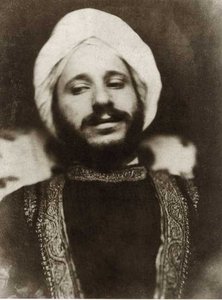
Simeone Solomon
1840 - 1905 , Regno Unito
Dati rapidi
- Artistic Movement Or Style: Pre-Raphaelita
- Artists Who Influenced This Artist:
- Rossetti
- Burne-Jones
- Date Of Birth: 1840
- Date Of Death: 1905
- Full Name: Simeon Solomon
- Nationality: Britannico
- Notable Artworks:
- Babilonia è...
- Sofia e Agatodemo
- Rut e Naomi
- Sdrach, Meshach...
- Nel Tempio di Venere
- Place Of Birth: Londra, Regno Unito
Articoli correlati

Il Dramma Barocco: Portare Splendore ed Emozione negli Interni Contemporanei
Scopri come portare il dramma e lo splendore dell'arte barocca nei tuoi interni con . Riproduzioni di alta qualità, consulenza d'arte personalizzata e ispirazione per uno stile unico.

The Enduring Power of Painting: A Historical & Contemporary Exploration of Form and Emotion
Explore the rich history & enduring techniques of oil painting with OriginalUniqueArt. Discover masterpieces, learn about art collecting, and find authentic handmade reproductions crafted by skilled artists.

The Enduring Legacy of Oil on Canvas: Technique, History & Aesthetic Impact
Explore the rich history & techniques of oil painting – from Renaissance masters to Impressionism. Discover pigments, layering methods, and why this timeless medium endures. Expert insights for artists & art enthusiasts.

The Dramatic Flourish: Exploring the Baroque Movement's Enduring Legacy in Art History
Explore the dramatic world of Baroque art! Discover iconic artists like Caravaggio & Rubens, defining techniques, and its lasting impact on art history. Expert insights for collectors & enthusiasts at OriginalUniqueArt.

I 10 Capolavori Barocchi che Hanno Definito un'Epoca | Arte e Decorazioni di Lusso
Esplora i 10 capolavori barocchi di Caravaggio, Bernini e Rembrandt che hanno rivoluzionato l'arte. Scopri storie, tecniche e colori iconici. Trova riproduzioni d'arte di alta qualità per la tua casa su !

