

 Anteprima in scala reale
 Condividi
 Condividi
 Dettagli
 Guida
Guida

 Scarica
 Articoli simili
 Radiografia
 Slideshow
 Statistiche
Terra
 Pre-Raphaelite
 1895
1895- 19th Century
 44.0 x 24.0 cm
 Galleria e Museo Ben Uri
 Leggi tutto
Acquista un'immagine digitale ad alta risoluzione e ottimizzata, di qualità nettamente superiore all'anteprima online.
Ogni file è meticolosamente preparato dai nostri specialisti interni attraverso l'uso di strumenti avanzati e un sapiente ritocco manuale. Garantiamo che ogni immagine presenti una chiarezza eccezionale, una precisione cromatica impeccabile e dettagli raffinati.
Il file finale viene consegnato via e-mail entro 72 ore, ottimizzato per un uso immediato in contesti professionali, editoriali e di stampa. Si tratta della stessa qualità affidata ai più prestigiosi studi di design, editori e gallerie d'arte.
Immagine Digitale
Scarica un file ad alta risoluzione per uso personale, per la stampa e per progetti creativi. ( Passa alle stampe Ordina la riproduzione dipinta a mano)
Incluso in ogni acquisto di immagini digitali
Consegna digitale professionale e garantita
Quando scegli OriginalUniqueArt.com, non riceverai solo un'immagine: riceverai un'opera d'arte digitale professionalmente ottimizzata, realizzata con la massima precisione e accompagnata da una garanzia di soddisfazione. Ecco tutto ciò che include il tuo ordine, automaticamente:

Consegna rapida via email
Riceverai il file dell'immagine digitale ad alta risoluzione via email entro 72 ore dall'ordine, pronto per un uso immediato.

File digitale potenziato dall'IA
La tua opera d'arte viene ottimizzata professionalmente attraverso l'uso di strumenti avanzati di intelligenza artificiale e una revisione manuale, garantendo il massimo livello di dettaglio, nitidezza e accuratezza cromatica.

Riconsegna gratuita a vita
Hai eliminato o perso accidentalmente il tuo file? Non preoccuparti: te lo invieremo di nuovo in qualsiasi momento, gratuitamente.

Nessun costo di importazione, mai
Goditi la tua opera d'arte istantaneamente senza costi doganali, dazi o spese di spedizione: i download digitali sono sempre esenti da tasse.

Garanzia di fedeltà cromatica
Garantiamo che la tua immagine digitale rifletta i colori originali con la massima fedeltà, grazie all'uso di strumenti professionali e a una gestione accurata del colore.

Garanzia soddisfatti o rimborsati 100 giorni
Se non sei soddisfatto della tua immagine digitale, la revisioneremo o ti rimborseremo il 100% entro 100 giorni, senza domande.

Garanzia di rimborso al 100%
Non sei soddisfatto? Ricevi un rimborso completo entro 100 giorni dal ricevimento del tuo file digitale, senza dover fornire spiegazioni.

Sconti per ordini multipli
Acquista 3 immagini, risparmia il 10% - Acquista 5, risparmia il 15% - Acquista 10+, risparmia il 20%. Ideale per progetti creativi, gallerie e agenzie.
A Vision of Melancholy: The Ethereal Gaze of Simeon Solomon
In the delicate, haunting strokes of Terra, created in 1895, we encounter one of the most poignant expressions of late Victorian sensibility. The painting presents a close-up study of a woman’s face, her vibrant red hair serving as a fiery contrast to the soft, ethereal tones that define the composition. As she gazes away from the viewer, lost in a profound and silent contemplation, the observer is drawn into her internal world—a realm of quiet longing and introspective sadness. This piece is not merely a portrait; it is an invitation to witness a moment of pure, unadulterated emotion, captured through the masterful lens of Simeon Solomon.
The technique employed in Terra reflects the artist's unique position within the Pre-Raphaelite movement. Eschewing the heavy, hyper-realistic textures often associated with his contemporaries, Solomon utilizes a palette dominated by warm oranges and luminous whites. This choice of color creates a vintage, almost dreamlike atmosphere that softens the edges of reality. The brushwork is fluid and evocative, allowing light to dance across the subject's features, lending her skin a porcelain-like quality while imbuing her hair with a sense of organic vitality. For the collector or interior designer, this soft-focus aesthetic offers a sophisticated way to introduce warmth and a sense of historical depth into a modern space.
Beyond its visual beauty, Terra carries the weight of Solomon’s complex biography and the symbolic language of his era. As an artist who navigated the fringes of Victorian society, Solomon often infused his subjects with themes of identity, desire, and spiritual searching. The title itself, suggesting earth or groundedness, stands in beautiful tension with the subject's detached, celestial gaze. There is a profound sense of nostalgia embedded in the work—a longing for a lost innocence or a connection to a classical past. This emotional resonance makes the painting an extraordinary centerpiece for those seeking art that speaks to the soul and provokes deep conversation.
For those looking to adorn a curated collection or a refined living space, a high-quality reproduction of Terra serves as more than just decoration; it acts as a window into the late 19th century. Its compact dimensions of 44 x 24 cm make it an ideal choice for intimate gallery walls or as a focal point in a study. Whether paired with classical motifs or contemporary minimalism, the painting’s ability to evoke both warmth and melancholy ensures it remains a timeless addition to any sophisticated interior design scheme.
Biografia dell'artista
A Life Shrouded in Beauty and Scandal: The World of Simeon Solomon
Simeon Solomon, a name whispered with both reverence and regret within the annals of Victorian art, occupies a unique and often tragic position amongst the Pre-Raphaelites. Born in London on 9 October 1840, the last of eight children in an artistically-inclined middle class Jewish family – the eighth and final child of merchant Meyer Solomon and artist Kate Levy – his life was one of remarkable artistic promise tragically curtailed by societal prejudice and personal demons. He wasn't merely a painter; he was a cultural mirror reflecting the complexities of Victorian England, grappling with faith, desire, and identity in a rapidly changing world.Early Influences and Artistic Development
Solomon’s artistic education began within his own family circle. His mother possessed an amateur talent for miniature painting, while his elder siblings, Abraham and Rebecca Solomon, were both established artists exhibiting at the Royal Academy. It was from them, particularly his brother Abraham, that Simeon received his initial training, learning the fundamentals of draftsmanship and composition. He formally studied at Carey’s Art Academy in 1852 before entering the prestigious Royal Academy Schools in 1856. This period proved pivotal, as it introduced him to the burgeoning Pre-Raphaelite Brotherhood through Dante Gabriel Rossetti. The encounter with Rossetti, along with friendships forged with Edward Burne-Jones and Algernon Charles Swinburne, profoundly shaped Solomon’s artistic sensibilities. He embraced their commitment to detailed realism, vibrant color palettes, and a fascination with literature, mythology, and religious narratives. Early works like *Isaac Offered* (1858) demonstrate this initial influence, showcasing a meticulous attention to detail and a dramatic narrative style characteristic of the Pre-Raphaelites. However, Solomon quickly began to forge his own path, infusing his paintings with a distinctly personal vision.Themes of Faith, Desire, and Identity
Solomon’s artistic output was remarkably diverse, encompassing biblical scenes, classical mythology, and genre paintings depicting Jewish life and rituals. He found particular inspiration in the Hebrew Bible, creating works such as *Moses* (1860) and *Shadrach, Meshach, and Abednego* (1863), which resonated with his own cultural heritage. Yet, it was his exploration of classical themes that truly set him apart. Paintings like *In the Temple of Venus* (1863) and *Bacchus* (1867) reveal a fascination with sensuality and beauty, often imbued with an undercurrent of melancholy and longing. These works also hint at Solomon’s growing interest in same-sex desire, a theme he would explore more explicitly – and dangerously – throughout his career. His association with Algernon Charles Swinburne, whose poetry celebrated unconventional love and challenged Victorian morality, undoubtedly fueled this exploration. Solomon's art became a subtle yet powerful commentary on the constraints of Victorian society, hinting at hidden passions and unspoken desires. He was one of the first artists to openly depict homoerotic themes, albeit often veiled in classical allegory or biblical narrative.Scandal, Decline, and Lasting Legacy
The year 1873 marked a devastating turning point in Solomon’s life. His arrest in a public urinal for attempting to commit sodomy brought swift and brutal consequences. Though he received a relatively light fine, the scandal shattered his reputation and effectively ended his career as a publicly exhibited artist. A subsequent arrest in Paris in 1874 led to a three-month prison sentence. Shunned by much of the art establishment, Solomon descended into alcoholism and poverty. However, despite his ostracization, he continued to create art, albeit often under difficult circumstances. He found support from a small circle of admirers – including Oscar Wilde, John Addington Symonds, and Walter Pater – who recognized his talent and collected his works in private. He spent time in the St Giles Workhouse, continuing to paint even amidst hardship. His death in 1905, resulting from complications related to alcoholism, went largely unnoticed by the wider public. In recent decades, however, there has been a growing reassessment of Solomon’s work and life. Retrospectives at the Birmingham Museum & Art Gallery (2005-6) and the Ben Uri Gallery in London (2006) have brought his art to a new audience, recognizing him as a significant figure within the Pre-Raphaelite movement and a pioneering artist who dared to challenge Victorian conventions. His paintings now reside in prominent collections such as the Victoria and Albert Museum, Wightwick Manor, and Leighton House, ensuring that his unique vision continues to inspire and provoke thought for generations to come. His story serves as a poignant reminder of the fragility of artistic freedom and the enduring power of art to transcend societal boundaries.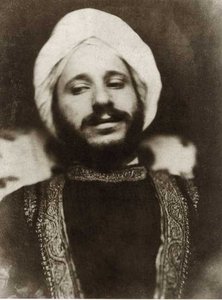
Simeone Solomon
1840 - 1905 , Regno Unito
In breve
- Artistic Movement Or Style: Pre-Raphaelita
- Artists Who Influenced This Artist:
- Rossetti
- Burne-Jones
- Date Of Birth: 1840
- Date Of Death: 1905
- Full Name: Simeon Solomon
- Nationality: Britannico
- Notable Artworks:
- Babilonia è...
- Sofia e Agatodemo
- Rut e Naomi
- Sdrach, Meshach...
- Nel Tempio di Venere
- Place Of Birth: Londra, Regno Unito