- Home

- Riproduzione di dipinto a olio
- Sidney Edward Dickinson
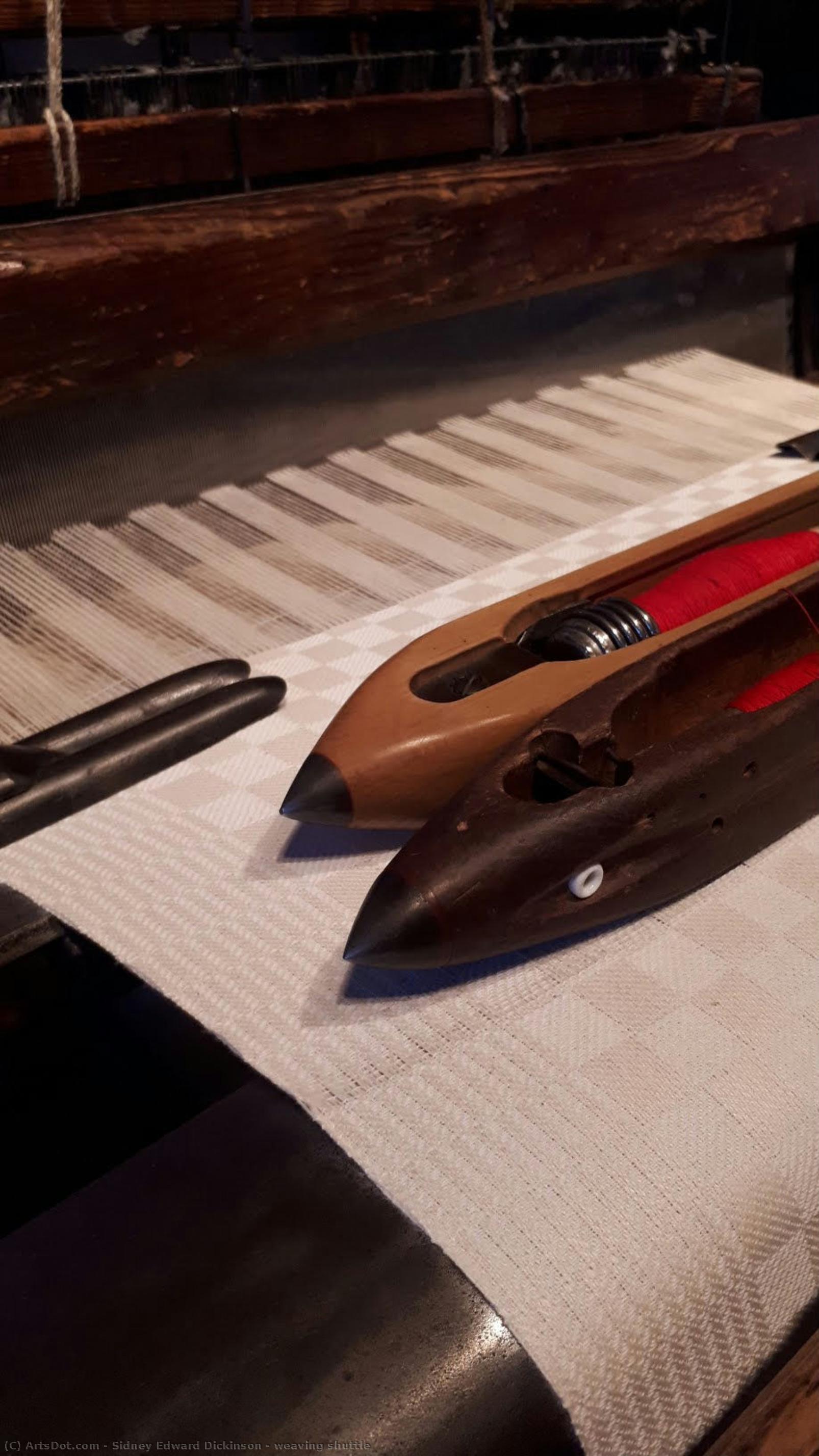
- weaving shuttle
 Acquista stampa Acquista download
 Invia
Invia
 Condividi
 Dettagli opera
 Aggiungi ai preferiti

 Scarica
 Simili
 Radiografia
 Slideshow
weaving shuttle


 Scopri di più
Riproduzione a olio fatta a mano
Olio su tela dipinto a mano nelle tue dimensioni e con la tua cornice, realizzato su ordinazione dai nostri artisti.




































Scegli tra le nostre dimensioni predefinite, che rispettano le proporzioni originali dell'opera d'arte.

È possibile inserire dimensioni personalizzate per adattare l'opera a una cornice o a uno spazio specifico. Se la dimensione selezionata non corrisponde alle proporzioni dell'immagine originale, provvederemo a ritagliare l'opera o a estendere il dipinto con elementi aggiuntivi dipinti a mano. Un mockup digitale ti sarà inviato per approvazione prima dell'inizio della produzione.
Si prega di notare che l'anteprima a schermo non riflette il ritaglio o l'estensione effettivi. Solo il mockup mostrerà accuratamente la composizione finale.
Sebbene siano disponibili dimensioni personalizzate, consigliamo di selezionare una dimensione dall'elenco predefinito per preservare le proporzioni originali.
Dopo l'ordine, il team di OriginalUniqueArt.com invierà un'e-mail al cliente per le istruzioni e fornirà un'anteprima del mockup
Consegna in tutto il mondo () in 3/4 settimane anziché nelle normali 5 settimane. (22 Luglio). Nessun compromesso sulla qualità.

Spedizione espressa gratuita in tutto il mondo

Tela in lino di alta qualità

Assicurazione completa sulla spedizione

Garanzia di rimborso dei dazi doganali

Garanzia di fedeltà cromatica

Politica di reso entro 60 giorni (solo per difetti)

Garanzia di rimborso al 100%

Sconto per acquisti multipli
 L'opzione vetro è disponibile solo per dimensioni inferiori a 110 cm

weaving shuttle
Tecnica di riproduzione
Dimensioni riproduzione
-


Prezzo totale finale
-
Biografia dell'artista
Sidney Edward Dickinson: A Portrait of American Realism
Sidney Edward Dickinson (November 28, 1890 – April, 1980) was an American painter who carved out a distinctive niche within the landscape of early 20th-century art. Born in Wallingford, Connecticut, to a Congregationalist minister, Charles H. Dickinson, his formative years instilled in him a deep appreciation for observation and detail—qualities that would become hallmarks of his artistic style. He pursued formal training at the Art Students League of New York and the School of the National Academy of Design, absorbing influences from masters like George Bridgman and William Merritt Chase. Dickinson’s journey wasn't solely confined to academic pursuits; he embraced a life of physical labor, gaining experience in lumber camps and securing employment as a surveyor’s roadman and farmhand. These practical endeavors provided him with invaluable insight into the textures and rhythms of rural America—a subject that would repeatedly reappear in his paintings. His artistic breakthrough arrived in 1915 when he debuted at the National Academy's winter show, presenting “Portrait of the Artist,” a self-portrait executed in a strikingly linear style characterized by muted tones and meticulous attention to form. This piece established him as a proponent of realism, prioritizing accurate representation over stylistic embellishment. Dickinson’s artistic vision centered on capturing the essence of human experience with unwavering honesty—a philosophy that permeated his oeuvre. He meticulously studied the works of Bridgman and Chase, absorbing their techniques for rendering anatomy and perspective, yet he steadfastly resisted trends toward excessive ornamentation or abstraction. Instead, Dickinson championed a style rooted in direct observation, favoring bold brushstrokes and vibrant colors to convey emotion and atmosphere. His landscapes, particularly those depicting rural Connecticut and Vermont, reflected his profound connection to the natural world—a connection that informed his artistic sensibility throughout his career. Throughout his prolific career, Dickinson received numerous accolades recognizing his artistic merit. He garnered a Julius Hallgarten Prize for his third exhibition with the National Academy in 1917, followed by further Hallgarten Prizes in 1924 and 1933; the Isaac N. Maynard Prize in 1933 and 1938; the Benjamin Altman Prize in 1936; and the Andrew Carnegie Prize in 1942. His involvement with the Academy Council from 1930 to 1933 solidified his position as a respected figure within the artistic community, and he was elected a member of the American Academy of Arts and Letters in 1931—a testament to his enduring legacy. Dickinson’s dedication extended beyond teaching; he mentored aspiring artists at the Art Students League (1919–1920) and headed a life class at the National Academy from 1928 to 1931 and again from 1939 to 1943. He continued his artistic pursuits during summers spent teaching at the league in 1943 and 1944, becoming a permanent faculty member in 1949 before retiring in 1973. Among his notable pupils were Albert Wasserman, James Rosenquist, Richard Pionk, and Robert Nefson—artists who carried forward Dickinson’s commitment to realism and observation into their own creative endeavors. He resided in Windsor, Vermont until his passing in the late 1970s, leaving behind a substantial body of work that continues to inspire admiration for its quiet dignity and unwavering fidelity to nature. His artistic output included notable pieces like “Portrait of the Artist” (1915) and “Weaving Shuttle” (1923), demonstrating his mastery of capturing subtle nuances in human form and natural landscapes alike. These paintings exemplify Dickinson’s stylistic approach—characterized by precise lines, subdued colors, and a profound respect for visual accuracy—solidifying his place as one of the foremost practitioners of American realism during the early decades of the 20th century.
Sidney Edward Dickinson
1890 - 1980 , Stati Uniti d'America
Dati rapidi
- Artistic Movement Or Style: Realism
- Artists Who Influenced This Artist:
- George Bridgman
- William Merritt Chase
- Date Of Birth: November 28, 1890
- Date Of Death: April, 1980
- Full Name: Sidney Edward Dickinson
- Nationality: American
- Notable Artworks:
- Portrait of the Artist
- Weaving Shuttle
- Place Of Birth: Wallingford, Connecticut

