- Home

- Riproduzione di dipinto a olio
- Sébastien Bourdon
- Les mendiants

 Acquista stampa Acquista download
 Invia
Invia
 Condividi
 Dettagli opera
 Aggiungi ai preferiti

 Scarica
 Simili
 Radiografia
 Slideshow
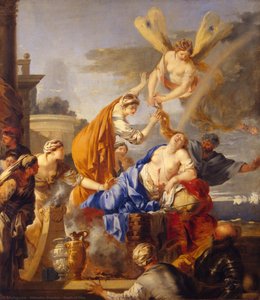
Les mendiants


 Scopri di più
Riproduzione a olio fatta a mano
Olio su tela dipinto a mano nelle tue dimensioni e con la tua cornice, realizzato su ordinazione dai nostri artisti.




P118B $10

P118H $10

P118W $10

P438Z $10

P508JH $12

P508YH $12

P805H $10

P805Z $10

P919BZ $10

P919G $10

P919XJ $10

P959ZH $10

P968JZ $12

W106C $8

W218G $10

W218JH $8

W218Y $10

W307PJ $10

W316G $10

W316PJ $8

W316Y $10

W398PJ $8

W4111J $10

W500HY $15

W500JH $15

W692G $12

W849H $8

W940BG $15

W953PJ $8




Scegli tra le nostre dimensioni predefinite, che rispettano le proporzioni originali dell'opera d'arte.

È possibile inserire dimensioni personalizzate per adattare l'opera a una cornice o a uno spazio specifico. Se la dimensione selezionata non corrisponde alle proporzioni dell'immagine originale, provvederemo a ritagliare l'opera o a estendere il dipinto con elementi aggiuntivi dipinti a mano. Un mockup digitale ti sarà inviato per approvazione prima dell'inizio della produzione.
Si prega di notare che l'anteprima a schermo non riflette il ritaglio o l'estensione effettivi. Solo il mockup mostrerà accuratamente la composizione finale.
Sebbene siano disponibili dimensioni personalizzate, consigliamo di selezionare una dimensione dall'elenco predefinito per preservare le proporzioni originali.
Dopo l'ordine, il team di OriginalUniqueArt.com invierà un'e-mail al cliente per le istruzioni e fornirà un'anteprima del mockup
Consegna in tutto il mondo () in 3/4 settimane anziché nelle normali 5 settimane. (22 Luglio). Nessun compromesso sulla qualità.

Spedizione espressa gratuita in tutto il mondo

Tela in lino di alta qualità

Assicurazione completa sulla spedizione

Garanzia di rimborso dei dazi doganali

Garanzia di fedeltà cromatica

Politica di reso entro 60 giorni (solo per difetti)

Garanzia di rimborso al 100%

Sconto per acquisti multipli
 L'opzione vetro è disponibile solo per dimensioni inferiori a 110 cm

Les mendiants
Tecnica di riproduzione
Dimensioni riproduzione
-


Prezzo totale finale
-
Descrizione dell'opera
A Window into 17th-Century France: The Stark Realism of *Les Mendiants*
Sébastien Bourdon’s *Les Mendiants*, painted around 1645, isn't merely a depiction of beggars; it’s a meticulously crafted tableau that plunges the viewer directly into the heart of 17th-century France – a nation grappling with poverty, social injustice, and the lingering scars of war. This genre painting, housed within the hallowed halls of the Louvre Museum in Paris, transcends simple observation to become a poignant commentary on humanity’s vulnerability and the complexities of charity. Bourdon, deeply influenced by the artistic currents flowing from Rome – particularly the dramatic lighting and emotive storytelling championed by Caravaggio – masterfully utilizes composition, color, and line to evoke a powerful sense of empathy and social critique.
The scene unfolds within the ruins of an ancient structure, a deliberate choice that immediately establishes a mood of decay and transience. A group of mendicants—men, women, and children – are rendered with remarkable realism, their faces etched with hardship and desperation. They’re not idealized figures; Bourdon presents them as individuals, each bearing the marks of poverty and suffering. A subtle yet crucial element is introduced by a wheelbarrow positioned strategically in the foreground, hinting at labor, perhaps scavenging for scraps or transporting meager possessions – a visual representation of their struggle for survival. The composition itself is carefully balanced, drawing the eye towards the central archway that frames the crumbling backdrop, creating a sense of immediacy and inviting the viewer to contemplate the scene’s gravity.
The Language of Light and Shadow: Bourdon's Baroque Technique
Bourdon’s technical prowess is immediately apparent in his masterful manipulation of light and shadow. The painting is dominated by a diffused, natural light emanating from the left side, casting soft shadows that sculpt the figures and highlight certain areas of the ruins. This chiaroscuro effect – a hallmark of Baroque art – not only adds depth and volume but also intensifies the emotional impact of the scene. The muted earth tones—browns, grays, and creams—are skillfully blended to create a sense of atmospheric perspective, with distant elements appearing paler and less distinct. The brushstrokes are relatively smooth, contributing to a realistic representation of textures – from the rough fabrics of the beggars’ clothing to the weathered surfaces of the stone.
- Oil on Canvas: Bourdon's choice of medium—oil paint on canvas—allowed for rich color saturation and subtle gradations in tone, essential for achieving the painting’s nuanced realism.
- Linear Perspective: The use of linear perspective creates a convincing illusion of depth, drawing the viewer into the scene and emphasizing the vastness of the ruined landscape.
- Atmospheric Perspective: The subtle blurring of distant elements reinforces the sense of spatial recession and adds to the painting’s overall atmosphere.
Symbolism and Social Commentary
Beyond its technical brilliance, *Les Mendiants* is laden with symbolic meaning. The ruins themselves represent decay, loss, and the passage of time – a potent metaphor for the fragility of human existence. The mendicants, as figures soliciting alms, evoke feelings of pity, compassion, and social concern. Their presence serves as a stark reminder of the inequalities inherent in society and the responsibility of the wealthy to care for the less fortunate. The inclusion of the wheelbarrow subtly suggests the cycle of poverty and the constant struggle for survival. The painting’s overall mood is somber but not overtly tragic; it invites reflection rather than despair, prompting viewers to consider their own role in addressing social injustice.
A Legacy of Dramatic Realism
Bourdon's *Les Mendiants* stands as a pivotal work within the tradition of 17th-century Dutch genre painting and a significant precursor to later artistic movements. Its influence can be seen in works by Francisco Goya, who was known to have owned a copy of this painting. The scene’s stark realism, coupled with its powerful emotional resonance, cemented Bourdon's reputation as one of the most accomplished artists of his time – an artist capable of capturing not only the outward appearance of reality but also the underlying complexities of human experience.
Biografia dell'artista
Sébastien Bourdon: A Baroque Master of Dramatic Light and Emotion
Sébastien Bourdon (1616 – 1671) stands as a pivotal figure in the flourishing artistic landscape of seventeenth-century France, embodying the grandeur and emotional intensity characteristic of the Baroque period. Born in Montpellier, France, he descended from a family steeped in artistic tradition—his father was a glass painter—and received an early education that instilled within him a profound appreciation for visual storytelling.
Bourdon’s formative years were marked by apprenticeship under Jean Baptiste Tourneyn, a Parisian painter who exposed him to the stylistic conventions of his time. Crucially, this training fostered a connection with the artistic currents emanating from Rome, where he embarked on a transformative journey in 1636. Inspired by luminaries such as Nicolas Poussin, Claude Lorrain, and Caravaggio—artists whose mastery captivated Bourdon’s imagination—he honed his skills amidst the intellectual fervor of the papal court.
Bourdon's artistic style is defined by its remarkable versatility and adaptability. While he excelled in portraiture, capturing subjects with sensitivity and nuance – often employing a Rubensian approach or favoring intimate bust-length portraits against muted backgrounds – he equally demonstrated prowess in monumental canvases imbued with Baroque drama. His most celebrated achievement remains “The Crucifixion of St. Peter,” commissioned for the cathedral of Notre Dame, a masterpiece that exemplifies Bourdon’s masterful command of chiaroscuro and his ability to convey profound spiritual emotion.
Other notable works include “The Deposition,” which showcases Bourdon's meticulous attention to detail and his capacity to depict scenes brimming with palpable pathos. His artistic output extended beyond religious commissions; he produced captivating landscapes reflecting the grandeur of the Italian countryside, demonstrating a broader engagement with humanist ideals.
Bourdon’s influence resonated throughout Europe, establishing him as a founding member of the Académie royale de peinture et de sculpture in Paris. He nurtured an extensive atelier, fostering the careers of numerous pupils who carried forward his artistic legacy. Bourdon's dedication to craft and unwavering pursuit of excellence cemented his place as one of the foremost painters of his era.
Bourdon’s enduring legacy resides not only in his impressive oeuvre but also in his role as a champion of Baroque aesthetics—a style characterized by theatrical lighting, dynamic compositions, and an expressive portrayal of human emotion. His paintings continue to inspire admiration for their technical brilliance and emotional depth, securing Bourdon's position as a cornerstone of French art history.
Biography
- Bourdon was born in Montpellier on February 2nd, 1616 – his family were craftsmen of modest means. His father, Marin, was a painter and glazier, his mother, Jeanne Gaultière, was the daughter of a master goldsmith. Sébastien was baptised on February 10th in Montpellier church*. *
- He began his artistic training as an apprentice under Jean Baptiste Tourneyn in Paris, gaining exposure to the stylistic conventions of the Baroque period.
- In 1636 he travelled to Rome, where he studied the paintings of masters such as Nicolas Poussin, Claude Lorrain and Caravaggio—artists whose influence profoundly shaped his artistic vision.
- He faced considerable hardship during this time due to his Protestant faith, fleeing Rome in 1638 after being threatened with prosecution by the Inquisition.
- Bourdon returned to Paris in 1652 where he established himself as a prominent artist and was elected as one of the original twelve elders in charge of the Académie royale de peinture et de sculpture.
Notable Works
- “The Crucifixion of St. Peter”: This monumental canvas, commissioned for Notre Dame Cathedral, exemplifies Bourdon’s mastery of chiaroscuro and his ability to convey profound spiritual emotion.
- “The Deposition”: Demonstrating Bourdon's meticulous attention to detail and his capacity to depict scenes brimming with palpable pathos.
- Landscapes: Bourdon produced captivating landscapes reflecting the grandeur of the Italian countryside, showcasing his broader engagement with humanist ideals.
Influences
- Nicolas Poussin: Bourdon’s artistic style was heavily influenced by Poussin's classical compositions and masterful use of light.
- Claude Lorrain: Lorrain’s atmospheric landscapes and idealized depictions of biblical scenes contributed to Bourdon’s aesthetic sensibilities.
- Caravaggio: Caravaggio’s dramatic chiaroscuro technique—characterized by stark contrasts between light and dark—served as a crucial inspiration for Bourdon's artistic endeavors.
Historical Significance
- Bourdon played a pivotal role in establishing the Académie royale de peinture et de sculpture, shaping the trajectory of French art education and fostering a vibrant artistic community.
- His enduring legacy resides in his contribution to Baroque painting—a style that continues to captivate audiences worldwide with its expressive power and technical sophistication.

Sébastien Bourdon
1616 - 1671 , Francia
Dati rapidi
- Artistic Movement Or Style: Barocco
- Artists Who Influenced This Artist:
- Nicolas Poussin
- Claude Lorrain
- Caravaggio
- Date Of Birth: 2 febbraio 1616
- Date Of Death: 8 maggio 1671
- Full Name: Sébastien Bourdon
- Nationality: Francese
- Notable Artworks:
- Il Battesimo di Cristo
- La Deposizione
- Place Of Birth: Montpellier, Francia
Articoli correlati

Golden Age Reflections: Dutch Baroque Painting & Cultural Innovation
Explore the Dutch Golden Age of painting! Discover key artists like Vermeer & ter Borch, their innovative techniques, and the rich cultural context behind these Baroque masterpieces. Learn about collecting & appreciating this iconic art period.
Jan Steen e la Vivacità della Vita Quotidiana: Un Maestro del Genere Olandese nell'Età dell'Oro
Esplora la vita e le opere di Jan Steen, maestro del genere pittorico olandese. Analisi approfondita dello stile, del simbolismo e dell'eredità artistica di questo icona del Secolo d'Oro.
David Teniers il Giovane: Vita Quotidiana e Commento Sociale nella Fiandra Barocca
Esplora la vita e l'opera di David Teniers il Giovane, maestro della pittura fiamminga barocca. Analisi approfondita dei suoi temi, stile unico e ruolo come pittore di corte. Scopri l'eredità di questo genio dell'arte.
Genre Painting: A Window into Daily Life & Societal Values of the Dutch Golden Age
Explore the captivating world of Dutch Golden Age genre painting! Discover realistic depictions of daily life, masterful artists like Ostade & Metsu, and hidden symbolism. Learn about this influential art movement with OriginalUniqueArt.
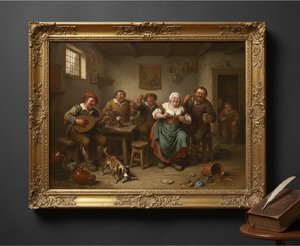
Adriaen van Ostade: A Master of Dutch Genre Painting & Social Commentary
Explore the life & work of Adriaen van Ostade, a leading Dutch Golden Age painter. Discover his realistic genre scenes, social commentary, and lasting influence on art history. Learn more at OriginalUniqueArt.