Anteprima in scala reale
 Invia
Invia Condividi
 Dettagli opera
 Guida
Guida

 Scarica
 Simili
 Radiografia
 Slideshow
 Q&A
Q&A Statistiche
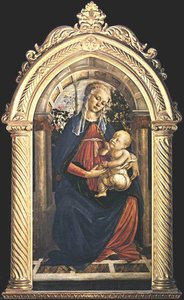
La Madonna e il Bambino


 Espandi i dettagli
Giclée / Stampe d'arte
Stampa giclée o su tela di qualità museale, con produzione rapida e diverse opzioni di finitura. ( Acquista il dipinto realizzato a mano Passa all'immagine digitale)




P118B €10

P118H €10

P118W €10

P438Z €10

P508JH €12

P508YH €12

P805H €10

P805Z €10

P919BZ €10

P919G €10

P919XJ €10

P959ZH €10

P968JZ €12

W106C €8

W218G €10

W218JH €8

W218Y €10

W307PJ €10

W316G €10

W316PJ €8

W316Y €10

W398PJ €8

W4111J €10

W500HY €15

W500JH €15

W692G €12

W849H €8

W940BG €15

W953PJ €8




Scegli tra le nostre dimensioni predefinite, che rispettano le proporzioni originali dell'opera d'arte.

Inserisci la larghezza e l'altezza desiderate, per adattarle alla tua cornice o alla tua parete. Una stampa può essere solo ritagliata, mai resa più grande dell'immagine originale; pertanto, un formato con una forma differente comporterà la perdita di una parte dell'opera. Ti invieremo un mockup digitale da approvare prima di procedere con la stampa. L'immagine mostrata in questa pagina non rappresenta il ritaglio reale — solo il mockup lo mostra.
Consegna in tutto il mondo () in 2 settimane invece delle normali 4/5 settimane. (29 Ottobre)

Spedizione espressa gratuita in tutto il mondo

Tela in lino di alta qualità

Assicurazione completa sulla spedizione

Garanzia di rimborso dei dazi doganali

Garanzia di fedeltà cromatica assoluta

Politica di reso entro 100 giorni (solo per difetti di fabbricazione)

Garanzia di rimborso al 100%

Offerta per acquisti multipli
 L'opzione vetro è disponibile solo per dimensioni inferiori a 110 cm

La Madonna e il Bambino
Giclée / Stampe d'arte
Dimensioni riproduzione
-


Prezzo finale calcolato
€ 71
A Renaissance Vision of Maternal Guidance: Sandro Botticelli’s Untitled Madonna and Child
Botticelli's "untitled (5768)" stands as a testament to the artistic ideals of fifteenth-century Florence—a radiant exemplar of Early Renaissance style. Created around 1480, this circular oil painting captures the essence of the Madonna and Child iconography, elevating it beyond mere depiction to profound symbolic representation. Its enduring appeal lies not only in its exquisite beauty but also in Botticelli’s masterful command of technique and his deep engagement with humanist thought.Subject & Composition
At the core of the artwork is Mary, portrayed with serene dignity as she cradles Jesus—a gesture imbued with tenderness and spiritual significance. The infant Christ isn't simply held; he actively engages in a contemplative posture, delicately holding an open book. This seemingly simple detail carries immense weight, foreshadowing Christ’s role as the ultimate teacher and embodying the Renaissance fascination with classical learning and philosophical inquiry. Surrounding Mary and Jesus are several angelic figures—dynamic poses conveying reverence and adoration. Their gaze descends upon the central scene, emphasizing the sanctity of the moment, while outstretched arms gesture towards a harmonious unity of divine grace. The circular format itself reinforces this sense of completeness and eternity, mirroring the halo commonly associated with holy representations.Style & Technique
Botticelli’s artistic style distinguishes itself from its Gothic predecessors by prioritizing elegance and refined linearity—flowing contours define both Mary and Jesus as well as the drapery, creating a visual harmony that speaks to the sensibilities of the Renaissance. The brushwork is remarkably smooth and effortless, resulting in surfaces that appear luminous and delicately modeled. Botticelli’s skillful use of oil paint allows for nuanced gradations of light and shadow—a technique crucial for conveying depth and atmosphere—further enhancing the painting's expressive power. Unlike later artists who pursued strict realism, Botticelli maintains a flattened perspective, prioritizing clarity of form and symbolic representation over meticulous anatomical accuracy. This stylistic choice reflects the humanist emphasis on idealized beauty and intellectual contemplation.Historical Context & Influences
Botticelli flourished during Florence’s golden age—a period marked by unprecedented artistic innovation and intellectual dynamism fueled by the rediscovery of classical texts and ideals. He moved within a circle of humanist scholars and artists, absorbing influences from figures like Fra Filippo Lippi and Lorenzo Ghiberti, who championed similar stylistic approaches. Patronage from wealthy families such as the Medici played a pivotal role in Botticelli’s career—providing him with resources to undertake ambitious projects and fostering an environment conducive to artistic experimentation. The painting likely served as devotional artwork for private contemplation, reflecting the spiritual fervor of its time and embodying the humanist conviction that art could elevate the human spirit.Symbolism & Meaning
The artwork overflows with symbolic resonance. Mary’s crown signifies her divine majesty—a visual affirmation of her role as Queen of Heaven—while the open book symbolizes knowledge, wisdom, and the scriptures—echoing Christ's prophetic mission. The angelic figures embody heavenly messengers, bridging the earthly realm with the divine—underscoring the painting’s overarching theme of spiritual grace and protection. Even the hazy landscape in the background contributes to an atmosphere of contemplative serenity—suggesting a connection between humanity and the cosmos. Diagonal lines created by the angels' arms draw the viewer's eye towards the central figures, reinforcing their importance within the composition. Ultimately, “untitled (5768)” invites viewers to contemplate themes of motherhood, faith, and divine illumination—a timeless masterpiece that continues to inspire admiration for its beauty and intellectual depth.Emotional Impact & Aesthetic Appeal
This painting evokes a profound sense of peace, reverence, and maternal love—capturing the essence of Christian piety in exquisite visual form. Botticelli’s masterful rendering of Mary's face conveys compassion and serenity—a testament to his ability to imbue his subjects with emotional nuance. The luminous colors—rich blues, reds, and golds—contribute to an opulent aesthetic experience—reflecting the grandeur of Florentine Renaissance art. For interior designers seeking to infuse their spaces with elegance and spiritual inspiration, “untitled (5768)” presents a stunning focal point—a timeless symbol of beauty and devotion.Domande e risposte
Che tipo di opera è "La Madonna e il Bambino"?
"La Madonna e il Bambino" è un'opera in Opere da parete.
Dove posso trovare una guida dedicata a "La Madonna e il Bambino"?
La pagina Schede didattiche di "La Madonna e il Bambino" di Sandro Botticelli offre una scheda informativa stampabile su due fogli: l'opera d'arte con la sua tabella identificativa, una linea temporale decennale che la colloca nel periodo di vita dell'artista, altre opere dello stesso autore, la tavolozza dei colori misurata e citazioni pronte da copiare in quattro stili diversi.
Quale tecnica è stata utilizzata per "La Madonna e il Bambino" di Sandro Botticelli?
La tecnica utilizzata per "La Madonna e il Bambino" di Sandro Botticelli è Olio su tavola. Le riproduzioni mirano a restituire l'aspetto di questa tecnica.
Biografia dell'artista
primi anni di vita e formazione
Sandro Botticelli, nato Alessandro di Mariano di Vanni Filippoipi intorno al 1445, è stata una figura chiave nel primo Rinascimento della pittura italiana. Inizialmente oscurato postumo, l'opera di Botticelli è stata rivitalizzata nella tarda ottava e novantina del secolo XIX dai pre-rafaeliani, portando a una rivalutazione dei suoi contributi artistici. Botticelli nacque a Firenze, in Italia, e visse tutta la sua vita nello stesso quartiere. La sua famiglia, inclusa il padre Mariano di Vanni d'Amedeo Filippoipi, era coinvolta in varie professioni, che li hanno portati a entrare in contatto con gli artisti. Giorgio Vasari riferì che Botticelli fu inizialmente addestrato come orefice.stile artistico e opere notevoli
L'opera di Botticelli è caratterizzata da una elegante linearità, che colma il divario tra il tardo gotico italiano e il primo Rinascimento. Le sue opere più famose, La nascita di Venere e Primavera, sono esposte alla Galleria degli Uffizi a Firenze, che ospita una collezione significativa delle sue opere. * La nascita di Venere (visualizza su OriginalUniqueArt) * Primavera (esplora l'arte di Sandro Botticelli su OriginalUniqueArt) * Natività mistica (Galleria Nazionale d'Arte Moderna, Roma), datata 1501, è l'unica opera di Botticelli con una data precisa.eredità e influenza
Lo stile di Botticelli si è evoluto in un approccio più personale negli anni '90 del Cinquecento, divergendo dai contemporanei come Leonardo da Vinci e dallo stile rinascimentale alto emergente. La sua opera è stata riconosciuta come un contributo significativo al movimento dell'arte rinascimentale italiana. * Il Rinascimento italiano * Sandro Botticelli su Wikipedia- Artisti notevoli del Rinascimento italiano includono Sandro Botticelli, Leonardo da Vinci, Michelangelo e Tiziano.
- La Galleria degli Uffizi a Firenze ospita una collezione significativa delle opere di Botticelli.
- L'opera di Botticelli è stata riconosciuta come una figura chiave nel primo Rinascimento della pittura italiana.
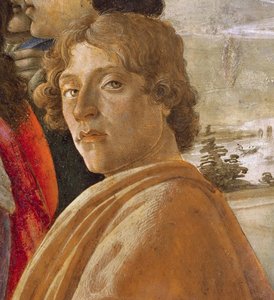
Sandro Botticelli
1445 - 1510 , Italia
Dettagli rapidi
- Artisti Influenti:
- Fra Angelico
- Paolo Uccello
- Data Di Nascita: c. 1445
- Luogo Di Nascita: Firenze, Italia
- Movimento Artistico: Primo Rinascimento
- Nazionalità: Italiana
- Nome Completo: Sandro Botticelli
- Opere Notevoli:
- Nascita di Venere
- Primavera
- Natività Mistica
Articoli correlati
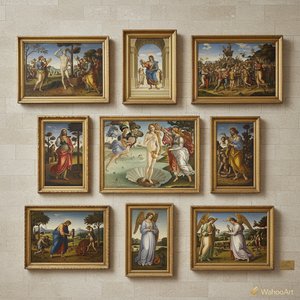
I 10 Capolavori del Rinascimento Iniziale che Hanno Definito l'Arte: Scopri i Maestri
Esplora i 10 capolavori del Rinascimento italiano: Leonardo, Michelangelo, Raffaello e altri maestri. Scopri la storia, il simbolismo e le tecniche di queste opere iconiche. Trova riproduzioni d'arte di alta qualità su !
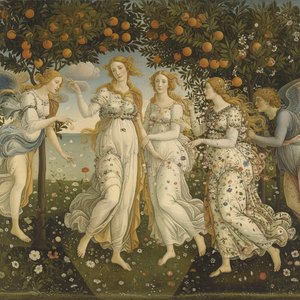
The Ethereal Beauty of Botticelli: A Journey Through the Grace and Symbolism of Italian Renaissance Masterpieces
Explore the ethereal beauty of Sandro Botticelli's masterpieces. Delve into the profound symbolism, mythological grace, and technical mastery that define the Italian Renaissance through an expert art-historical lens.

I 25 capolavori imperdibili della Galleria degli Uffizi a Firenze
Scopri i 25 capolavori degli Uffizi, da Botticelli a Da Vinci. Esplora la collezione su OriginalUniqueArt.com.

L'Armonia Perfetta: I 25 Capolavori più Grandiosi di Raffaello
Scopri i 25 capolavori di Raffaello e l'armonia del Rinascimento. Esplora la collezione su OriginalUniqueArt.com.
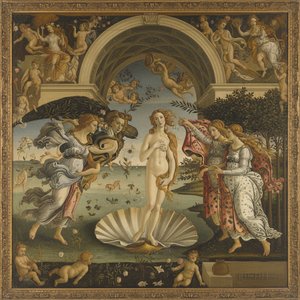
Botticelli: I 25 Capolavori Immortali dell'Arte Rinascimentale | OriginalUniqueArt
Esplora i 25 capolavori di Sandro Botticelli, l'icona del Rinascimento italiano. Scopri la storia, il simbolismo e le tecniche dietro opere come 'La Nascita di Venere'. Stampe d'arte di alta qualità su OriginalUniqueArt.com per decorare casa con bellezza senza tempo.