Anteprima in scala reale
 Condividi
 Condividi
 Dettagli
 Guida stampabile

 Scarica
 Articoli simili
 Radiografia
 Slideshow
 Statistiche
Anchorites Tempted by Demons


 Leggi tutto
Giclée / Stampe d'arte
Stampa giclée o su tela di qualità museale, con produzione rapida e diverse opzioni di finitura. ( Ordina la riproduzione dipinta a mano Passa all'immagine digitale)




P118B $10

P118H $10

P118W $10

P438Z $10

P508JH $12

P508YH $12

P805H $10

P805Z $10

P919BZ $10

P919G $10

P919XJ $10

P959ZH $10

P968JZ $12

W106C $8

W218G $10

W218JH $8

W218Y $10

W307PJ $10

W316G $10

W316PJ $8

W316Y $10

W398PJ $8

W4111J $10

W500HY $15

W500JH $15

W692G $12

W849H $8

W940BG $15

W953PJ $8




Scegli tra le nostre dimensioni predefinite, che rispettano le proporzioni originali dell'opera d'arte.

È possibile inserire dimensioni personalizzate per adattare l'opera a una cornice o a uno spazio specifico. Se la dimensione selezionata non corrisponde alle proporzioni dell'immagine originale, procederemo al ritaglio dell'opera o all'estensione dell'immagine con un bordo specchiato o a tinta unita. Un mockup digitale ti verrà inviato per approvazione prima dell'inizio della produzione.
Si prega di notare che l'anteprima a schermo non riflette il ritaglio o l'estensione effettivi. Solo il mockup mostrerà accuratamente la composizione finale.
Sebbene siano disponibili dimensioni personalizzate, si raccomanda di selezionare una dimensione dall'elenco predefinito per preservare le proporzioni originali.
Consegna in tutto il mondo () in 2 settimane invece delle normali 4/5 settimane. (27 Settembre)

Spedizione espressa gratuita in tutto il mondo

Tela in lino di alta qualità

Assicurazione completa sulla spedizione

Garanzia di rimborso dei dazi doganali

Garanzia di perfetta fedeltà cromatica

Politica di reso entro 100 giorni (solo per difetti di fabbricazione)

Garanzia di rimborso al 100%

Sconto per acquisti multipli
 L'opzione vetro è disponibile solo per dimensioni inferiori a 110 cm

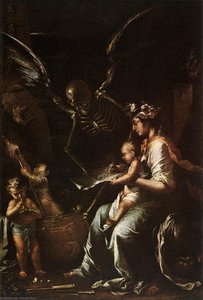
Anchorites Tempted by Demons
Giclée / Stampe d'arte
Dimensioni della riproduzione
-


Prezzo totale
$ 80
Anchorites Tempted by Demons: A Descent into Spiritual Struggle
Salvator Rosa’s “Anchorites Tempted by Demons” is not merely a painting; it's a visceral plunge into the heart of human vulnerability and the eternal battle between good and evil. Completed around 1660-1665, this arresting work, currently residing in the Galleria Nazionale d’Arte Antica in Rome, transcends its Renaissance aesthetic to deliver a profoundly unsettling and psychologically rich experience for the viewer. Rosa, a master of dramatic landscapes and allegorical narratives, here employs a carefully constructed composition to explore themes of isolation, temptation, and the precariousness of faith.
The scene centers on two figures – an anchorite, presumably seeking solace in solitude, and a pair of demonic entities. The anchorite, seated with his head bowed, embodies a profound sense of despair and resignation. His posture suggests both prayer and surrender, hinting at a spiritual crisis where the line between devotion and abandonment is blurred. Opposite him stands a figure representing temptation – not a singular demon but rather an embodiment of corrupting influences, depicted as grotesque yet compelling in their allure. The demons themselves are rendered with a startlingly realistic detail; their exaggerated features—large eyes, gaping mouths, clawed hands—are designed to evoke horror and unease, emphasizing the threat they pose to the anchorite’s spiritual purity.
A Baroque Masterpiece: Technique and Composition
Rosa's masterful command of oil paint is immediately evident. The brushwork is loose and expressive, particularly in the rendering of the demons’ forms and the turbulent background landscape. He utilizes a technique known as “sfumato,” subtly blurring edges and creating an atmospheric haze that contributes to the painting’s overall sense of mystery and unease. The color palette is dominated by earthy tones – browns, beiges, and grays—reflecting the desolate setting and the anchorite's internal turmoil. However, flashes of crimson and ochre punctuate the scene, drawing attention to the demonic figures and hinting at the violence inherent in their temptation.
The composition itself is carefully orchestrated. The diagonal line created by the anchorite’s seated form leads the viewer’s eye towards the demons, while the archway in the background—a recurring motif in Rosa's work—suggests a transition between the mundane world and a realm of divine or supernatural significance. This architectural element not only provides depth to the scene but also reinforces the painting’s allegorical nature, representing the gateway to temptation and spiritual peril.
Symbolism and Historical Context
“Anchorites Tempted by Demons” is deeply rooted in the religious and philosophical currents of its time. The figure of the anchorite reflects a growing trend during the 17th century—a fascination with monastic life, asceticism, and the search for spiritual enlightenment. Rosa’s depiction, however, deviates from idealized portrayals of monks, presenting instead a figure consumed by doubt and struggling against internal demons. The presence of the demons themselves speaks to the pervasive anxieties about sin, corruption, and the constant threat of falling from grace—themes central to both Christian theology and Renaissance humanism.
Rosa’s work also aligns with the broader artistic trends of the Baroque period, characterized by dramatic lighting, intense emotion, and a focus on narrative storytelling. He was influenced by artists like Ribera, known for his naturalistic depictions of religious subjects, and Poussin, whose classical compositions provided a framework for exploring moral and philosophical themes. Yet, Rosa’s unique vision—his willingness to depict unsettling scenes and challenge conventional artistic norms—established him as a distinct and influential figure within the Baroque movement.
Emotional Resonance and Artistic Legacy
“Anchorites Tempted by Demons” continues to resonate with viewers today due to its profound exploration of human psychology and spiritual struggle. The painting’s unsettling atmosphere, coupled with its compelling characters and symbolic richness, invites contemplation on themes of faith, doubt, temptation, and the enduring conflict between good and evil. Salvator Rosa's ability to capture such complex emotions through his masterful technique ensures that this work remains a powerful testament to the artist’s genius and a captivating window into the anxieties and aspirations of the Renaissance era.
Biografia dell'artista
La Vita e la Formazione
Salvator Rosa, pittore barocco italiano, poeta e incisore, nacque ad Arenella, Napoli, il 20 giugno o il 21 luglio del 1615. Sua madre, Giulia Greca Rosa, proveniva da una delle famiglie greche della Sicilia. Nonostante i desideri di suo padre che lo volesse avvocato o sacerdote, Salvator dimostrò fin dalla giovane età una predilezione per le arti.La Carriera Artistica
La carriera artistica di Salvator Rosa fu segnata da uno stile non convenzionale ed eccentrico, che lo distingueva dai suoi contemporanei. Fu attivo a Napoli, Roma e Firenze, e la sua opera fu influenzata dal naturalismo di Ribera e dal classicismo di Poussin. Tuttavia, rifiutò di essere vincolato a qualsiasi particolare stile o movimento.- Pitagora che emerge dagli Inferi (Kimbell Art Museum, Fort Worth, Stati Uniti), uno dei suoi lavori più famosi, mette in mostra il suo insolito connubio tra temi filosofici e artistici.
- Il Battesimo dell'Eunuco (Chrysler Museum of Art, Norfolk, Stati Uniti) dimostra la sua capacità di infondere dramma anche nelle storie bibliche meno importanti.
Influenze e Sviluppo Stilistico
Rosa sviluppò uno stile unico che combinava elementi del naturalismo, del classicismo e del barocco, ma con una forte impronta personale. La sua pittura si caratterizza per l'uso di colori intensi, forti contrasti chiaroscurali e composizioni dinamiche. I suoi paesaggi, spesso selvaggi e inospitali, riflettono un interesse per la natura incontaminata e il sublime. La sua opera mostra una progressiva evoluzione verso temi più oscuri e drammatici, con figure solitarie immerse in paesaggi desolati che esprimono sentimenti di malinconia e inquietudine.Significato Storico e Legacy
L'opera di Salvator Rosa ebbe un impatto significativo sullo sviluppo dell'arte barocca. La sua influenza può essere vista nelle opere di artisti successivi, come Luca Giordano, che continuarono a spingere i confini dell'espressione artistica. Rosa è considerato un precursore del Romanticismo per la sua attenzione alla natura selvaggia e ai sentimenti intensi. Il suo stile anticonformista e ribelle ha ispirato generazioni di artisti e appassionati d'arte, consolidando il suo posto negli annali dell'arte barocca. Importanti link: Profilo di Salvator Rosa su OriginalUniqueArt Wikipedia: Salvator Rosa Pitagora che emerge dagli Inferi su OriginalUniqueArtConclusione
La vita e l'opera di Salvator Rosa continuano ad affascinare gli amanti dell'arte e gli storici. Il suo stile non convenzionale e la sua perpetua ribellione contro le norme del suo tempo hanno cementato il suo posto negli annali dell'arte barocca. Come pittore, poeta e incisore, rimane una figura enigmatica, e la sua opera continua a ispirare nuove generazioni di artisti e appassionati d'arte.
Salvatore Rosa
1615 - 1673 , Italia
Informazioni rapide
- Artistic Movement Or Style: Barocco
- Artists Or Movements Influenced By This Artist:
- Luca Giordano
- Romanticismo
- Artists Who Influenced This Artist:
- Ribera
- Poussin
- Date Of Birth: 20 giugno/21 luglio 1615
- Date Of Death: 15 marzo 1673
- Full Name: Salvator Rosa
- Nationality: Italiana
- Notable Artworks:
- Pitagora che emerge dal mondo infero
- Il battesimo dell'eunuco
- Place Of Birth (City And Country): Arenella, Italia
Articoli correlati

The Visceral Stage: Exploring Dramatic Narratives & Emotional Intensity in Baroque Art
Explore the dramatic world of Baroque art! Discover iconic masters like Caravaggio & Rembrandt, their techniques, and the movement's lasting impact. Expert insights for collectors & enthusiasts at OriginalUniqueArt.

Il Dramma Barocco: Portare Splendore ed Emozione negli Interni Contemporanei
Scopri come portare il dramma e lo splendore dell'arte barocca nei tuoi interni con . Riproduzioni di alta qualità, consulenza d'arte personalizzata e ispirazione per uno stile unico.

Salvator Rosa: Visione Barocca del Paesaggio, Allegoria e Condizione Umana – Un Ribelle tra Arte e Filosofia
Esplora la vita e l'opera di Salvator Rosa, pittore barocco ribelle e filosofo. Analisi approfondita dei suoi paesaggi tenebrosi, allegorie complesse e dell'influenza sulla storia dell'arte.

The Dramatic Flourish: Exploring the Baroque Movement's Enduring Legacy in Art History
Explore the dramatic world of Baroque art! Discover iconic artists like Caravaggio & Rubens, defining techniques, and its lasting impact on art history. Expert insights for collectors & enthusiasts at OriginalUniqueArt.

Drama and Light: A Definitive Guide to the Italian Baroque Masterpieces and the Revolution of Chiaroscuro
Explore the dramatic world of Italian Baroque art. Discover how masters like Caravaggio used chiaroscuro and tenebrism to revolutionize painting through light, shadow, and profound realism. A definitive guide for history lovers and art collectors.