Anteprima in scala reale
 Condividi
 Condividi
 Dettagli

 Scarica
 Articoli simili
 Radiografia
 Slideshow
 Statistiche
John Butler Yeats


 Leggi tutto
Riproduzione a olio fatta a mano
Olio su tela dipinto a mano nelle tue dimensioni e con la tua cornice, realizzato su ordinazione dai nostri artisti. ( Passa alle stampe Passa all'immagine digitale)




P118B $10

P118H $10

P118W $10

P438Z $10

P508JH $12

P508YH $12

P805H $10

P805Z $10

P919BZ $10

P919G $10

P919XJ $10

P959ZH $10

P968JZ $12

W106C $8

W218G $10

W218JH $8

W218Y $10

W307PJ $10

W316G $10

W316PJ $8

W316Y $10

W398PJ $8

W4111J $10

W500HY $15

W500JH $15

W692G $12

W849H $8

W940BG $15

W953PJ $8




Scegli tra le nostre dimensioni predefinite, che rispettano le proporzioni originali dell'opera d'arte.

È possibile inserire dimensioni personalizzate per adattare l'opera a una cornice o a uno spazio specifico. Se la dimensione selezionata non corrisponde alle proporzioni dell'immagine originale, provvederemo a ritagliare l'opera o a estendere il dipinto con elementi aggiuntivi dipinti a mano. Un mockup digitale ti sarà inviato per approvazione prima dell'inizio della produzione.
Si prega di notare che l'anteprima a schermo non riflette il ritaglio o l'estensione effettivi. Solo il mockup mostrerà accuratamente la composizione finale.
Sebbene siano disponibili dimensioni personalizzate, consigliamo di selezionare una dimensione dall'elenco predefinito per preservare le proporzioni originali.
Dopo l'ordine, il team di OriginalUniqueArt.com contatterà il cliente via e-mail per ricevere le istruzioni e fornirà un'anteprima del mockup
Consegna in tutto il mondo () in 3/4 settimane anziché nelle normali 5 settimane. (13 Settembre). Nessun compromesso sulla qualità.

Spedizione espressa gratuita in tutto il mondo

Tela in lino di alta qualità

Assicurazione completa sulla spedizione

Garanzia di rimborso dei dazi doganali

Garanzia di perfetta fedeltà cromatica

Politica di reso entro 100 giorni (solo per difetti di fabbricazione)

Garanzia di rimborso al 100%

Sconto per acquisti multipli
 L'opzione vetro è disponibile solo per dimensioni inferiori a 110 cm

John Butler Yeats
Tecnica di riproduzione
Dimensioni della riproduzione
-


Prezzo totale
$ 300
A Dialogue of Vision: The Soul Within the Portrait
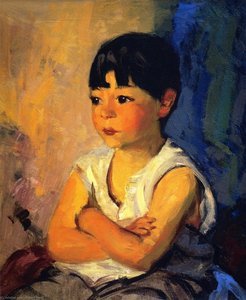
In the quiet intensity of Robert Henri’s 1909 portrait, John Butler Yeats, we encounter more than just a likeness; we witness a profound psychological encounter. This masterpiece serves as a bridge between two distinct worlds—the ethereal, Symbolist-inspired Romanticism of the Irish master and the gritty, unyielding realism that Henri would eventually pioneer through the Ashcan School. The subject, the esteemed father of poet W.B. and artist Jack B. Yeats, sits before us with a presence that is both commanding and contemplative. His gaze, directed squarely at the viewer, pierces through the layers of time, inviting an intimate communion that transcends the mere application of oil on canvas.
The composition is masterfully balanced, capturing a moment of stillness amidst the burgeoning energy of the early twentieth century. As the subject rests with hands crossed, there is a palpable sense of weight and history in his posture. The presence of other figures, partially glimpsed in the periphery, adds a layer of narrative depth, suggesting a shared space of intellectual or artistic discourse. This is not a solitary study but a window into a social and creative ecosystem where ideas were exchanged as fluidly as the brushstrokes themselves.
Technique and the Texture of Reality
To behold this work is to appreciate the visceral power of Henri’s technique. Eschewing the polished, academic finish of his predecessors, Henri employs a method characterized by rapid, energetic application. The paint is not merely applied; it is sculpted upon the surface. One can trace the movement of the brush through the thick, textured layers that define the subject's beard and the heavy folds of his attire. This tactile quality lends the portrait an organic vitality, making the sitter feel as though he possesses a physical breath and warmth.
The palette is a sophisticated study in earthy resonance. Henri utilizes a spectrum of browns, ochres, and muted grays to ground the subject in reality, yet he infuses these tones with a luminous quality that prevents the scene from feeling somber. The interplay of light and shadow—the chiaroscuro effect—is used not just for anatomical accuracy, but to sculpt emotion. The way light catches the edge of a collar or the glint in an eye creates a rhythmic movement across the canvas, guiding the viewer’s eye through a landscape of skin, fabric, and atmosphere.
A Legacy for the Discerning Collector
For the art lover or the interior designer, a reproduction of this portrait offers much more than aesthetic decoration; it provides an anchor of intellectual and emotional depth. The painting embodies the tension between the old world and the new, making it a perfect centerpiece for spaces that value heritage, storytelling, and the profound beauty of human character. Its muted, sophisticated color scheme allows it to integrate seamlessly into diverse environments, from the classic elegance of a traditional library to the bold, contemporary lines of a modern loft.
Owning a piece that captures such a pivotal moment in art history—the collision of Yeats’s lyrical depth and Henri’s unflinching honesty—is an opportunity to surround oneself with the very essence of artistic evolution. This portrait remains a testament to the enduring power of the human spirit, captured through a lens of uncompromising truth and masterful artistry.
Biografia dell'artista
Inizi Difficili e Formazione
Robert Henri, nato Robert Henry Cozad il 24 giugno 1865 a Cincinnati, Ohio, ebbe un'infanzia segnata da una relazione tumultuosa tra i suoi genitori, John Jackson Cozad, giocatore d’azzardo e sviluppatore immobiliare, e Theresa Gatewood Cozad. Un evento significativo nel 1882 avrebbe cambiato il corso delle loro vite. Studiò alla Pennsylvania Academy of the Fine Arts a Filadelfia sotto Thomas Anshutz, per poi recarsi a Parigi nel 1888 all'Académie Julian, dove fu influenzato da William-Adolphe Bouguereau e François Millet, abbracciando infine l’impressionismo.La Scuola Ashcan e "The Eight"
Henri divenne una figura di spicco della scuola Ashcan del realismo americano e un organizzatore de "The Eight", un'associazione informale di artisti che protestavano contro le pratiche espositive restrittive della potente e conservatrice National Academy of Design. Questo gruppo includeva William Glackens, George Luks, Everett Shinn e John Sloan. Henri si distinse per la sua volontà di rappresentare la vita urbana in modo crudo e realistico, senza idealizzazioni.Evoluzione Artistica e Influenze
Il percorso artistico di Henri fu caratterizzato da una continua evoluzione. Inizialmente influenzato dall'impressionismo francese, sviluppò un proprio stile che si concentrava sulla rappresentazione della vita quotidiana americana, con particolare attenzione alle scene urbane e ai ritratti di persone comuni. La sua opera risentì dell’influenza di artisti come Franz Hals, ammirato per la sua capacità di catturare l'essenza dei suoi soggetti in modo rapido e diretto.Insegnamento e Impatto
Henri iniziò a insegnare alla Philadelphia School of Design for Women nel 1892. Tra i suoi studenti si annoverano figure importanti come Joseph Stella, Edward Hopper, Rockwell Kent, George Bellows, Norman Raeben, Louis D. Fancher e Stuart Davis. Il suo approccio all'insegnamento era incentrato sull’incoraggiamento degli studenti a sviluppare la propria visione artistica e a esprimere se stessi liberamente. La sua influenza si estese ben oltre l'aula, contribuendo a formare una nuova generazione di artisti americani.Opere Chiave e Riconoscimenti
Tra le opere più significative di Henri figurano "Donna con Mantello" (1899) e "La Neige" ("La neve"), acquistata dal governo francese per essere esposta al Musée du Luxembourg. Nel 1929, fu nominato uno dei tre artisti americani viventi più importanti dall'Arts Council of New York. La sua eredità è quella di un artista che ha saputo cogliere l’autenticità della vita americana e trasmetterla attraverso la sua arte, influenzando profondamente il corso del realismo americano.- Opere Principali: "Donna con Mantello" (1899), "La Neige" ("La neve").
- Studenti Notabili: Joseph Stella, Edward Hopper, Rockwell Kent, George Bellows, Norman Raeben, Louis D. Fancher, Stuart Davis.
- Movimento Artistico: Scuola Ashcan del Realismo Americano.

Robert Henri
1865 - 1929 , Stati Uniti d'America
Informazioni rapide
- Artistic Movement Or Style: Realismo americano (Ashcan)
- Artists Or Movements Influenced By This Artist:
- Edward Hopper
- Rockwell Kent
- Artists Who Influenced This Artist:
- William-Adolphe Bouguereau
- François Millet
- Date Of Birth: 24 giugno 1865
- Date Of Death: 1929
- Full Name: Robert Henri
- Nationality: Americano
- Notable Artworks:
- Woman in Manteau
- La Neige
- Place Of Birth: Cincinnati, USA
Articoli correlati

John Constable: I 25 Capolavori che Celebrano la Bellezza della Campagna Inglese
Esplora i 25 capolavori di John Constable, il maestro del Romanticismo inglese. Paesaggi suggestivi, luce naturale e colori vibranti ti aspettano. Acquista riproduzioni d'arte di alta qualità su OriginalUniqueArt.com e porta la bellezza della campagna inglese nella tua casa.

John Singer Sargent: I 25 Capolavori Immortali per Arredare con Stile
Esplora i 25 capolavori di John Singer Sargent, pittore americano simbolo dell'Impressionismo e del Gilded Age. Ritratti iconici, acquerelli luminosi e storie affascinanti. Trova la tua opera d'arte ideale su OriginalUniqueArt.com!
Henri Matisse: I 25 Capolavori Essenziali per Amare l'Arte e Decorare con Stile
Esplora i 25 capolavori di Henri Matisse, il maestro del fauvismo e dei colori vivaci. Scopri la storia, lo stile unico e l'impatto culturale di ogni dipinto. Trova riproduzioni arte di alta qualità per decorare casa tua su OriginalUniqueArt.com.
The Ashcan School: Realism, Urban Life & the Democratization of American Art
Explore the revolutionary Ashcan School! Discover how artists like Henri & Sloan challenged tradition with gritty realism, capturing urban life in early 20th-century America. Learn about their impact on American art history.
Robert Henri e la Scuola Ashcan: Un Realismo Urbano Rivoluzionario
Esplora la rivoluzionaria Scuola Ashcan e Robert Henri, il suo fondatore. Scopri il realismo urbano americano, le tematiche sociali e l'impatto duraturo di questo movimento artistico unico.