Anteprima in scala reale
 Invia
Invia Condividi
 Dettagli opera
 Guida
Guida

 Scarica
 Simili
 Radiografia
 Slideshow
 Statistiche
White Lady
 Acrylic On Canvas
- WallArt
- Modernisme
 1891
1891- 19th Century
 55.0 x 35.0 cm
 Museo Cau Ferrat
 Espandi i dettagli
Riproduzione a olio fatta a mano
Olio su tela dipinto a mano nelle tue dimensioni e con la tua cornice, realizzato su ordinazione dai nostri artisti. ( Passa alle stampe Passa all'immagine digitale)




P118B €10

P118H €10

P118W €10

P438Z €10

P508JH €12

P508YH €12

P805H €10

P805Z €10

P919BZ €10

P919G €10

P919XJ €10

P959ZH €10

P968JZ €12

W106C €8

W218G €10

W218JH €8

W218Y €10

W307PJ €10

W316G €10

W316PJ €8

W316Y €10

W398PJ €8

W4111J €10

W500HY €15

W500JH €15

W692G €12

W849H €8

W940BG €15

W953PJ €8




Scegli tra le nostre dimensioni predefinite, che rispettano le proporzioni originali dell'opera d'arte.

Inserisci la larghezza e l'altezza desiderate, per adattarle alla tua cornice o alla tua parete. Trattandosi di un'opera dipinta a mano, in caso di dimensioni con un formato differente, l'artista può estendere leggermente il dipinto oltre i bordi dell'immagine o ritagliare una piccola parte — la scelta spetta a te. Ti invieremo un mockup digitale da approvare prima che la realizzazione abbia inizio. L'immagine mostrata in questa pagina non rappresenta il risultato finale — solo il mockup lo fa.
Dopo l'ordine, il team di OriginalUniqueArt.com contatterà il cliente via e-mail per ricevere le istruzioni e fornirà un'anteprima del mockup
Consegna in tutto il mondo () in 3/4 settimane anziché nelle normali 5 settimane. (27 Ottobre). Nessun compromesso sulla qualità.

Spedizione espressa gratuita in tutto il mondo

Tela in lino di alta qualità

Assicurazione completa sulla spedizione

Garanzia di rimborso dei dazi doganali

Garanzia di fedeltà cromatica assoluta

Politica di reso entro 100 giorni (solo per difetti di fabbricazione)

Garanzia di rimborso al 100%

Offerta per acquisti multipli
 L'opzione vetro è disponibile solo per dimensioni inferiori a 110 cm

White Lady
Tecnica di riproduzione
Dimensioni riproduzione
-


Prezzo finale calcolato
€ 263
Ramon Casas i Carbó’s ‘White Lady’: A Portrait of Catalan Modernisme
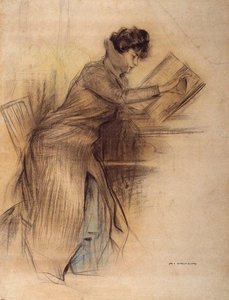
Ramon Casas i Carbó's “White Lady,” painted in 1891, is more than just a portrait; it’s a delicately rendered window into the heart of Catalan Modernisme. This intimate scene captures a woman seated on a bench, an embodiment of quiet contemplation and understated elegance – a hallmark of Casas’s artistic vision. The painting immediately draws the eye to the subject's serene expression and the soft palette dominated by whites, pinks, and subtle greens, colors that evoke both fragility and resilience, reflecting the spirit of the era.
- Subject & Composition: The central figure, a woman in a flowing white dress with a blush-toned skirt, occupies the foreground with a sense of quiet dignity. Her hands folded demurely in her lap contribute to an atmosphere of stillness and introspection. The inclusion of a nearby chair subtly suggests a moment of respite, inviting the viewer into her private world.
- Technique & Style: Casas masterfully employs Impressionistic techniques, evident in his loose brushstrokes and emphasis on capturing fleeting moments of light and shadow. This approach is particularly noticeable in the rendering of the fabrics – the delicate folds of the dress and the subtle textures of the green plants – adding a remarkable level of realism to the scene.
A Window into Barcelona’s Modernista World
Painted during a pivotal moment in Catalan art history, “White Lady” reflects the burgeoning Modernisme movement that was transforming Barcelona. This period witnessed a rejection of traditional academic styles and an embrace of new influences – notably Impressionism and Japonisme – alongside a fervent desire to express Catalan identity through artistic expression. Casas, as a key figure within this movement, skillfully blended these diverse elements, creating a style uniquely his own.
- Historical Context: 1891 Barcelona was undergoing rapid industrialization and urbanization, yet simultaneously, there was a strong cultural revival focused on Catalan heritage. Casas’s work often depicted scenes of daily life in the city, capturing both its dynamism and its underlying traditions.
- The Artist's Influence: Casas’s connections within the artistic circles of Barcelona – including his friendships with figures like Santiago Rusiñol – further cemented his position as a leading voice of Modernisme.
Symbolism & Emotional Resonance
While seemingly simple in its composition, “White Lady” is rich in symbolic potential. The color white itself often represents purity and innocence, while the woman’s posture suggests vulnerability and contemplation. The green plants introduce a natural element, symbolizing life, growth, and perhaps even hope. The overall effect is one of quiet beauty and emotional depth – inviting viewers to ponder themes of solitude, reflection, and the transient nature of existence.
- Color Palette: The restrained color palette contributes significantly to the painting’s mood, creating a sense of calm and serenity.
- Light & Shadow: Casas's skillful use of light and shadow adds depth and dimension to the portrait, enhancing its realism and emotional impact.
A Timeless Masterpiece – A Perfect Reproduction
This hand-painted reproduction captures every nuance of Casas’s original masterpiece, offering a stunning addition to any art collection or interior space. The meticulous attention to detail, combined with the artist's signature Impressionistic style, ensures that this artwork will continue to captivate and inspire for generations to come. Whether you are an admirer of Modernisme, a collector seeking exceptional pieces, or an interior designer looking to create a sophisticated atmosphere, “White Lady” is a truly timeless investment.
Domande e risposte
Quale tono emotivo accompagna lo stile Modernisme di "White Lady"?
L'emozione Reflective di "White Lady" accompagna il suo stile Modernisme.
Cosa rappresenta "White Lady" di Ramon Casas I Carbó e quale atmosfera trasmette?
"White Lady" di Ramon Casas I Carbó unisce portrait woman, catalan scene, white dress, bench seating, pink skirt, green plants, ramon casas con un'atmosfera Ethereal.
Quanto sono vivaci i colori di "White Lady"?
I colori di "White Lady" di Ramon Casas I Carbó presentano una saturazione Subtle Color e un'intensità Balanced.
Biografia dell'artista
Ramon Casas i Carbó: Una Vita Dedicata all'Arte e alla Modernità Catalana
Ramon Casas i Carbó (Barcellona, 4 gennaio 1866 – Barcellona, 17 marzo 1932) è stato un pittore, disegnatore e incisore spagnolo, figura chiave del Modernismo catalano. La sua opera riflette la vibrante vita culturale di Barcellona alla fine del XIX secolo e all'inizio del XX, combinando elementi di Realismo, Impressionismo e simbolismo con una forte identità catalana.
La Formazione Artistica e i Primi Successi
Casas nacque in una famiglia benestante; suo padre aveva accumulato una fortuna a Cuba. Abbandonò gli studi regolari nel 1877 per dedicarsi all'arte, entrando nello studio di Joan Vicens. La sua precoce abilità lo portò rapidamente alla ribalta. I suoi primi lavori si concentrarono su ritratti e caricature dell’élite catalana, spagnola e francese, dimostrando un notevole talento nel catturare la personalità dei soggetti. Tra le sue opere giovanili più significative spiccano:
- Autoritratto da ballerino di flamenco (1883): Quest'opera gli valse l’invito a unirsi alla Société d'artistes français, un riconoscimento importante per un giovane artista.
- Corrida de toros (1884): Un dipinto che evidenzia la sua capacità di rappresentare scene affollate e dinamiche, catturando l’atmosfera intensa della corrida.
L'Evoluzione Artistica e le Collaborazioni
Negli anni '90, Casas continuò a sviluppare il suo stile, dimostrando una crescente maturità artistica. Intérieur du moulin de la galette (1891), esposto alla Berlin International Exposition dove ricevette una medaglia, testimonia questa evoluzione. Casas non fu solo un artista solitario; collaborò attivamente con altri artisti, in particolare con Santiago Rusiñol, con il quale viaggiò attraverso la Catalogna nel 1889, documentando paesaggi e scene di vita quotidiana. La sua associazione con la Société d'artistes français gli permise di esporre le sue opere al Salon senza dover affrontare una selezione a giuria.
Temi Chiave e Stile Artistico
L’opera di Casas è caratterizzata da diversi elementi distintivi:
- Ritratto: Casas eccelleva nel ritrarre personaggi della sua epoca, catturando non solo la loro somiglianza fisica ma anche il loro carattere e la loro posizione sociale.
- Scene di vita catalana: Molte delle sue opere raffigurano scene di vita quotidiana in Catalogna, offrendo uno spaccato autentico della cultura e delle tradizioni locali.
- Influenze artistiche: Il suo stile è una fusione di Realismo e Impressionismo, con un'attenzione particolare alla luce e al colore. Si possono notare anche influenze del simbolismo, soprattutto nelle sue opere più tarde.
- Grafica e Manifesti: Casas si distinse anche come designer grafico, creando manifesti pubblicitari innovativi per caffè, teatri e altri locali di Barcellona, contribuendo a definire l'estetica della città.
Eredità e Riconoscimento
Ramon Casas i Carbó lasciò un’impronta significativa nell’arte catalana e spagnola. Le sue opere sono oggi esposte in importanti musei, tra cui:
- Museu Cau Ferrat (Sitges): Ospita diverse delle sue opere, tra cui Nudo femminile e Nudo con chitarra.
- Museu d'Art Contemporani de Barcelona (MACBA): Presenta una selezione rappresentativa della sua produzione artistica.
La sua capacità di combinare l’osservazione realistica con un tocco impressionista e la sua profonda connessione con la cultura catalana lo rendono una figura fondamentale del Modernismo spagnolo, celebrato per il suo contributo all'arte e alla vita culturale della Catalogna.

Ramon Casas I Carbó
1866 - 1932 , Spagna
Dettagli rapidi
- Artisti Influenti: ['Joan Vicens']
- Data Di Nascita: 4 gennaio 1866
- Luogo Di Nascita: Barcellona, Spagna
- Movimento Artistico: Modernismo catalano
- Nazionalità: Spagnola
- Nome Completo: Ramon Casas i Carbó
- Opere Notevoli:
- Autoritratto da ballerino flamenco
- Corrida de toros
- Intérieur du moulin de la galette
- Ritratto del signor Domínguez
- Isaac Albéniz
Articoli correlati

Bianco Sublime: I 10 Dipinti Più Famosi Dominati dal Colore Bianco | .it
Esplora i 10 dipinti più celebri dominati dal bianco, da Monet a Malevich. Scopri la storia, le tecniche e l'impatto di queste opere iconiche. Trova stampe su tela e riproduzioni d'arte di alta qualità per decorare casa con stile su .

Echoes of Time: Exploring the Enduring Appeal & Historical Context of Vintage Art Prints
Explore the captivating world of vintage art prints! Discover their history, collecting tips & enduring appeal. Expert insights on chromolithography and building a legacy collection with OriginalUniqueArt.

Giclée Prints: Archival Quality & Aesthetic Nuances for the Discerning Collector
Explore the world of giclée prints with OriginalUniqueArt. Learn about archival quality, aesthetic nuances & investment potential. Expert guidance for discerning art collectors seeking museum-quality reproductions and lasting value.
The Enduring Legacy of Printmaking: Techniques, Themes & Artistic Innovation Across Centuries
Explore the rich history of printmaking with OriginalUniqueArt. Discover techniques from intaglio to lithography, learn about collecting valuable prints & find museum-quality reproductions. Expert insights for art enthusiasts and collectors.

The Enduring Legacy of Fine Art Prints: Technique, History & Aesthetic Impact
Explore the rich history & techniques of fine art prints. Discover investment potential, assess authenticity, and learn how to preserve your collection with expert guidance. Trusted insights for discerning collectors.