Anteprima in scala reale
 Invia
Invia Condividi
 Dettagli opera
 Guida
Guida

 Scarica
 Simili
 Radiografia
 Slideshow
 Statistiche
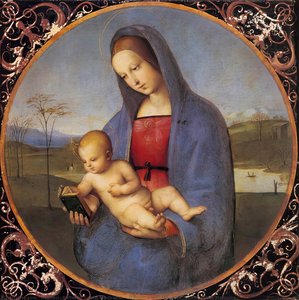
Terranuova Madonna
 Olio su tavola
- Alto Rinascimento
 1505
1505- Renaissance
 86.0 x 86.0 cm
 Espandi i dettagli
Giclée / Stampe d'arte
Stampa giclée o su tela di qualità museale, con produzione rapida e diverse opzioni di finitura. ( Acquista il dipinto realizzato a mano Passa all'immagine digitale)




P118B €10

P118H €10

P118W €10

P438Z €10

P508JH €12

P508YH €12

P805H €10

P805Z €10

P919BZ €10

P919G €10

P919XJ €10

P959ZH €10

P968JZ €12

W106C €8

W218G €10

W218JH €8

W218Y €10

W307PJ €10

W316G €10

W316PJ €8

W316Y €10

W398PJ €8

W4111J €10

W500HY €15

W500JH €15

W692G €12

W849H €8

W940BG €15

W953PJ €8




Scegli tra le nostre dimensioni predefinite, che rispettano le proporzioni originali dell'opera d'arte.

Inserisci la larghezza e l'altezza desiderate, per adattarle alla tua cornice o alla tua parete. Una stampa può essere solo ritagliata, mai resa più grande dell'immagine originale; pertanto, un formato con una forma differente comporterà la perdita di una parte dell'opera. Ti invieremo un mockup digitale da approvare prima di procedere con la stampa. L'immagine mostrata in questa pagina non rappresenta il ritaglio reale — solo il mockup lo mostra.
Consegna in tutto il mondo () in 2 settimane invece delle normali 4/5 settimane. (26 Ottobre)

Spedizione espressa gratuita in tutto il mondo

Tela in lino di alta qualità

Assicurazione completa sulla spedizione

Garanzia di rimborso dei dazi doganali

Garanzia di fedeltà cromatica assoluta

Politica di reso entro 100 giorni (solo per difetti di fabbricazione)

Garanzia di rimborso al 100%

Offerta per acquisti multipli
 L'opzione vetro è disponibile solo per dimensioni inferiori a 110 cm

Terranuova Madonna
Giclée / Stampe d'arte
Dimensioni riproduzione
-


Prezzo finale calcolato
€ 70
Terranuova Madonna: A Renaissance Vision of Motherhood
Raphael’s *Terranuova Madonna*, painted in 1505, is a captivating example of High Renaissance artistry. This oil on panel, currently housed at the Staatliche Museen zu Berlin, offers a serene and intimate portrayal of the Virgin Mary surrounded by cherubic figures. The painting's circular format – a *tondo* – was particularly popular during this period, lending itself to domestic settings and devotional practices. It’s a masterpiece that continues to inspire awe and admiration centuries later.Composition and Symbolic Harmony
The composition centers on Mary, gracefully positioned as the focal point. She tenderly holds two infants in her arms, while three additional figures peek from behind, creating a sense of depth and familial warmth. The arrangement isn’t merely aesthetic; it subtly alludes to the Holy Family and the nurturing aspect of motherhood. The tondo format itself symbolizes eternity and divine perfection, reinforcing the sacred nature of the scene. Raphael masterfully employs *chiaroscuro* – the dramatic interplay of light and shadow – to sculpt the figures, highlighting their forms and adding a sense of volume. The meticulously rendered landscape in the background isn’t just decorative; it provides a tranquil setting that mirrors the peacefulness of the central subject matter. This careful balance contributes significantly to the painting's emotional resonance.Artistic Influences & Raphael’s Style
Raphael was deeply influenced by his contemporaries, most notably Leonardo da Vinci. The extreme foreshortening evident in Mary’s hand and the relaxed pose of one Christ Child – legs crossed with a playful air – are clear nods to Leonardo’s innovative techniques. However, Raphael doesn't simply imitate; he synthesizes these influences with his own innate grace and compositional skill. He elevates Leonardo’s daring perspective into a harmonious whole, demonstrating his mastery of artistic innovation while maintaining an unwavering commitment to classical ideals. The lush landscape also reflects Northern European artistic traditions that were gaining prominence in Italy at the time – a testament to Raphael's openness to diverse inspirations.Historical Context & The Renaissance Ideal
Created during the High Renaissance – a period marked by renewed interest in classical art and humanist philosophy – the *Terranuova Madonna* embodies the era’s ideals of beauty, harmony, and proportion. Florence, where Raphael painted this work, was a hotbed of artistic innovation, fostering competition and collaboration among masters. Commissioned for private devotion, paintings like this were intended to inspire contemplation and reverence. Raphael's ability to imbue religious subjects with human emotion made his works particularly appealing to patrons and audiences alike. The painting reflects the broader cultural shift toward celebrating human potential alongside divine grace – a defining characteristic of Renaissance thought.Emotional Resonance & Lasting Legacy
The *Terranuova Madonna* evokes a sense of profound tenderness, peace, and maternal love. The soft colors, gentle expressions, and harmonious composition create an atmosphere of serenity that invites viewers into the scene. It’s not merely a depiction of religious figures; it's a celebration of family, innocence, and divine grace. As one of several Madonnas by Raphael held in the Staatliche Museen zu Berlin – alongside the *Colonna Madonna* and *Solly Madonna* – this painting stands as a testament to his enduring legacy as a master of Renaissance art.- Ideal for collectors seeking iconic Renaissance works.
- A stunning focal point for interior design, bringing classic elegance to any space.
- An inspiring piece for art enthusiasts and students alike.
The Urbino Renaissance: Raphael’s Early Life and Formation
Raffaello Sanzio da Urbino, known to the world as Raphael, emerged from a remarkably fertile cultural landscape. Born in 1483 within the walls of Urbino, a small but intellectually vibrant city-state in central Italy, his earliest years were steeped in an atmosphere that prized both artistic skill and humanist learning. His father, Giovanni Santi, was not merely a painter employed by Duke Federico da Montefeltro—he was a man deeply engaged with the currents of Renaissance thought, a poet who chronicled the Duke’s life and actively sought out innovative artistic ideas from across Italy and beyond. This immersion in a courtly environment, one that valued refinement and intellectual discourse, profoundly shaped the young Raphael's sensibilities. The loss of his father at age eleven thrust responsibility upon him, but also provided an opportunity to hone his skills within the family workshop, absorbin
Domande e risposte
È possibile ordinare una riproduzione a olio di "Terranuova Madonna"?
"Terranuova Madonna" è disponibile come una riproduzione a olio dipinta a mano su tela di lino. È possibile effettuare l'ordine nella pagina Riproduzione dipinta a mano, scegliendo tra diverse dimensioni.
Che tipo di opera d'arte è "Terranuova Madonna" di Raffaello?
"Terranuova Madonna" di Raffaello è classificato come wall art. La categoria descrive la tipologia di opera d'arte dell'originale.
Chi ha realizzato "Terranuova Madonna" e in che anno?
L'autore di "Terranuova Madonna" è Raffaello e l'opera risale al 1505.
Biografia dell'artista
**primi anni di vita e formazione**
Raphael (Raffaello Sanzio da Urbino), un rinomato pittore e architetto italiano, nacque tra il 28 marzo e il 6 aprile 1483, nella piccola ma culturalmente significativa città di Urbino. Suo padre, Giovanni Santi, era un pittore di corte per il duca, offrendo a Raffaello un'esposizione precoce al mondo dell’arte. Dopo la morte del padre all'età di undici anni, Raffaello probabilmente gestì l'officina familiare, consolidando ulteriormente le sue fondamenta artistiche.**carriera artistica e influenze**
Il percorso artistico di Raffaello può essere suddiviso in tre fasi distinte, ciascuna caratterizzata da uno stile unico:- primi anni a Umbriglia: caratterizzati dall'influenza del padre e dall'atmosfera culturale di Urbino.
- periodo fiorentino (1504-1508): assorbendo le tradizioni artistiche di Firenze, che hanno profondamente influenzato il suo stile.
- periodo romano (1508-1520): lavorando per due papi e i loro associati, producendo alcune delle sue opere più celebrate, tra cui La scuola di Atene nella stanza della segnatura Vaticana.
**opere notevoli e eredità**
Alcune delle opere più importanti di Raffaello includono:- Il giudizio di Solemano (visualizza su OriginalUniqueArt)
- La Madonna di Esterhazy (visualizza su OriginalUniqueArt)
- Stanze Vaticane - Vista della stanza della segnatura (visualizza su OriginalUniqueArt)
- S. Sebastiano (visualizza su OriginalUniqueArt)
- La donna velata (visualizza su OriginalUniqueArt)
**influenza e eredità**
L'influenza di Raffaello sull'arte è profonda, con le sue opere che costituiscono un pilastro del Rinascimento maturo. Il suo stile sereno e armonioso è stato un modello per la pittura neoclassica, come notato da l' storico dell'arte Johann Joachim Winckelmann. Nonostante l'influenza successiva dello stile di Michelangelo, Raffaello rimane uno degli artisti più celebrati della storia. visualizza il profilo di Raffaello su OriginalUniqueArt
Raffaello
1483 - 1520 , Italia
Dettagli rapidi
- Artisti Influenti:
- Giovanni Santi
- Pietro Perugino
- Leonardo da Vinci
- Michelangelo
- Artisti Influenzati: ['Neoclassicismo']
- Data Di Morte: 6 aprile 1520
- Data Di Nascita: 28 marzo 1483
- Luogo Di Nascita: Urbino, Italia
- Movimento Artistico: Rinascimento maturo
- Nazionalità: Italiana
- Nome Completo: Raffaello Sanzio da Urbino
- Opere Notevoli:
- La Scuola di Atene
- Madonna Solly
- Madonna del Cardellino
- Le Tre Grazie
- La Messa a Bolsena
Articoli correlati
Oil on Panel: The Ultimate Guide to Bold, High-Impact Texture & Depth
Master the art of impact with our expert guide to oil on panel. Discover how impasto textures and heavy-body pigments create 3D depth and bold visual energy for modern interiors. Elevate your space with high-impact, hand-painted masterpieces designed for maximum aesthetic punch.
Mastering the Surface: A Historical and Technical Guide to the Art of Oil on Panel Painting
Explore the profound history and technical brilliance of oil on panel painting. From Renaissance masters to modern techniques, discover why this rigid support offers unparalleled precision and permanence for fine art lovers and collectors.
I 10 Capolavori a Olio su Tavola che Hanno Rivoluzionato la Storia dell'Arte
Esplora i 10 capolavori a olio su tavola che hanno segnato la storia dell'arte! Da Botticelli a Leonardo, scopri le storie e le tecniche dei maestri. Trova riproduzioni d'arte di alta qualità per decorare casa con stile su .
Raffaello Sanzio: I 25 Capolavori Immortali dell'Arte Rinascimentale | OriginalUniqueArt
Esplora i 25 capolavori immortali di Raffaello Sanzio, il maestro del Rinascimento italiano. Scopri la storia, le tecniche e l'emozione dietro dipinti iconici come 'La Scuola di Atene'. Trova riproduzioni d'arte di alta qualità per decorare casa tua su OriginalUniqueArt.com.
Oil on Panel: A Historical Survey of Technique, Support, and Aesthetic Impact
Explore the rich history of oil on panel painting! Discover Renaissance techniques, support construction, & the enduring legacy of this masterful art form. Expert insights for collectors and enthusiasts.