Anteprima in scala reale
 Condividi
 Condividi
 Dettagli
 Guida stampabile

 Scarica
 Articoli simili
 Radiografia
 Slideshow
 Statistiche
Ritratto di Agnolo Doni
 Olio su tavola
- Alto Rinascimento
 1506
1506- Renaissance
 63.0 x 45.0 cm
 Palazzo Pitti
 Leggi tutto
Giclée / Stampe d'arte
Stampa giclée o su tela di qualità museale, con produzione rapida e diverse opzioni di finitura. ( Ordina la riproduzione dipinta a mano Passa all'immagine digitale)




P118B €10

P118H €10

P118W €10

P438Z €10

P508JH €12

P508YH €12

P805H €10

P805Z €10

P919BZ €10

P919G €10

P919XJ €10

P959ZH €10

P968JZ €12

W106C €8

W218G €10

W218JH €8

W218Y €10

W307PJ €10

W316G €10

W316PJ €8

W316Y €10

W398PJ €8

W4111J €10

W500HY €15

W500JH €15

W692G €12

W849H €8

W940BG €15

W953PJ €8




Scegli tra le nostre dimensioni predefinite, che rispettano le proporzioni originali dell'opera d'arte.

È possibile inserire dimensioni personalizzate per adattare l'opera a una cornice o a uno spazio specifico. Se la dimensione selezionata non corrisponde alle proporzioni dell'immagine originale, procederemo al ritaglio dell'opera o all'estensione dell'immagine con un bordo specchiato o a tinta unita. Un mockup digitale ti verrà inviato per approvazione prima dell'inizio della produzione.
Si prega di notare che l'anteprima a schermo non riflette il ritaglio o l'estensione effettivi. Solo il mockup mostrerà accuratamente la composizione finale.
Sebbene siano disponibili dimensioni personalizzate, si raccomanda di selezionare una dimensione dall'elenco predefinito per preservare le proporzioni originali.
Consegna in tutto il mondo () in 2 settimane invece delle normali 4/5 settimane. (11 Ottobre)

Spedizione espressa gratuita in tutto il mondo

Tela in lino di alta qualità

Assicurazione completa sulla spedizione

Garanzia di rimborso dei dazi doganali

Garanzia di perfetta fedeltà cromatica

Politica di reso entro 100 giorni (solo per difetti di fabbricazione)

Garanzia di rimborso al 100%

Sconto per acquisti multipli
 L'opzione vetro è disponibile solo per dimensioni inferiori a 110 cm

Ritratto di Agnolo Doni
Giclée / Stampe d'arte
Dimensioni della riproduzione
-


Prezzo totale
€ 69
Portrait of Agnolo Doni
Raphael’s *Portrait of Agnolo Doni*, painted in 1506, is not merely a likeness but a profound statement about Florentine identity and the burgeoning humanist ideals of the High Renaissance. This captivating oil on panel, currently housed within the esteemed Pitti Palace Museum in Florence, offers a compelling glimpse into the world of a wealthy merchant and reflects Raphael’s mastery of portraiture during his formative years.
Subject & Style: A Man of His Time
Agnolo Doni, depicted with striking directness, is presented as a man of substance and quiet confidence. He isn't adorned with ostentatious displays of wealth; instead, his status is conveyed through the quality of his garments – a dark hat and a vibrant red jacket – and his assured gaze. Raphael eschews the elaborate backgrounds common in earlier portraiture, opting for a subtly rendered landscape that doesn’t distract from the sitter but rather complements his presence. The painting exemplifies the High Renaissance style: characterized by harmonious composition, balanced forms, and an idealized yet realistic portrayal of the human figure. Raphael's ability to capture both physical likeness *and* psychological depth is remarkable.
Technique & Artistic Influences
The execution of this portrait showcases Raphael’s exceptional technical skill. The smooth blending of oil paints creates a luminous quality, particularly noticeable in the rendering of Doni’s skin tones and the rich texture of his clothing. Raphael was deeply influenced by both Leonardo da Vinci and Michelangelo during his time in Florence. From Leonardo, he absorbed techniques for *sfumato* – the subtle blurring of lines to create a soft, atmospheric effect – while from Michelangelo, he gained an appreciation for anatomical accuracy and dynamic poses (though Doni’s pose is deliberately restrained). However, Raphael synthesized these influences into a style uniquely his own—one marked by grace, clarity, and harmonious balance.
Historical Context: Florence in 1506
Florence in 1506 was a vibrant hub of artistic innovation and political intrigue. The city-state, recently experiencing shifts in power, was undergoing a cultural flourishing fueled by wealthy patrons like Agnolo Doni himself. Doni belonged to an established Florentine family involved in commerce and banking. Commissioning this portrait wasn’t simply about vanity; it was a statement of social standing and civic pride. The Pitti Palace Museum, originally built for the Pitti family and later acquired by the Medici, provides a fitting home for this testament to Florentine history.
Symbolism & Emotional Impact
While seemingly straightforward, the portrait contains subtle symbolic elements. The ring on Doni’s finger suggests marital status or perhaps engagement, hinting at his familial responsibilities and social connections. More importantly, the directness of his gaze invites a connection with the viewer – a sense of intimacy rarely found in portraits of this period. The painting evokes a feeling of quiet dignity and intellectual curiosity. It's not an overtly emotional work, but rather one that conveys a sense of inner strength and self-possession.
For art collectors: Raphael’s *Portrait of Agnolo Doni* represents a significant investment in a cornerstone of Renaissance art history. Its provenance, artistic merit, and historical importance make it a highly sought-after piece. For interior designers: The painting's sophisticated color palette—the deep blacks, rich reds, and subtle earth tones—lends itself beautifully to both traditional and contemporary interiors. It adds a touch of timeless elegance and intellectual gravitas to any space.
Experience the enduring beauty of Renaissance art. A high-quality reproduction allows you to bring the sophistication and historical richness of Raphael’s masterpiece into your home or office.
Photo Description: --Overall Impression-- The artwork is a portrait of a young man in the style of Renaissance painting. It’s a close-up depiction with a focus on his face and hands, set against a softly rendered landscape background. The composition is balanced, with the subject centrally positioned and occupying most of the frame. The use of lines is primarily linear, defining the contours of the figure's face, hair, clothing, and the horizon line in the background. Shapes are predominantly organic – the curves of his face, hair, and hands contrast with the geometric forms of the hat and clothing folds. The texture appears smooth and refined, characteristic of oil painting technique, particularly evident in the skin tones and fabric details. Lighting is soft and diffused, creating subtle gradations of tone and highlighting key features like the eyes and hand. Perspective is relatively shallow, focusing on a frontal view with minimal atmospheric perspective to create depth. Size: 63 x 45 cm Date: 1506Domande e risposte
In quale ambiente si consiglia di collocare "Ritratto di Agnolo Doni" di Raffaello?
Una riproduzione di "Ritratto di Agnolo Doni" si adatta perfettamente a un/una Zona giorno.
In che anno è stata realizzata l'opera "Ritratto di Agnolo Doni" di Raffaello?
"Ritratto di Agnolo Doni" di Raffaello è stata creata nel 1506.
In che modo "Ritratto di Agnolo Doni" si inserisce nei temi e nello stile di Raffaello?
"Ritratto di Agnolo Doni" condivide con le altre opere di Raffaello lo stile Alto Rinascimento e i temi ricorrenti: patronato dei medici, società fiorentina, umanesimo, ideali di bellezza ideale, commissioni papali.
Che atmosfera Ritratto di Agnolo Doni saprebbe donare a un ambiente?
L'atmosfera Classico di "Ritratto di Agnolo Doni" di Raffaello si sposa perfettamente con lo spazio consigliato: un/una Zona giorno.
Quanti anni aveva Raffaello quando ha creato "Ritratto di Agnolo Doni" nel 1506?
Raffaello aveva 23 anni quando ha creato "Ritratto di Agnolo Doni" nel 1506. L'età è calcolata sulla base dell'anno di nascita dell'artista, 1483.
"Ritratto di Agnolo Doni" di Raffaello è un'opera dai toni chiari o scuri?
"Ritratto di Agnolo Doni" ha una luminosità complessiva di brilliant, con una luminanza pari a Bright Balance.
Chi è l'artista dietro "Ritratto di Agnolo Doni"?
L'artista che ha creato "Ritratto di Agnolo Doni" è Raffaello. L'opera è catalogata sotto il nome di Raffaello.
Biografia dell'artista
**primi anni di vita e formazione**
Raphael (Raffaello Sanzio da Urbino), un rinomato pittore e architetto italiano, nacque tra il 28 marzo e il 6 aprile 1483, nella piccola ma culturalmente significativa città di Urbino. Suo padre, Giovanni Santi, era un pittore di corte per il duca, offrendo a Raffaello un'esposizione precoce al mondo dell’arte. Dopo la morte del padre all'età di undici anni, Raffaello probabilmente gestì l'officina familiare, consolidando ulteriormente le sue fondamenta artistiche.**carriera artistica e influenze**
Il percorso artistico di Raffaello può essere suddiviso in tre fasi distinte, ciascuna caratterizzata da uno stile unico:- primi anni a Umbriglia: caratterizzati dall'influenza del padre e dall'atmosfera culturale di Urbino.
- periodo fiorentino (1504-1508): assorbendo le tradizioni artistiche di Firenze, che hanno profondamente influenzato il suo stile.
- periodo romano (1508-1520): lavorando per due papi e i loro associati, producendo alcune delle sue opere più celebrate, tra cui La scuola di Atene nella stanza della segnatura Vaticana.
**opere notevoli e eredità**
Alcune delle opere più importanti di Raffaello includono:- Il giudizio di Solemano (visualizza su OriginalUniqueArt)
- La Madonna di Esterhazy (visualizza su OriginalUniqueArt)
- Stanze Vaticane - Vista della stanza della segnatura (visualizza su OriginalUniqueArt)
- S. Sebastiano (visualizza su OriginalUniqueArt)
- La donna velata (visualizza su OriginalUniqueArt)
**influenza e eredità**
L'influenza di Raffaello sull'arte è profonda, con le sue opere che costituiscono un pilastro del Rinascimento maturo. Il suo stile sereno e armonioso è stato un modello per la pittura neoclassica, come notato da l' storico dell'arte Johann Joachim Winckelmann. Nonostante l'influenza successiva dello stile di Michelangelo, Raffaello rimane uno degli artisti più celebrati della storia. visualizza il profilo di Raffaello su OriginalUniqueArt
Raffaello
1483 - 1520 , Italia
Informazioni rapide
- Artisti Influenti:
- Giovanni Santi
- Pietro Perugino
- Leonardo da Vinci
- Michelangelo
- Artisti Influenzati: ['Neoclassicismo']
- Data Di Morte: 6 aprile 1520
- Data Di Nascita: 28 marzo 1483
- Luogo Di Nascita: Urbino, Italia
- Movimento Artistico: Rinascimento maturo
- Nazionalità: Italiana
- Nome Completo: Raffaello Sanzio da Urbino
- Opere Notevoli:
- La Scuola di Atene
- Madonna Solly
- Madonna del Cardellino
- Le Tre Grazie
- La Messa a Bolsena
Articoli correlati

Oil on Canvas: A Historical & Technical Exploration of a Timeless Artistic Medium
Explore the rich history & enduring techniques of oil painting on canvas. Discover the science behind its longevity, conservation practices, and contemporary relevance. Expert insights for art enthusiasts.
I 10 Capolavori del Rinascimento Maturo che Hanno Definito l'Arte: Scopri i Maestri
Esplora i 10 capolavori del Rinascimento Maturo con ! Scopri Leonardo, Michelangelo, Raffaello e altri maestri. Dipinti iconici, storie affascinanti e riproduzioni d'arte di alta qualità per la tua casa. Esplora la collezione online!

The Enduring Legacy of Oil on Canvas: Technique, History & Aesthetic Impact
Explore the rich history & techniques of oil painting – from Renaissance masters to Impressionism. Discover pigments, layering methods, and why this timeless medium endures. Expert insights for artists & art enthusiasts.
Raffaello Sanzio: I 25 Capolavori Immortali dell'Arte Rinascimentale | OriginalUniqueArt
Esplora i 25 capolavori immortali di Raffaello Sanzio, il maestro del Rinascimento italiano. Scopri la storia, le tecniche e l'emozione dietro dipinti iconici come 'La Scuola di Atene'. Trova riproduzioni d'arte di alta qualità per decorare casa tua su OriginalUniqueArt.com.
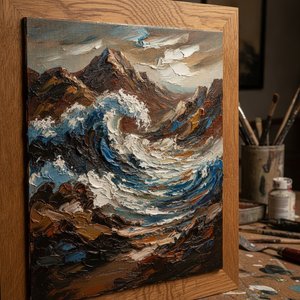
Oil on Panel: The Ultimate Guide to Bold, High-Impact Texture & Depth
Master the art of impact with our expert guide to oil on panel. Discover how impasto textures and heavy-body pigments create 3D depth and bold visual energy for modern interiors. Elevate your space with high-impact, hand-painted masterpieces designed for maximum aesthetic punch.