Menu

() ·

A painting made for you, by hand

Riproduzione a olio fatta a mano

Olio su tela dipinto a mano nelle tue dimensioni e con la tua cornice, realizzato su ordinazione dai nostri artisti. ( Passa alle stampe Passa all'immagine digitale)

Descrizione del reperto

Experience Qiu Ying's 'The Sixteen Luohans,' a stunning 16th-century Chinese handscroll showcasing masterful gongbi brushwork & intricate detail of Buddhist figures.

Biografia dell'artista

Qiu Ying (1494-1552): Pittore della dinastia Ming celebre per i suoi paesaggi, figure e fiori di stile gongbi squisito. Uno dei Quattro Maestri dell'arte cinese.

from ·

Chapter 1

How large should it be?

Slide to change the size; the wall on the left shows it at its real scale. The proportions of the original are kept.

Formato standard
su misura
CM
INCH

Scegli tra le nostre dimensioni predefinite, che rispettano le proporzioni originali dell'opera d'arte.

larghezza
altezza

Inserisci la larghezza e l'altezza desiderate, per adattarle alla tua cornice o alla tua parete. Trattandosi di un'opera dipinta a mano, in caso di dimensioni con un formato differente, l'artista può estendere leggermente il dipinto oltre i bordi dell'immagine o ritagliare una piccola parte — la scelta spetta a te. Ti invieremo un mockup digitale da approvare prima che la realizzazione abbia inizio. L'immagine mostrata in questa pagina non rappresenta il risultato finale — solo il mockup lo fa.

Chapter 2

How should it arrive?

Choose the edges of the stretched canvas

Choose your frame

Corner sample of the WhiteWrap canvas edge finish, stretched on legno massello bars
White €1
Corner sample of the BlurSideWrap canvas edge finish, stretched on legno massello bars
Blurside €1
Corner sample of the ExtendedWrap canvas edge finish, stretched on legno massello bars
Extended €1
Corner sample of the P118B picture frame: polistirene stampato, 5 cm wide and 3 cm thick
P118B €10
Corner sample of the P118H picture frame: polistirene stampato, 5 cm wide and 3 cm thick
P118H €10
Corner sample of the P118W picture frame: polistirene stampato, 5 cm wide and 3 cm thick
P118W €10
Corner sample of the P438Z picture frame: polistirene stampato, 5.5 cm wide and 3.5 cm thick
P438Z €10
Corner sample of the P508JH picture frame: polistirene stampato, 7 cm wide and 3.5 cm thick
P508JH €12
Corner sample of the P508YH picture frame: polistirene stampato, 7 cm wide and 3.5 cm thick
P508YH €12
Corner sample of the P805H picture frame: polistirene stampato, 5 cm wide and 3.5 cm thick
P805H €10
Corner sample of the P805Z picture frame: polistirene stampato, 5 cm wide and 3.5 cm thick
P805Z €10
Corner sample of the P919BZ picture frame: polistirene stampato, 7 cm wide and 3.5 cm thick
P919BZ €10
Corner sample of the P919G picture frame: polistirene stampato, 7 cm wide and 3.5 cm thick
P919G €10
Corner sample of the P919XJ picture frame: polistirene stampato, 7 cm wide and 3.5 cm thick
P919XJ €10
Corner sample of the P959ZH picture frame: polistirene stampato, 5 cm wide and 3 cm thick
P959ZH €10
Corner sample of the P968JZ picture frame: polistirene stampato, 6 cm wide and 4 cm thick
P968JZ €12
Corner sample of the W106C picture frame: legno massello, 5 cm wide and 3 cm thick
W106C €8
Corner sample of the W218G picture frame: legno massello, 5 cm wide and 3 cm thick
W218G €10
Corner sample of the W218JH picture frame: legno massello, 5 cm wide and 3 cm thick
W218JH €8
Corner sample of the W218Y picture frame: legno massello, 5 cm wide and 3 cm thick
W218Y €10
Corner sample of the W307PJ picture frame: legno massello, 6 cm wide and 3 cm thick
W307PJ €10
Corner sample of the W316G picture frame: legno massello, 6 cm wide and 3 cm thick
W316G €10
Corner sample of the W316PJ picture frame: legno massello, 6 cm wide and 3 cm thick
W316PJ €8
Corner sample of the W316Y picture frame: legno massello, 6 cm wide and 3 cm thick
W316Y €10
Corner sample of the W398PJ picture frame: legno massello, 5 cm wide and 3 cm thick
W398PJ €8
Corner sample of the W4111J picture frame: legno massello, 6.5 cm wide and 3.5 cm thick
W4111J €10
Corner sample of the W500HY picture frame: legno massello, 7 cm wide and 5 cm thick
W500HY €15
Corner sample of the W500JH picture frame: legno massello, 7 cm wide and 5 cm thick
W500JH €15
Corner sample of the W692G picture frame: legno massello, 8 cm wide and 4 cm thick
W692G €12
Corner sample of the W849H picture frame: legno massello, 5 cm wide and 3 cm thick
W849H €8
Corner sample of the W940BG picture frame: legno massello, 7.5 cm wide and 4.5 cm thick
W940BG €15
Corner sample of the W953PJ picture frame: legno massello, 6 cm wide and 3.5 cm thick
W953PJ €8
Corner sample of the H24-GOLD picture frame: legno intagliato e gessato, 10 cm wide and 6 cm thick
H24-GOLD €30
Corner sample of the H24-SILVER picture frame: legno intagliato e gessato, 10 cm wide and 6 cm thick
H24-SILVER €30
Corner sample of the H36-GOLD picture frame: legno intagliato e gessato, 15 cm wide and 6.5 cm thick
H36-GOLD €45
Corner sample of the H36-SILVER picture frame: legno intagliato e gessato, 15 cm wide and 6.5 cm thick
H36-SILVER €45
Anteprima cornice
Con cornice

Moulding: . Overall size with the frame: .

Chapter 3

Who paints it, and should anything change?

Examples of what can be changed: Replace face with customer photo; Add pet (e.g., replace cat with dog); Include hidden message in background; Change background landscape or elements.
After order, OriginalUniqueArt.com team will email client for instructions and provide a mockup preview

Consegna in tutto il mondo () in 3/4 settimane anziché nelle normali 5 settimane. (29 Ottobre). Nessun compromesso sulla qualità.

Chapter 4

The finishing touches

A nameplate, as in a museum?

Dettagli della targhetta in bronzo inciso

This elegant plaque features the artist's name and the title of the artwork, finely engraved for a timeless presentation.

It is made from bronze with a refined, elegant finish. The text is precisely laser-engraved for a sharp and permanent result. Measuring 9x2 cm, the plaque is compact yet easy to read. It's built to be durable and scratch-resistant, offering a professional, museum-quality look. Mounting is simple thanks to the included adhesive backing.

Dettagli della targhetta in acrilico trasparente

The plaque includes essential engraved details such as the artist's name, the title of the artwork, the date it was created, the type of media used-like oil on canvas or watercolor-a brief description of the piece, and a QR code that links to the complete artwork information.

It is crafted from clear acrylic, offering a sleek, modern appearance. The text is UV-engraved in black to ensure strong visual contrast. With a size of 10x15 cm, it ensures optimal readability. It comes equipped with two metal hooks for secure wall mounting. The plaque is designed to be weather-resistant, making it suitable for various environments, and it includes interactive features that work seamlessly with smartphone scanning.

Dettagli della targhetta in acrilico nero

This elegant plaque includes engraved information such as the artist's name, the title of the artwork, the date it was created, the type of media used (like oil on canvas or watercolor), a short description of the artwork, and a QR code for quick access to more information.

The plaque itself is made from refined black acrylic with a premium finish. The text is laser-engraved in white for high contrast and readability. Its size is 10x15 cm, designed to be easy to read. It comes with two metal hooks for professional mounting. The design is sleek and fits any interior style. It is also weather-resistant and durable, with built-in digital integration for mobile compatibility.

A protective varnish?

When do you need it?

Chapter 5

Your painting, as you ordered it

Handscroll

Tecnica di riproduzione

Dimensioni riproduzione

-

Artisti di alto livello

Maggiore dettaglio, finezza e tempi di produzione dedicati

-

Cornice per riproduzione

-

-

Per opere d'arte o riproduzioni con un lato superiore a 105 cm (circa 41 pollici), la cornice verrà spedita in forma di kit smontato. Questo metodo garantisce una consegna sicura e previene danni durante il trasporto.

Montaggio professionale richiesto - non è un prodotto fai-da-te.
Il kit deve essere assemblato e la tela tesa da un esperto cornice professionista, utilizzando colla per legno (non inclusa), una pinza per tendere la tela e morsetti per mantenere i listelli in squadra durante l'asciugatura della colla. Un montaggio errato o una tensione non uniforme della tela possono danneggiare permanentemente l'opera d'arte e non sono coperti dalla nostra garanzia.

  • Tutte le barre in legno massello sono incluse, tagliate con precisione alle dimensioni corrette.

  • Da assemblare con le viti fornite e con la colla per legno per gli incastri degli angoli, che non è inclusa e dovrà essere reperita dal vostro corniceio.

  • Sono necessari strumenti professionali non inclusi: una pinza tendicanvas (tenditore) e dei morsetti per mantenere i listelli in squadra durante l'asciugatura della colla.

Importante:
Gli incastri d'angolo richiedono colla per legno, i listelli devono essere mantenuti in posizione con dei morsetti finché la colla non è completamente asciutta, e il tensionamento della tela sulla cornice assemblata richiede una pinza per tendere la tela. Nessuno di questi strumenti è incluso nel kit. Si prega di consultare un incorniciatore professionista esperto prima di ordinare questa misura.

Didascalia

-

-

Vernice protettiva

Vernice lucida (esalta i colori, protegge da luce e umidità)

-

Personalizza la mia opera

Esempi di personalizzazione: sostituire il volto con una foto del cliente; aggiungere un animale domestico (ad esempio, sostituire un gatto con un cane); inserire un messaggio nascosto nello sfondo; cambiare il paesaggio o gli elementi dello sfondo.

-

Consegna rapida

Consegna in tutto il mondo () in 3/4 settimane anziché nelle normali 5 settimane. (29 Ottobre). Nessun compromesso sulla qualità.

-

Spedizione espressa

Spedizione in tutto il mondo () in 5 settimane. (5 Novembre).

Spedizione inclusa

Prezzo finale calcolato

€ 265

Prezzo totale € 265

L'opzione vetro è disponibile solo per dimensioni inferiori a 110 cm

Included with every order

  • Spedizione espressa gratuita in tutto il mondo
  • Tela in lino di alta qualità
  • Assicurazione completa sulla spedizione
  • Garanzia di rimborso dei dazi doganali
  • Garanzia di fedeltà cromatica assoluta
  • Politica di reso entro 100 giorni (solo per difetti di fabbricazione)
  • Garanzia di rimborso al 100%
  • Offerta per acquisti multipli

Qiu Ying’s “Up the River During Qingming”: A Masterpiece of Ming Dynasty Serenity

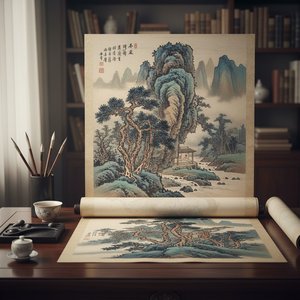
“Up the River During Qingming,” painted by Qiu Ying during the mid-16th century, is more than just a landscape; it's a carefully constructed meditation on harmony, leisure, and the enduring beauty of nature. Attributed to one of China’s Four Masters of the Ming Dynasty – alongside Shen Zhou, Tang Yin, and Wen Zhengming – this exquisite handscroll offers a rare glimpse into the refined aesthetic sensibilities of Suzhou during that era. The work, currently residing in the collection of the National Gallery of Canada, invites viewers into a tranquil scene brimming with subtle symbolism and masterful brushwork.

Qiu Ying’s artistic journey was remarkably unconventional for his time. Rather than pursuing formal training within established art circles, he began as a lacquer artisan, honing his skills in meticulous detail – a foundation that profoundly influenced the precision and control evident throughout “Up the River During Qingming.” This early experience instilled in him an unparalleled understanding of line and color, qualities he would later translate into his celebrated landscape paintings. His apprenticeship with Zhou Chen in Suzhou further solidified his technical abilities, exposing him to the techniques of the Wu School, known for its emphasis on ink washes and a more expressive approach to nature.

A Symphony of Detail: Technique and Style

The painting’s remarkable quality stems from Qiu Ying's mastery of the gongbi technique – a highly detailed, realistic style that was favored by court painters. Each element—from the meticulously rendered bamboo stalks to the delicate folds of the pavilions—is executed with painstaking precision, creating an illusion of incredible depth and texture. Notice the subtle gradations of color achieved through layering washes of ink and pigment; this creates a luminous quality that brings the scene to life. The composition is carefully balanced, drawing the eye across the landscape in a deliberate and engaging manner. The artist’s use of loose brushwork, particularly in depicting the distant mountains and flowing river, contrasts beautifully with the tightly controlled detail of the foreground elements, demonstrating Qiu Ying's versatility and his ability to seamlessly blend different artistic approaches.

Symbolism Woven into the Landscape

“Up the River During Qingming” is rich in symbolic meaning. The scene depicts a scholar leisurely enjoying a day by the river, surrounded by carefully arranged pavilions and gardens. This imagery reflects the Confucian ideals of scholarly pursuits, contemplation, and harmony with nature – values highly esteemed during the Ming Dynasty. The presence of the tavern and the farmer gathering water vegetables adds a touch of everyday life to the scene, reminding us that even amidst beauty and tranquility, human activity continues. The bamboo grove, a recurring motif in Chinese art, symbolizes resilience, integrity, and longevity—qualities admired in virtuous individuals. The distant mountains represent permanence and stability, while the flowing river embodies fluidity and change.

A Window into Ming Dynasty Culture

Beyond its aesthetic beauty, “Up the River During Qingming” offers a valuable insight into Ming Dynasty culture. It reflects the importance of gardens as spaces for contemplation, artistic expression, and social interaction. The lavish furnishings within the pavilions—including the exquisite celadon vase—demonstrate the wealth and sophistication of the era’s elite. The painting also reveals the influence of philosophical ideas, particularly those associated with Zhou Dunyi, whose “On the Love for the Lotus” inspired the scene's composition and symbolism. Qiu Ying’s ability to seamlessly integrate these diverse elements into a cohesive and harmonious whole is a testament to his artistic skill and cultural awareness.

Collecting a Legacy: Reproduction and Inspiration

Reproductions of “Up the River During Qingming” capture only a fraction of the painting's original impact. The subtle nuances of color, texture, and brushwork are difficult to replicate fully, but high-quality reproductions offer an accessible way to appreciate Qiu Ying’s artistry. This work serves as a powerful reminder of the enduring appeal of Chinese landscape painting—a genre that continues to inspire artists and captivate viewers with its beauty, symbolism, and profound sense of serenity.

Domande e risposte

Quale tecnica è stata utilizzata per "Handscroll" e in che anno è stata realizzata?

La tecnica di "Handscroll" di Qiu Ying è Acrylic On Canvas e l'opera risale al 1530.

Quanto è satura la tavolozza di "Handscroll"?

I colori di "Handscroll" di Qiu Ying presentano una saturazione Balanced Soft. La saturazione indica quanto i colori siano vivaci o attenuati.

L'opera "Handscroll" di Qiu Ying trasmette una sensazione di luminosità o di oscurità?

In termini di luminosità percepita, "Handscroll" di Qiu Ying è shadow.

In numbers

  • 1530the year it was painted
  • 29frames to choose from
  • standard sizes, in its own proportions
  • 5weeks to paint and deliver it
Qiu Ying

Qiu Ying

1494 - 1552, Cina

Dettagli rapidi

  • Artistic Movement Or Style: *Gongbi*
  • Artists Or Movements Influenced By This Artist: ['Wu School']
  • Artists Who Influenced This Artist: ['Song Dynasty masters']
  • Date Of Birth: c. 1494
  • Date Of Death: c. 1559 or 1561
  • Full Name: Qiu Ying
  • Nationality: Cinese
  • Notable Artworks:
    • Up the River During Qingming
    • Lady in a Bamboo Grove
    • Seven Sages of Bamboo Grove
    • Spring Morning in Han Palace
  • Place Of Birth: Taicang, Cina

Biografia dell'artista

Qiu Ying: Vita e Eredità

Primi Anni di Vita ed Educazione

Nato nel 1494 a Taicang (attuale provincia di Jiangsu), in Cina, Qiu Ying proveniva da una famiglia contadina. A differenza di molti artisti affermati del suo tempo che provenivano da ambienti colti, il percorso di Qiu Ying verso la notorietà artistica fu in gran parte autodidatta. Ha iniziato la sua formazione formale sotto Zhou Chen a Suzhou, un importante centro culturale durante la dinastia Ming. Questa educazione fondamentale gli ha fornito le competenze e le tecniche che avrebbero definito la sua carriera.

Sviluppo Artistico e Stile

Sebbene la scuola di Wu a Suzhou favorisse principalmente la pittura con inchiostro, Qiu Ying ha dimostrato una notevole versatilità, padroneggiando sia la delicata tecnica del gongbi – caratterizzata da dettagli precisi e colori vivaci – che lo stile verde e blu. Questa adattabilità gli ha permesso di soddisfare un'ampia clientela ed affermare la sua voce artistica unica. Ha sapientemente incorporato varie tecniche nel suo lavoro, dimostrando una capacità eccezionale di sintetizzare approcci diversi.

Patronaggio e Opere Principali

La carriera di Qiu Ying è fiorita grazie al sostegno di ricchi mecenati che hanno commissionato un'ampia gamma di soggetti. I suoi dipinti comprendevano paesaggi, scene religiose, raffigurazioni di fiori e giardini e composizioni figure. Alcune delle sue opere più celebrate includono:

  • Salendo il fiume durante il Qingming: Una magistrale resa ispirata all'originale del periodo della dinastia Song settentrionale.
  • Signora in un boschetto di bambù: Dimostrando la sua abilità nel ritrarre figure eleganti in ambienti naturali.
  • I Sette Savi del boschetto di bambù: Dimostrando la sua comprensione dei temi letterari classici.
  • Mattina primaverile nel palazzo Han: Una vivace rappresentazione della vita cortese.

Mecenati chiave includevano Chen Guan di Suzhou, e successivamente Zhou Fenglai e Xiang Yuanbian, entrambi importanti collezionisti d'arte che hanno sostenuto in modo significativo i suoi sforzi artistici.

Influenze e Caratteristiche Artistiche

L'opera di Qiu Ying riflette influenze da maestri precedenti, in particolare quelli della dinastia Song. Ha sapientemente combinato queste premesse storiche con l'estetica Ming contemporanea. I suoi dipinti sono caratterizzati da:

  • Eccezionale abilità tecnica nel gongbi.
  • Una tavolozza di colori raffinata e un'attenzione meticolosa ai dettagli.
  • La capacità di creare sia panorami grandiosi e panoramici che scene intime e dettagliate.
  • Versatilità nell'argomento e nello stile.

Significato Storico ed Eredità

Qiu Ying’s talento e versatilità gli hanno valso il riconoscimento come uno dei “Quattro Maestri” della dinastia Ming – un testamento del suo profondo impatto sulla pittura cinese. Ha colmato il divario tra stili tradizionali e gusti contemporanei, creando opere che erano sia tecnicamente brillanti che esteticamente gradevoli. La sua influenza si è estesa oltre la sua vita, ispirando generazioni di artisti con la sua maestria tecnica e il suo approccio innovativo. Rimane una figura celebrata nella storia dell'arte cinese, ammirato per la sua capacità di catturare la bellezza e trasmettere significato attraverso i suoi squisiti dipinti.

Informazioni rapide

  • Influences: Li Tang
  • Title: The Sixteen Luohans
  • Artistic style: Landscape, Buddhist
  • Movement: Ming Dynasty
  • Medium: Ink & Color on Silk
  • Notable elements or techniques: Gongbi brushwork, intricate detail

Quiz d'arte

Per ogni domanda è presente una sola risposta corretta.

Domanda 1:
What is the primary subject matter of Qiu Ying’s ‘Up the River During Qingming’?
Domanda 2:
Qiu Ying is considered one of the ‘Four Masters’ of which dynasty?
Domanda 3:
Which artistic technique is most prominently featured in Qiu Ying's paintings, as evidenced by ‘Up the River During Qingming’?
Domanda 4:
The presence of a scholar crossing a bridge in ‘Up the River During Qingming’ alludes to which philosophical concept?
Domanda 5:
What is the approximate date range during which Qiu Ying created ‘Up the River During Qingming’?

More about this painting

Anteprima in scala reale Anteprima in AR Passa alle stampe Passa all'immagine digitale Invia
Dettagli opera Guida Aggiungi ai preferiti Scarica Simili Radiografia Slideshow Q&A Statistiche