Anteprima in scala reale
 Condividi
 Condividi
 Dettagli

 Scarica immagine
 Articoli simili
 Radiografia
 Slideshow
The Concert
 Acrylic On Canvas
- WallArt
- Rococo Painting
 1741
1741 60.0 x 48.0 cm
 Gallerie dell’Accademia
 Leggi tutto
Riproduzione a olio fatta a mano
Olio su tela dipinto a mano nelle tue dimensioni e con la tua cornice, realizzato su ordinazione dai nostri artisti. ( Ordina stampa Acquista download)




P118B $10

P118H $10

P118W $10

P438Z $10

P508JH $12

P508YH $12

P805H $10

P805Z $10

P919BZ $10

P919G $10

P919XJ $10

P959ZH $10

P968JZ $12

W106C $8

W218G $10

W218JH $8

W218Y $10

W307PJ $10

W316G $10

W316PJ $8

W316Y $10

W398PJ $8

W4111J $10

W500HY $15

W500JH $15

W692G $12

W849H $8

W940BG $15

W953PJ $8




Scegli tra le nostre dimensioni predefinite, che rispettano le proporzioni originali dell'opera d'arte.

È possibile inserire dimensioni personalizzate per adattare l'opera a una cornice o a uno spazio specifico. Se la dimensione selezionata non corrisponde alle proporzioni dell'immagine originale, provvederemo a ritagliare l'opera o a estendere il dipinto con elementi aggiuntivi dipinti a mano. Un mockup digitale ti sarà inviato per approvazione prima dell'inizio della produzione.
Si prega di notare che l'anteprima a schermo non riflette il ritaglio o l'estensione effettivi. Solo il mockup mostrerà accuratamente la composizione finale.
Sebbene siano disponibili dimensioni personalizzate, consigliamo di selezionare una dimensione dall'elenco predefinito per preservare le proporzioni originali.
Dopo l'ordine, il team di OriginalUniqueArt.com contatterà il cliente via e-mail per le istruzioni e fornirà un'anteprima del mockup
Consegna in tutto il mondo () in 3/4 settimane anziché nelle normali 5 settimane. (14 Agosto). Nessun compromesso sulla qualità.

Spedizione espressa gratuita in tutto il mondo

Tela in lino di alta qualità

Assicurazione completa sulla spedizione

Garanzia di rimborso dei dazi doganali

Garanzia di fedeltà cromatica dell'originale

Politica di reso entro 60 giorni (solo per difetti di fabbricazione)

Garanzia di rimborso al 100%

Sconto per acquisti multipli
 L'opzione vetro è disponibile solo per dimensioni inferiori a 110 cm

The Concert
Tecnica di riproduzione
Dimensioni della riproduzione
-


Prezzo totale
$ 300
Descrizione dell'opera
The Concert: A Venetian Intimacy
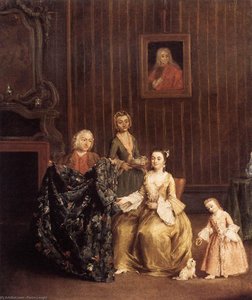
Pietro Longhi’s “The Concert,” painted in 1741, isn't merely a depiction of an evening gathering; it’s a meticulously crafted window into the heart of 18th-century Venice – a society both refined and subtly observant. Far removed from the grand historical narratives favored by many of his contemporaries, Longhi chose to capture the quiet dramas unfolding within the walls of bourgeois homes, offering a remarkably intimate glimpse into the lives of Venetian citizens. The painting immediately draws the eye with its warm, inviting palette—a blend of ochres, reds, and golds that evokes the flickering light of candlelight dancing across richly upholstered furniture. It’s a scene brimming with understated elegance, yet subtly hinting at the complexities beneath the surface of polite society.
The composition itself is deceptively simple, yet remarkably dynamic. A woman, presumably the hostess, sits poised on a bed, her hands gracefully supporting a violin – an instrument central to Venetian musical life. She appears to be singing, her posture suggesting both confidence and a touch of vulnerability. Around her, a group of figures are engaged in various activities: some listening intently, others conversing animatedly, while a young man playfully leans towards the woman, perhaps offering a flirtatious glance. The inclusion of a bird perched on a chair adds an unexpected element of charm and whimsy, subtly disrupting the formality of the scene and hinting at a more carefree spirit.
A Rococo Masterpiece: Style and Technique
“The Concert” firmly establishes Longhi as a key figure in the Venetian Rococo style. This movement, flourishing during the 18th century, prioritized elegance, grace, and a celebration of everyday life. Unlike the rigid formality of Baroque art, Rococo embraced asymmetry, delicate ornamentation, and a sense of playful informality. Longhi’s brushwork is remarkably fluid and loose, contributing to the painting's overall feeling of warmth and spontaneity. Notice how he uses broken color—small, distinct strokes of paint—to create texture and depth, particularly in the fabrics and furnishings. The figures are rendered with a remarkable degree of realism, yet imbued with a sense of charm and personality. The use of chiaroscuro – the dramatic contrast between light and shadow – further enhances the painting’s visual impact, drawing attention to key elements and creating a sense of depth.
Longhi's technical skill is evident in his masterful depiction of domestic interiors. He meticulously captures the details of the room—the ornate furniture, the delicate porcelain vase, the grandfather clock – each element contributing to the painting’s overall atmosphere. The perspective is carefully considered, creating a sense of space and inviting the viewer into the scene. The artist's attention to detail extends beyond mere representation; he seems to be conveying a feeling, an essence, of the moment captured on canvas.
Venetian Society: Context and Symbolism
To fully appreciate “The Concert,” it’s crucial to understand the social context in which it was created. Venice in the 18th century was a vibrant hub of commerce, art, and culture—a city where wealth and privilege coexisted with poverty and intrigue. Longhi's paintings offer a rare glimpse into the lives of the Venetian bourgeoisie – the merchants, bankers, and artisans who formed the backbone of the city’s economy. The scene depicted in “The Concert” reflects the values and customs of this social class—a love of music, refined conversation, and elegant entertainment.
Symbolism plays a subtle but significant role throughout the painting. The violin itself is a potent symbol of musicality and refinement, while the gathering represents the importance of social connection and leisure. The presence of the bird could be interpreted as a symbol of joy or good fortune. Even the seemingly mundane details—the clock, the vase—carry symbolic weight, reflecting the values and aspirations of Venetian society. The painting is not simply a snapshot of a particular moment; it’s a carefully constructed representation of an entire worldview.
Emotional Resonance: A Moment of Quiet Delight
Despite its historical context, “The Concert” possesses a remarkable emotional resonance that continues to captivate viewers today. It's a painting about connection, intimacy, and the simple pleasures of life—a reminder that even in the midst of bustling city life, moments of quiet delight can be found within the walls of one’s own home. The scene exudes a sense of warmth, conviviality, and understated charm. The figures seem genuinely engaged with each other, lost in the enjoyment of music and conversation.
Reproductions of “The Concert” offer an exceptional opportunity to bring this captivating Venetian scene into your own space. Whether you’re seeking to add a touch of elegance to a formal living room or create a cozy atmosphere in a study, this painting's timeless appeal will undoubtedly enhance any setting. It is more than just a beautiful image; it’s a portal to another time and place—a testament to the enduring power of art to transport us beyond our own lives.
Biografia dell'artista
Primi anni e formazione
Pietro Longhi, rinomato pittore veneziano, nacque a Venezia nella parrocchia di Santa Maria il 5 novembre 1701. Era figlio primogenito di Alessandro Falca, un argentiere, e della moglie Antonia. Longhi adottò il suo cognome quando iniziò a dipingere, inizialmente istruito dal pittore veronese Antonio Balestra.Carriera artistica
I primi lavori di Longhi includevano pale d'altare e temi religiosi, con il suo primo importante lavoro documentato essendo una pala d'altare per la chiesa di San Pellegrino nel 1732. In seguito si specializzò in opere di genere su piccola scala, guadagnandosi il titolo di "il William Hogarth veneziano". Le sue scene interiori galanti riflettono l'attenzione del XVIII secolo verso il privato e il borghese.- I dipinti di Longhi spesso presentano figure mascherate impegnate in varie attività, come l'incontro del procuratore e di sua moglie, che mostra la sua prospettiva satirica.
- Le sue opere, come cacciatori di anatra sulla laguna, dimostrano la sua capacità di catturare la vita quotidiana a Venezia.
- I numerosi disegni di Longhi, tipicamente in grafite o matita accentuati con gesso bianco su carta colorata, erano spesso realizzati per se stessi, piuttosto che come studi preparatori per i dipinti.
Influenze e sviluppo artistico
Longhi fu inizialmente influenzato dal pittore veronese Antonio Balestra, che lo introdusse alla pittura. Successivamente, il suo periodo di apprendistato con Giuseppe Maria Crespi a Bologna ebbe un impatto significativo sul suo stile, introducendolo alle tecniche della pittura di genere e all'influenza dei maestri olandesi. Questo si riflette nella sua attenzione ai dettagli realistici e nella rappresentazione accurata della vita quotidiana veneziana. Il suo sviluppo artistico fu caratterizzato da una graduale transizione dai temi religiosi a quelli profani, culminando nella specializzazione nelle scene di genere che lo resero famoso.Opere principali e stile
Longhi è noto per le sue vivaci rappresentazioni della vita veneziana del XVIII secolo. Tra le sue opere più importanti si annoverano:- Il sarto (Gallerie dell'Accademia, Venezia)
- Il battesimo (Fondazione Querini Stampalia, Venezia)
- Il pittore nel suo studio (Ca' Zenobio, Venezia)
- La scena della mostra di uno Rinoceronte, che cattura l’eccitazione e la curiosità del pubblico veneziano.
Significato storico e eredità
Pietro Longhi morì l'8 maggio 1785, lasciando dietro di sé un’eredità come uno dei più celebrati pittori di genere del suo tempo. La sua opera continua ad essere ammirata per il suo insolito connubio tra satira e vita quotidiana, offrendo uno sguardo sulla Venezia del XVIII secolo. Longhi è considerato un precursore della pittura di genere moderna e la sua influenza si può riscontrare in molti artisti successivi. Visualizza altre opere di Pietro Longhi su OriginalUniqueArt.com.
Pietro Longhi
1701 - 1785 , Italia
Informazioni rapide
- Artisti Influenti:
- Antonio Balestra
- Giuseppe Maria Crespi
- Data Di Nascita: 5 novembre 1701
- Luogo Di Nascita: Venezia, Italia
- Movimento Artistico: Rococò Veneziano
- Nazionalità: Italiana
- Nome Completo: Pietro Longhi
- Opere Notevoli:
- Il sarto
- Il battesimo
- Pittore nel suo studio
Articoli correlati

Pietro Longhi's Venetian Scenes: A Study of Rococo Society & Domestic Life
Explore the captivating world of Pietro Longhi's Venetian scenes! Discover insightful analysis of his Rococo masterpieces & social commentary on 18th-century life. Learn about this 'Venetian Hogarth' and his lasting artistic legacy.

The Rococo Aesthetic: Opulence, Rebellion & the Pursuit of Pleasure in 18th-Century Art
Explore the opulent world of Rococo art! Discover its origins, key artists like Watteau & Boucher, and lasting influence on design. Expert insights for collectors & enthusiasts.

I 10 Capolavori Rococò che Hanno Definito un'Epoca | Arte e Decorazioni di Lusso
Esplora i 10 capolavori del Rococò con ! Scopri Fragonard, Boucher e Tiepolo e lasciati ispirare da colori pastello e decorazioni di lusso. Quadri antichi e riproduzioni d'arte per interni eleganti. Esplora la collezione online!

Francesco Guardi: Luce Veneziana, Prospettiva Atmosferica e la Transizione dal Rococò al Neoclassicismo
Esplora l'opera di Francesco Guardi, maestro della pittura veneziana e innovatore del 'pittura di tocco'. Analisi approfondita del suo stile unico, la transizione dal Rococò al Neoclassicismo e il confronto con Canaletto. Scopri perché le sue vedute sono così apprezzate dai collezionisti.

Jacopo Tintoretto: I 25 Capolavori che Definiscono un Maestro del Rinascimento Veneziano | OriginalUniqueArt
Esplora i 25 capolavori di Jacopo Tintoretto, il maestro del Rinascimento veneziano. Scopri la storia, le tecniche e l'emozione dietro ogni dipinto. Trova riproduzioni artistiche di alta qualità per decorare la tua casa su OriginalUniqueArt.com.