

 Anteprima in scala reale
 Condividi
 Condividi
 Dettagli

 Scarica
 Articoli simili
 Radiografia
 Slideshow
 Statistiche
The Dancing Lesson
 Oil
Oil- WallArt
- Dutch Golden Age
 1627
1627- Early Modern
 40.0 x 53.0 cm
 Musée du Louvre
 Leggi tutto
Riproduzione a olio fatta a mano
Olio su tela dipinto a mano nelle tue dimensioni e con la tua cornice, realizzato su ordinazione dai nostri artisti. ( Passa alle stampe Passa all'immagine digitale)




P118B $10

P118H $10

P118W $10

P438Z $10

P508JH $12

P508YH $12

P805H $10

P805Z $10

P919BZ $10

P919G $10

P919XJ $10

P959ZH $10

P968JZ $12

W106C $8

W218G $10

W218JH $8

W218Y $10

W307PJ $10

W316G $10

W316PJ $8

W316Y $10

W398PJ $8

W4111J $10

W500HY $15

W500JH $15

W692G $12

W849H $8

W940BG $15

W953PJ $8




Scegli tra le nostre dimensioni predefinite, che rispettano le proporzioni originali dell'opera d'arte.

È possibile inserire dimensioni personalizzate per adattare l'opera a una cornice o a uno spazio specifico. Se la dimensione selezionata non corrisponde alle proporzioni dell'immagine originale, provvederemo a ritagliare l'opera o a estendere il dipinto con elementi aggiuntivi dipinti a mano. Un mockup digitale ti sarà inviato per approvazione prima dell'inizio della produzione.
Si prega di notare che l'anteprima a schermo non riflette il ritaglio o l'estensione effettivi. Solo il mockup mostrerà accuratamente la composizione finale.
Sebbene siano disponibili dimensioni personalizzate, consigliamo di selezionare una dimensione dall'elenco predefinito per preservare le proporzioni originali.
Dopo l'ordine, il team di OriginalUniqueArt.com contatterà il cliente via e-mail per ricevere le istruzioni e fornirà un'anteprima del mockup
Consegna in tutto il mondo () in 3/4 settimane anziché nelle normali 5 settimane. (13 Settembre). Nessun compromesso sulla qualità.

Spedizione espressa gratuita in tutto il mondo

Tela in lino di alta qualità

Assicurazione completa sulla spedizione

Garanzia di rimborso dei dazi doganali

Garanzia di perfetta fedeltà cromatica

Politica di reso entro 100 giorni (solo per difetti di fabbricazione)

Garanzia di rimborso al 100%

Sconto per acquisti multipli
 L'opzione vetro è disponibile solo per dimensioni inferiori a 110 cm

The Dancing Lesson
Tecnica di riproduzione
Dimensioni della riproduzione
-


Prezzo totale
$ 300
A Glimpse into the Golden Age: The Elegance of Motion
In the quiet, sun-drenched interiors of the seventeenth-century Netherlands, moments of domestic grace were often captured with profound reverence. Pieter Jacobsz Codde’s "The Dancing Lesson," painted in 1627, serves as a breathtaking window into this era of refined social ritual. At the heart of this composition stands a woman, her presence commanding yet graceful, draped in a striking black dress that anchors the scene's visual weight. As she guides her pupils through the rhythmic steps of a dance, the painting transcends a mere instructional moment, becoming a poetic meditation on poise, etiquette, and the structured beauty of Dutch social life. The room around her is alive with the subtle energy of a gathering, where the soft interplay of light and shadow breathes life into every figure and object.
The mastery of Codde lies in his ability to weave a complex narrative through meticulous detail and a sophisticated use of chiaroscuro. Influenced by the legendary Frans Hals, Codde employs a technique that emphasizes naturalism and psychological depth. Notice how the light falls upon the ruffled collar of the central figure, creating a brilliant contrast against the dark fabric of her gown, drawing the eye immediately to the focal point of the lesson. The surrounding figures, though partially obscured in the periphery, contribute to a sense of atmospheric depth, their positions suggesting a layered, bustling environment. Every element, from the heavy wooden chair to the books resting upon the dining table, is rendered with such precision that one can almost feel the stillness of the room punctuated by the soft shuffling of feet.
Technical Brilliance and the Dutch Aesthetic
For the discerning collector or interior designer, this piece offers a masterclass in the silvery-gray tonalities that defined the Dutch Golden Age. Codde’s brushwork captures the tactile reality of the era—the crispness of linen, the weight of dark wool, and the smooth surface of polished wood. The composition is balanced yet dynamic; while the central figure provides a stable vertical axis, the scattered arrangement of people and objects creates a rhythmic flow that mimics the dance itself. This careful orchestration of space makes the artwork an exceptional choice for creating a focal point in a room, offering both a sense of historical gravity and a light, airy sophistication.
Beyond its technical brilliance, "The Dancing Lesson" carries a profound emotional resonance. There is a sense of nostalgic tranquility in the scene—a celebration of a world where time moved to the tempo of music and social interaction was governed by a graceful, shared decorum. It invites the viewer to step back into a period of burgeoning prosperity and cultural refinement. Whether placed in a formal study or a contemporary living space, this reproduction serves as more than mere decoration; it is an invitation to contemplate the enduring beauty of human connection and the quiet elegance found in life's most simple, choreographed moments.
Biografia dell'artista
Pieter Jacobsz Codde: A Master of Dutch Genre Painting
Pieter Jacobsz Codde (1599 – October 12, 1678) stands as a prominent figure in the Dutch Golden Age artistic landscape. Born in Haarlem, Codde’s career spanned over four decades and produced an impressive body of work characterized by meticulous detail and a masterful grasp of chiaroscuro—the dramatic interplay between light and shadow—techniques that cemented his reputation as one of the era's foremost genre painters. His canvases offer glimpses into everyday life, capturing moments of social interaction and domestic tranquility with remarkable sensitivity and realism. ### Early Life and Artistic Training Information about Codde’s formative years remains somewhat sparse, primarily gleaned from records pertaining to Haarlem’s guild system. He apprenticed under Frans Hals, a celebrated portraitist whose influence undoubtedly shaped Codde's artistic sensibilities. Hals championed naturalism and psychological insight—qualities that would become hallmarks of Codde’s own oeuvre. This apprenticeship instilled in him not only technical proficiency but also an understanding of the importance of capturing human emotion within a visual narrative. He likely began his training as a portrait painter, producing both single and group portraits throughout his career. Although it has been suggested, there is nothing to indicate that Frans Hals was his teacher. It is possible that Codde received his training from either Berem van Someren or Cornelis van der Voort, both portrait painters. ### Artistic Style and Technique Codde’s distinctive style is immediately recognizable by its unwavering commitment to realism. Unlike some contemporaries who favored idealized representations, Codde meticulously rendered textures—fabric folds, skin surfaces, musical instruments—with astonishing accuracy. His compositions are often carefully balanced, employing geometric principles to create harmonious visual arrangements. Crucially, he skillfully utilized chiaroscuro to sculpt forms and heighten dramatic impact, as exemplified in works like ‘The Merry Company’ and ‘Gallant Company,’ where subtle gradations of light illuminate faces and gestures, conveying a palpable sense of atmosphere. He achieved particular renown for his genre scenes depicting domestic interiors—particularly musical gatherings and lessons—and guardroom portraits. ‘The Merry Company,’ commissioned by the Amsterdam crossbow civic guard, exemplifies Codde’s ability to convey social dynamics with nuanced observation. Similarly, ‘Gallant Company,’ featuring officers of the Amsterdam crossbow civic guard under captain reynier reael and lieutenant cornelis michielsz. blaeu, showcases a similar level of detail and psychological depth. ### Notable Works: Capturing Moments of Domestic Life Codde's artistic output encompassed a diverse range of subjects, but he achieved particular renown for his genre scenes depicting domestic interiors—particularly musical gatherings and lessons—and guardroom portraits. ‘The Merry Company,’ commissioned by the Amsterdam crossbow civic guard, exemplifies Codde’s ability to convey social dynamics with nuanced observation. Similarly, ‘Gallant Company,’ featuring officers of the Amsterdam crossbow civic guard under captain reynier reael and lieutenant cornelis michielsz. blaeu, showcases a similar level of detail and psychological depth. Perhaps his most celebrated piece is ‘Dancing Lesson,’ currently housed in the Louvre—a luminous depiction of a young woman instructing her pupils that embodies Codde’s signature style and artistic vision. His masterful use of chiaroscuro—the dramatic interplay between light and shadow—transformed ordinary scenes into emotionally resonant narratives, capturing the subtleties of human behavior with unparalleled precision. ### Influence and Legacy Codde's influence extended beyond his immediate contemporaries, shaping subsequent generations of Dutch artists who admired his technical prowess and expressive power. His meticulous approach to observation and rendering contributed significantly to the development of realism within Dutch painting—a movement that would profoundly impact European art history. Today, Codde’s paintings continue to resonate with audiences worldwide, serving as enduring reminders of the artistic brilliance achieved during the Dutch Golden Age. They are displayed prominently in institutions such as the Rijksmuseum and the Louvre, ensuring his legacy as a master of genre painting persists through time. You can explore more about his life and work on https://OriginalUniqueArt.com.
Pieter Jacobsz Codde
1599 - 1678 , Paesi Bassi
Informazioni rapide
- Artistic Movement Or Style: Dutch Golden Age
- Artists Who Influenced This Artist: ['Frans Hals']
- Date Of Birth: December 11, 1599
- Date Of Death: October 12, 1678
- Full Name: Pieter Jacobsz Codde
- Nationality: Dutch
- Notable Artworks:
- The Music Lesson
- Dancing Lesson
- Merry Company
- Place Of Birth: Amsterdam, Netherlands
Articoli correlati
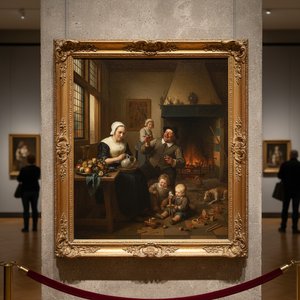
Genre Painting: A Window into Daily Life & Societal Values of the Dutch Golden Age
Explore the captivating world of Dutch Golden Age genre painting! Discover realistic depictions of daily life, masterful artists like Ostade & Metsu, and hidden symbolism. Learn about this influential art movement with OriginalUniqueArt.

Golden Light & Dutch Skies: The Timeless Magic of Dutch Golden Age Landscapes
Discover the breathtaking beauty of Dutch Golden Age landscapes. Explore the mastery of light, chiaroscuro, and 17th-century realism through an expert art history lens, celebrating the enduring legacy of the Dutch Masters for discerning collectors and art lovers.

Golden Age Reflections: Dutch Baroque Painting & Cultural Innovation
Explore the Dutch Golden Age of painting! Discover key artists like Vermeer & ter Borch, their innovative techniques, and the rich cultural context behind these Baroque masterpieces. Learn about collecting & appreciating this iconic art period.
Illuminating a Century of Change: Artistic Expression & Societal Shifts in 17th-Century Europe
Explore the artistic brilliance of the 17th-century Dutch Golden Age & Baroque period. Discover Rembrandt, genre painting, and chiaroscuro techniques. Expert insights for art lovers & collectors.
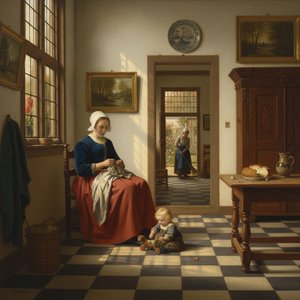
Pieter de Hooch e l'Illuminazione della Vita Domestica Olandese: Fascino dell'Età d'Oro e Innovazioni Pittoriche
Esplora il genio di Pieter de Hooch e l'illuminazione della vita domestica olandese nel Secolo d'Oro. Analisi approfondita dello stile, delle tecniche e del simbolismo nelle sue opere più iconiche.