
 Anteprima in scala reale
 Invia
Invia Condividi
 Dettagli opera
 Guida
Guida

 Scarica
 Simili
 Radiografia
 Slideshow
 Q&A
Q&A Statistiche
Coppia con pappagallo

- 73.0 x 62.0 cm


 Espandi i dettagli
Giclée / Stampe d'arte
Stampa giclée o su tela di qualità museale, con produzione rapida e diverse opzioni di finitura. ( Acquista il dipinto realizzato a mano Passa all'immagine digitale)




P118B €10

P118H €10

P118W €10

P438Z €10

P508JH €12

P508YH €12

P805H €10

P805Z €10

P919BZ €10

P919G €10

P919XJ €10

P959ZH €10

P968JZ €12

W106C €8

W218G €10

W218JH €8

W218Y €10

W307PJ €10

W316G €10

W316PJ €8

W316Y €10

W398PJ €8

W4111J €10

W500HY €15

W500JH €15

W692G €12

W849H €8

W940BG €15

W953PJ €8




Scegli tra le nostre dimensioni predefinite, che rispettano le proporzioni originali dell'opera d'arte.

Inserisci la larghezza e l'altezza desiderate, per adattarle alla tua cornice o alla tua parete. Una stampa può essere solo ritagliata, mai resa più grande dell'immagine originale; pertanto, un formato con una forma differente comporterà la perdita di una parte dell'opera. Ti invieremo un mockup digitale da approvare prima di procedere con la stampa. L'immagine mostrata in questa pagina non rappresenta il ritaglio reale — solo il mockup lo mostra.
Consegna in tutto il mondo () in 2 settimane invece delle normali 4/5 settimane. (1 Novembre)

Spedizione espressa gratuita in tutto il mondo

Tela in lino di alta qualità

Assicurazione completa sulla spedizione

Garanzia di rimborso dei dazi doganali

Garanzia di fedeltà cromatica assoluta

Politica di reso entro 100 giorni (solo per difetti di fabbricazione)

Garanzia di rimborso al 100%

Offerta per acquisti multipli
 L'opzione vetro è disponibile solo per dimensioni inferiori a 110 cm

Coppia con pappagallo
Giclée / Stampe d'arte
Dimensioni riproduzione
-


Prezzo finale calcolato
€ 71
Un momento di quiete nell'Età dell'Oro olandese
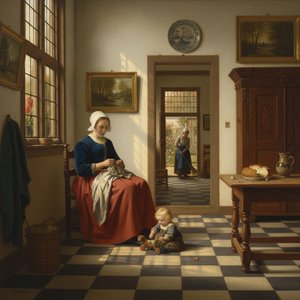
Nella luce morbida e diffusa di un interno del XVII secolo, Pieter de Hooch ci invita in un mondo di profonda intimità e tranquillità domestica. Coppia con pappagallo, dipinto nel 1668, è molto più di un semplice ritratto; è una lezione magistrale nell'arte dell'osservazione. La scena si svela con una grazia delicata, catturando un uomo e una donna colti in un momento di silenziosa connessione. Mentre il gentiluomo sta in piedi protettivamente dietro la sua compagna seduta, emerge un inconfondibile senso di storia condivisa e affetto non detto tra loro. De Hooch, luminare dell'Età dell'Oro olandese, possedeva una capacità singolare di elevare il quotidiano al magnifico, trasformando una semplice stanza in un palcoscenico per le sottili complessità dell'emozione umana.
La composizione è arricchita da un'attenzione meticolosa al dettaglio che delizia sia l'occhio che l'intelletto. Un orologio pende sulla parete, la sua presenza costante funge da silenzioso promemoria del passare del tempo, mentre un piccolo uccello appollaiato nelle vicinanze introduce un tocco del mondo naturale in questo ambiente interno e controllato. Ogni oggetto—dalla delicata tazza che riposa sul tavolo alle trame dell'architettura circostante—è reso con una precisione che suggerisce una profonda riverenza per la quotidianità. Per il collezionista esperto o l'interior designer, questo dipinto offre un senso di atemporalità, fornendo un punto focale che infonde vita e profondità narrativa in qualsiasi spazio sofisticato.
Maestria della luce e realismo domestico
Tecnicamente, l'opera di de Hooch è un trionfo di luce e profondità spaziale. La sua maestria risiede nel modo in cui manipola l'illuminazione per guidare lo sguardo dello spettatore attraverso la stanza, creando una sensazione di atmosfera che appare quasi tattile. La luce non si limita ad illuminare i soggetti; accarezza le superfici dei mobili e ammorbidisce i contorni delle figure, intrecciandole nella trama stessa dell'ambiente. Questa tecnica, spesso definita doorkijkje—la vista attraverso una porta aperta o verso spazi adiacenti—crea una complessità stratificata che rende la stanza espansiva eppure accogliente.
La tavolozza dell'artista è contenuta ma incredibilmente efficace, utilizzando toni terrosi e delicati riflessi per evocare il calore di una casa vissuta. Questo realismo era profondamente radicato nei valori della nascente classe media olandese, che cercava un'arte capace di riflettere le proprie vite, virtù e stabilità domestica. Catturando la quieta dignità di questa coppia, de Hooch offre una risonanza emotiva che trascende i secoli. Possedere una riproduzione di un tale capolavoro significa portare nella propria casa un frammento dell'era più pacifica della storia, offrendo un perdurante senso di calma, eleganza e colta raffinatezza.
Domande e risposte
Quale emozione trasmette "Coppia con pappagallo" di Pieter de Hooch?
Il tono emotivo registrato per "Coppia con pappagallo" di Pieter de Hooch è Riflessivo. Esso riassume la sensazione espressa dall'opera.
"Coppia con pappagallo" è un'opera celebre del Età dell'oro olandese?
"Coppia con pappagallo" di Pieter de Hooch è classificata come Riconosciuto e appartiene al movimento Età dell'oro olandese.
Posso visualizzare "Coppia con pappagallo" come una presentazione a schermo intero?
È disponibile un diaporama: la pagina Slideshow di "Coppia con pappagallo" di Pieter de Hooch.
Biografia dell'artista
Early Life and Artistic Beginnings
Pieter de Hooch, a name synonymous with the quiet intimacy of Dutch domestic life, was born in Rotterdam on December 20, 1629. His origins were humble; his father, Hendrick Hendricksz de Hooch, was a skilled bricklayer – an artisan whose craft instilled a keen eye for detail and structure within his son. Pieter’s mother, Annetge Pieters, contributed her expertise as a midwife, shaping his understanding of human experience and the rhythms of daily existence. Little is definitively known about his formative years, but it's believed he received his initial artistic training in Haarlem under the tutelage of Nicolaes Berchem, a landscape painter whose influence subtly shaped de Hooch’s early style. This period laid the groundwork for his future success, introducing him to the principles of composition and color that would become hallmarks of his work. The connection with Jacob Ochtervelt, another prominent Haarlem artist, further broadened his artistic horizons. De Hooch's upbringing in a working-class environment instilled a deep appreciation for the realities of everyday life – a perspective he would later translate into his captivating paintings.A Delft Master: Style and Themes
De Hooch’s career truly blossomed in Delft, where he established himself as a leading figure within the city’s thriving artistic community. His style is instantly recognizable—a masterful blend of realism and subtle lyricism that captured the essence of Dutch bourgeois life. He specialized in “kamergezichten,” or room views, depicting scenes of women engaged in domestic activities: preparing meals, sewing, receiving visitors, or simply enjoying quiet moments with their children. These weren’t grand historical narratives; instead, they offered intimate glimpses into the lives of ordinary people—a remarkable departure from the heroic subjects favored by many of his contemporaries. His use of light is particularly noteworthy – a delicate interplay of shadows and highlights that creates a sense of atmosphere and depth within each scene. De Hooch skillfully employed muted colors and subtle details to evoke a feeling of tranquility and realism, drawing inspiration from both Jan Vermeer’s meticulous observation of light and shadow and the atmospheric techniques of Rembrandt van Rijn. The influence of Emanuel de Witte, another Delft painter, is also evident in his later works, particularly in the use of architectural settings.Notable Works and Artistic Evolution
Among de Hooch's most celebrated paintings are “The Empty Glass” (circa 1650), a deceptively simple scene that reveals an extraordinary sensitivity to light and form; "Woman Nursing" (1658) and "Woman with a Baby on Her Lap" (1658), which capture the tenderness of maternal love; and “Cardplayers in a Sunlit Room” (1658), a vibrant depiction of social interaction within a domestic setting. His work from the mid-1660s, particularly “A Woman Preparing Bread and Butter for a Boy” (1661) and "The Merry Drinker" (c. 1650), showcases his ability to create compelling narratives through subtle gestures and expressions. Later in his career, influenced by the trends of the time, de Hooch began incorporating more elaborate settings—marble rooms from the new Amsterdam Town Hall—offering a grander stage for his subjects. Despite these shifts, he retained his signature style and attention to detail, producing works like “The Clothes Cupboard” (1667) and "The Minuet" (1680), which demonstrate his continued mastery of light, composition, and human emotion.Legacy and Influence
Pieter de Hooch’s impact on the course of Dutch painting is undeniable. He stands as one of the most important figures in the Delft School, a movement characterized by its focus on domestic scenes and realistic depictions of everyday life. His work profoundly influenced subsequent generations of artists, particularly those who followed in the footsteps of Vermeer—artists like Jacob van Ruisdael and Frans Hals. De Hooch’s legacy extends beyond his individual paintings; he helped to establish a new genre of painting that celebrated the beauty and dignity of ordinary people. His meticulous observation, subtle use of light, and intimate portrayal of domestic life continue to resonate with viewers today, cementing his place as a master of Dutch Golden Age art. His works are now housed in prestigious museums around the world, including the Koninklijk Museum voor Schone Kunsten in Antwerpen, Belgium, where a vast collection of European art from the 15th to the 20th centuries offers a comprehensive view of his artistic journey.
Pieter de Hooch
1629 - 1694 , Paesi Bassi
Dettagli rapidi
- Artistic Movement Or Style: Realismo, Età dell'Oro
- Artists Or Movements Influenced By This Artist: ['Impressionismo']
- Artists Who Influenced This Artist: ['Nicolaes Berchem']
- Date Of Birth: 1629
- Date Of Death: 1694
- Full Name: Pieter de Hooch
- Nationality: Olandese
- Notable Artworks:
- Donna che legge una lettera
- Il cortile di una casa a Delft
- Place Of Birth (City And Country): Rotterdam, Paesi Bassi
Articoli correlati

Willem van de Velde il Vecchio: Maestro della Pittura Marittima e Cronista dell'Età d'Oro Olandese
Scopri la vita e le opere di Willem van de Velde il Vecchio, maestro della pittura marina olandese del Secolo d'Oro. Analisi approfondite, tecniche artistiche e consigli per collezionisti.
Pieter de Hooch e l'Illuminazione della Vita Domestica Olandese: Fascino dell'Età d'Oro e Innovazioni Pittoriche
Esplora il genio di Pieter de Hooch e l'illuminazione della vita domestica olandese nel Secolo d'Oro. Analisi approfondita dello stile, delle tecniche e del simbolismo nelle sue opere più iconiche.

Mastering Light & Shadow: A Journey Through the Dutch Golden Age's Luminous Legacy
Embark on a cultural journey through the Dutch Golden Age. Explore the masterful interplay of light and shadow in 17th-century masterpieces, from Rembrandt to Vermeer, and discover how this era of profound realism continues to inspire fine art collectors today.

I 10 Capolavori dell'Età d'Oro Olandese: Arte, Storia e Stile per la Tua Casa
Esplora i 10 capolavori dell'Età d'Oro Olandese con ! Rembrandt, Vermeer e altri maestri rivivono in dipinti iconici. Scopri storia, tecnica e colori di opere senza tempo per arredare la tua casa con arte di qualità museale. Esplora la collezione online!

Golden Light & Dutch Skies: The Timeless Magic of Dutch Golden Age Landscapes
Discover the breathtaking beauty of Dutch Golden Age landscapes. Explore the mastery of light, chiaroscuro, and 17th-century realism through an expert art history lens, celebrating the enduring legacy of the Dutch Masters for discerning collectors and art lovers.


