Anteprima in scala reale
 Condividi
 Condividi
 Dettagli
 Guida stampabile

 Scarica
 Articoli simili
 Radiografia
 Slideshow
 Statistiche
Place de la Concorde


 Leggi tutto
Riproduzione a olio fatta a mano
Olio su tela dipinto a mano nelle tue dimensioni e con la tua cornice, realizzato su ordinazione dai nostri artisti. ( Passa alle stampe Passa all'immagine digitale)




P118B €10

P118H €10

P118W €10

P438Z €10

P508JH €12

P508YH €12

P805H €10

P805Z €10

P919BZ €10

P919G €10

P919XJ €10

P959ZH €10

P968JZ €12

W106C €8

W218G €10

W218JH €8

W218Y €10

W307PJ €10

W316G €10

W316PJ €8

W316Y €10

W398PJ €8

W4111J €10

W500HY €15

W500JH €15

W692G €12

W849H €8

W940BG €15

W953PJ €8




Scegli tra le nostre dimensioni predefinite, che rispettano le proporzioni originali dell'opera d'arte.

Inserisci la larghezza e l'altezza di cui hai bisogno, per adattarle alla tua cornice o alla tua parete. Trattandosi di un'opera dipinta a mano, in caso di dimensioni con una forma differente, l'artista può dipingere un po' più oltre i bordi dell'immagine o ritagliare leggermente — la scelta spetta a te. Ti invieremo un mockup digitale da approvare prima che la pittura abbia inizio. L'immagine mostrata in questa pagina non rappresenta il risultato reale — solo il mockup lo fa.
Dopo l'ordine, il team di OriginalUniqueArt.com contatterà il cliente via e-mail per ricevere le istruzioni e fornirà un'anteprima del mockup
Consegna in tutto il mondo () in 3/4 settimane anziché nelle normali 5 settimane. (24 Ottobre). Nessun compromesso sulla qualità.

Spedizione espressa gratuita in tutto il mondo

Tela in lino di alta qualità

Assicurazione completa sulla spedizione

Garanzia di rimborso dei dazi doganali

Garanzia di perfetta fedeltà cromatica

Politica di reso entro 100 giorni (solo per difetti di fabbricazione)

Garanzia di rimborso al 100%

Sconto per acquisti multipli
 L'opzione vetro è disponibile solo per dimensioni inferiori a 110 cm

Place de la Concorde
Tecnica di riproduzione
Dimensioni della riproduzione
-


Prezzo totale
€ 263
A Symphony of Balance: Deconstructing Mondrian’s ‘Place de la Concorde’
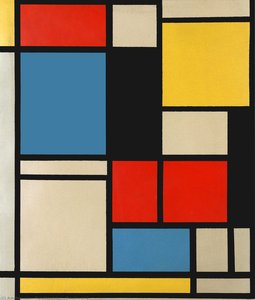
Piet Mondrian’s *Place de la Concorde*, painted between 1938 and 1943, is far more than a geometric arrangement of color and line; it’s a distillation of an artistic philosophy, a visual poem born from a period of profound change and upheaval. While titled after the famed Parisian square, Mondrian doesn't offer a representational depiction. Instead, he presents us with an abstraction that *embodies* the energy and dynamism of modern urban life – a pulsating grid of black lines containing blocks of primary colors—red, yellow, and blue—set against a stark white background. This wasn’t merely about depicting a place; it was about capturing its essence, its underlying structure, and translating it into a universal visual language. The painting's evolution is particularly fascinating. Begun in Paris before Mondrian fled the looming threat of World War II, it continued to be reworked after his arrival in New York City, absorbing the influence of a new environment—a faster pace, bolder energy—resulting in adjustments to line weight and color placement that lend the work an even greater sense of vitality.The Path to Neoplasticism: A Life Dedicated to Abstraction
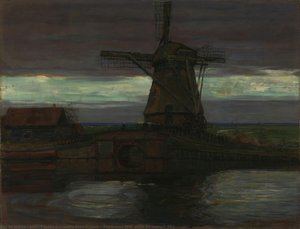
To truly appreciate *Place de la Concorde*, one must understand its place within Mondrian’s artistic journey. Born Pieter Cornelis Mondriaan in 1872, he initially trained as a teacher while simultaneously pursuing his passion for art. His early works were steeped in the traditions of Dutch landscape painting, reflecting the influence of the Hague School and Impressionism. Paintings like *The Red Mill* demonstrate this formative period, showcasing a naturalistic style that gradually gave way to experimentation with Pointillism and Fauvism. However, it was his move to Paris in 1912 that proved pivotal. Immersed in the avant-garde scene and captivated by Cubism, Mondrian began to deconstruct forms, moving away from representational art towards a more abstract vocabulary. This exploration culminated in the development of Neoplasticism – also known as De Stijl – a style predicated on the belief that pure abstraction could express universal harmony. Mondrian believed that through reducing painting to its most fundamental elements—horizontal and vertical lines, primary colors, and black, white, and gray—he could reveal the underlying structure of reality and achieve a spiritual ideal.Decoding the Composition: Beyond Form and Color
The seemingly simple composition of *Place de la Concorde* is deceptively complex. The grid structure isn’t arbitrary; it represents Mondrian’s attempt to create a harmonious balance between opposing forces – horizontal versus vertical, static versus dynamic, individual elements versus the unified whole. The black lines act as boundaries and connectors, defining spaces while simultaneously creating a sense of flow and interconnectedness. The carefully placed blocks of color aren’t merely decorative; they represent specific energies and emotions. Red often symbolizes passion and intensity, blue evokes tranquility and spirituality, and yellow embodies joy and intellect. The white background isn't simply empty space but an essential element that allows the colors to breathe and resonate. It is important to note that Mondrian didn’t view these elements as isolated components but rather as integral parts of a larger, interconnected system—a microcosm of the universe itself. He saw his art not just as aesthetic expression but as a spiritual practice, a means of revealing underlying cosmic truths.A Lasting Legacy: The Enduring Influence of Mondrian
*Place de la Concorde*, and indeed all of Mondrian’s Neoplastic work, has had an immeasurable impact on the course of 20th-century art and design. His reductive aesthetic profoundly influenced movements like Minimalism, Color Field painting, and Abstract Expressionism. Beyond the realm of fine art, his principles have permeated architecture, graphic design, fashion, and interior decoration. The clean lines, geometric forms, and bold color palettes found in Mondrian’s paintings continue to inspire designers seeking a sense of order, clarity, and modern elegance. A reproduction of *Place de la Concorde* isn’t just an acquisition; it’s an invitation to embrace a philosophy—a commitment to simplicity, balance, and the pursuit of universal beauty. It is a statement piece that transcends trends, offering a timeless aesthetic that will continue to resonate for generations to come.- Artist: Piet Mondrian
- Born Year: 1872
- Death Year: 1944
- Birth City: Amersfoort
- Birth Country: Netherlands
- Explore WikiArt.org for detailed information and images: Place de la Concorde
- Discover the history of Place de la Concorde on Google Arts & Culture: Place de la Concorde - Google Arts & Culture
- Learn about Mondrian's artistic journey on Wikipedia: Place de la Concorde (1938 – 1943) by Piet Mondrian - WikiArt.org
Domande e risposte
Come viene descritto il tono emotivo di "Place de la Concorde" di Piet Mondrian?
"Place de la Concorde" di Piet Mondrian è descritto come Sereno per atmosfera. Questa classificazione può aiutare a abbinare l'opera a un ambiente.
In che modo lo stile di "Place de la Concorde" si relaziona all'epoca del suo autore?
In "Place de la Concorde" di Piet Mondrian, il movimento Neoplasticism incontra l'epoca Età Moderna.
"Place de la Concorde" dispone di un'anteprima in realtà aumentata?
Puoi visualizzare "Place de la Concorde" di Piet Mondrian sulla tua parete grazie alla pagina Anteprima AR dell'opera, utilizzando la realtà aumentata su un dispositivo compatibile.
Biografia dell'artista
**primi anni di vita e carriera nei Paesi Bassi (1872-1911)**
pieter cornelis mondriaan, noto dopo il 1911 come piet mondrian, era un pittore e teorico dell'arte olandese nato il 7 marzo 1872 ad Amersfoort, nei Paesi Bassi. Iniziò la sua carriera come insegnante di istruzione primaria mentre praticava la pittura, inizialmente nello stile impressionista olandese della scuola di Haarlem.- Le sue opere giovanili, caratterizzate da paesaggi naturalistici, possono essere viste in dipinti come the red mill e trees in moonrise, esposte al kunstmuseum den haag.
- La ricerca di mondrian per uno stile personale lo portò a esplorare vari movimenti artistici, tra cui il puntinismo e il fauvismo.
- La sua prima mostra nel 1893 segnò l'inizio della sua carriera prolifica.
**l'evoluzione dello stile di mondrian**
da figurativo all'astratto la direzione artistica di mondrian si è spostata verso uno stile sempre più astratto, culminando in una forma non rappresentativa che chiamò neoplasticismo. Questa 'arte plastica pura' mirava a creare 'bellezza universale', limitando il suo vocabolario formale ai colori primari (rosso, blu e giallo), ai valori (nero, bianco e grigio) e alle direzioni (orizzontali e verticali).- Esempi di questo stile possono essere visti in dipinti come composition with yellow patch (46 x 46 cm, neoplasticismo, olio su tela).
- Il lavoro di mondrian ha avuto un'enorme influenza sull'arte del XX secolo, influenzando non solo la pittura astratta ma anche il design, l'architettura e la moda.
**eredità e influenza**
l'eredità di mondrian si estende oltre il suo lavoro stesso, influenzando stili e movimenti importanti come la pittura a campo colorato, l'espressionismo astratto e il minimalismo. Lo storico dell'arte stephen bayley ha notato che mondrian è diventato un totem per tutto ciò che il modernismo voleva essere.- Esplora altri lavori di mondrian su OriginalUniqueArt.com.
- Impara sul movimento de stijl e sulla sua influenza sull'arte moderna su wikipedia.
- Scopri altri artisti influenti come vincent van gogh e il loro impatto sul mondo dell'arte.
**opere chiave ed esposizioni**
* piet mondrian: apple blossom (cubismo) (visualizza su OriginalUniqueArt.com) * piet mondrian: still life with vase of spices ii (cubismo) (visualizza su OriginalUniqueArt.com) * piet mondrian: passionflower (73 x 48 cm, kunstmuseum den haag, post impressionism, watercolor) (visualizza su OriginalUniqueArt.com)
Piet Mondrian
1872 - 1944 , Paesi Bassi
Informazioni rapide
- Artisti Influenti:
- Hague School
- Impressionismo
- Pointillism
- Fauvismo
- Cubismo
- Artisti Influenzati:
- Color Field painting
- Abstract Expressionism
- Minimalismo
- Data Di Nascita: 7 marzo 1872
- Luogo Di Nascita: Amersfoort, Paesi Bassi
- Movimento Artistico: De Stijl, Neoplasticismo
- Nazionalità: Olandese
- Nome Completo: Piet Mondrian
- Opere Notevoli:
- Composition with Red, Yellow and Blue
- Broadway Boogie Woogie
- Tableau no. 2 Composition no. V
- Rhythm of Black Lines
Articoli correlati
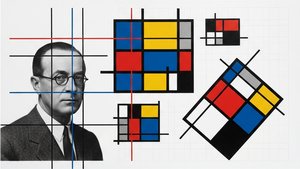
Theo van Doesburg e il Neoplasticismo: Pionieri dello Stijl e l'Evoluzione dell'Astrattismo
Esplora il rivoluzionario movimento De Stijl e l'influenza di Theo van Doesburg sul Neoplasticismo. Analisi approfondita, storia, principi e impatto sull'arte moderna.
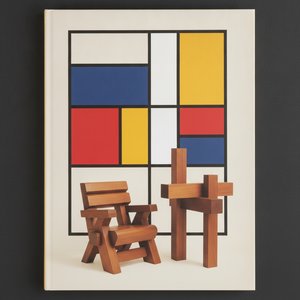
De Stijl: Mastering the Art of Pure Abstraction and Geometric Harmony for the Modern Collector
Explore the profound elegance of De Stijl. Discover how Piet Mondrian and the masters of Neoplasticism utilized geometric harmony and primary colors to redefine modern abstraction. An authoritative guide for the discerning collector seeking timeless, structured beauty.

Astrazione Geometrica: 10 Capolavori che Hanno Definito un Movimento Artistico
Esplora i 10 capolavori dell'Astrazione Geometrica: Mondrian, Malevich e Kandinsky rivoluzionano l'arte moderna. Scopri la storia, i colori e le tecniche di questi movimenti iconici. Stampe d'arte di alta qualità su OriginalUniqueArt.com!
Beyond Form: Exploring the Philosophical Foundations of Geometric Abstraction
Explore the philosophical roots & artistic evolution of geometric abstraction with OriginalUniqueArt. Discover Mondrian, Malevich, De Stijl & more. Expert insights for collectors and art enthusiasts.
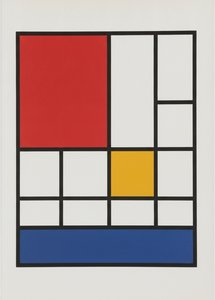
Pure Harmony: Discover the Bold Geometry and Spiritual Order of De Stijl Art
Explore the profound beauty of De Stijl art. Discover how masters like Piet Mondrian used bold geometry and primary colors to seek universal harmony through Neoplasticism. A deep dive into the spiritual order behind the world's most iconic abstract movements.