Baroque
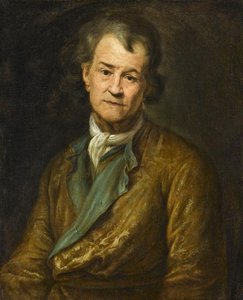
Self portrait Marble (Pierre Puget)
Pierre Puget (1620–1694) ha realizzato Self portrait Marble. Fa parte del movimento Baroque. È realizzato in Stone.
- Stone

 Dipinto a olio fatto a mano
 Invia
 Condividi
 Scheda didattica


 Scarica
 Simili
 Slideshow
 Domande e risposte

 Statistiche
Self portrait Marble, in breve
- Titolo
- Self portrait Marble
- Artista
- Pierre Puget (1620–1694)
- Artista nato a
- Marsiglia, Francia
- Tecnica
- Stone
- Movimento
- Baroque
- Epoca
- Early Modern
- Soggetto
- portrait, sculpture, elderly, marble, baroque, classicism
Cosa raffigura Self portrait Marble?
Identification of the Self portrait Marble
The Self portrait Marble by Pierre Puget presents a quiet confrontation with the passage of time. This work is a photographic reproduction of a sculpted portrait, capturing the likeness of an older man in the stillness of stone. The subject is a bust, focusing on the head and shoulders to anchor the viewer in a singular, unmoving gaze.
In this representation, the artist Pierre Puget turns the chisel toward his own changing features. The sculpture acts as a vessel for human aging and experience, recording the weight of years through the physical presence of the subject. It is a portrait of a man, stripped of movement, existing only in the permanence of his own likeness.
The image holds a steady, frontal view. It captures a moment of stillness that feels heavy and fixed. The stone carries the memory of the face it once held.
Visual Composition and Subject Matter
The composition centers on the head and shoulders of an elderly man, captured in a black and white bust. A simple frontal view meets the eye, stripped of unnecessary distraction. The perspective remains direct, focusing entirely on the subject's presence. Because of the photographic nature of the image, the depth remains limited, pulling the viewer into a shallow space where only the immediate form exists.
Lines define the topography of the face, tracing the paths of wrinkles and the individual strands of hair. These contours map the history of a life through the texture of the skin. Organic shapes dominate the work, following the natural, soft curves of the human head and its features. The light settles into the hollows, emphasizing the physical reality of the subject.
A shallow depth of field isolates the man, blurring the world beyond his immediate silhouette. This focus sharpens the details of the face, making the texture of the sculpture feel tangible. The subject remains still, a quiet study of aging and the weight of experience. The stone holds a steady, silent gaze.
Technique and Material Properties
The original work is a classical sculpture carved from stone, likely marble. This heavy, pale medium captures the weight of the subject's features. The surface is not smooth; instead, the texture appears rough and uneven. Shading and modeling techniques emphasize this tactile quality, pulling light across the ridges of the face and the deep recesses of the hair. Every line is a physical groove in the stone.
This image is a photographic reproduction of that sculpted form. The lens translates the three-dimensional carving into a two-dimensional plane of light and shadow. The technique relies on the interplay of dark and light to define the contours of the head and shoulders. It is a study of how light meets a hard, unyielding surface. The result is a sense of solemnity. The stone holds its stillness.
Immagini ad alta risoluzione di Self portrait Marble
Pubblico dominio: l'artista è deceduto nel 1694.
Pierre Puget, Self portrait Marble. Pubblico dominio
Domande su Self portrait Marble, risposte
Con quale tecnica è realizzata "Self portrait Marble" di Pierre Puget?
La tecnica utilizzata per "Self portrait Marble" di Pierre Puget è Stone. Le riproduzioni mirano a restituire l'aspetto di questa tecnica.
Qual è il soggetto di "Self portrait Marble"?
I soggetti di "Self portrait Marble" sono portrait, sculpture, elderly, marble, baroque, classicism, time, memory.
"Self portrait Marble" è di pubblico dominio?
Stato del copyright per "Self portrait Marble" di Pierre Puget: l'opera è di pubblico dominio - il copyright è scaduto. Ciò determina se sia possibile effettuare liberamente riproduzioni dell'immagine.
Chi è l'artista dietro "Self portrait Marble"?
"Self portrait Marble" è attribuito a Pierre Puget.
A quale movimento artistico appartiene "Self portrait Marble" di Pierre Puget?
Il movimento associato a "Self portrait Marble" di Pierre Puget è Baroque. Questa classificazione colloca l'opera tra artisti e opere d'arte correlati.
A quale periodo della carriera di Pierre Puget appartiene "Self portrait Marble"?
All'interno della carriera di Pierre Puget, "Self portrait Marble" appartiene al Mature Period. Questa fase permette di confrontarla con le altre opere dell'artista.
Qual è la spiegazione relativa allo stato del copyright di "Self portrait Marble" di Pierre Puget?
"Self portrait Marble" di Pierre Puget è di di pubblico dominio - il copyright è scaduto. La durata del copyright decorre dalla morte dell'artista, avvenuta nel 1694.
In che modo "Self portrait Marble" si inserisce nel percorso artistico di Pierre Puget?
"Self portrait Marble" appartiene alla produzione Baroque di Pierre Puget, i cui temi ricorrenti includono classical ideals, roman influence, baroque drama, emotional depth, portraiture tradition, realism, ageing, mortality.
In che modo il soggetto di "Self portrait Marble" si relaziona ai temi abituali di Pierre Puget?
"Self portrait Marble" raffigura portrait, sculpture, elderly, marble, baroque, classicism, time, memory, mentre i temi ricorrenti di Pierre Puget sono classical ideals, roman influence, baroque drama, emotional depth, portraiture tradition, realism, ageing, mortality. Il confronto tra i due evidenzia come l'opera si relazioni con i soggetti abituali dell'artista.
Informazioni sull'artista, Pierre Puget
1620–1694, Francia
Pierre Puget
Pierre Puget: Una Vita tra Arte e Ingegneria Nato: Marsiglia, Francia (1620) Morto: 1694 Primi Anni e Influenze Italiane Apprendistato: Puget iniziò la sua carriera all'età di quattordici anni, intagliando ornamenti per le galere costruite a Marsiglia. Questa prima esposizione alla lavorazione del legno pose le basi per i suoi successivi impegni artistici. Viaggio in Italia (1640): In cerca di opportunità, viaggiò in Italia, inizialmente a Livorno e poi a Firenze. Affinò le sue abilità come intagliatore del legno e pittore.
Altre opere di Pierre Puget
 L'incontro tra Alessandro Magno e Diogene1671
 Milone di Crotone1671
 Autoritratto1668
 Vista sul mare1670
Saggi su Self portrait Marble
 L'Alchimia del Marmo: Storia e Segreti della Scultura EternaScopri i segreti tecnici e la storia della scultura in marmo tra maestri classici. Esplora l'arte eterna del bianco.
 I 25 Capolavori di Hans Baldung Grien: l'Enigma del Rinascimento TedescoScopri i 25 capolavori di Hans Baldung Grien e il fascino del Rinascimento tedesco. Esplora la collezione su OriginalUniqueArt.com.
 Pierre Puget: 25 tra sculture e dipinti tra forza muscolare e tensione baroccaScopri le 25 opere chiave di Pierre Puget tra scultura e pittura barocca. Esplora la collezione completa su OriginalUniqueArt.com.