
 Anteprima in scala reale
 Invia
Invia Condividi
 Dettagli opera
 Guida
Guida

 Scarica
 Simili
 Radiografia
 Slideshow
 Domande e risposte
 Statistiche
Shipwreck

- 58.0 x 81.0 cm


 Espandi i dettagli
Giclée / Stampe d'arte
Stampa giclée o su tela di qualità museale, con produzione rapida e diverse opzioni di finitura. ( Acquista il dipinto realizzato a mano Passa all'immagine digitale)




P118B €10

P118H €10

P118W €10

P438Z €10

P508JH €12

P508YH €12

P805H €10

P805Z €10

P919BZ €10

P919G €10

P919XJ €10

P959ZH €10

P968JZ €12

W106C €8

W218G €10

W218JH €8

W218Y €10

W307PJ €10

W316G €10

W316PJ €8

W316Y €10

W398PJ €8

W4111J €10

W500HY €15

W500JH €15

W692G €12

W849H €8

W940BG €15

W953PJ €8




Scegli tra le nostre dimensioni predefinite, che rispettano le proporzioni originali dell'opera d'arte.

Inserisci la larghezza e l'altezza desiderate, per adattarle alla tua cornice o alla tua parete. Una stampa può essere solo ritagliata, mai resa più grande dell'immagine originale; pertanto, un formato con una forma differente comporterà la perdita di una parte dell'opera. Ti invieremo un mockup digitale da approvare prima di procedere con la stampa. L'immagine mostrata in questa pagina non rappresenta il ritaglio reale — solo il mockup lo mostra.
Consegna in tutto il mondo () in 2 settimane invece delle normali 4/5 settimane. (6 Novembre)

Spedizione espressa gratuita in tutto il mondo

Tela in lino di alta qualità

Assicurazione completa sulla spedizione

Garanzia di rimborso dei dazi doganali

Garanzia di fedeltà cromatica assoluta

Politica di reso entro 100 giorni (solo per difetti di fabbricazione)

Garanzia di rimborso al 100%

Offerta per acquisti multipli
 L'opzione vetro è disponibile solo per dimensioni inferiori a 110 cm

Shipwreck
Giclée / Stampe d'arte
Dimensioni riproduzione
-


Prezzo finale calcolato
€ 72
A Tempestuous Vision: Philip James de Loutherbourg’s “Shipwreck”
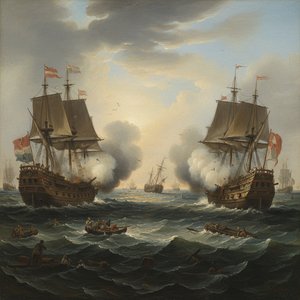
Philip James de Loutherbourg's "Shipwreck," painted in 1793, isn’t merely a depiction of maritime disaster; it’s a visceral exploration of human vulnerability against the overwhelming power of nature. This dramatic landscape, now housed within the Southampton City Art Gallery, transcends simple realism to become a potent allegory for survival, desperation, and the precariousness of existence – themes that resonated deeply with the burgeoning Romantic movement of the late 18th century.
The painting immediately commands attention through its turbulent composition. A colossal wave, rendered in thick, swirling brushstrokes of indigo, ochre, and grey, dominates the scene, threatening to engulf a shattered vessel – the remnants of a once-proud ship now reduced to splintered wood and clinging figures. Loutherbourg masterfully employs chiaroscuro, utilizing stark contrasts between light and shadow to heighten the drama and emphasize the immediate threat. The dark, brooding sky, pregnant with impending storm, mirrors the despair etched on the faces of those struggling for survival amidst the wreckage.
The Baroque Influence & Dramatic Lighting
While firmly rooted in the Romantic sensibility, "Shipwreck" reveals a clear debt to the Baroque tradition, particularly in its theatrical use of light and shadow. Loutherbourg, who had trained under Charles-André van Loo, inherited a penchant for dramatic effects – a skill he honed not only as a painter but also as a stage designer for London’s Drury Lane Theatre. This influence is evident in the painting's heightened emotional intensity and its carefully orchestrated composition, designed to draw the viewer directly into the heart of the scene.
The figures themselves are illuminated from the left, casting long, dramatic shadows that accentuate their vulnerability and heighten the sense of urgency. Loutherbourg’s technique is particularly noteworthy in his rendering of water – not as a smooth, reflective surface, but as a chaotic, dynamic force, teeming with movement and energy. The artist's attention to detail extends to the depiction of the ship itself, meticulously rendered with a sense of both grandeur and impending doom. The use of layered textures—the rough splintered wood, the slickness of the waves, the ragged clothing of the survivors—adds considerable depth and realism to the scene.
Symbolism & The Romantic Spirit
Beyond its immediate depiction of a shipwreck, “Shipwreck” is rich in symbolic meaning. The storm represents not just a natural event but also the unpredictable forces that govern human life – fate, adversity, and the limitations of control. The survivors, huddled together on the rocks, embody the resilience of the human spirit in the face of overwhelming odds. Their desperate struggle for survival speaks to our shared vulnerability and our innate desire to endure.
The inclusion of bandits attacking the lifeboat adds another layer of complexity, suggesting a broader theme of exploitation and injustice. It’s a subtle but powerful commentary on the darker aspects of human nature – the willingness to prey upon the weak in times of crisis. This painting perfectly encapsulates the Romantic spirit's fascination with both the sublime beauty and terrifying power of the natural world, alongside its exploration of profound emotional experiences.
A Legacy of Dramatic Art
Philip James de Loutherbourg’s “Shipwreck” stands as a testament to his artistic versatility and his ability to capture the drama and intensity of human experience. It's a work that continues to resonate with viewers today, prompting reflection on our own vulnerabilities and our capacity for both despair and resilience. The painting’s enduring appeal lies in its masterful composition, its evocative use of light and shadow, and its profound exploration of timeless themes – all rendered with the skill and passion characteristic of a true Romantic artist.
Domande e risposte
In che modo "Shipwreck" bilancia luci e ombre?
I valori rilevati per "Shipwreck" di Philip James de Loutherbourg sono: luminosità deep_shadow, luminanza Dark.
Quali sono le dimensioni dell'originale "Shipwreck"?
"Shipwreck" misura 58 x 81 cm nella sua forma originale. Le dimensioni originali sono un utile riferimento per scegliere la dimensione di una riproduzione.
In quale fase della carriera di Philip James de Loutherbourg si colloca "Shipwreck", considerando la sua datazione?
"Shipwreck", realizzata nel 1767, appartiene al Mature Period della carriera di Philip James de Loutherbourg.
Biografia dell'artista
Primi Anni e Formazione
- Nato: Strasburgo, Francia (1740)
- Morto: 1812
- Philip James de Loutherbourg, conosciuto anche come Philip Jacques de Loutherbourg, fu un pittore franco-britannico.
- Iniziò il suo percorso artistico in giovane età e divenne rapidamente noto per la sua abilità nella pittura.
- Fu nominato membro della Royal Academy nel 1781.
- Suo padre era un incisore e miniaturista, influenzando la sua precoce esposizione all'arte.
- Inizialmente destinato al ministero, rifiutò questa strada per dedicarsi alla pittura.
- Studiò sotto Charles-André van Loo e Francesco Giuseppe Casanova a Parigi.
Opere Notabili e Stile Artistico
- Azione di Lord Howe, o il Primo Giugno Glorioso: Commemorò le vittorie navali britanniche (1795).
- La Distruzione dell'Armada: Dimostrò la sua abilità nel catturare scene drammatiche.
- Coalbrookdale di Notte: Evidenziò il suo interesse per la Rivoluzione Industriale.
- Cavaliere e Bestiame in un Temporale: Una rappresentazione drammatica della potenza della natura (1780).
- Paesaggio con Bestiame e Figure, un Temporale che si Avvicina: Una splendida scena pastorale resa in stile pittorico ad olio (1781).
- I suoi dipinti spesso presentavano soggetti storici, navali e paesaggistici.
- Era noto per le sue composizioni drammatiche e l'attenzione ai dettagli.
- Lo stile di Loutherbourg è associato al Romanticismo, enfatizzando emozione e grandiosità.
L’Eidofusikon e Innovazioni Teatrali
- Nel 1789, Loutherbourg abbandonò temporaneamente la pittura per esplorare l'alchimia e il soprannaturale.
- Incontrò Alessandro di Cagliostro e viaggiò con lui prima della condanna di Cagliostro.
- Loutherbourg inventò l’Eidofusikon, un teatro meccanico che combinava scenografie dipinte con effetti di illuminazione e figure in movimento.
- L'Eidophusikon fu una significativa innovazione nella progettazione teatrale e nell'intrattenimento.
- Progettò elaborate scenografie per i teatri londinesi, tra cui Drury Lane, mostrando le sue abilità inventiva.
Carriera Successiva ed Eredità
- Loutherbourg tornò a dipingere dopo il suo coinvolgimento con Cagliostro.
- Le sue opere successive includevano dipinti storici e soggetti biblici.
- Pubblicò due raccolte di incisioni: Picturesque Scenery of Great Britain (1801) e The Romantic and Picturesque Scenery of England and Wales (1805).
- La sua opera può essere trovata in musei di tutto il mondo, tra cui il National Maritime Museum e il British Museum.
- L'influenza di Loutherbourg si estese a successivi artisti come J.M.W. Turner.
- È ricordato per i suoi contributi sia alla pittura che alla progettazione teatrale.
Significato Storico
- Loutherbourg svolse un ruolo significativo nello sviluppo dell'arte romantica britannica.
- I suoi dipinti navali contribuirono a popolare le rappresentazioni di eventi marittimi.
- L'Eidophusikon dimostrò il suo spirito innovativo e contribuì ai progressi nella tecnologia teatrale.
- Fece da ponte tra pittura, progettazione teatrale ed esplorazione scientifica.
- L'eredità di Loutherbourg risiede nella sua capacità di combinare abilità artistiche con innovazione tecnologica e una fascinazione per il mondo naturale.

Philip James de Loutherbourg
1740 - 1812 , Francia
Dettagli rapidi
- Artisti Influenti:
- Charles-André van Loo
- Francesco Giuseppe Casanova
- Artisti Influenzati: ['J.M.W. Turner']
- Data Di Morte: 11 marzo 1812
- Data Di Nascita: 31 ottobre 1740
- Luogo Di Nascita: Strasburgo, Francia
- Movimento Artistico: Romanticismo
- Nazionalità: Franco-britannico
- Nome Completo: Philip James de Loutherbourg
- Opere Notevoli:
- Lord Howe's Action
- Distruzione dell'Armada
- Coalbrookdale di notte
Articoli correlati
Masterpieces of Maritime Warfare: The Artistry and Intensity of Naval Combat in Historical Painting
Explore the dramatic intensity of naval combat through art history. From Romanticism to classical maritime masterpieces, discover how legendary painters captured the chaos, light, and heroism of sea battles in breathtaking oil paintings.

Riguardo a noi
Scopri la nostra storia! Portiamo l'arte di livello mondiale nella tua vita grazie a una selezione esperta, creazioni personalizzate e anteprime gratuite. Approvato da privati e aziende dal 2000.

Willem van de Velde il Vecchio: Maestro della Pittura Marittima e Cronista dell'Età d'Oro Olandese
Scopri la vita e le opere di Willem van de Velde il Vecchio, maestro della pittura marina olandese del Secolo d'Oro. Analisi approfondite, tecniche artistiche e consigli per collezionisti.

Philip James de Loutherbourg: Visioni Romantiche della Vita Marittima e il Sublime
Esplora il mondo di Philip James de Loutherbourg, maestro della pittura romantica e innovatore nella rappresentazione del mare. Analisi approfondita delle sue opere, tecniche e l'influenza del Sublime.

I 25 capolavori di Francisco Goya: tra luce e oscurità dell'anima
Scopri i 25 capolavori di Goya tra luce e ombre. Esplora la collezione su OriginalUniqueArt.com per riproduzioni da museo d'eccellenza.


