Anteprima in scala reale
 Condividi
 Condividi
 Dettagli
 Guida stampabile

 Scarica
 Articoli simili
 Radiografia
 Slideshow
 Statistiche
The Bonaventure Pine
 Acrylic On Canvas
- WallArt
- Neo-Impressionist Pointillism
 1893
1893- 19th Century
 81.0 x 65.0 cm
 Leggi tutto
Giclée / Stampe d'arte
Stampa giclée o su tela di qualità museale, con produzione rapida e diverse opzioni di finitura. ( Ordina la riproduzione dipinta a mano Passa all'immagine digitale)




P118B €10

P118H €10

P118W €10

P438Z €10

P508JH €12

P508YH €12

P805H €10

P805Z €10

P919BZ €10

P919G €10

P919XJ €10

P959ZH €10

P968JZ €12

W106C €8

W218G €10

W218JH €8

W218Y €10

W307PJ €10

W316G €10

W316PJ €8

W316Y €10

W398PJ €8

W4111J €10

W500HY €15

W500JH €15

W692G €12

W849H €8

W940BG €15

W953PJ €8




Scegli tra le nostre dimensioni predefinite, che rispettano le proporzioni originali dell'opera d'arte.

Inserisci la larghezza e l'altezza desiderate, per adattarle alla tua cornice o alla tua parete. Una stampa può essere solo ritagliata, mai resa più grande dell'immagine originale; pertanto, un formato con una forma differente comporterà la perdita di una parte dell'opera. Ti invieremo un mockup digitale da approvare prima di procedere con la stampa. L'immagine mostrata in questa pagina non rappresenta il ritaglio reale — solo il mockup lo mostra.
Consegna in tutto il mondo () in 2 settimane invece delle normali 4/5 settimane. (23 Ottobre)

Spedizione espressa gratuita in tutto il mondo

Tela in lino di alta qualità

Assicurazione completa sulla spedizione

Garanzia di rimborso dei dazi doganali

Garanzia di perfetta fedeltà cromatica

Politica di reso entro 100 giorni (solo per difetti di fabbricazione)

Garanzia di rimborso al 100%

Sconto per acquisti multipli
 L'opzione vetro è disponibile solo per dimensioni inferiori a 110 cm

The Bonaventure Pine
Giclée / Stampe d'arte
Dimensioni della riproduzione
-


Prezzo totale
€ 70
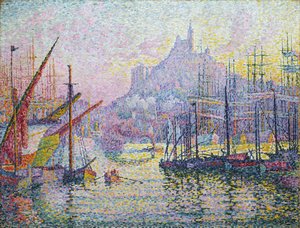
Paul Signac's *The Bonaventure Pine*: A Symphony of Light and Color
Paul Signac’s 1893 painting, *The Bonaventure Pine*, is more than just a depiction of a Provençal landscape; it’s a meticulously constructed exploration of light, color, and the burgeoning scientific understanding of vision that defined his pivotal role in the development of Neo-Impressionism. This captivating work, measuring 81 x 65 cm, immediately draws the viewer into a world where the very essence of nature is rendered through a revolutionary technique – Pointillism. The scene itself presents a majestic pine tree, its vibrant green foliage and azure branches dominating the composition, standing proudly amidst a tranquil field and distant mountains. Boats dot the water’s surface, adding a sense of scale and inviting the eye to wander across the textured canvas.
The Birth of Pointillism
Signac's artistic journey was profoundly shaped by his collaboration with Georges Seurat. Together, they sought to move beyond the fleeting effects of Impressionism and establish a more systematic approach to painting. Pointillism, born from this partnership, involved applying tiny, distinct dots of pure color – primarily complementary hues – side-by-side. This technique, rather than blending colors on the palette or in the viewer’s eye, relies entirely on optical mixing. When viewed from a distance, these individual dots coalesce to create an astonishingly luminous and vibrant effect, mimicking the way the human eye perceives color. *The Bonaventure Pine* exemplifies this mastery; observe how Signac builds depth and form through carefully placed points of red, blue, green, and yellow, creating a shimmering surface that seems to vibrate with light.
Symbolism and the Provençal Landscape
The choice of subject – the *Bonaventure Pine* – is significant. This iconic tree, located in Saint-Tropez, was already imbued with local legend; it was said to have been planted by a young sailor who, upon returning home after years at sea, had vowed to dedicate his life to the woman he loved. The painting thus transcends a simple landscape depiction and becomes a meditation on themes of longing, perseverance, and the enduring power of nature. The inclusion of boats further reinforces this connection to maritime history and the human desire for exploration and adventure. The distant mountains provide a sense of grandeur and timelessness, anchoring the scene within the broader context of the Provençal countryside.
Emotional Impact and Artistic Legacy
*The Bonaventure Pine* possesses an undeniable emotional resonance. Signac’s masterful use of color evokes a feeling of serenity and tranquility, while the meticulous detail invites close observation. This painting represents a crucial moment in modern art history – a bold experiment that challenged conventional notions of representation and paved the way for subsequent developments in abstract expressionism. Its enduring appeal lies not only in its technical brilliance but also in its ability to capture the beauty and wonder of the natural world through a uniquely innovative artistic lens. This reproduction offers an exceptional opportunity to experience Signac’s revolutionary vision firsthand.
Domande e risposte
In che modo il movimento e l'epoca si incontrano in "The Bonaventure Pine" di Paul Signac?
"The Bonaventure Pine" appartiene al movimento Neo-Impressionist Pointillism, e il suo autore ha operato nell'epoca XIX secolo.
"The Bonaventure Pine" di Paul Signac è un dipinto, un disegno o una stampa?
"The Bonaventure Pine" è un'opera di tipo WallArt.
Quanto è forte il contrasto in "The Bonaventure Pine" di Paul Signac?
Il contrasto chiaroscurale di "The Bonaventure Pine" è registrato come Statement. Il contrasto descrive quanto marcata sia la differenza tra le aree chiare e quelle scure.
Biografia dell'artista
Primi anni e formazione
Paul Victor Jules Signac, pittore neo-impressionista francese, nacque l'11 novembre 1863 a Parigi. Inizialmente intraprese un corso di architettura prima di decidere di diventare pittore all'età di 18 anni. Questa decisione fu influenzata da una mostra delle opere di Claude Monet.Stile artistico e influenze
Lo stile di Signac era caratterizzato dall'uso di piccoli punti di colore puro, che accostava per creare un senso di profondità e luce. Questa tecnica, nota come puntinismo, fu sviluppata in collaborazione con Georges Seurat. Il lavoro di Signac fu anche influenzato dai suoi viaggi lungo la costa europea, dove catturò la bellezza delle città portuali in acquerelli.Opere notevoli e associazioni
- Boulevard de Clichy (1886), un'opera post-impressionista che mette in mostra lo stile meticoloso di Signac.
- Il Boetta Rossa, Saint-Tropez (1895), una vibrante pittura marina con un boetta rosso-arancio su uno sfondo blu intenso.
- Membro fondatore della Société des Artistes Indépendants, che organizzò mostre annuali che stabilirono tendenze nell'arte del primo XX secolo.
Eredità e influenza
Il lavoro di Signac ebbe un profondo impatto sullo sviluppo del fauvismo, influenzando artisti come Henri Matisse e André Derain. In qualità di presidente della Société des Artistes Indépendants, Signac sostenne gli artisti più giovani ed espose opere controverse dei Fauves e dei Cubisti.- Visualizza altre opere di Paul Signac su https://OriginalUniqueArt.com/@/paul-signac
- Esplora la tecnica del puntinismo e la sua influenza sul neoimpressionismo su https://en.wikipedia.org/wiki/pointillism
- Scopri il movimento artistico del simbolismo, emerso come reazione al realismo nel campo della cultura nel XIX secolo, su https://en.wikipedia.org/wiki/symbolist_painting
Date chiave
- 11 novembre 1863: nato a Parigi
- 1884: ha co-fondato la Société des Artistes Indépendants
- 15 agosto 1935: è deceduto all'età di 71 anni

Paul Signac
1863 - 1935 , Francia
Informazioni rapide
- Artisti Influenti:
- Claude Monet
- Georges Seurat
- Artisti Influenzati:
- Henri Matisse
- André Derain
- Data Di Nascita: 11 novembre 1863
- Luogo Di Nascita: Parigi, Francia
- Movimento Artistico: Neo-Impressionismo
- Nazionalità: Francese
- Nome Completo: Paul Signac
- Opere Notevoli:
- Boulevard de Clichy (1886)
- Il Boia Rosso, Saint-Tropez (1895)
Articoli correlati

Paul Signac: Puntinismo, Politica e la Ricerca dell'Armonia nell'Arte Moderna
Esplora il puntinismo e il divisionismo con OriginalUniqueArt. Scopri la rivoluzione tecnica di Seurat, l'impegno politico di Signac e la ricerca dell'armonia nell'arte moderna. Approfondimenti storici e analisi approfondite.
The Science of Light: How Seurat and Signac Revolutionized Color with Pointillism
Explore the scientific brilliance of Seurat and Signac. Discover how Pointillism revolutionized color through optical mixing and light, offering a profound look into the Neo-Impressionist movement for true art connoisseurs and collectors.

Paul Klee: Le 25 Opere Più Iconiche per Arricchire la Tua Casa con l'Arte
Esplora le 25 opere più iconiche di Paul Klee, maestro dell'arte astratta e del colore. Scopri la storia, lo stile unico e il significato dei suoi capolavori. Trova riproduzioni d'arte di alta qualità per decorare casa con OriginalUniqueArt.com.
La Scienza della Luce: Come l'Ottica ha Guidato la Tecnica di Seurat e Signac nel Puntinismo
Scopri come la scienza dell'ottica ha rivoluzionato il puntinismo di Seurat e Signac. Approfondisci la tecnica del colore ora.

Paul Cézanne: I 25 Capolavori che Hanno Rivoluzionato l'Arte Moderna | OriginalUniqueArt
Esplora i 25 capolavori di Paul Cézanne, il maestro dell'impressionismo e post-impressionismo. Scopri la storia, le tecniche e i colori iconici dietro opere come 'Le grandi bagnanti' e 'Mont Sainte-Victoire'. Trova riproduzioni artistiche di alta qualità per decorare la tua casa su OriginalUniqueArt.com.