Anteprima in scala reale
 Condividi
 Condividi
 Dettagli
 Guida stampabile

 Scarica
 Articoli simili
 Radiografia
 Slideshow
 Statistiche
The skeleton has the shell
 Acrylic On Canvas
- WallArt
- Surrealist Dreamscapes
 1944
1944- Modern
 122.0 x 100.0 cm
 Leggi tutto
L'opera d'arte visualizzata in questa pagina è protetta dalle leggi sul diritto d'autore, il che significa che non possiamo legalmente creare o vendere una riproduzione identica. Tale protezione è garantita da accordi internazionali quali la Convenzione di Berna e dalle leggi nazionali, incluse quelle stabilite da Legge sul copyright degli Stati Uniti - Titolo 17. Tutti i diritti riservati. Le immagini presenti su questo sito sono protette da copyright e non possono essere riprodotte o utilizzate senza l'autorizzazione scritta di WahooArt.com o dei rispettivi proprietari del copyright.
Questo metodo è pienamente conforme alle normative sul diritto d'autore poiché non prevede la copia o la duplicazione dell'opera protetta. Si tratta invece di una rielaborazione creativa: un nuovo dipinto che trae ispirazione dall'originale, senza tuttavia esserne identico.
Giclée / Stampe d'arte
Stampa giclée o su tela di qualità museale, con produzione rapida e diverse opzioni di finitura. ( Ordina la riproduzione dipinta a mano Passa all'immagine digitale)




P118B €10

P118H €10

P118W €10

P438Z €10

P508JH €12

P508YH €12

P805H €10

P805Z €10

P919BZ €10

P919G €10

P919XJ €10

P959ZH €10

P968JZ €12

W106C €8

W218G €10

W218JH €8

W218Y €10

W307PJ €10

W316G €10

W316PJ €8

W316Y €10

W398PJ €8

W4111J €10

W500HY €15

W500JH €15

W692G €12

W849H €8

W940BG €15

W953PJ €8




Scegli tra le nostre dimensioni predefinite, che rispettano le proporzioni originali dell'opera d'arte.

È possibile inserire dimensioni personalizzate per adattare l'opera a una cornice o a uno spazio specifico. Se la dimensione selezionata non corrisponde alle proporzioni dell'immagine originale, procederemo al ritaglio dell'opera o all'estensione dell'immagine con un bordo specchiato o a tinta unita. Un mockup digitale ti verrà inviato per approvazione prima dell'inizio della produzione.
Si prega di notare che l'anteprima a schermo non riflette il ritaglio o l'estensione effettivi. Solo il mockup mostrerà accuratamente la composizione finale.
Sebbene siano disponibili dimensioni personalizzate, si raccomanda di selezionare una dimensione dall'elenco predefinito per preservare le proporzioni originali.
Consegna in tutto il mondo () in 2 settimane invece delle normali 4/5 settimane. (10 Ottobre)

Spedizione espressa gratuita in tutto il mondo

Tela in lino di alta qualità

Assicurazione completa sulla spedizione

Garanzia di rimborso dei dazi doganali

Garanzia di perfetta fedeltà cromatica

Politica di reso entro 100 giorni (solo per difetti di fabbricazione)

Garanzia di rimborso al 100%

Sconto per acquisti multipli
 L'opzione vetro è disponibile solo per dimensioni inferiori a 110 cm

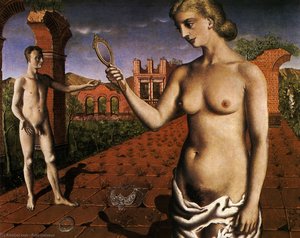
The skeleton has the shell
Giclée / Stampe d'arte
Dimensioni della riproduzione
-


Prezzo totale
€ 69
A Haunting Still Life: Delvaux’s “The Skeleton Has the Shell”
Paul Delvaux's "The Skeleton Has the Shell," painted in 1944, is more than just a depiction of human remains; it’s a meticulously crafted descent into the unsettling realm of Surrealist dreamscapes. This work, measuring 122 x 100 cm, exemplifies Delvaux’s mastery of creating scenes that are both strikingly realistic and profoundly unnerving. The composition immediately draws the eye to the central figures – two skeletons engaged in an intimate, yet deeply disturbing interaction. One skeleton leans over the other, who sits passively, a posture suggesting vulnerability or perhaps acceptance of fate. This dynamic is further complicated by the presence of several other skeletal forms scattered throughout the room, each contributing to a sense of pervasive decay and isolation. The inclusion of two chairs, one on either side of the scene, adds an element of domesticity that only amplifies the artwork’s chilling effect – a familiar setting rendered utterly devoid of life.Surrealist Techniques and Delvaux's Vision
Delvaux was a key figure in the Surrealist movement, though he resisted rigid categorization, preferring to explore the subconscious through meticulous observation and precise rendering. “The Skeleton Has the Shell” showcases his signature technique: a hyper-realistic style applied to utterly fantastical subjects. The smooth, polished surfaces of the skeletons, combined with the detailed textures of the room – the aged plaster columns, the worn fabric of the chairs – create an almost photographic quality that intensifies the unsettling nature of the scene. This deliberate juxtaposition of realism and the bizarre is a hallmark of Surrealism, designed to provoke thought and challenge conventional perceptions. The clock on the wall, a recurring motif in Delvaux’s work, subtly introduces themes of time, mortality, and the relentless march towards oblivion.Symbolic Layers: Mortality, Decay, and the Unconscious
The imagery within “The Skeleton Has the Shell” is laden with symbolic weight. Skeletons themselves are universally recognized symbols of death, decay, and the fragility of human existence. The act of one skeleton bending over another suggests a power dynamic, perhaps representing dominance or control in the face of mortality. The room itself can be interpreted as a representation of the unconscious mind – a dark, enclosed space filled with unsettling imagery and unresolved anxieties. Delvaux’s work taps into primal fears surrounding death and the unknown, reflecting the broader cultural preoccupation with these themes during the mid-20th century. The title itself, “The Skeleton Has the Shell,” is deliberately ambiguous, adding to the artwork's enigmatic quality and inviting multiple interpretations.A Timeless Masterpiece for Collection and Interior Design
This hand-painted reproduction of Paul Delvaux’s "The Skeleton Has the Shell" offers a unique opportunity to own a piece of Surrealist history. Measuring 122 x 100 cm, it is ideally suited for display in a variety of settings – from private collections to sophisticated interior design projects. The artwork's haunting beauty and thought-provoking symbolism will undoubtedly serve as a focal point, sparking conversation and contemplation. OriginalUniqueArt’s meticulous reproduction ensures that the full impact of Delvaux’s original vision is faithfully preserved, offering collectors and enthusiasts alike a chance to experience the unsettling allure of this iconic Surrealist masterpiece. Code: DELV-SKELETON-1944Domande e risposte
Quando è stata creata "The skeleton has the shell" e a quale movimento appartiene?
"The skeleton has the shell" è stata creata nel 1944 come opera del movimento Surrealist Dreamscapes. La data e il movimento collocano l'opera all'interno della storia dell'arte.
Verso quale tonalità tende "The skeleton has the shell"?
"The skeleton has the shell" tende verso una tonalità Golden Yellow Range.
Come posso ottenere un file digitale di "The skeleton has the shell" di Paul Delvaux?
È possibile acquistare un'immagine digitale di "The skeleton has the shell" di Paul Delvaux su questa pagina: download di un'immagine digitale ad alta risoluzione.
Quanto è satura la tavolozza di "The skeleton has the shell"?
I colori di "The skeleton has the shell" di Paul Delvaux hanno una saturazione Clear Color Presence. La saturazione descrive quanto i colori siano vivaci o attenuati.
Quanti anni aveva Paul Delvaux quando ha creato "The skeleton has the shell" nel 1944?
Quando "The skeleton has the shell" fu creata nel 1944, Paul Delvaux - nato nel 1897 - aveva 47 anni.
In che anno è stata realizzata l'opera "The skeleton has the shell" di Paul Delvaux?
"The skeleton has the shell" di Paul Delvaux è stata creata nel 1944.
Chi è l'artista dietro "The skeleton has the shell"?
L'artista che ha creato "The skeleton has the shell" è Paul Delvaux. L'opera è catalogata sotto il nome di Paul Delvaux.
Biografia dell'artista
Primi anni e influenze
Paul Delvaux, rinomato pittore belga, nacque il 23 settembre 1897 a Wanze, in Belgio. La sua prima vita fu segnata da una vasta gamma di interessi, tra cui la musica, gli studi di greco e latino e le opere di Jules Verne e Omero. Queste influenze avrebbero plasmato più tardi il suo stile artistico unico.Sviluppo artistico
Il percorso artistico di Delvaux iniziò all'Académie Royale des Beaux-Arts di Bruxelles, dove studiò architettura a causa del disappunto dei suoi genitori per la sua ambizione di diventare pittore. Tuttavia, continuò a perseguire la pittura, frequentando lezioni tenute da Constant Montald e Jean Delville. I suoi primi lavori, principalmente paesaggi naturalistici, furono influenzati dagli espressionisti fiamminghi come Constant Permeke e Gustave de Smet.Periodo surrealista
Alla fine degli anni '20 e all'inizio degli anni '30, i dipinti di Delvaux iniziarono a presentare nudi in paesaggi, mostrando la sua miscela unica di elementi classici e scene oniriche. Questo stile fu pesantemente influenzato dall'arte metafisica di Giorgio de Chirico, che incontrò alla fine degli anni '20. Un esempio notevole di questo periodo è "La Venere Dormiente", un affascinante dipinto ad olio su tela che esemplifica lo stile surrealista di Delvaux.Opere notevoli e musei
- "Treno Notturno" (1947), un capolavoro del surrealismo, si può trovare al Musée de Toyama in Giappone.
- La Tate Gallery a Londra presenta un'altra versione di "La Venere Dormiente", mostrando il lavoro su larga scala di Delvaux.
Eredità e impatto
Lo stile unico di Delvaux, che fonde elementi classici con scene oniriche, ha lasciato un impatto duraturo nel mondo dell'arte. Le sue opere continuano a essere celebrate per la loro bellezza e qualità estetiche. Come artista, Delvaux rimane una figura significativa nel movimento surrealista, ispirando le future generazioni di artisti.- Scopri di più sulla vita e sulle opere di Paul Delvaux su https://OriginalUniqueArt.com/@/paul-delvaux
- Esplora la storia del surrealismo e delle sue figure chiave su https://en.wikipedia.org/wiki/surrealism
- Scopri l'impatto dell'arte metafisica di Giorgio de Chirico sull'opera di Delvaux su /it/art/show/art-d3cr9h-it/
- 23 settembre 1897: nato a Wanze, Belgio
- 1944: creata "La Venere Dormiente"
- 20 luglio 1994: deceduto a Veurne, Belgio

Paul Delvaux
1897 - 1994 , Belgio
Informazioni rapide
- Artisti Influenti:
- Giorgio de Chirico
- James Ensor
- Data Di Nascita: 23 settembre 1897
- Luogo Di Nascita: Wanze, Belgio
- Movimento Artistico: Surrealismo
- Nazionalità: Belga
- Nome Completo: Paul Delvaux
- Opere Notevoli:
- Notte in Treno
- La Venere Addormentata
- La Foresta
Articoli correlati

OriginalUniqueArt.com F.A.Q.: Elevate Your Decor with Premium Textured Giclée Prints
Discover the distinction of OriginalUniqueArt.com premium textured Giclée prints. Expertly crafted with archival 12-color pigments and museum-grade substrates, our prints offer unparalleled vividness for the discerning collector seeking luxury, durability, and timeless elegance.