Anteprima in scala reale
 Condividi
 Condividi
 Dettagli
 Guida stampabile

 Scarica
 Articoli simili
 Radiografia
 Slideshow
 Statistiche
Vista di Auvers-sur-Oise
 Olio su tela
- Opere da parete
- Post-Impressionism
 1873
1873- 19th Century
 44.0 x 34.0 cm
 Leggi tutto
Giclée / Stampe d'arte
Stampa giclée o su tela di qualità museale, con produzione rapida e diverse opzioni di finitura. ( Ordina la riproduzione dipinta a mano Passa all'immagine digitale)




P118B €10

P118H €10

P118W €10

P438Z €10

P508JH €12

P508YH €12

P805H €10

P805Z €10

P919BZ €10

P919G €10

P919XJ €10

P959ZH €10

P968JZ €12

W106C €8

W218G €10

W218JH €8

W218Y €10

W307PJ €10

W316G €10

W316PJ €8

W316Y €10

W398PJ €8

W4111J €10

W500HY €15

W500JH €15

W692G €12

W849H €8

W940BG €15

W953PJ €8




Scegli tra le nostre dimensioni predefinite, che rispettano le proporzioni originali dell'opera d'arte.

Inserisci la larghezza e l'altezza desiderate, per adattarle alla tua cornice o alla tua parete. Una stampa può essere solo ritagliata, mai resa più grande dell'immagine originale; pertanto, un formato con una forma differente comporterà la perdita di una parte dell'opera. Ti invieremo un mockup digitale da approvare prima di procedere con la stampa. L'immagine mostrata in questa pagina non rappresenta il ritaglio reale — solo il mockup lo mostra.
Consegna in tutto il mondo () in 2 settimane invece delle normali 4/5 settimane. (24 Ottobre)

Spedizione espressa gratuita in tutto il mondo

Tela in lino di alta qualità

Assicurazione completa sulla spedizione

Garanzia di rimborso dei dazi doganali

Garanzia di perfetta fedeltà cromatica

Politica di reso entro 100 giorni (solo per difetti di fabbricazione)

Garanzia di rimborso al 100%

Sconto per acquisti multipli
 L'opzione vetro è disponibile solo per dimensioni inferiori a 110 cm

Vista di Auvers-sur-Oise
Giclée / Stampe d'arte
Dimensioni della riproduzione
-


Prezzo totale
€ 70
A Moment Frozen in Time: Unveiling Cézanne’s “View of Auvers”
Paul Cézanne's "View of Auvers," painted in 1879–80, isn’t merely a depiction of a rural French landscape; it’s a profound exploration of perception and the very nature of seeing. This captivating work, housed today at the Ashmolean Museum in Oxford, represents a pivotal moment in Cézanne's artistic journey – a bridge between his early influences and the groundbreaking innovations that would define his legacy as a Post-Impressionist master. The scene unfolds within the small village of Auvers-sur-Oise, nestled just northwest of Paris, a location that held particular significance for the artist during his brief but intensely productive residency there. More than simply capturing a picturesque vista, Cézanne sought to distill the essence of the place – its light, its atmosphere, and the way it resonated with his own internal vision.The painting itself is a study in controlled chaos, a deliberate departure from the fleeting impressions of Impressionism. Instead of striving for photographic accuracy, Cézanne employs a technique he termed “separating planes,” meticulously constructing the scene through distinct layers of color and form. The houses, rendered with simplified shapes and muted tones, are not painted as individual objects but rather as volumes that exist within a larger spatial framework. The rolling hills and distant trees are treated similarly, their outlines subtly defined to create an illusion of depth and solidity. Notice how the artist uses short, broken brushstrokes – almost like dabs or smears – to build up the surfaces, capturing the play of light and shadow with remarkable sensitivity. The sky itself is a symphony of blues and whites, not blended smoothly but rather applied in distinct patches, suggesting movement and atmosphere.
The Seeds of Modernism: Cézanne’s Revolutionary Approach
Cézanne's "View of Auvers" stands as a crucial stepping stone towards the development of Cubism. His emphasis on geometric forms, his fragmentation of space, and his exploration of multiple viewpoints – all hallmarks of this painting – foreshadowed the radical innovations of Picasso and Braque. However, Cézanne wasn’t simply dismantling traditional representation; he was fundamentally altering how we *perceive* art itself. He believed that a painting should not merely imitate nature but rather capture its underlying structure—the way objects exist in space and relate to one another. This conviction led him to experiment with perspective, often depicting multiple viewpoints simultaneously within a single frame, challenging the viewer’s sense of depth and orientation.
The influence of Japanese prints is undeniable here. Cézanne was deeply fascinated by the flattened perspectives and bold compositions found in Ukiyo-e woodblock prints. He adopted these techniques to create a sense of immediacy and dynamism, injecting a vibrant energy into his landscapes. Furthermore, Cézanne’s exploration of color—his use of complementary hues and his avoidance of traditional blending—echoes the principles of Japanese aesthetics, where color is often employed to evoke mood and atmosphere rather than simply describing reality.
A Village in Transition: Context and Connections
To understand “View of Auvers,” it’s essential to consider the context in which Cézanne was working. The late 1870s were a period of intense artistic ferment, as Impressionism challenged established conventions and paved the way for new directions. Cézanne, initially influenced by Impressionist techniques, gradually moved beyond them, seeking a more enduring and expressive language. His time in Auvers-sur-Oise was particularly formative, providing him with a sense of tranquility and inspiration that fueled his artistic experimentation.
Interestingly, this painting shares thematic connections with Vincent van Gogh’s “Vineyards with a View of Auvers,” created just a few years later. While Van Gogh employed a more emotionally charged palette and expressive brushwork, both artists were captivated by the same landscape—a testament to its enduring beauty and Cézanne’s profound ability to capture its essence. The two paintings offer a fascinating dialogue between artistic approaches, highlighting the evolving trajectory of Post-Impressionism.
Bringing Cézanne Home: Reproductions and Artistic Inspiration
OriginalUniqueArt offers meticulously crafted hand-painted oil painting reproductions of “View of Auvers,”, allowing you to experience Paul Cézanne’s masterpiece in stunning detail. Our skilled artists faithfully recreate Cézanne’s unique style, capturing the subtle nuances of color, texture, and form. Whether for your home or office, a OriginalUniqueArt reproduction will serve as a timeless reminder of Cézanne’s revolutionary vision and his enduring legacy as one of art history’s most influential figures.
Explore our collection today: View of Auvers and discover the perfect Cézanne reproduction to complement your space.
Domande e risposte
Con quali pseudonimi o nomi alternativi è conosciuto Paul Cézanne?
Altri nomi registrati per Paul Cézanne, autore di "Vista di Auvers-sur-Oise", includono Paul Cezanne.
Verso quale tonalità tende "Vista di Auvers-sur-Oise"?
Una tonalità Spettro dal verde al viola attraversa l'opera "Vista di Auvers-sur-Oise" di Paul Cézanne.
Qual è la spiegazione relativa allo stato del copyright di "Vista di Auvers-sur-Oise" di Paul Cézanne?
"Vista di Auvers-sur-Oise" di Paul Cézanne è di di pubblico dominio - il suo copyright è scaduto. I termini del copyright si calcolano a partire dalla morte dell'artista, e Paul Cézanne è deceduto nel 1906.
Biografia dell'artista
vitae e influenze
paul cézanne, pittore post-impressionista francese, nacque il 19 gennaio 1839 ad Aix-en-Provence, Francia. La sua giovinezza fu segnata da un forte legame con la famiglia e la sua attività bancaria, che gli fornirono sicurezza finanziaria. Ciò gli permise di concentrarsi sulle sue aspirazioni artistiche senza il peso dello stress finanziario. les nabis, neo-impressionismo e simbolismo influenzarono le prime opere di Cézanne, caratterizzate dall'enfasi sulle forme geometriche e su una tavolozza cromatica limitata. Il suo interesse per le opere di paul gauguin e georges seurat ha ulteriormente consolidato il suo stile post-impressionista.stile artistico e tecniche
L'uso innovativo di Cézanne dei piani cromatici e delle piccole pennellate ripetitive creava campi complessi che esprimevano il suo intenso studio dei soggetti. Il suo approccio spesso esploratorio all’arte portò allo sviluppo di una nuova lingua pittorica, che enfatizzava la struttura sottostante degli oggetti in una composizione.- caratteristiche principali:
- forme geometriche e faccette
- tavolozza cromatica ridotta
- enfasi sull'essenza costruttiva del mondo fisico
- prospettiva multipla e simultaneità
- opere influenti:
- the pond at jas de bouffan (1880)
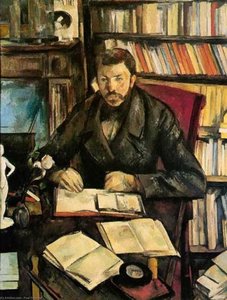
- portrait of emile zola (1866)
- bosco (1892)
- musei che espongono le opere di Cézanne:
- musée marmottan monet a Parigi, Francia
- the museum of fine arts a Houston, Stati Uniti
eredità e impatto
L'opera pionieristica di Cézanne nel post-impressionismo ha aperto la strada a vari movimenti d’avanguardia, tra cui il cubismo, il fauvismo e il surrealismo. La sua influenza può essere vista nelle opere di pablo picasso, henri matisse e georges braque. L'eredità di Cézanne continua a ispirare artisti ed appassionati d’arte, consolidando il suo posto come figura fondamentale nella storia dell’arte moderna.- movimenti artistici correlati:
- visualizza le opere di Cézanne:
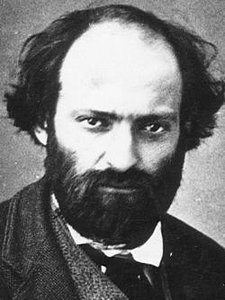
Paul Cézanne
1839 - 1906 , Francia
Informazioni rapide
- Artisti Che Hanno Influenzato:
- Paul Gauguin
- Georges Seurat
- Artisti Influenzati:
- Pablo Picasso
- Henri Matisse
- Georges Braque
- Data Di Nascita: 19 gennaio 1839
- Luogo Di Nascita: Aix-en-Provence, Francia
- Movimento Artistico: Post-Impressionismo
- Nazionalità: Francese
- Nome Completo: Paul Cézanne
- Opere Notevoli:
- Lo stagno a Jas de Bouffan
- Ritratto di Émile Zola
- Bosco
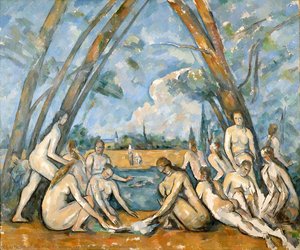
- Grandi Bagnanti
Articoli correlati
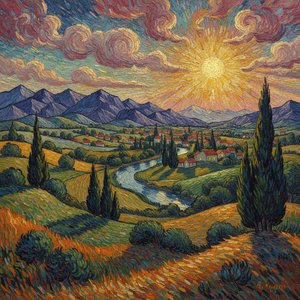
Beyond Impressionism: The Emotional Depth and Vibrant Evolution of Post-Impressionist Landscapes
Explore the profound evolution of Post-Impressionist landscapes. From Van Gogh's emotional brushwork to Cézanne's structural mastery, discover how these visionaries redefined art history through color and form in this expert guide for fine art enthusiasts.

I 10 Capolavori Impressionisti che Hanno Rivoluzionato il Paesaggio Pittorico
Esplora i 10 capolavori impressionisti che hanno rivoluzionato il paesaggio pittorico! Monet, Renoir e altri maestri catturati in stampe su tela di alta qualità. Scopri la storia dell'arte e trova l'opera perfetta per arredare casa tua con OriginalUniqueArt.com.

Paul Cézanne: I 25 Capolavori che Hanno Rivoluzionato l'Arte Moderna | OriginalUniqueArt
Esplora i 25 capolavori di Paul Cézanne, il maestro dell'impressionismo e post-impressionismo. Scopri la storia, le tecniche e i colori iconici dietro opere come 'Le grandi bagnanti' e 'Mont Sainte-Victoire'. Trova riproduzioni artistiche di alta qualità per decorare la tua casa su OriginalUniqueArt.com.
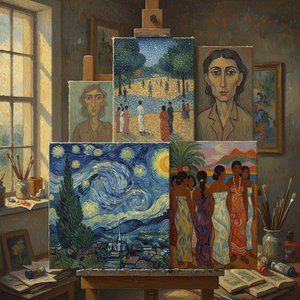
Beyond Impressionism: Exploring the Emotional Depth of Post-Impressionist Painting
Explore the profound emotional depth & innovative techniques of Post-Impressionism with OriginalUniqueArt. Discover Cézanne, Van Gogh, Gauguin & more – and their lasting impact on modern art.

Impressionismo: I 10 Capolavori che Rivoluzionarono la Pittura | OriginalUniqueArt
Esplora i 10 capolavori dell'Impressionismo con OriginalUniqueArt. Scopri Monet, Renoir e Degas: storia, tecnica e colori che hanno rivoluzionato l'arte. Stampe di alta qualità per la tua casa! Esplora la collezione online.