Anteprima in scala reale
 Condividi
 Condividi
 Dettagli
 Guida stampabile

 Scarica
 Articoli simili
 Radiografia
 Slideshow
 Statistiche
Young Girl Throwing a Rock

 Leggi tutto
Giclée / Stampe d'arte
Stampa giclée o su tela di qualità museale, con produzione rapida e diverse opzioni di finitura. ( Ordina la riproduzione dipinta a mano Passa all'immagine digitale)




P118B $10

P118H $10

P118W $10

P438Z $10

P508JH $12

P508YH $12

P805H $10

P805Z $10

P919BZ $10

P919G $10

P919XJ $10

P959ZH $10

P968JZ $12

W106C $8

W218G $10

W218JH $8

W218Y $10

W307PJ $10

W316G $10

W316PJ $8

W316Y $10

W398PJ $8

W4111J $10

W500HY $15

W500JH $15

W692G $12

W849H $8

W940BG $15

W953PJ $8




Scegli tra le nostre dimensioni predefinite, che rispettano le proporzioni originali dell'opera d'arte.

È possibile inserire dimensioni personalizzate per adattare l'opera a una cornice o a uno spazio specifico. Se la dimensione selezionata non corrisponde alle proporzioni dell'immagine originale, procederemo al ritaglio dell'opera o all'estensione dell'immagine con un bordo specchiato o a tinta unita. Un mockup digitale ti verrà inviato per approvazione prima dell'inizio della produzione.
Si prega di notare che l'anteprima a schermo non riflette il ritaglio o l'estensione effettivi. Solo il mockup mostrerà accuratamente la composizione finale.
Sebbene siano disponibili dimensioni personalizzate, si raccomanda di selezionare una dimensione dall'elenco predefinito per preservare le proporzioni originali.
Consegna in tutto il mondo () in 2 settimane invece delle normali 4/5 settimane. (25 Settembre)

Spedizione espressa gratuita in tutto il mondo

Tela in lino di alta qualità

Assicurazione completa sulla spedizione

Garanzia di rimborso dei dazi doganali

Garanzia di perfetta fedeltà cromatica

Politica di reso entro 100 giorni (solo per difetti di fabbricazione)

Garanzia di rimborso al 100%

Sconto per acquisti multipli
 L'opzione vetro è disponibile solo per dimensioni inferiori a 110 cm

Young Girl Throwing a Rock
Giclée / Stampe d'arte
Dimensioni della riproduzione
-


Prezzo totale
$ 80
The Raw Emotion of Childhood: Unpacking Picasso’s ‘Young Girl Throwing a Rock’
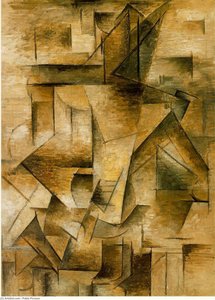
Pablo Picasso's “Young Girl Throwing a Rock,” painted in 1931, isn’t merely a depiction of a child playing; it’s a potent distillation of childhood energy, vulnerability, and the nascent awareness of conflict. Created during a period of intense artistic experimentation for Picasso – a time when he was grappling with Surrealism and exploring new ways to represent reality – this work stands as a testament to his ability to capture fleeting moments of human experience with remarkable intensity. The painting immediately draws the viewer in with its dynamic composition, dominated by the central figure’s forceful action, yet simultaneously imbued with an underlying sense of quiet contemplation.
The subject herself is rendered with a deliberate ambiguity. Her features are simplified, almost childlike, yet her posture and gaze convey a surprising degree of awareness. The loose brushstrokes and flattened perspective contribute to the painting's dreamlike quality, suggesting that this isn’t simply a portrait but rather an exploration of emotion and instinct. Picasso masterfully employs color – primarily ochres, blues, and browns – to create a sense of depth and atmosphere, grounding the scene in a tangible reality while simultaneously hinting at the subconscious.
Cubism's Echoes and Surrealist Influences
“Young Girl Throwing a Rock” firmly resides within Picasso’s evolving artistic landscape. While often associated with Cubism – particularly his Analytical phase – this work demonstrates elements of both Cubism and Surrealism, reflecting the artist’s ongoing experimentation with form and representation. The fragmented forms and multiple perspectives characteristic of Cubism are present, but they're deployed here not to dissect reality but to convey a sense of movement and emotional intensity. The influence of Surrealism is evident in the painting’s dreamlike quality and its exploration of the inner world – a departure from the more objective approach favored by earlier Cubist iterations.
Notably, Picasso was deeply affected by the political turmoil of his time, particularly the Spanish Civil War. The atmosphere of uncertainty and violence permeated much of his work during this period, and “Young Girl Throwing a Rock” can be interpreted as a reflection of these anxieties. The act of throwing the rock itself – an impulsive, almost primal gesture – carries symbolic weight, suggesting a confrontation with something unknown or potentially dangerous.
Symbolism in Action: The Rock, the Book, and the Bottle
Beyond the central figure, several elements within the painting contribute to its layered symbolism. The rock she throws is not just an object of play; it represents action, defiance, and perhaps even aggression. The book positioned near her left hand could symbolize knowledge, innocence, or a yearning for understanding – a contrast to the impulsive act taking place. The bottle on the far left, partially obscured, might represent containment, fragility, or the potential for disruption.
These seemingly simple objects are arranged within a carefully constructed space, creating a dynamic composition that draws the eye and invites interpretation. Picasso’s use of negative space – the areas around and between the figures – further enhances this effect, allowing each element to breathe and contribute to the overall narrative.
A Window into the Artist's Soul
“Young Girl Throwing a Rock” is more than just a painting; it’s a glimpse into Picasso’s artistic process and his profound understanding of human emotion. It’s a work that rewards repeated viewing, revealing new layers of meaning with each encounter. The raw energy captured in this seemingly simple scene speaks to the universal experiences of childhood – the joy of play, the confrontation with uncertainty, and the burgeoning awareness of the world around us. Reproductions of this iconic piece offer a remarkable opportunity to bring this powerful work into your home, allowing you to contemplate its enduring message for years to come.
Biografia dell'artista
Pablo Picasso: Un Artista Rivoluzionario
Primi Anni di Vita e Formazione (1881-1904)
- Nato il 25 ottobre 1881 a Málaga, in Spagna, Pablo Ruiz y Picasso dimostrò un talento artistico fin da piccolissimo.
- Suo padre, José Ruiz y Blasco, era un insegnante d'arte che gli fornì una formazione precoce. Si dice che le prime parole di Picasso fossero “piz, piz” – cercando di dire ‘matita’.
- Picasso superò rapidamente le capacità del suo padre, mostrando un’abilità notevole nelle rappresentazioni naturalistiche.
- La famiglia si trasferì a A Coruña e successivamente a Barcellona dopo la tragica perdita della sorella di Picasso.
- A Barcellona, frequentò la Scuola d'Arti Visive ma spesso entrò in conflitto con le istruzioni accademiche tradizionali. Studiò brevemente alla Royal Academy of San Fernando a Madrid, trovandola soffocante e preferendo studiare i maestri come Velázquez e Goya in modo indipendente.
Il Periodo Blu e Rosa (1901-1906)
- Il Periodo Blu (circa 1901-1904) è caratterizzato da dipinti malinconici dominati da sfumature di blu e verde acqua.
- Questi lavori raffigurano spesso figure emarginate – mendicanti, ciechi, prostitute – riflettendo malinconia e commento sociale. Esempi chiave includono La Vie (1903) e L'Oldista (1903-1904).
- Successivamente, il Periodo Rosa (1904-1906) emerse con tonalità più calde – rosa, arancione e rosso.
- Questo periodo riflette una prospettiva più ottimista, spesso ritraendo artisti di circo, harlequini e acrobati. Famiglia dei Saltimbanchi (1905) ne è un esempio.
Gli Anni Rivoluzionari: Cubismo e Oltre (1907-1919)
- Il 1907 ha segnato un momento cruciale con Les Demoiselles d'Avignon, influenzato dalla scultura iberica e dalle maschere africane. Questo dipinto infranse la prospettiva tradizionale, aprendo la strada al Cubismo.
- Lavorando a stretto contatto con Georges Braque, Picasso co-fondò il Cubismo, trasformando radicalmente il modo in cui gli artisti rappresentavano la realtà.
- Cubismo Analitico (1909-1912) presentava forme frammentate, colori tenui e una dissezione degli oggetti in forme geometriche.
- Cubismo Sintetico (1912-1919) incorporava elementi di collage – ritagli di giornale, stracci – per creare superfici testurizzate e nuovi livelli visivi.
Neoclassicismo e Surrealismo (Anni '20 - Anni '30)
- Gli anni '20 hanno visto Picasso esplorare stili neoclassici con figure monumentali che enfatizzavano le forme classiche.
- Ha anche interagito con il movimento surrealista, pur non allineandosi pienamente ai suoi principi. La sua opera ha combinato stili precedenti con immagini surrealiste e prospettive distorte.
Anni Successivi e Eredità (1940-1973)
- Durante la Seconda Guerra Mondiale, Picasso è rimasto in Francia, producendo dichiarazioni anti-guerra potenti come Guernica (1937), una risposta viscera al bombardamento di Guernica durante la guerra civile spagnola.
- Guernica è diventata un simbolo duraturo degli orrori della guerra e rimane uno dei suoi lavori più celebrati.
- Nel corso degli anni '50 e '60, Picasso ha continuato a sperimentare con vari mezzi – ceramiche, sculture, stampe – dimostrando una versatilità notevole.
- Si è sposato con Jacqueline Roque nel 1961. È morto il 8 aprile 1973 a Mougins, in Francia.
Influenze e Significato Storico
- Lo sviluppo artistico di Picasso fu plasmato da maestri spagnoli come Velázquez e Goya, dalla scultura iberica, dall'arte africana e da Henri Matisse.
- Il suo impatto sull'arte del XX secolo è incommensurabile. Ha co-fondato il Cubismo, ha pionieristicamente utilizzato collage e sculture costruite e ha costantemente sfidato le convenzioni artistiche.
- L'incessante sperimentazione di Picasso ha ridefinito l'arte moderna e continua a ispirare gli artisti oggi.
- La sua produzione prolifica – stimata in oltre 50.000 opere – consolida la sua posizione come uno degli artisti più importanti e influenti della storia.

Pablo Picasso
1881 - 1973 , Spagna
Informazioni rapide
- Artisti Che Hanno Influenzato Questo Artista:
- Velázquez
- Goya
- Henri Matisse
- Data Di Morte: 8 aprile 1973
- Data Di Nascita: 25 ottobre 1881
- Luogo Di Nascita: Malaga, Spagna
- Movimento Artistico: Cubismo, Surrealismo
- Nazionalità: Spagnola
- Nome Completo: Pablo Ruiz y Picasso
- Opere Notevoli:
- Les Demoiselles d'Avignon
- Guernica
- La Vie
- L'Oldista
- Famiglia dei Saltimbanchi
Articoli correlati
Cubismo: I 10 Capolavori Che Hanno Rivoluzionato l'Arte Moderna | OriginalUniqueArt
Esplora i 10 capolavori del Cubismo con OriginalUniqueArt. Scopri Picasso, Braque e Gris e la rivoluzione artistica delle forme geometriche e dei colori audaci. Quadri iconici per decorare casa con stile! Esplora la collezione online.
Cubism Unveiled: How Picasso and Braque Redefined Reality Through Geometric Abstraction
Explore the revolutionary world of Cubism. Discover how masters Pablo Picasso and Georges Braque dismantled reality through geometric abstraction to redefine modern art history.
Cubism Explained: How Picasso and Braque Shattered Reality to Redefine Modern Art
Master the complexities of Cubism with our expert guide. Explore how Picasso and Braque revolutionized modern art through fragmentation, multiple perspectives, and geometric innovation. Perfect for art students and collectors seeking deep historical insight.

Cubism Unveiled: How Picasso and Braque Redefined Modern Art through Geometric Revolution
Explore the revolutionary world of Cubism. Discover how Pablo Picasso and Georges Braque dismantled perspective to redefine modern art through geometric innovation and analytical mastery. An essential guide for art students, collectors, and history enthusiasts.

Pablo Picasso: Rivoluzione Cubista, Simbolismo e un'Eredità Duratura nell'Arte Moderna
Esplora la rivoluzione artistica di Pablo Picasso e il Cubismo con OriginalUniqueArt. Scopri le origini, l'evoluzione stilistica e l'eredità duratura del maestro spagnolo. Guide all'acquisto e valutazione per collezionisti esperti.