Passa alle stampe
 Espandi i dettagli







































 Per opere d'arte o riproduzioni con un lato superiore a 105 cm (circa 41 pollici), la cornice verrà spedita in forma di kit smontato. Questo metodo garantisce una consegna sicura e previene danni durante il trasporto.


Seven Ballerinas: A Study in Minimalism and Melancholy
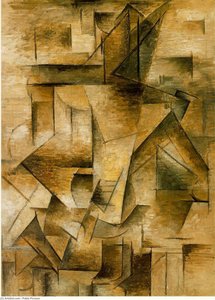
Pablo Picasso’s “Seven Ballerinas,” created in 1919, stands as a cornerstone of Cubist experimentation and embodies the artist's profound engagement with movement and emotion. This monochrome drawing—executed on paper—captures not just the physical postures of dancers but delves into an intangible realm of feeling, reflecting Picasso’s evolving artistic vision during his formative years.
- Composition & Form: The artwork presents a dynamic yet restrained arrangement; seven ballerinas are positioned in a loose semicircle, emphasizing fluidity and suggesting continuous action. Picasso abandons traditional anatomical accuracy, opting for simplified geometric forms that prioritize essence over meticulous detail—a characteristic hallmark of Cubism’s revolutionary approach.
- Color Palette & Texture: Stripped bare of color, the drawing utilizes a masterful grayscale palette ranging from delicate shades to darker tones. The artist achieves textural depth through extensive hatching and cross-hatching techniques, skillfully layering lines to simulate skin, fabric, and shadow—creating an illusion of palpable presence.
- Technique & Materials: Picasso’s technique is characterized by precise control over graphite or charcoal pencil strokes, demonstrating exceptional skill in capturing tonal variations and conveying subtle nuances of form. The choice of paper lends itself beautifully to the artist's expressive style, allowing for nuanced shading and textural richness.
- Historical Context & Influence: Produced during Picasso’s early Cubist period—immediately following “Les Demoiselles d’Avignon”—“Seven Ballerinas” exemplifies the movement’s preoccupation with fragmentation and multiple perspectives. It anticipates subsequent explorations of abstraction and challenges conventional notions of representation, cementing Picasso's position as a pioneer of modern art.
- Symbolism & Emotional Resonance: Beyond its formal qualities, the drawing evokes a palpable sense of melancholy—a recurring motif in Picasso’s oeuvre—perhaps reflecting his personal experiences during this turbulent time. The monochromatic hue amplifies this mood, inviting contemplation on themes of vulnerability and beauty amidst stillness.
“Seven Ballerinas” transcends mere depiction; it's an invitation to consider the artist’s exploration of form, texture, and emotion—a testament to Picasso’s enduring legacy as one of the most influential figures in 20th-century art. Its understated elegance continues to inspire artists and collectors alike.
Domande e risposte
Quale dimensione è consigliata per "Seven ballerinas" in un/una Zona living?
L'abbinamento consigliato per "Seven ballerinas" di Pablo Picasso: una stampa di dimensioni Grande formato in un/una Zona living.
Quanto sono intensi i colori di "Seven ballerinas" di Pablo Picasso?
"Seven ballerinas" di Pablo Picasso presenta un'intensità cromatica Monocromatico.
In che anno è stata creata "Seven ballerinas" di Pablo Picasso?
"Seven ballerinas" di Pablo Picasso è stata creata nel 1919.
 Anteprima in scala reale
 Invia
Invia Condividi
 Dettagli opera
 Guida
Guida

 Scarica
 Simili
 Radiografia
 Slideshow
 Q&A
Q&A Statistiche