Anteprima in scala reale
 Condividi
 Condividi
 Dettagli

 Scarica immagine
 Articoli simili
 Radiografia
 Slideshow
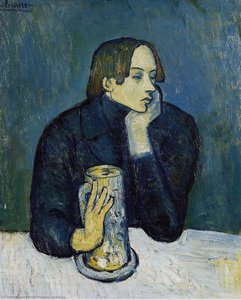
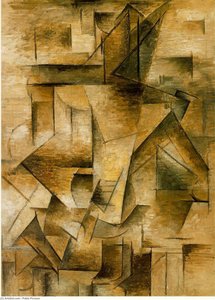
Colazione dell'uomo cieco


 Leggi tutto
Giclée / Stampe d'arte
Stampa giclée o su tela di qualità museale, con produzione rapida e diverse opzioni di finitura. ( Acquista dipinto fatto a mano Acquista immagine)




P118B $10

P118H $10

P118W $10

P438Z $10

P508JH $12

P508YH $12

P805H $10

P805Z $10

P919BZ $10

P919G $10

P919XJ $10

P959ZH $10

P968JZ $12

W106C $8

W218G $10

W218JH $8

W218Y $10

W307PJ $10

W316G $10

W316PJ $8

W316Y $10

W398PJ $8

W4111J $10

W500HY $15

W500JH $15

W692G $12

W849H $8

W940BG $15

W953PJ $8




Scegli tra le nostre dimensioni predefinite, che rispettano le proporzioni originali dell'opera d'arte.

È possibile inserire dimensioni personalizzate per adattare l'opera a una cornice o a uno spazio specifico. Se la dimensione selezionata non corrisponde alle proporzioni dell'immagine originale, procederemo al ritaglio dell'opera o all'estensione dell'immagine con un bordo specchiato o a tinta unita. Un mockup digitale ti verrà inviato per approvazione prima dell'inizio della produzione.
Si prega di notare che l'anteprima a schermo non riflette il ritaglio o l'estensione effettivi. Solo il mockup mostrerà accuratamente la composizione finale.
Sebbene siano disponibili dimensioni personalizzate, si raccomanda di selezionare una dimensione dall'elenco predefinito per preservare le proporzioni originali.
Consegna in tutto il mondo () in 2 settimane invece delle normali 4/5 settimane. (12 Agosto)

Spedizione espressa gratuita in tutto il mondo

Tela in lino di alta qualità

Assicurazione completa sulla spedizione

Garanzia di rimborso dei dazi doganali

Garanzia di fedeltà cromatica dell'originale

Politica di reso entro 60 giorni (solo per difetti di fabbricazione)

Garanzia di rimborso al 100%

Sconto per acquisti multipli
 L'opzione vetro è disponibile solo per dimensioni inferiori a 110 cm

Colazione dell'uomo cieco
Giclée / Stampe d'arte
Dimensioni della riproduzione
-


Prezzo totale
$ 80
Descrizione del pezzo
A Moment Suspended in Blue: Unveiling Picasso’s “Breakfast of a Blind Man”
Pablo Picasso's “Breakfast of a Blind Man,” painted around 1903, is not simply a depiction of a meal; it is a haunting meditation on isolation, dependence, and the very nature of perception. Emerging from the depths of his Blue Period, this oil on canvas encapsulates the profound empathy that characterized Picasso’s early work, offering a glimpse into the marginalized lives often overlooked by society. The painting presents a solitary figure seated at a sparsely furnished table, engaged in the act of eating – or perhaps merely attempting to eat – with an air of quiet desperation. A bowl sits before him, alongside a piece of bread clutched in his hand, while two vases flank the scene, adding a subtle compositional balance to the overall somber mood. The limited palette, dominated by shades of blue and gray, reinforces the feeling of melancholy that permeates the canvas, creating an atmosphere of profound stillness.The Blue Period and the Language of Suffering
To understand “Breakfast of a Blind Man,” one must consider its place within Picasso’s artistic development. Following his move to Paris in 1904, and deeply affected by the suicide of his close friend Carlos Casagemas in 1901, Picasso entered what is now known as his Blue Period. This phase was marked by a stylistic shift towards monochromatic paintings depicting subjects steeped in poverty, loneliness, and despair. The choice of blue wasn’t merely aesthetic; it served to amplify the emotional weight of these scenes, evoking feelings of coldness, sadness, and spiritual longing. “Breakfast of a Blind Man” is a quintessential example of this period, echoing themes found in other works like "The Old Guitarist" and "La Vie." Picasso wasn't simply documenting social realities; he was actively engaging with them, using his art to express solidarity with the downtrodden and to explore the universal human condition. The artist’s meticulous attention to detail—the texture of the bread, the glaze on the vase—reflects a desire to convey not just what is seen but also how it feels.Symbolism and Spiritual Resonance
Beyond its immediate depiction of a blind man at breakfast, the painting is rich in symbolic layers. The act of eating, typically associated with sustenance and life, here feels fraught with difficulty and perhaps even futility. The blindness of the subject introduces themes of vulnerability and dependence, forcing us to confront our own reliance on sensory experience. Some scholars have interpreted the scene as an allegory for the Last Supper, drawing parallels between the blind man’s meager meal and the symbolic bread and wine representing Christ’s body and blood. This interpretation adds a layer of spiritual resonance to the work, suggesting a contemplation of faith, sacrifice, and redemption. The presence of the dog, often seen as a symbol of loyalty and companionship, offers a small glimmer of hope amidst the prevailing gloom, hinting at the possibility of connection even in isolation. Picasso’s masterful use of color—primarily blues and grays—creates an emotional landscape that is both desolate and contemplative.A Lasting Emotional Impact
“Breakfast of a Blind Man” continues to resonate with viewers today because it taps into fundamental human emotions – empathy, compassion, and a sense of shared vulnerability. Picasso’s revolutionary approach to Cubism—fragmentation of form and multiple perspectives—challenges conventional notions of representation, inviting the viewer to consider alternative interpretations of reality. The painting is not merely a historical artifact; it is a timeless exploration of the human condition, reminding us of our interconnectedness and the importance of recognizing the suffering of others. For those seeking to bring a piece of art history into their homes, a reproduction of “Breakfast of a Blind Man” offers more than just aesthetic appeal—it provides a poignant reminder of the power of art to provoke thought, inspire empathy, and deepen our understanding of ourselves and the world around us. Photo Description: The image is a painting by Pablo Picasso titled "Breakfast of a Blind Man." The scene features a man sitting at a table with a bowl in front of him. He appears to be eating something out of the bowl while holding a piece of bread in his hand. There are two vases on the table, one located near the left side and another towards the right side. A cup can also seen placed close to the man's hand. The painting is an oil on canvas, showcasing Picasso’s Cubist style. Size: Unknown Date: Unknown ARTIST INFORMATION: ================== Artist: Pablo Ruiz Picasso Birth Year: 1881 Death Year: 1973 Birth City: Malaga Birth Country: Spain Biography:A Revolutionary Spirit: The Life and Art of Pablo Picasso
Pablo Diego José Francisco de Paula Juan Nepomuceno María de los Remedios Cipriano de la Santísima Trinidad Ruiz y Picasso (25 October 1881 – 8 April 1973) was a Spanish painter, sculptor, printmaker, ceramicist, and theatre designer who spent most of his adult life in France. One of the most influential artists of the 20th century, he is known for co-founding the Cubist movement, the invention of constructed sculpture, the co-invention of collage, and for the wide variety of styles that he helped develop and explore. Among his most famous works are the proto-Cubist Les Demoiselles d'Avignon (1907) and the anti-war painting Guernica (1937), a dramatic portrayal of the bombing of Guernica by German and Italian air forces during the Spanish Civil War.\nBeginning his formal training under his father José Ruiz y Blasco aged seven, Picasso demonstrated extraordinary artistic talent from an early age, painting in a naturalistic manner through his childhood and adolescence. During the first decade of the 20th century, his style changed as he experimented with different theories, techniques, and ideas. After 1906, the Fauvist work of the older artist Henri Matisse motivated Picasso to explore more radical styles, beginning a fruitful rivalry between the two artists, who subsequently were often paired by critics as the leaders of modern art.\nPicasso's output, especially in his early career, is often periodized. While the names of many of his later periods are debated, the most commonly accepted periods in his work are the Blue Period (1901–1904), the Rose Period (1904–1906), the African-influenced Period (1907–1909), Analytic Cubism (1909–1912), and Synthetic Cubism (1912–1919), also referred to as the Crystal period. Much of Picasso's work of the late 1910s and early 1920s is in a neoclassical style, and his work in the mid-1920s often has characteristics of Surrealism. His later work often combines elements of his earlier styles.\nExceptionally prolific throughout the course of his long life, Picasso achieved universal renown and immense fortune for his revolutionary artistic accomplishments, and became one of the best-known figures in 20th-century art.\n\n== Early life ==\n\nPicasso was born at 23:15 on 25 October 1881, in the city of Málaga, Andalusia, in southern Spain. He was the first child of José Ruiz y Blasco (1838–1913) and María Picasso y López. Ruiz y Blasco was a professor of art at the School of Fine Arts and a curator of a local museum.\nPicasso showed a passion and a skill for drawing from an early age. According to his mother, his first words were \"piz, piz\", a shortening of lápiz, the Spanish word for \"pencil\". From the age of seven, Picasso received formal artistic training from his father in figure drawing and oil painting. Ruiz y Blasco believed that proper training required disciplined copying of the masters. He also encouraged Pablo to draw from plaster casts and live models.\n== Family life ==\nJosé Ruiz y Blasco who was known by his family as \"Pepe\" was born in 1838 and grew up in a middle-class family. At 42 years of age, he married María Picasso López (1855–1938), who was 17 years younger than him. The couple had three children; Pablo was born on 25 October 1881, Dolores, who was nicknamed \"Lola\", was born in 1884, and Concepción, who was nicknamed \"Conchita\", was born in 1887. When Pablo was 13 years old, Conchita died at the age of seven from diphtheria.\n== Career ==\nPicasso began his artistic training under his father José Ruiz y Blasco aged seven. Ruiz y Blasco taught him art at the Escuela de Bellas Artes San Telmo in Málaga. Picasso completed his first painting Le petit picador jaune at the age of eight. Ruiz y Blasco encouraged Pablo to draw from plaster casts and live models.\n== Influence on Picasso ==\nPablo Ruiz y Blasco was a model for his son's artwork and Pablo madeBiografia dell'artista
Pablo Picasso: Un Artista Rivoluzionario
Primi Anni di Vita e Formazione (1881-1904)
- Nato il 25 ottobre 1881 a Málaga, in Spagna, Pablo Ruiz y Picasso dimostrò un talento artistico fin da piccolissimo.
- Suo padre, José Ruiz y Blasco, era un insegnante d'arte che gli fornì una formazione precoce. Si dice che le prime parole di Picasso fossero “piz, piz” – cercando di dire ‘matita’.
- Picasso superò rapidamente le capacità del suo padre, mostrando un’abilità notevole nelle rappresentazioni naturalistiche.
- La famiglia si trasferì a A Coruña e successivamente a Barcellona dopo la tragica perdita della sorella di Picasso.
- A Barcellona, frequentò la Scuola d'Arti Visive ma spesso entrò in conflitto con le istruzioni accademiche tradizionali. Studiò brevemente alla Royal Academy of San Fernando a Madrid, trovandola soffocante e preferendo studiare i maestri come Velázquez e Goya in modo indipendente.
Il Periodo Blu e Rosa (1901-1906)
- Il Periodo Blu (circa 1901-1904) è caratterizzato da dipinti malinconici dominati da sfumature di blu e verde acqua.
- Questi lavori raffigurano spesso figure emarginate – mendicanti, ciechi, prostitute – riflettendo malinconia e commento sociale. Esempi chiave includono La Vie (1903) e L'Oldista (1903-1904).
- Successivamente, il Periodo Rosa (1904-1906) emerse con tonalità più calde – rosa, arancione e rosso.
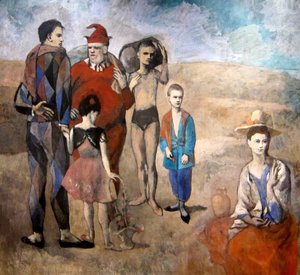
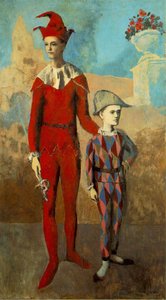
- Questo periodo riflette una prospettiva più ottimista, spesso ritraendo artisti di circo, harlequini e acrobati. Famiglia dei Saltimbanchi (1905) ne è un esempio.
Gli Anni Rivoluzionari: Cubismo e Oltre (1907-1919)
- Il 1907 ha segnato un momento cruciale con Les Demoiselles d'Avignon, influenzato dalla scultura iberica e dalle maschere africane. Questo dipinto infranse la prospettiva tradizionale, aprendo la strada al Cubismo.
- Lavorando a stretto contatto con Georges Braque, Picasso co-fondò il Cubismo, trasformando radicalmente il modo in cui gli artisti rappresentavano la realtà.
- Cubismo Analitico (1909-1912) presentava forme frammentate, colori tenui e una dissezione degli oggetti in forme geometriche.
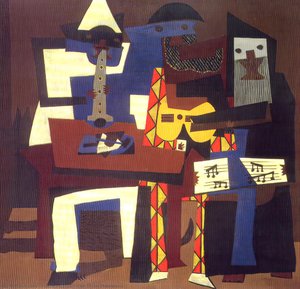
- Cubismo Sintetico (1912-1919) incorporava elementi di collage – ritagli di giornale, stracci – per creare superfici testurizzate e nuovi livelli visivi.
Neoclassicismo e Surrealismo (Anni '20 - Anni '30)
- Gli anni '20 hanno visto Picasso esplorare stili neoclassici con figure monumentali che enfatizzavano le forme classiche.
- Ha anche interagito con il movimento surrealista, pur non allineandosi pienamente ai suoi principi. La sua opera ha combinato stili precedenti con immagini surrealiste e prospettive distorte.
Anni Successivi e Eredità (1940-1973)
- Durante la Seconda Guerra Mondiale, Picasso è rimasto in Francia, producendo dichiarazioni anti-guerra potenti come Guernica (1937), una risposta viscera al bombardamento di Guernica durante la guerra civile spagnola.
- Guernica è diventata un simbolo duraturo degli orrori della guerra e rimane uno dei suoi lavori più celebrati.
- Nel corso degli anni '50 e '60, Picasso ha continuato a sperimentare con vari mezzi – ceramiche, sculture, stampe – dimostrando una versatilità notevole.
- Si è sposato con Jacqueline Roque nel 1961. È morto il 8 aprile 1973 a Mougins, in Francia.
Influenze e Significato Storico
- Lo sviluppo artistico di Picasso fu plasmato da maestri spagnoli come Velázquez e Goya, dalla scultura iberica, dall'arte africana e da Henri Matisse.
- Il suo impatto sull'arte del XX secolo è incommensurabile. Ha co-fondato il Cubismo, ha pionieristicamente utilizzato collage e sculture costruite e ha costantemente sfidato le convenzioni artistiche.
- L'incessante sperimentazione di Picasso ha ridefinito l'arte moderna e continua a ispirare gli artisti oggi.
- La sua produzione prolifica – stimata in oltre 50.000 opere – consolida la sua posizione come uno degli artisti più importanti e influenti della storia.

Pablo Picasso
1881 - 1973 , Spagna
Informazioni rapide
- Artisti Che Hanno Influenzato Questo Artista:
- Velázquez
- Goya
- Henri Matisse
- Data Di Morte: 8 aprile 1973
- Data Di Nascita: 25 ottobre 1881
- Luogo Di Nascita: Malaga, Spagna
- Movimento Artistico: Cubismo, Surrealismo
- Nazionalità: Spagnola
- Nome Completo: Pablo Ruiz y Picasso
- Opere Notevoli:
- Les Demoiselles d'Avignon
- Guernica
- La Vie
- L'Oldista
- Famiglia dei Saltimbanchi
Articoli correlati
Pablo Picasso: I 25 Capolavori Immortali dell'Arte Moderna | OriginalUniqueArt
Esplora i 25 capolavori di Pablo Picasso, da 'Guernica' al 'Cubismo'. Scopri la storia, il significato e le tecniche dietro ogni opera iconica. Riscopri l'arte moderna con OriginalUniqueArt: riproduzioni di alta qualità per decorare casa con stile.

I 10 Dipinti Più Famosi Dominati dal Blu Ardesia: Storia, Arte e Decorazioni Raffinate
Esplora i 10 dipinti più iconici dominati dal blu ardesia! Scopri la storia, gli artisti e le tecniche dietro capolavori impressionisti e moderni. Trova riproduzioni artistiche di alta qualità per decorare casa con .
Cubismo: I 10 Capolavori Che Hanno Rivoluzionato l'Arte Moderna | OriginalUniqueArt
Esplora i 10 capolavori del Cubismo con OriginalUniqueArt. Scopri Picasso, Braque e Gris e la rivoluzione artistica delle forme geometriche e dei colori audaci. Quadri iconici per decorare casa con stile! Esplora la collezione online.
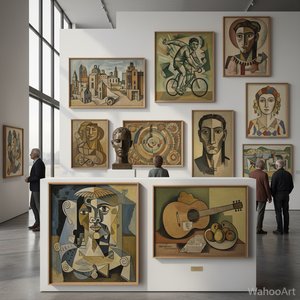
Cubismo: I 10 Capolavori che Hanno Rivoluzionato l'Arte Moderna |
Esplora i 10 capolavori del Cubismo con ! Scopri Picasso, Braque e Gris e la rivoluzione dell'arte moderna. Quadri iconici, storie affascinanti e riproduzioni di alta qualità per decorare la tua casa. Esplora la collezione online!

Serene Blue Backgrounds: Discover Soulful Art to Transform Your Space with Timeless Elegance
Transform your home with soulful blue art. From serene Monet impressions to modern textured sculptures, discover curated masterpieces designed to inspire calm. Explore expert art consultations and bespoke hand-painted reproductions to create your personal sanctuary.