Passa alle stampe
 Espandi i dettagli







































 Per opere d'arte o riproduzioni con un lato superiore a 105 cm (circa 41 pollici), la cornice verrà spedita in forma di kit smontato. Questo metodo garantisce una consegna sicura e previene danni durante il trasporto.


Rest on the Flight to Egypt
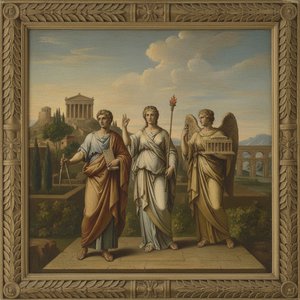
Nicolas Poussin’s “Rest on the Flight to Egypt” transcends mere depiction; it embodies the very essence of Renaissance idealism and classical contemplation, capturing a pivotal moment in Christian iconography with breathtaking serenity and intellectual depth. Painted around 1657-1658, this monumental canvas resides within the Musée des Beaux-Arts de Lyon, a testament to Poussin’s enduring legacy as one of France's foremost Baroque artists despite his profound connection to Italian artistic traditions.- Subject Matter: The painting portrays Mary, Joseph, and Jesus Christ resting during their perilous journey from Nazareth to Egypt—a narrative deeply rooted in biblical lore but embellished by medieval legends concerning Herod’s persecution of the infant Jesus. Unlike Caravaggio's dramatic portrayal emphasizing emotion and immediacy, Poussin meticulously crafts a scene steeped in tranquility, prioritizing compositional harmony over visceral reaction.
- Style & Technique: Characteristic of Poussin’s oeuvre, “Rest” exemplifies High Renaissance style—a deliberate rejection of Mannerism’s exaggerated forms and expressive gestures—favoring clarity, balance, and idealized beauty. The artist employs a masterful technique of *sfumato*, subtly blending tonal variations to create soft contours and atmospheric haze, lending an ethereal quality to the landscape backdrop. This meticulous attention to detail is evident in every brushstroke, reflecting Poussin’s unwavering commitment to classical principles of representation.
- Historical Context: Produced during the Counter-Reformation—a period marked by fervent religious fervor and a renewed emphasis on moral didacticism—the painting speaks to the anxieties of its time while simultaneously upholding humanist ideals. The choice of landscape as setting wasn’t arbitrary; it mirrored prevailing artistic trends advocating for naturalistic observation alongside spiritual contemplation, aligning perfectly with the Catholic Church's desire to inspire piety through beauty.
- Symbolism: Beyond its narrative depiction, “Rest” is laden with symbolic significance. The Virgin Mary’s posture—tenderly nursing Jesus—represents maternal compassion and divine grace, mirroring established iconography of the Virgo Lactans tradition. The landscape itself symbolizes Paradise regained, reflecting the biblical promise of salvation after suffering. Furthermore, the inclusion of angels subtly underscores God's benevolent providence guiding the Holy Family on their arduous pilgrimage.
- Emotional Impact: Viewing “Rest” evokes a profound sense of peace and contemplation—a deliberate antidote to the turbulent emotional landscape of Baroque art. Poussin’s masterful composition invites viewers into a meditative space, prompting reflection on themes of faith, humility, and divine love. The painting's enduring appeal lies in its ability to transcend temporal boundaries, resonating with audiences across centuries as an emblem of timeless beauty and spiritual aspiration.
Domande e risposte
In che modo i colori di "Riposo nel viaggio verso Egitto" di Nicolas Poussin si riflettono nel suo impatto emotivo?
"Riposo nel viaggio verso Egitto" di Nicolas Poussin unisce una tavolozza Toni della terra a un tono Tranquillo.
Qual è la tonalità dominante di "Riposo nel viaggio verso Egitto" di Nicolas Poussin?
La tonalità dominante di "Riposo nel viaggio verso Egitto" di Nicolas Poussin è Gamma di gialli dorati, un colore che costituisce il tono di fondo dell'intera tavolozza.
Quale collocazione si adatta meglio al formato di "Riposo nel viaggio verso Egitto" di Nicolas Poussin?
Il formato Orizzontale di "Riposo nel viaggio verso Egitto" di Nicolas Poussin è ideale per un/una Zona living. Il formato e lo spazio sono elementi chiave per scegliere il posizionamento perfetto della riproduzione.
Maggiori informazioni su questo dipinto
 Anteprima in scala reale
 Invia
Invia Condividi
 Dettagli opera
 Guida
Guida

 Scarica
 Simili
 Radiografia
 Slideshow
 Domande e risposte
 Statistiche