Passa alle stampe
 Espandi i dettagli







































 Per opere d'arte o riproduzioni con un lato superiore a 105 cm (circa 41 pollici), la cornice verrà spedita in forma di kit smontato. Questo metodo garantisce una consegna sicura e previene danni durante il trasporto.


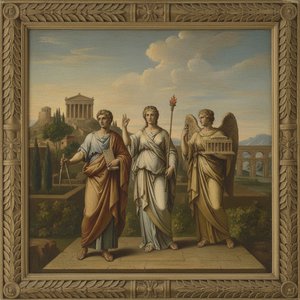
Nicolas Poussin: Moses Striking Water from the Rock
Nicolas Poussin (Andelys, 15 June 1594 – Rome, 19 November 1665) stands as a pivotal figure in French Baroque painting. Though he spent the majority of his career in Rome, his artistic vision remained profoundly connected to French artistic traditions, establishing him as a cornerstone of classical French art. He was born in Normandy and trained initially in Paris before embarking on his transformative journey to Rome in 1624, where he would dedicate himself entirely to mastering the ideals of antiquity and the legacy of Raphael. This dedication would define his oeuvre and solidify his reputation as one of the most influential artists of his time.- Style: Poussin’s artistic style is characterized by a remarkable clarity and order, departing significantly from the exuberant ornamentation prevalent in contemporary Baroque art. He meticulously crafted compositions that prioritized linearity and geometric precision—a deliberate reaction against the prevailing trends—resulting in images imbued with an unparalleled sense of serenity and intellectual contemplation.
- Technique: Poussin employed a masterful technique rooted in disegno, emphasizing careful observation and precise rendering of form. His palette was subdued, favoring earthy tones that conveyed depth and realism without resorting to dramatic contrasts. He skillfully utilized chiaroscuro—the interplay of light and shadow—to sculpt figures and create atmospheric effects, capturing the essence of biblical narratives with breathtaking subtlety.
- Historical Context: The painting emerged during a period marked by intellectual ferment and artistic revival in Rome, where humanist ideals were rekindled amidst the grandeur of papal patronage. Poussin’s work reflects the influence of classical sculpture—particularly Michelangelo’s Pietà—and embodies the Renaissance preoccupation with idealized beauty and moral virtue.
- Symbolism: The scene depicts a pivotal moment from Exodus mythology – Moses striking the rock to summon forth water for the thirsty Israelites. This act symbolizes divine intervention, faith, and obedience, embodying the core tenets of Christian theology. The figures themselves are imbued with symbolic significance, representing humanity’s yearning for salvation and God’s benevolent provision.
- Emotional Impact: Despite its restrained aesthetic, Poussin's Moses Striking Water from the Rock possesses a profound emotional resonance. The artist captures the palpable tension between despair and hope—the agony of thirst juxtaposed with the ecstasy of deliverance—creating an image that transcends mere depiction to convey universal themes of faith and redemption.
Related Media
The artwork’s influence extends beyond its immediate visual impact, inspiring numerous reproductions and engravings that continue to circulate today. Its enduring appeal testifies to Poussin's unparalleled ability to distill complex theological concepts into aesthetically sublime forms—a testament to the power of art as a conduit for spiritual contemplation.Domande e risposte
Qual è il ruolo di "Mosè che colpisce una roccia" di Nicolas Poussin nella storia dell'arte?
Storicamente, "Mosè che colpisce una roccia" è un'opera Classical French Baroque appartenente alla più ampia epoca Età Moderna.
Posso visualizzare "Mosè che colpisce una roccia" come una presentazione a schermo intero?
Il diaporama di "Mosè che colpisce una roccia" è disponibile nella pagina Slideshow dell'opera.
Quanta luce sembrano riflettere i colori di "Mosè che colpisce una roccia"?
I colori di "Mosè che colpisce una roccia" presentano una luminanza Scuro.
Maggiori informazioni su questo dipinto
 Anteprima in scala reale
 Invia
Invia Condividi
 Dettagli opera
 Guida
Guida

 Scarica
 Simili
 Radiografia
 Slideshow
 Domande e risposte
 Statistiche