Anteprima in scala reale
 Condividi
 Condividi
 Dettagli
 Guida stampabile

 Scarica
 Articoli simili
 Radiografia
 Slideshow
 Statistiche
Ignudo (24)


 Leggi tutto
Riproduzione a olio fatta a mano
Olio su tela dipinto a mano nelle tue dimensioni e con la tua cornice, realizzato su ordinazione dai nostri artisti. ( Passa alle stampe Passa all'immagine digitale)




P118B €10

P118H €10

P118W €10

P438Z €10

P508JH €12

P508YH €12

P805H €10

P805Z €10

P919BZ €10

P919G €10

P919XJ €10

P959ZH €10

P968JZ €12

W106C €8

W218G €10

W218JH €8

W218Y €10

W307PJ €10

W316G €10

W316PJ €8

W316Y €10

W398PJ €8

W4111J €10

W500HY €15

W500JH €15

W692G €12

W849H €8

W940BG €15

W953PJ €8




Scegli tra le nostre dimensioni predefinite, che rispettano le proporzioni originali dell'opera d'arte.

Inserisci la larghezza e l'altezza di cui hai bisogno, per adattarle alla tua cornice o alla tua parete. Trattandosi di un'opera dipinta a mano, in caso di dimensioni con una forma differente, l'artista può dipingere un po' più oltre i bordi dell'immagine o ritagliare leggermente — la scelta spetta a te. Ti invieremo un mockup digitale da approvare prima che la pittura abbia inizio. L'immagine mostrata in questa pagina non rappresenta il risultato reale — solo il mockup lo fa.
Dopo l'ordine, il team di OriginalUniqueArt.com contatterà il cliente via e-mail per ricevere le istruzioni e fornirà un'anteprima del mockup
Consegna in tutto il mondo () in 3/4 settimane anziché nelle normali 5 settimane. (22 Ottobre). Nessun compromesso sulla qualità.

Spedizione espressa gratuita in tutto il mondo

Tela in lino di alta qualità

Assicurazione completa sulla spedizione

Garanzia di rimborso dei dazi doganali

Garanzia di perfetta fedeltà cromatica

Politica di reso entro 100 giorni (solo per difetti di fabbricazione)

Garanzia di rimborso al 100%

Sconto per acquisti multipli
 L'opzione vetro è disponibile solo per dimensioni inferiori a 110 cm

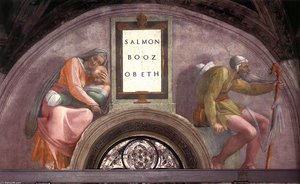
Ignudo (24)
Tecnica di riproduzione
Dimensioni della riproduzione
-


Prezzo totale
€ 263
Michelangelo Buonarroti: Ignudo – A Meditation on Vulnerability and Divine Presence
Michelangelo Buonarroti, a name synonymous with the High Renaissance, resonates through centuries as a testament to human artistic potential. Born on March 6, 1475, in Caprese Michelangelo, nestled in the Tuscan hills of Italy, his life was an extraordinary convergence of talent, ambition, and divine inspiration. Though initially met with resistance from his father regarding an artistic path, young Michelangelo’s innate gift for drawing proved undeniable, setting him on a course to redefine the boundaries of sculpture, painting, and architecture. His formative years were marked by an immersion in classical art—specifically the sculptures of antiquity—which instilled within him a reverence for idealized beauty and proportion. The Sistine Chapel commission itself arose from Pope Julius II’s ambition to revive papal grandeur after decades of decline, fueled by a fervent desire to reaffirm Christian faith amidst turbulent political currents. Michelangelo's task was monumental: to depict scenes from Genesis with breathtaking realism and spiritual depth—a challenge he accepted with unwavering dedication.The Context of Creation
Michelangelo Buonarroti was already establishing himself as one of Florence’s foremost artists by 1496, having apprenticed with Domenico Ghirlandaio and swiftly gravitating towards sculpture. His early apprenticeship under Domenico Ghirlandaio provided foundational skills in fresco and draftsmanship, but it was within the Medici gardens—a haven of classical antiquity—that his artistic soul truly awakened. Immersed in the study of Greek and Roman sculptures, Michelangelo absorbed the principles of anatomy, proportion, and idealized beauty that would become hallmarks of his oeuvre. The Sistine Chapel commission itself arose from Pope Julius II’s ambition to revive papal grandeur after decades of decline, fueled by a fervent desire to reaffirm Christian faith amidst turbulent political currents. Michelangelo's task was monumental: to depict scenes from Genesis with breathtaking realism and spiritual depth—a challenge he accepted with unwavering dedication.A Study in Form and Gesture
The Ignudo by Michelangelo Buonarroti stands as an emblem of Renaissance artistic idealism—a testament to the sculptor’s profound understanding of human anatomy and his masterful manipulation of marble to convey emotion and spiritual contemplation. Completed in 1509, during the apex of Michelangelo's prolific output on the Sistine Chapel ceiling project, this solitary figure embodies a core theme explored throughout the chapel’s monumental frescoes: the inherent dignity of humanity before God. The sculptor meticulously studied human musculature, achieving unparalleled accuracy in capturing the subtle nuances of anatomical detail. The Ignudo is remarkably simple in composition yet profoundly expressive. Positioned on a ledge or wall, the nude male figure occupies a central space within the chapel’s fresco cycle. His posture exudes stillness, conveying both vulnerability and repose—a deliberate contrast to the dynamic narratives unfolding around him. Michelangelo’s masterful use of marble ensures that every curve and contour contributes to the overall impression of serenity and contemplation.Symbolism and Spiritual Resonance
The Ignudo’s pose—seated with his feet resting on a step—is laden with symbolic significance. It represents humanity humbled before divine majesty, mirroring Adam’s posture in Michelangelo's iconic depiction of The Creation of Adam. The figure’s gaze downward symbolizes introspection and acceptance of mortality—a poignant reminder of the human condition within the grand scheme of cosmic order. Furthermore, the inclusion of two other figures—one standing and one seated—creates a dynamic interplay between stillness and movement, reinforcing the chapel's overarching message about divine providence and human responsibility. Michelangelo’s intention was to convey not merely physical perfection but also spiritual contemplation—a reflection of God’s grace and humanity’s yearning for transcendence.Legacy and Enduring Influence
Michelangelo Buonarroti’s achievement transcended mere technical skill; he instilled awe in viewers through his * terribilità*, capturing the sublime beauty of God’s creation with breathtaking precision. His contemporaries recognized his genius—a recognition that continues to inspire admiration centuries later. As Giorgio Vasari eloquently stated, Michelangelo's work was “supreme in not one art alone but in all three,” cementing his place as an unparalleled artist and shaping the trajectory of Western art history. The Ignudo remains a powerful symbol of Renaissance ideals—a timeless masterpiece demonstrating the transformative capacity of artistic vision to elevate the human spirit. Its enduring appeal lies in its ability to evoke contemplation on themes of vulnerability, faith, and divine majesty—concepts that continue to resonate with audiences today.- Artist: Michelangelo Buonarroti
- Birth Year: 1475
- Death Year: 1564
- Birth City: Caprese Michelangelo
- Birth Country: Italy
- Notable Work: David
- Notable Work: Sistine Chapel Ceiling
- Notable Work: The Creation of Adam
- Notable Work: Moses
- Notable Work: The Last Judgment
- Movement: High Renaissance
- Signature: Michelangelo
- Material: Marble
- Technique: Fresco Sculpture
- Dimensions: Unknown
- Location: Sistine Chapel, Vatican City
Domande e risposte
Come è strutturata la composizione cromatica di "Ignudo (24)" di Michelangelo Buonarroti?
L'analisi cromatica di "Ignudo (24)" di Michelangelo Buonarroti registra un Statement contrasto e una Unified Palette armonia.
A quale periodo della carriera di Michelangelo Buonarroti appartiene "Ignudo (24)"?
"Ignudo (24)" rappresenta il Mature Period di Michelangelo Buonarroti.
Per quale motivo lo stato del copyright di "Ignudo (24)" è questo?
"Ignudo (24)" di Michelangelo Buonarroti è di di pubblico dominio - il suo copyright è scaduto. La durata del copyright decorre dalla morte dell'artista, avvenuta nel 1564.
Biografia dell'artista
Michelangelo Buonarroti: Un Titan del Rinascimento
Primi Anni di Vita e Formazione (1475-1496)
- Michelangelo di Lodovico Buonarroti Simoni nacque il 6 marzo 1475 a Caprese Michelangelo, in Toscana.
- Inizialmente, suo padre resistette alla carriera artistica, ma cedette al talento eccezionale del figlio per disegnare.
- A quindici anni, fu apprendista di Domenico Ghirlandaio, imparando tecniche di affresco e disegno.
- Ben presto si orientò verso la scultura, studiando le opere classiche nei giardini dei Medici – un'influenza fondamentale.
Periodo Iniziale: Stabilire il Dominio (1490-1505)
- Intorno al 1496, ricevette la sua prima commissione importante: la scultura della Pietà, completata nel 1499.
- La Pietà, ospitata nella Basilica di San Pietro, dimostrò la sua maestria nella scultura del marmo e la sua profondità emotiva.
- Il suo prossimo lavoro significativo fu il colossale monumento a David (1501-1504), che simboleggiava gli ideali repubblicani fiorentini.
- Il David, alto più di 17 piedi, dimostrò la sua comprensione dell'anatomia e la sua capacità di infondere vita alla pietra.
Alto Rinascimento: Affreschi della Cappella Sistina (1505-1520)
- Papa Giulio II commissionò a Michelangelo di dipingere il soffitto della Cappella Sistina nel 1508.
- Per quattro anni, dipinse oltre 300 figure che raffiguravano scene dal Genesi, tra cui La Creazione di Adamo.
- Questo ciclo pittorico monumentale è un'impresa fondamentale nell'arte occidentale, dimostrando la sua abilità compositiva e il suo potere narrativo.
- Iniziò anche a lavorare sulla tomba di Papa Giulio II – un progetto che avrebbe richiesto decenni ma sarebbe rimasto incompiuto come originariamente concepito.
Anni Successivi: Architettura e il "Giudizio Universale" (1520-1564)
- Nel 1520, Michelangelo divenne architetto della Basilica di San Pietro, modificando in modo significativo il progetto di Bramante.
- Tra il 1536 e il 1541, dipinse Il Giudizio Universale sulla parete absidale della Cappella Sistina.
- Questo vasto affresco raffigurava la Seconda Venuta di Cristo con una composizione drammatica e un'intensità emotiva, riflettendo uno spostamento verso il Manierismo.
Influenze e Sviluppo Artistico
- Antichità Classica: Lo studio delle sculture greche e romane ha profondamente influenzato la sua comprensione dell'anatomia e della proporzione.
- Umanesimo Rinascimentale: L'enfasi sul potenziale umano è evidente nella sua celebrazione della forma umana.
- Tradizione Fiorentina: Si basò sull'eredità di artisti come Donatello e Masaccio.
- Il suo stile si evolse dall'idealismo classico a un manierismo più dinamico ed espressivo.
Significato Storico e Eredità
- Michelangelo è considerato uno degli artisti più grandi di tutti i tempi, incarnando l'"uomo del Rinascimento".
- Le sue sculture, dipinti e architettura hanno ispirato generazioni e continuano a catturare il pubblico di tutto il mondo.
- Ha influenzato profondamente sia i movimenti artistici dell'Alto Rinascimento che del Manierismo.
- La sua accuratezza anatomica, le composizioni drammatiche e la profondità emotiva hanno stabilito nuovi standard di eccellenza artistica.
Gli Ultimi Anni
- Michelangelo morì il 18 febbraio 1564 a Roma, lasciando dietro di sé un'opera incomparabile.
- La sua eredità continua a plasmare la nostra comprensione della bellezza, del potere e del potenziale umano.

Michelangelo Buonarroti
1475 - 1564 , Italia
Informazioni rapide
- Artisti Influenti:
- Donatello
- Masaccio
- Artisti Influenzati: ['Movimento Manierista']
- Data Di Morte: 18 febbraio 1564
- Data Di Nascita: 6 marzo 1475
- Luogo Di Nascita: Caprese Michelangelo, Italia
- Movimento Artistico: Rinascimento, Manierismo
- Nazionalità: Italiana
- Nome Completo: Michelangelo Buonarroti
- Opere Notevoli:
- Pietà
- David
- Cappella Sistina
- Giudizio Universale
Articoli correlati

I 10 Capolavori Bronzei che Hanno Rivoluzionato la Storia dell'Arte | OriginalUniqueArt
Esplora i 10 capolavori bronzei che hanno segnato la storia dell'arte! Da Rodin a Michelangelo, scopri le storie e le tecniche dietro queste sculture iconiche. Trova riproduzioni d'arte di alta qualità per decorare la tua casa con OriginalUniqueArt.com.

I 10 Capolavori in Bronzo che Hanno Rivoluzionato la Storia dell'Arte | OriginalUniqueArt
Esplora i 10 capolavori in bronzo che hanno segnato la storia dell'arte! Da Michelangelo a Rodin, scopri le storie e le tecniche dietro queste statue iconiche. Trova riproduzioni artistiche di alta qualità per decorare casa tua con OriginalUniqueArt.com.

L'Arte dei Murales di Famiglia: Trasformare le Mura in Memorie Eterne
Scopri l'arte del fresco e crea murales familiari unici! Esplora la storia, le tecniche e realizza il tuo sogno artistico con : esperti artisti e qualità garantita.
The Enduring Legacy of Fresco Painting: Techniques, History & Contemporary Relevance
Explore the rich history & enduring artistry of fresco painting – from Giotto to Michelangelo! Discover techniques, conservation efforts, & modern applications. Learn how OriginalUniqueArt brings this timeless art form to your home.

Michelangelo Buonarroti: I 25 Capolavori Immortali per Arredare con Arte
Esplora i 25 capolavori immortali di Michelangelo Buonarroti. Scopri la storia, le tecniche e l'emozione dietro opere iconiche come il David e la Pietà. Arreda con arte rinascimentale: riproduzioni di alta qualità su OriginalUniqueArt.com.