Anteprima in scala reale
 Condividi
 Condividi
 Dettagli
 Guida stampabile

 Scarica
 Articoli simili
 Radiografia
 Slideshow
 Statistiche
Last Judgment
 Olio su tela
- Opere da parete
- Early Netherlandish Painting
 1467
1467- Late Medieval
 223.0 x 72.0 cm
 Museo Nazionale
 Leggi tutto
L'opera d'arte visualizzata in questa pagina è protetta dalle leggi sul diritto d'autore, il che significa che non possiamo legalmente creare o vendere una riproduzione identica. Tale protezione è garantita da accordi internazionali quali la Convenzione di Berna e dalle leggi nazionali, incluse quelle stabilite da Legge sul copyright degli Stati Uniti - Titolo 17. Tutti i diritti riservati. Le immagini presenti su questo sito sono protette da copyright e non possono essere riprodotte o utilizzate senza l'autorizzazione scritta di WahooArt.com o dei rispettivi proprietari del copyright.
Questo metodo è pienamente conforme alle normative sul diritto d'autore poiché non prevede la copia o la duplicazione dell'opera protetta. Si tratta invece di una rielaborazione creativa: un nuovo dipinto che trae ispirazione dall'originale, senza tuttavia esserne identico.
Giclée / Stampe d'arte
Stampa giclée o su tela di qualità museale, con produzione rapida e diverse opzioni di finitura. ( Ordina la riproduzione dipinta a mano Passa all'immagine digitale)




P118B €10

P118H €10

P118W €10

P438Z €10

P508JH €12

P508YH €12

P805H €10

P805Z €10

P919BZ €10

P919G €10

P919XJ €10

P959ZH €10

P968JZ €12

W106C €8

W218G €10

W218JH €8

W218Y €10

W307PJ €10

W316G €10

W316PJ €8

W316Y €10

W398PJ €8

W4111J €10

W500HY €15

W500JH €15

W692G €12

W849H €8

W940BG €15

W953PJ €8




Scegli tra le nostre dimensioni predefinite, che rispettano le proporzioni originali dell'opera d'arte.

Inserisci la larghezza e l'altezza desiderate, per adattarle alla tua cornice o alla tua parete. Una stampa può essere solo ritagliata, mai resa più grande dell'immagine originale; pertanto, un formato con una forma differente comporterà la perdita di una parte dell'opera. Ti invieremo un mockup digitale da approvare prima di procedere con la stampa. L'immagine mostrata in questa pagina non rappresenta il ritaglio reale — solo il mockup lo mostra.
Consegna in tutto il mondo () in 2 settimane invece delle normali 4/5 settimane. (22 Ottobre)

Spedizione espressa gratuita in tutto il mondo

Tela in lino di alta qualità

Assicurazione completa sulla spedizione

Garanzia di rimborso dei dazi doganali

Garanzia di perfetta fedeltà cromatica

Politica di reso entro 100 giorni (solo per difetti di fabbricazione)

Garanzia di rimborso al 100%

Sconto per acquisti multipli
 L'opzione vetro è disponibile solo per dimensioni inferiori a 110 cm

Last Judgment
Giclée / Stampe d'arte
Dimensioni della riproduzione
-


Prezzo totale
€ 70
Hans Memling's "Last Judgment": A Descent into Divine Justice
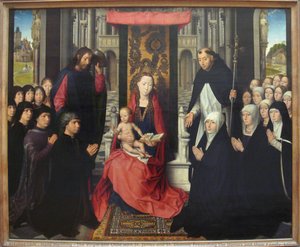
This arresting depiction of the Last Judgment, painted in 1467 by Hans Memling, is more than just a religious scene; it’s a profound meditation on mortality, judgment, and the eternal consequences of human action. Measuring 223 x 72 cm, this work immediately commands attention with its dramatic composition and meticulously rendered figures. Memling, working primarily in Bruges during the High Renaissance, was renowned for his ability to infuse religious subjects with an almost palpable sense of realism and emotional depth – a hallmark that distinguishes his art from earlier, more stylized depictions.
- Subject Matter: The painting’s core is the biblical narrative of the Last Judgment, as described in Revelation. It portrays humanity undergoing divine judgment, with souls ascending to heaven while others are cast into eternal damnation.
- Style & Technique: Memling's style exemplifies the pinnacle of Early Netherlandish painting. He masterfully employs oil paint – a relatively new medium at the time – to achieve astonishing levels of detail and luminosity. Note the subtle gradations of color, the delicate modeling of drapery, and the remarkably lifelike expressions on the faces of the figures. The artist’s training under Rogier van der Weyden is clearly evident in his use of perspective and his ability to convey a sense of three-dimensionality.
A Symphony of Suffering and Salvation
The scene unfolds with a powerful dynamism, drawing the viewer into its emotional core. The composition is dominated by two distinct groups: those ascending towards the radiant figure of Christ at the top left – representing salvation – and those plummeting downwards into a fiery abyss below, symbolizing eternal punishment. The figures themselves are not merely static representations; they embody a spectrum of human emotion—fear, despair, hope, and acceptance. The artist’s attention to detail extends beyond mere physical representation; he captures the psychological weight of this momentous event.
- Symbolism: The rocky cliff upon which many figures stand represents earthly existence, a precarious position between salvation and damnation. The fiery pit below is a direct visual reference to Hell, while the ascending figures embody Heaven. The angel present in the upper left corner serves as a divine messenger, guiding souls towards redemption.
- Color Palette: Memling’s use of color is restrained yet effective. Rich blues and reds dominate, conveying both the majesty of God and the intensity of judgment. The contrast between these colors further emphasizes the dichotomy between salvation and damnation.
Historical Context & Artistic Legacy
Created in 1467, this “Last Judgment” reflects the anxieties and spiritual concerns prevalent during the late medieval period. Bruges at this time was a major center of trade and artistic patronage, attracting artists from across Europe. Memling’s workshop produced numerous works for wealthy patrons – including the Burgundian dukes – contributing significantly to the dissemination of his style throughout the Low Countries and beyond. His influence extended to artists in Germany, France, and Italy.
- Memling's Influence: Memling’s work profoundly influenced subsequent generations of painters, particularly those working in the Northern Renaissance. His meticulous technique and emotional sensitivity set a new standard for religious art, demonstrating the power of painting to evoke profound spiritual experiences.
A Timeless Masterpiece – Recreated with Precision
OriginalUniqueArt offers a meticulously crafted hand-painted reproduction of Hans Memling’s “Last Judgment,” capturing the essence and emotional impact of this iconic work. Each reproduction is created by skilled artisans, employing techniques that closely emulate Memling's original methods. This ensures an authentic representation of this masterpiece, perfect for adorning your home or office – a testament to enduring artistic genius.
Domande e risposte
Che atmosfera saprebbe conferire a una stanza una riproduzione di "Last Judgment" di Hans Memling?
"Last Judgment" di Hans Memling emana un'atmosfera Drammatico ed è consigliato per un Accoglienza d'impatto. Il mood rappresenta ciò che l'opera dona allo spazio circostante.
Quale uso si consiglia per "Last Judgment" di Hans Memling?
L'uso consigliato per una stampa di "Last Judgment" è Opera d'impatto.
Quale emozione trasmette "Last Judgment" di Hans Memling?
"Last Judgment" di Hans Memling trasmette un tono emotivo Drammatico.
Biografia dell'artista
Hans Memling: The Bruges Master of Detail and Patronage
Hans Memling (c. 1430 – August 11, 1494), born in Seligenstadt, Germany, stands as a pivotal figure in Early Netherlandish painting—a movement characterized by exquisite realism, meticulous observation of nature, and profound spiritual contemplation. Though his formative years were spent primarily within the Rhineland’s artistic milieu, Memling's trajectory ultimately led him to Bruges, Belgium, where he established himself as one of the foremost artists of his time and cultivated a prolific workshop that disseminated his distinctive style across Europe. His early life remains shrouded in mystery, but biographical accounts suggest he emerged from Mainz around 1430. His artistic education commenced under the tutelage of Rogier van der Weyden, a titan of Flemish painting whose mastery of oil paint and sculptural modeling profoundly shaped Memling's technique. This apprenticeship instilled in him an unwavering dedication to detail—a hallmark that would define his oeuvre. Van der Weyden’s influence is palpable in Memling’s meticulous rendering of drapery folds and the subtle shading techniques he employed, demonstrating a shared commitment to capturing the nuances of human form and texture.Bruges & The Workshop: A Hub for Artistic Innovation
By 1465, Memling secured citizenship in Bruges, a burgeoning commercial hub and artistic epicenter—a city renowned for its patronage of the arts and its vibrant mercantile spirit. Recognizing the potential for collaborative creativity, he founded a workshop staffed by numerous assistants, fostering an environment of innovation and stylistic consistency. This workshop became internationally celebrated for producing stunning reproductions of masterpieces—a testament to Memling’s skill as both artist and pedagogue. He meticulously oversaw every aspect of production, ensuring that each painting adhered to his exacting standards of craftsmanship and artistic vision. The workshop's output included altarpieces, portraits, and decorative panels—all bearing the unmistakable stamp of Memling’s distinctive style.A Style Defined by Precision & Patronage
Memling’s artistic style is instantly recognizable: characterized by luminous color palettes, delicately rendered drapery folds, and an astonishing level of anatomical accuracy. He meticulously studied human anatomy—drawing inspiration from classical sculpture—to achieve unparalleled realism in his portraits and religious scenes alike. Unlike many contemporaries who favored expressive brushstrokes, Memling prioritized meticulous observation and painstaking execution, resulting in images imbued with serene beauty and profound spiritual depth. His approach mirrored the humanist ideals prevalent during the Renaissance, reflecting a belief in the importance of rational inquiry and artistic representation as vehicles for conveying moral truths. The artist’s palette favoured rich hues—particularly reds and blues—creating dramatic contrasts that heightened visual impact.Notable Works & Artistic Achievements
Memling's most enduring legacy resides in his monumental fresco “The Last Judgment” at St John’s Hospital in Bruges—a masterpiece of composition, color theory, and psychological drama. Executed with breathtaking precision and imbued with a palpable sense of solemnity, the fresco exemplifies Memling’s mastery of artistic technique and his ability to communicate complex theological concepts through visual imagery. Alongside “The Last Judgment,” Memling produced numerous iconic paintings including “Cristo Circondato da Angeli Musicisti” and “L'adorazione dei Magi”, demonstrating his versatility as an artist and cementing his reputation as one of the foremost figures of Early Netherlandish painting. These works continue to inspire awe and admiration for their artistic beauty and spiritual significance.Influence & Legacy: Shaping Flemish Renaissance Art
Memling’s influence extended far beyond his own lifetime, shaping the trajectory of Flemish Renaissance art and inspiring subsequent generations of artists—particularly Quentin Massys, who established the Antwerp School—solidifying Memling's position as a cornerstone of Flemish artistic heritage. His unwavering dedication to detail and profound understanding of human psychology remain remarkably relevant in our contemporary appreciation of art history, ensuring that Hans Memling’s name will forever be associated with excellence, innovation, and enduring beauty.
Hans Memling
Germania
Informazioni rapide
- Artistic Movement Or Style: Pittura fiamminga antica
- Artists Who Influenced This Artist: ['Rogier van der Weyden']
- Date Of Birth: c. 1430
- Date Of Death: 11 agosto 1494
- Full Name: Hans Memling
- Nationality: Germano-Fiammingo
- Notable Artworks:
- St Johns Hospital
- L'ultima giudicatura
- Scene dalla Passione
- Place Of Birth: Seligenstadt, Germania
Articoli correlati

Giclée Prints: Archival Quality & Aesthetic Nuances for the Discerning Collector
Explore the world of giclée prints with OriginalUniqueArt. Learn about archival quality, aesthetic nuances & investment potential. Expert guidance for discerning art collectors seeking museum-quality reproductions and lasting value.

Echoes of Time: Exploring the Enduring Appeal & Historical Context of Vintage Art Prints
Explore the captivating world of vintage art prints! Discover their history, collecting tips & enduring appeal. Expert insights on chromolithography and building a legacy collection with OriginalUniqueArt.
The Enduring Legacy of Printmaking: Techniques, Themes & Artistic Innovation Across Centuries
Explore the rich history of printmaking with OriginalUniqueArt. Discover techniques from intaglio to lithography, learn about collecting valuable prints & find museum-quality reproductions. Expert insights for art enthusiasts and collectors.

I 10 Capolavori della Pittura Fiamminga Antica: Arte, Storia e Stile per la Tua Casa
Esplora i 10 capolavori della pittura fiamminga antica! Jan van Eyck, Rogier van der Weyden e altri maestri rinascimentali. Scopri storia, tecnica e simbolismo di questi dipinti iconici. Trova riproduzioni d'arte di alta qualità per la tua casa su OriginalUniqueArt.com.

The Enduring Legacy of Fine Art Prints: Technique, History & Aesthetic Impact
Explore the rich history & techniques of fine art prints. Discover investment potential, assess authenticity, and learn how to preserve your collection with expert guidance. Trusted insights for discerning collectors.