Anteprima in scala reale
 Condividi
 Condividi
 Dettagli
 Guida stampabile

 Scarica
 Articoli simili
 Radiografia
 Slideshow
 Statistiche
A Foolish Virgin
 Engraving
- WallArt
- Renaissance
 1480
1480- Renaissance
 143.0 x 108.0 cm
 National Gallery of Art
 Leggi tutto
Giclée / Stampe d'arte
Stampa giclée o su tela di qualità museale, con produzione rapida e diverse opzioni di finitura. ( Ordina la riproduzione dipinta a mano Passa all'immagine digitale)




P118B €10

P118H €10

P118W €10

P438Z €10

P508JH €12

P508YH €12

P805H €10

P805Z €10

P919BZ €10

P919G €10

P919XJ €10

P959ZH €10

P968JZ €12

W106C €8

W218G €10

W218JH €8

W218Y €10

W307PJ €10

W316G €10

W316PJ €8

W316Y €10

W398PJ €8

W4111J €10

W500HY €15

W500JH €15

W692G €12

W849H €8

W940BG €15

W953PJ €8




Scegli tra le nostre dimensioni predefinite, che rispettano le proporzioni originali dell'opera d'arte.

Inserisci la larghezza e l'altezza desiderate, per adattarle alla tua cornice o alla tua parete. Una stampa può essere solo ritagliata, mai resa più grande dell'immagine originale; pertanto, un formato con una forma differente comporterà la perdita di una parte dell'opera. Ti invieremo un mockup digitale da approvare prima di procedere con la stampa. L'immagine mostrata in questa pagina non rappresenta il ritaglio reale — solo il mockup lo mostra.
Consegna in tutto il mondo () in 2 settimane invece delle normali 4/5 settimane. (23 Ottobre)

Spedizione espressa gratuita in tutto il mondo

Tela in lino di alta qualità

Assicurazione completa sulla spedizione

Garanzia di rimborso dei dazi doganali

Garanzia di perfetta fedeltà cromatica

Politica di reso entro 100 giorni (solo per difetti di fabbricazione)

Garanzia di rimborso al 100%

Sconto per acquisti multipli
 L'opzione vetro è disponibile solo per dimensioni inferiori a 110 cm

A Foolish Virgin
Giclée / Stampe d'arte
Dimensioni della riproduzione
-


Prezzo totale
€ 70
A Foolish Virgin by Martin Schongauer: A Window into Northern Renaissance Symbolism
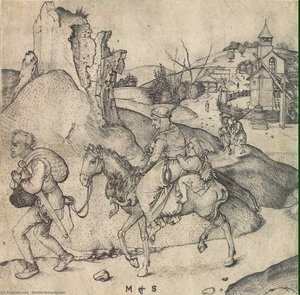
Martin Schongauer’s “A Foolish Virgin,” created around 1480, stands as a testament to the meticulous artistry of late fifteenth-century German printmaking and offers a profound glimpse into the intellectual currents of the Northern Renaissance. This engraving, part of Schongauer's ambitious series illustrating the biblical tale of the five wise virgins and five foolish virgins—a narrative deeply rooted in Christian morality—captures a moment of quiet contemplation that speaks volumes about its era.Composition and Technique: Precision Embodied
The artwork’s central focus is undeniably the woman depicted in three-quarter view, positioned prominently within the frame. Schongauer's masterful technique—copper engraving—demonstrates an unparalleled level of detail achieved through a painstaking process. Lines are scratched into a metal plate with considerable precision, followed by ink application and printing onto paper. The resulting image showcases exceptional tonal gradation thanks to hatching and cross-hatching techniques; these meticulous lines create subtle variations in shading that imbue the figure with palpable depth and texture—a hallmark of Northern Renaissance artistic sensibilities. Notice how Schongauer skillfully employs size diminution to convey a sense of perspective, subtly diminishing the background details to emphasize the woman’s presence and inner state.Symbolism and Emotional Resonance: Distraction Versus Vigilance
Beyond its technical brilliance, “A Foolish Virgin” is laden with symbolic significance. The woman's downward gaze—a gesture frequently interpreted as representing preoccupation or distraction from spiritual matters—contrasts sharply with the object held in her hands. This item, rendered with understated detail, symbolizes the foolish virgins’ lack of preparedness for the impending judgment. Schongauer’s deliberate choice to depict this scene evokes a melancholic mood, prompting viewers to consider themes of faith, vigilance, and the consequences of neglecting spiritual devotion—central concerns within the broader context of Renaissance humanist thought.Historical Context: The Legacy of Rogier van der Weyden
Schongauer's artistic training under Rogier van der Weyden profoundly shaped his approach to portraiture. Van der Weyden’s influence is evident in Schongauer’s meticulous attention to anatomical accuracy and the expressive rendering of drapery—characteristics that align seamlessly with the prevailing stylistic trends of Early Netherlandish painting. This connection underscores the interconnectedness of artistic movements during the Renaissance, demonstrating how artists drew inspiration from their predecessors while forging distinct visual vocabularies.A Reproduction Worth Admiring
OriginalUniqueArt offers exceptional reproductions of “A Foolish Virgin,” allowing art enthusiasts to experience Schongauer’s masterpiece in stunning detail and color fidelity. Each print is crafted with archival inks on premium canvas, ensuring that its beauty and artistic integrity endure for generations to come—a fitting tribute to this iconic work of Northern Renaissance art.Domande e risposte
Quale posto occupa "A Foolish Virgin" tra i soggetti ricorrenti di Martino d'Anversa?
"A Foolish Virgin" raffigura virgin mary, engraving, renaissance, portraiture, religious art, german art, line art, symbolism, mentre i temi ricorrenti di Martino d'Anversa sono northern renaissance style, early german printmaking, flemish painting influence, virgin's humility & folly, medieval morality themes, rise of individual portraiture, schongauer's engraving skill, foundation for later works. Il confronto tra i due evidenzia come l'opera si relazionazioni con i soggetti abituali dell'artista.
In che anno è stata realizzata l'opera "A Foolish Virgin" di Martino d'Anversa?
"A Foolish Virgin" di Martino d'Anversa è stata creata nel 1480.
Che dimensione dovrei scegliere per la stampa di "A Foolish Virgin" in base alla mia stanza?
L'abbinamento consigliato per "A Foolish Virgin" di Martino d'Anversa: una stampa di dimensioni Large in un/una Lounge.
Biografia dell'artista
Martin Schongauer: Vita e Eredità
Primi Anni di Vita e Formazione
Martin Schongauer, nato intorno al 1450 a Colmar, Alsazia (ora Francia), è stato una figura chiave nello sviluppo della stampa durante il Rinascimento del Nord. Proveniva da una famiglia di artigiani; suo padre, Caspar Schongauer, era un orefiere che si era trasferito a Colmar dall'Augsburg, Germania, intorno al 1440. Questo background familiare ha influenzato significativamente la sua formazione artistica iniziale, poiché l'orefiere forniva una solida base in precisione e tecniche di lavorazione dei metalli – competenze direttamente trasferibili all'incisione.
Istruzione e Sviluppo Artistico
Nel 1465, Schongauer ha frequentato brevemente l'Università di Lipsia, ma presto abbandonò gli studi accademici per dedicarsi interamente all'arte. Inizialmente si formò come pittore sotto Caspar Isenmann, un maestro locale influenzato dalla pittura olandese del nord, in particolare dal lavoro di Rogier van der Weyden. Questa precoce esposizione alla realtà olandese e all'attenzione ai dettagli sarebbero diventate caratteristiche dello stile di Schongauer.
Stile Artistico e Influenze
Lo stile artistico di Schongauer è caratterizzato da un chiaro, organizzato estetismo gotico mescolato con le emergenti influenze del Rinascimento del Nord. Non ha ricevuto influenza diretta dall'Italia, ma ha tratto ispirazione dalle tradizioni tedesche e olandesi del nord. Il suo lavoro dimostra un meticoloso dettaglio, figure espressive e una sofisticata comprensione della composizione.
- Caratteristiche Chiave: Incisione precisa, rappresentazioni realistiche, narrazioni drammatiche, struttura gotica
- Influenze: Rogier van der Weyden, Caspar Isenmann, tradizioni gotiche tedesche
Realizzazioni Principali e Opere
Schongauer è più noto per le sue 116 incisioni, ognuna identificata dal suo monogramma. Queste stampe sono state ampiamente diffuse in tutta Europa, influenzando significativamente lo sviluppo delle tecniche di stampa e degli stili artistici. Le sue incisioni raffiguravano spesso scene religiose, ritratti e soggetti allegorici.
- Madonna della Pergola (1473): Un'opera significativa che mostra la sua abilità nel rappresentare dettagli delicati e profondità emotiva.
- Incisioni: Tra cui *La Tentazione di Sant’Antonio*, *L’Adorazione dei Pastori* e numerose altre, dimostrando la sua maestria nella tecnica dell'incisione.
Significato Storico ed Eredità
L'impatto di Martin Schongauer sul mondo dell'arte è stato considerevole. È stato uno dei primi artisti tedeschi a raggiungere il riconoscimento internazionale come incisore. Le sue stampe erano molto richieste e ampiamente imitate, diffondendo il suo stile artistico in tutta Europa. È documentato che Michelangelo stesso ha studiato e copiato una delle incisioni di Schongauer – *Il Giudizio di Sant’Antonio* – dimostrando l'alto rispetto in cui Schongauer era tenuto dai maestri successivi.
L'opera di Schongauer ha colmato il divario tra l'arte gotica e il Rinascimento, aprendo la strada ad artisti come Albrecht Dürer. Il suo uso innovativo delle tecniche di incisione e il suo impegno per il dettaglio artistico hanno lasciato un'eredità duratura nella storia della stampa e dell'arte nord europea.
Morte
Martin Schongauer è morto a Breisach il 2 febbraio 1491, lasciando dietro di sé una straordinaria produzione artistica che continua ad essere celebrata per il suo valore artistico e la sua importanza storica.

Martino d'Anversa
1450 - 1491 , Germania
Informazioni rapide
- Artistic Movement Or Style: Gotico nord rinascimentale
- Artists Or Movements Influenced By This Artist: ['Albrecht Dürer']
- Artists Who Influenced This Artist:
- Rogier van der Weyden
- Caspar Isenmann
- Date Of Birth: Circa 1450
- Date Of Death: 1491
- Full Name: Martin Schongauer
- Nationality: Tedesco
- Notable Artworks:
- Madonna della Pergola
- Cristo davanti a Pilato
- Place Of Birth: Colmar, Alsazia
Articoli correlati

Giclée Prints: Archival Quality & Aesthetic Nuances for the Discerning Collector
Explore the world of giclée prints with OriginalUniqueArt. Learn about archival quality, aesthetic nuances & investment potential. Expert guidance for discerning art collectors seeking museum-quality reproductions and lasting value.

Engraving: A Historical Survey of Technique, Artistic Expression & Enduring Legacy
Explore the rich history of engraving with OriginalUniqueArt. Discover techniques, iconic artists like Dürer & Callot, collecting tips, and expert guidance for preserving your art investment. Learn about intaglio printing & more!

The Enduring Legacy of Fine Art Prints: Technique, History & Aesthetic Impact
Explore the rich history & techniques of fine art prints. Discover investment potential, assess authenticity, and learn how to preserve your collection with expert guidance. Trusted insights for discerning collectors.

The Intricate World of Engraving: A Historical Survey of Technique, Artistic Expression & Enduring Legacy
Explore the rich history of engraving with OriginalUniqueArt. Discover techniques, iconic artists like Dürer & Callot, collecting tips, and expert guidance for preserving your art investment. Learn about intaglio printing & more!

I 10 Capolavori dell'Incisione che Hanno Rivoluzionato l'Arte | OriginalUniqueArt
Esplora i 10 capolavori dell'incisione che hanno segnato la storia dell'arte! Dürer, Rembrandt, Goya e altri maestri. Scopri tecniche uniche e storie affascinanti. Stampe d'arte di alta qualità per decorare casa con stile su OriginalUniqueArt.com