

 Anteprima in scala reale
 Invia
Invia Condividi
 Dettagli opera
 Guida
Guida

 Scarica
 Simili
 Radiografia
 Slideshow
 Q&A
Q&A Statistiche
Saint Jerome in His Study
 Oil
Oil- WallArt
- Northern Renaissance
 Renaissance
 82.0 x 84.0 cm
 Espandi i dettagli
Giclée / Stampe d'arte
Stampa giclée o su tela di qualità museale, con produzione rapida e diverse opzioni di finitura. ( Acquista il dipinto realizzato a mano Passa all'immagine digitale)




P118B €10

P118H €10

P118W €10

P438Z €10

P508JH €12

P508YH €12

P805H €10

P805Z €10

P919BZ €10

P919G €10

P919XJ €10

P959ZH €10

P968JZ €12

W106C €8

W218G €10

W218JH €8

W218Y €10

W307PJ €10

W316G €10

W316PJ €8

W316Y €10

W398PJ €8

W4111J €10

W500HY €15

W500JH €15

W692G €12

W849H €8

W940BG €15

W953PJ €8




Scegli tra le nostre dimensioni predefinite, che rispettano le proporzioni originali dell'opera d'arte.

Inserisci la larghezza e l'altezza desiderate, per adattarle alla tua cornice o alla tua parete. Una stampa può essere solo ritagliata, mai resa più grande dell'immagine originale; pertanto, un formato con una forma differente comporterà la perdita di una parte dell'opera. Ti invieremo un mockup digitale da approvare prima di procedere con la stampa. L'immagine mostrata in questa pagina non rappresenta il ritaglio reale — solo il mockup lo mostra.
Consegna in tutto il mondo () in 2 settimane invece delle normali 4/5 settimane. (30 Ottobre)

Spedizione espressa gratuita in tutto il mondo

Tela in lino di alta qualità

Assicurazione completa sulla spedizione

Garanzia di rimborso dei dazi doganali

Garanzia di fedeltà cromatica assoluta

Politica di reso entro 100 giorni (solo per difetti di fabbricazione)

Garanzia di rimborso al 100%

Offerta per acquisti multipli
 L'opzione vetro è disponibile solo per dimensioni inferiori a 110 cm

Saint Jerome in His Study
Giclée / Stampe d'arte
Dimensioni riproduzione
-


Prezzo finale calcolato
€ 71
Domande e risposte
Quale formato di stampa di "Saint Jerome in His Study" di Marinus Van Reymerswaele si adatta meglio alla stanza consigliata?
Per un Office, la dimensione di stampa consigliata per "Saint Jerome in His Study" di Marinus Van Reymerswaele è Medium.
Quanto sono armoniosi i colori di "Saint Jerome in His Study" di Marinus Van Reymerswaele?
"Saint Jerome in His Study" di Marinus Van Reymerswaele presenta un'armonia cromatica Strong Color Unity.
Qual è il formato di "Saint Jerome in His Study"?
"Saint Jerome in His Study" di Marinus Van Reymerswaele è una composizione in Square. Le proporzioni meritano di essere verificate prima di scegliere la dimensione della stampa.
Biografia dell'artista
L'Enigmatico Maestro delle Ombre di Anversa
Nel cuore pulsante e mercantile dei Paesi Bassi del XVI secolo, emerse un pittore il cui pennello seppe catturare la profonda tensione tra devozione spirituale e avidità mondana. Marinus van Reymerswaele, un artista il cui nome stesso evoca la cittadina costiera di Reimerswaal dove nacque, rimane uno degli enigmi più affascinanti del Rinascimento olandese. La sua vita seguì la tipica traiettoria di un abile artigiano; dopo gli studi a Lovanio, trovò stabilità professionale all'interno della prestigiosa Gilda di San Luca di Anversa. Registrato come allievo del vetraio Symon van Daele, Reymerswaelse possedeva una sensibilità per il dettaglio e la luce che avrebbe successivamente definito la sua maestria nella resa delle texture e dell'atmosfera.
Mentre si stabiliva ad Anversa, l'epicentro del commercio europeo, la sua opera iniziò a rispecchiare la complessa identità della città stessa. Gestì una bottega prolificante, uno studio frenetico capace di produrre numerose versioni dei suoi temi più celebri. Questa laboriosità permise al suo specifico linguaggio visivo — un connubio tra realismo meticoloso e pungente commento sociale — di permeare le collezioni dell'epoca. I suoi dipinti non si limitavano a ritrarre scene; mettevano in scena drammi morali che riflettevano le ansie di un'era sospesa tra la pietà medievale e l'inarrestabile ascesa del capitalismo.
Una Galleria di Avidità e Grazia
Osservare un'opera attribuita a Reymerswaele significa entrare in uno spazio dove il sacro e il profano collidono. Egli fu maestro di un'iconografia molto specifica e ricorrente, capace di catturare l'immaginazione del pubblico del Cinquecento. Le sue composizioni ruotavano spesso attorno a quattro temi cardine che esploravano la condizione umana attraverso diverse lenti:
- L'intenso studio di San Girolamo, simbolo di devozione dotta e contemplazione religiosa.
- Il frenetico fermento dei esattori delle tasse, inteso come commento satirico sulla cupidigia e la corruzione.
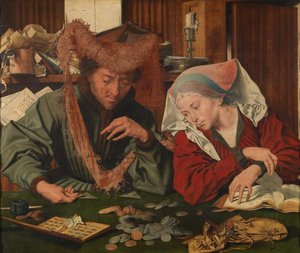
- Il cambiatore e sua moglie, che cattura l'intersezione tra vita domestica e commercio.
- Il mondo giuridico, come un avvocato nel suo studio, specchio della crescente complessità della burocrazia civica.
Il suo capolavoro, Due Esattori, si erge come un esempio straordinario dell'arte del Rinascimento settentrionale. Attraverso l'uso dell'olio su tavola di quercia, l'artista raggiunse una profondità e una consistenza materica che infondono vita ai suoi soggetti. Il dipinto funge da vivido commento sulla corruzione dei funzionari fiscali, utilizzando la descrizione dettagliata di abiti e ambienti per ancorare la sua satira a una realtà riconoscibile. In queste opere, i pesanti e antiquati indumenti dei personaggi aggiungono uno strato di critica sociale, ricordando all'osservatore il mutamento del panorama morale dell'epoca.
Eredità e Influenza Artistica
Lo sviluppo stilistico di Marinus van Reymerswaele mostra la profonda influenza del pittore di Anversa Quentin Matsys. Questo legame contribuì a plasmare la sua capacità di fondere elementi di realismo con un senso dell'umorismo acuto e spesso caricaturale. La sua opera è caratterizzata da un'attenzione al dettaglio che permette allo spettatore di ammirare le minime trame di manoscritti, documenti legali e monete, tutti simboli della preoccupazione dell'epoca per la ricchezza e la legge.
Sebbene abbia lavorato intensamente ad Anversa, il suo viaggio lo condusse infine verso i Paesi Bassi settentrionali. Dopo essersi operato ad Anversa almeno fino al 1540, si trasferì a Goes, dove la sua vita giunse al termine. Sebbene molti dei suoi pannelli siano noti per attribuzione piuttosto che per firma, il suo impatto sulla pittura di genere rimane innegabile. Egli ha lasciato un'eredità visiva che continua a affascinare, offrendo uno sguardo profondo nella mente di un artista alle prese con la fede, lo studio e le onnipresenti ombre dell'avarizia umana.
Marinus Van Reymerswaele
1490 - 1546 , Italia
Dettagli rapidi
- Artistic Movement Or Style: Rinascimento nordico
- Artists Who Influenced This Artist: ['Quentin Matsys']
- Date Of Birth: 1490
- Date Of Death: 1546
- Full Name: Marinus van Reymerswaele
- Nationality: Olandese
- Notable Artworks:
- Due esattori delle tasse
- I collettori di tasse
- San Girolamo nel suo studio
- Il cambiale e sua moglie
- Place Of Birth: Reimerswaal, Paesi Bassi
Articoli correlati

Golden Age Reflections: Dutch Baroque Painting & Cultural Innovation
Explore the Dutch Golden Age of painting! Discover key artists like Vermeer & ter Borch, their innovative techniques, and the rich cultural context behind these Baroque masterpieces. Learn about collecting & appreciating this iconic art period.
Charles Leickert: Capturing the Dutch Golden Age Light – A Comprehensive Study of Technique, Context, and Legacy
Explore the captivating winter landscapes of Charles Leickert, a master of Dutch Golden Age light & atmosphere. Discover his techniques, symbolism, and lasting legacy – a comprehensive study for art enthusiasts and collectors.

Mastering Devotion: The Most Iconic Depictions of Saint Jerome in Art History
Explore the profound iconography of Saint Jerome through art history's most iconic masterpieces. From Renaissance serenity to Baroque drama, discover how legendary painters captured divine devotion in breathtaking oil paintings and fine art reproductions.

Golden Light & Dutch Skies: The Timeless Magic of Dutch Golden Age Landscapes
Discover the breathtaking beauty of Dutch Golden Age landscapes. Explore the mastery of light, chiaroscuro, and 17th-century realism through an expert art history lens, celebrating the enduring legacy of the Dutch Masters for discerning collectors and art lovers.

I 25 Capolavori di Leonardo da Vinci: Il Genio del Rinascimento
Scopri i 25 capolavori di Leonardo da Vinci e il segreto del Rinascimento. Esplora la collezione su OriginalUniqueArt.com.


