

 Anteprima in scala reale
 Invia
Invia Condividi
 Dettagli opera

 Scarica immagine
 Simili
 Radiografia
 Slideshow
Sonata


 Espandi i dettagli
Giclée / Stampe d'arte
Stampa giclée o su tela di qualità museale, con produzione rapida e diverse opzioni di finitura. ( Acquista il dipinto realizzato a mano Acquista immagine)




P118B $10

P118H $10

P118W $10

P438Z $10

P508JH $12

P508YH $12

P805H $10

P805Z $10

P919BZ $10

P919G $10

P919XJ $10

P959ZH $10

P968JZ $12

W106C $8

W218G $10

W218JH $8

W218Y $10

W307PJ $10

W316G $10

W316PJ $8

W316Y $10

W398PJ $8

W4111J $10

W500HY $15

W500JH $15

W692G $12

W849H $8

W940BG $15

W953PJ $8




Scegli tra le nostre dimensioni predefinite, che rispettano le proporzioni originali dell'opera d'arte.

È possibile inserire dimensioni personalizzate per adattare l'opera a una cornice o a uno spazio specifico. Se la dimensione selezionata non corrisponde alle proporzioni dell'immagine originale, procederemo al ritaglio dell'opera o all'estensione dell'immagine con un bordo specchiato o a tinta unita. Un mockup digitale ti verrà inviato per approvazione prima dell'inizio della produzione.
Si prega di notare che l'anteprima a schermo non riflette il ritaglio o l'estensione effettivi. Solo il mockup mostrerà accuratamente la composizione finale.
Sebbene siano disponibili dimensioni personalizzate, si raccomanda di selezionare una dimensione dall'elenco predefinito per preservare le proporzioni originali.
Consegna in tutto il mondo () in 2 settimane invece delle normali 4/5 settimane. (5 Settembre)

Spedizione espressa gratuita in tutto il mondo

Tela in lino di alta qualità

Assicurazione completa sulla spedizione

Garanzia di rimborso dei dazi doganali

Garanzia di fedeltà cromatica

Politica di reso entro 60 giorni (solo per difetti di fabbricazione)

Garanzia di rimborso al 100%

Offerta per acquisti multipli
 L'opzione vetro è disponibile solo per dimensioni inferiori a 110 cm

Sonata
Giclée / Stampe d'arte
Dimensioni riproduzione
-


Prezzo totale calcolato
$ 80
A Fragmented Moment: Marcel Duchamp's "Sonata"
Marcel Duchamp’s “Sonata,” painted in 1911, is not merely a depiction of a musical performance; it’s a carefully constructed disruption – a visual puzzle that embodies the revolutionary spirit driving early 20th-century art. This watercolor, rendered in predominantly brown and white with strategic yellow accents, captures a scene brimming with potential narrative, yet deliberately fractured through the lens of Cubism. The image portrays a woman seated at a piano, surrounded by onlookers, a violinist poised nearby – a tableau ripe with artistic and social significance. However, Duchamp doesn’t offer a straightforward representation; instead, he dismantles the subject into geometric forms, presenting multiple perspectives simultaneously. This technique, characteristic of his exploration of perception and reality, anticipates the radical shifts in art that would define the Dada movement.
Cubist Innovation and Deconstructed Reality
Created during a pivotal moment in artistic history – just before World War I – “Sonata” reflects Duchamp’s engagement with Cubism. Unlike the Impressionists who sought to capture fleeting moments of light, Cubism aimed to represent objects from multiple viewpoints at once, challenging traditional notions of perspective and representation. Duchamp's use of fragmented forms—the woman’s body rendered as overlapping planes, the instruments abstracted into geometric shapes—forces the viewer to actively participate in constructing meaning. The deliberate ambiguity invites speculation about the relationships between the figures, their motivations, and the nature of the performance itself. This rejection of a single, unified viewpoint is a key element of Duchamp's artistic philosophy: questioning established conventions and exploring alternative ways of seeing.
Symbolism and the Performance of Art
The scene depicted in “Sonata” carries layers of symbolic weight. The act of playing music itself has long been associated with emotion, contemplation, and transcendence. The presence of a violinist suggests harmony and collaboration, while the audience represents judgment and appreciation – elements central to the artistic process. Duchamp’s Cubist treatment subtly undermines these traditional associations, suggesting that art is not simply about representing reality but about actively constructing it. The color palette—earthy browns and whites punctuated by vibrant yellows—further enhances this sense of tension between order and chaos, stability and disruption. The yellow accents could represent the spotlight illuminating the performer, or perhaps a critical eye observing the scene.
Emotional Impact and Artistic Legacy
"Sonata" possesses a haunting beauty born from its deliberate incompleteness. The fragmented composition evokes a sense of unease and invites contemplation about the nature of perception, representation, and artistic value. Duchamp’s work paved the way for Conceptual Art, where the idea behind the artwork often takes precedence over its aesthetic qualities. This piece remains a powerful example of Duchamp's intellectual rigor and his willingness to challenge the very foundations of art. A hand-painted reproduction offers an opportunity to experience this seminal work firsthand, appreciating the intricate details and the profound questions it raises about our relationship with art and the world around us.
Biografia dell'artista
primi anni di vita e inizi artistici
Marcel Duchamp, pittore, scultore, giocatore di scacchi e scrittore francese-americano, nacque il 28 luglio 1887 a Blainville-Crevon, Normandia, Francia. La sua famiglia, nota per le sue inclinazioni culturali, incoraggiò il suo interesse precoce per l'arte. Il percorso artistico di Duchamp è iniziato con stili post-impressionisti, sperimentando tecniche e soggetti classici.evoluzione artistica e opere notevoli
- L'opera di Marcel Duchamp è associata al cubismo, all'arte concettuale e al dadaismo, sebbene fosse cauto nell'uso del termine dada.
- Una delle sue opere più famose, Fountain (1917), una tazza da urina firmata 'R. Mutt', è un esempio dei suoi readymade, sfidando la nozione di ciò che costituisce l'arte.
- Ritratto di giocatori di scacchi (1911), un'opera cubista, mostra il suo interesse per il gioco e i suoi aspetti strategici.
- To be looked at (from the other side of the glass) with one eye, close to, for almost an hour (1945) è un'altra opera notevole, che riflette le sue inclinazioni dadaiste.
influenza e eredità
L'impatto di Duchamp sull'arte del XX secolo è immenso. Insieme a Pablo Picasso e Henri Matisse, ha definito le arti plastiche nei primi anni del XX secolo. Il suo approccio concettuale all'arte ha influenzato generazioni di artisti.- Esplora altre opere di Duchamp su OriginalUniqueArt: Marcel Duchamp | opere d'arte
- Scopri il Museo Ohara d'Arte, Giappone, che presenta collezioni di arte occidentale, tra cui alcune influenzate dallo stile di Duchamp: Museo Ohara d'Arte, Giappone
- Scopri di più sul lettrismo, un movimento influenzato dal dadaismo e dal surrealismo, di cui Duchamp faceva parte: Movimento artistico del lettrismo
conclusione
L'enigmatico approccio di Marcel Duchamp all'arte, che combina elementi concettuali e dadaisti, ha lasciato un segno indelebile nel mondo dell'arte. La sua eredità continua a ispirare artisti e a influenzare lo sviluppo dell'arte moderna e contemporanea. Franck Scurti, artista francese noto per la sua arte concettuale, segue le orme di Duchamp, contribuendo ulteriormente alla eredità di questo pioniere dell'arte.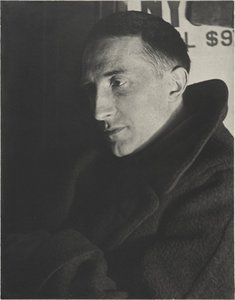
Marcel Duchamp
1887 - 1968 , Francia
Dati rapidi
- Artisti Influenzati: ['Franck Scurti']
- Data Di Nascita: 28 luglio 1887
- Luogo Di Nascita: Blainville-sur-Mer, Francia
- Movimento Artistico:
- Cubismo
- Dadaismo
- Arte Concettuale
- Nazionalità: Francese-Americana
- Nome Completo: Marcel Duchamp
- Opere Notevoli:
- Fontana
- Ritratto di giocatori di scacchi
- The Large Glass
- L.H.O.O.Q.
- Boîte-en-valise
Articoli correlati

I 10 Capolavori dell'Acquerello che Hanno Rivoluzionato l'Arte | OriginalUniqueArt
Esplora i 10 capolavori dell'acquerello che hanno cambiato la storia dell'arte! Da Turner a Monet, scopri le storie e le tecniche di questi artisti iconici. Trova riproduzioni di alta qualità e idee per decorare casa con OriginalUniqueArt.com.

Ephemeral Visions: Exploring the History & Emotional Resonance of Watercolor Painting
Explore the captivating history of watercolor painting, from ancient techniques to modern masters like Kandinsky & Blake. Discover essential artists, collecting tips & the emotional power of this luminous medium. Expert insights for art enthusiasts.

Ephemeral Visions: Exploring the Artistic Legacy & Contemporary Practice of Watercolor Painting
Explore the captivating world of watercolor painting! Discover its rich history, essential techniques, influential artists & collecting tips. A comprehensive guide for art enthusiasts from OriginalUniqueArt.

Giclée Prints: Archival Quality & Aesthetic Nuances for the Discerning Collector
Explore the world of giclée prints with OriginalUniqueArt. Learn about archival quality, aesthetic nuances & investment potential. Expert guidance for discerning art collectors seeking museum-quality reproductions and lasting value.

Kandinsky: I 25 Capolavori che Hanno Rivoluzionato l'Arte Moderna | OriginalUniqueArt
Esplora i 25 capolavori di Wassily Kandinsky, pioniere dell'arte astratta. Scopri la storia, il significato e le tecniche dietro ogni dipinto iconico. Trova riproduzioni d'arte di alta qualità per decorare la tua casa su OriginalUniqueArt.com.



