
 Condividi
 Condividi
 Dettagli

 Scarica immagine
 Articoli simili
 Slideshow
The Architect


 Leggi tutto
Riproduzione a olio fatta a mano
Olio su tela dipinto a mano nelle tue dimensioni e con la tua cornice, realizzato su ordinazione dai nostri artisti. ( Ordina stampa Acquista download)




































Scegli tra le nostre dimensioni predefinite, che rispettano le proporzioni originali dell'opera d'arte.

È possibile inserire dimensioni personalizzate per adattare l'opera a una cornice o a uno spazio specifico. Se la dimensione selezionata non corrisponde alle proporzioni dell'immagine originale, provvederemo a ritagliare l'opera o a estendere il dipinto con elementi aggiuntivi dipinti a mano. Un mockup digitale ti sarà inviato per approvazione prima dell'inizio della produzione.
Si prega di notare che l'anteprima a schermo non riflette il ritaglio o l'estensione effettivi. Solo il mockup mostrerà accuratamente la composizione finale.
Sebbene siano disponibili dimensioni personalizzate, consigliamo di selezionare una dimensione dall'elenco predefinito per preservare le proporzioni originali.
Dopo l'ordine, il team di OriginalUniqueArt.com contatterà il cliente via e-mail per le istruzioni e fornirà un'anteprima del mockup
Consegna in tutto il mondo () in 3/4 settimane anziché nelle normali 5 settimane. (18 Agosto). Nessun compromesso sulla qualità.

Spedizione espressa gratuita in tutto il mondo

Tela in lino di alta qualità

Assicurazione completa sulla spedizione

Garanzia di rimborso dei dazi doganali

Garanzia di fedeltà cromatica dell'originale

Politica di reso entro 60 giorni (solo per difetti di fabbricazione)

Garanzia di rimborso al 100%

Sconto per acquisti multipli
 L'opzione vetro è disponibile solo per dimensioni inferiori a 110 cm

The Architect
Tecnica di riproduzione
Dimensioni della riproduzione
-


Prezzo totale
$ 300
Descrizione dell'opera
The Grand Dialogue of Creation: Exploring "The Architect"
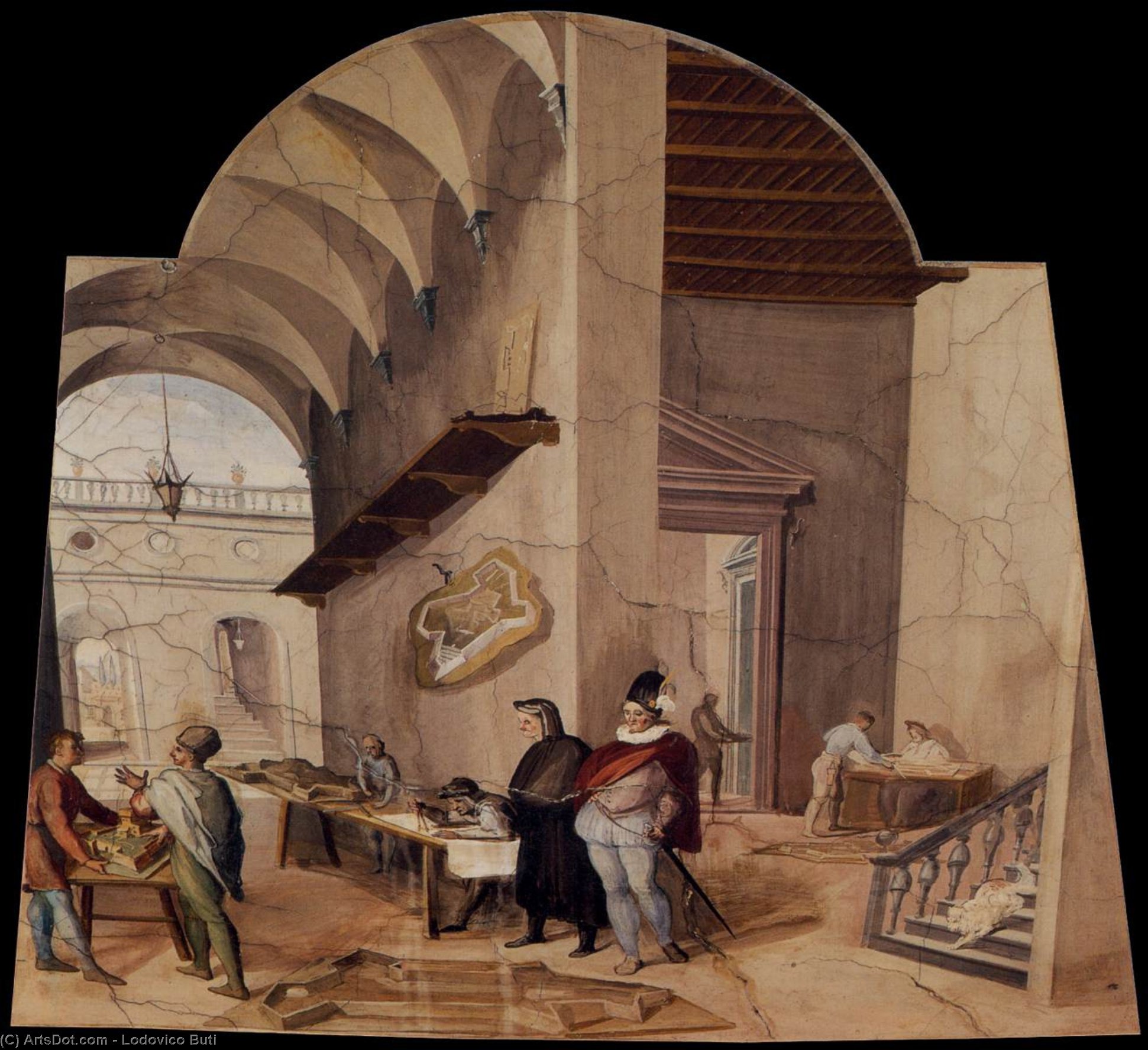
To stand before Lodovico Buti's magnificent fresco, "The Architect," is to step directly into the vibrant intellectual crucible of the High Renaissance. Created in 1558 and housed within the hallowed halls of the Uffizi Gallery, this work transcends mere depiction; it captures a moment—a charged exchange of ideas where vision meets tangible form. The scene unfolds within an architecturally rich space, characterized by soaring ceilings supported by classical columns and graceful arches. It is a visual symphony dedicated to the very act of creation, suggesting that genius itself is not a solitary endeavor but a collaborative dialogue.
Mastery in Technique and Form
Buti’s command over his chosen medium—fresco with tempera and gold accents—is breathtakingly evident. The permanence and subtle luminosity afforded by the fresco technique allow for an astonishing level of detail, making every fold of drapery and every carved cornice feel immediate. Observe the interplay between the figures and their environment; the intricate architectural elements are not mere backdrop but active participants in the narrative. The artist masterfully employs perspective, drawing the viewer's eye deep into the composition while simultaneously grounding us in the intimate conversation taking place in the foreground. It is a testament to Renaissance understanding of proportion, where artifice and reality merge seamlessly.
A Tapestry of Human Interaction
The emotional core of "The Architect" resides within its figures. A man clad in a striking red robe gestures emphatically toward another figure, perhaps the architect himself, who listens with an air of profound contemplation, draped in white. These expressive facial expressions are what breathe life into the scene; they convey not just words spoken, but the weight of intellectual exchange—the thrill of discovery, the gravity of design. In the background, other figures contribute to this bustling atmosphere: one seated at a desk, lost in study, another gazing outward from near a window, perhaps contemplating the structure that lies beyond the palazzo walls. This gathering speaks volumes about the Renaissance reverence for human intellect.
Symbolism and Enduring Inspiration
Beyond its historical documentation of architectural practice, "The Architect" resonates with universal symbolism. It celebrates the synergy between art and science—the melding of aesthetic beauty with structural necessity. The very act depicted suggests that true mastery requires both visionary imagination and rigorous execution. For the modern collector or designer, this piece offers more than decoration; it offers an aspiration. It is a visual reminder that every great undertaking, whether building a palazzo or crafting a life, begins with a compelling conversation between ideas.
Bringing Renaissance Grandeur Home
For those who wish to incorporate the spirit of this masterpiece into your own sanctuary, OriginalUniqueArt.com offers exquisite handmade oil paintings reproductions. Our skilled artisans dedicate themselves to capturing the very essence and luminosity of Buti's original fresco. By choosing one of our replicas, you are not merely acquiring a painting; you are inviting a piece of Renaissance intellectual fervor—a dialogue between genius and material—into your home.
Biografia dell'artista
Ludovico Buti (1560-1611): Venetian Illusionist and Architect of Dreams
Ludovico Buti, born around 1560 in Florence, remains a shadowy figure within the vibrant tapestry of Renaissance art, yet his impact on Venetian decorative arts is undeniable. Despite limited surviving documentation—primarily focused on architectural commissions—scholarly research has illuminated a prolific artist who skillfully blended Mannerist aesthetics with innovative optical illusions and fantastical imagery, establishing him as a pivotal contributor to the artistic landscape of his time.- Early Life & Training: Precise biographical details are scarce. However, evidence suggests Buti’s formative years were spent in Florence under the tutelage of Alessandro Allori, a leading Mannerist sculptor and painter who instilled in him a profound understanding of sculptural form and expressive gesture—elements that would later permeate Buti's architectural designs.
- Venetian Engagement & Architectural Innovation: Buti’s career truly blossomed in Venice during the reign of Charles II. He swiftly gained recognition for his ambitious projects, collaborating with Stefano Buonsignori on monumental interiors at Santa Maria Novella and transforming the Uffizi Gallery into a breathtaking spectacle of illusionistic decoration. His approach to architecture wasn't merely about constructing buildings; it was about crafting immersive experiences that challenged perceptions of space and reality.
Optical Illusion: Mastering Trompe-l’œil Buti’s artistic genius extended beyond mere architectural grandeur; he perfected the art of *trompe-l'œil*, a technique that utilizes illusionistic painting to deceive the eye into perceiving images or textures as if they were real. This masterful manipulation of perspective and shading—exemplified by his celebrated fresco depicting Saint Philip Neri rescuing a drowning youth—demonstrates Buti’s unwavering commitment to pushing artistic boundaries. The intricate detail and subtle distortions within these paintings underscore his profound understanding of visual perception.
- Notable Commissions: Among Buti's most significant undertakings were the decoration of the Map Room and Stanzino delle Matematiche at Santa Maria Novella, where he collaborated with Buonsignori to create a mesmerizing panorama of celestial bodies—a testament to his ambition and artistic vision.
- The Basilica of Our Lady of Humility: Buti’s contribution to the basilica in Pistoia is equally remarkable. His fresco portraying The Annunciation showcases his ability to convey emotion and narrative complexity through masterful brushwork and compositional arrangement.
Influence & Legacy Buti's influence on Venetian art extends beyond his individual commissions. He championed a Mannerist style characterized by dynamism, expressive distortion, and psychological depth—a stylistic hallmark that resonated throughout the artistic milieu of Venice during Charles II’s reign. His pioneering use of optical illusion solidified his position as one of the foremost innovators of his era, inspiring subsequent generations of artists to explore new frontiers of visual representation.
- Continuing Research: Despite the paucity of biographical information, ongoing scholarly investigations continue to refine our understanding of Buti’s artistic output and its significance within the broader context of Renaissance art history. Future research promises to unveil further insights into his life, training, and creative process—solidifying his place as a captivating enigma within the annals of Venetian art.
Concluding Remarks Ludovico Buti’s legacy resides not merely in the grandeur of his architectural achievements but also in his unwavering dedication to artistic experimentation. He remains an artist whose work embodies the spirit of Mannerist innovation—a testament to the transformative power of imagination and technique in shaping visual culture.

lodovico buti
1560 - 1611
Informazioni rapide
- Artistic Movement Or Style: Mannerist
- Date Of Death: after 1611
- Full Name: Ludovico Buti
- Nationality: Italian
- Notable Artworks:
- Study for Saint Philip Neri Rescuing a Drowning Youth
- Optical Illusion with Portraits of Charles II and His Daughter Christine of Lorraine
- Preparation of Gunpowder
- Annunciation
- Place Of Birth: Florence
Articoli correlati

L'Arte dei Murales di Famiglia: Trasformare le Mura in Memorie Eterne
Scopri l'arte del fresco e crea murales familiari unici! Esplora la storia, le tecniche e realizza il tuo sogno artistico con : esperti artisti e qualità garantita.
The Enduring Legacy of Fresco Painting: Techniques, History & Contemporary Relevance
Explore the rich history & enduring artistry of fresco painting – from Giotto to Michelangelo! Discover techniques, conservation efforts, & modern applications. Learn how OriginalUniqueArt brings this timeless art form to your home.

The Enduring Legacy of Fresco: Technique, History & Artistic Expression Across Cultures
Explore the rich history & enduring legacy of fresco painting! Discover ancient techniques, Giotto's masterpieces, and modern applications. Expert insights for art lovers & professionals.

The Enduring Legacy of Fresco: Technique, History & Artistic Expression
Explore the rich history & enduring artistry of fresco painting. Discover techniques from Giotto to Michelangelo, conservation efforts, & modern applications. Learn how OriginalUniqueArt brings this timeless art form to your home.

Il Fresco Moderno: Arte sui Soffitti per Hotel di Lusso
Scopri l'arte del soffitto moderno per hotel di lusso! Guide esperte, tecniche innovative e ispirazioni uniche per trasformare i tuoi spazi con affreschi personalizzati. : qualità garantita.

