

 Anteprima in scala reale
 Condividi
 Condividi
 Dettagli
 Guida stampabile

 Scarica
 Articoli simili
 Radiografia
 Slideshow
 Statistiche
Stacking Grain Sheaves


 Leggi tutto
Riproduzione a olio fatta a mano
Olio su tela dipinto a mano nelle tue dimensioni e con la tua cornice, realizzato su ordinazione dai nostri artisti. ( Passa alle stampe Passa all'immagine digitale)




P118B €10

P118H €10

P118W €10

P438Z €10

P508JH €12

P508YH €12

P805H €10

P805Z €10

P919BZ €10

P919G €10

P919XJ €10

P959ZH €10

P968JZ €12

W106C €8

W218G €10

W218JH €8

W218Y €10

W307PJ €10

W316G €10

W316PJ €8

W316Y €10

W398PJ €8

W4111J €10

W500HY €15

W500JH €15

W692G €12

W849H €8

W940BG €15

W953PJ €8




Scegli tra le nostre dimensioni predefinite, che rispettano le proporzioni originali dell'opera d'arte.

Inserisci la larghezza e l'altezza di cui hai bisogno, per adattarle alla tua cornice o alla tua parete. Trattandosi di un'opera dipinta a mano, in caso di dimensioni con una forma differente, l'artista può dipingere un po' più oltre i bordi dell'immagine o ritagliare leggermente — la scelta spetta a te. Ti invieremo un mockup digitale da approvare prima che la pittura abbia inizio. L'immagine mostrata in questa pagina non rappresenta il risultato reale — solo il mockup lo fa.
Dopo l'ordine, il team di OriginalUniqueArt.com contatterà il cliente via e-mail per ricevere le istruzioni e fornirà un'anteprima del mockup
Consegna in tutto il mondo () in 3/4 settimane anziché nelle normali 5 settimane. (21 Ottobre). Nessun compromesso sulla qualità.

Spedizione espressa gratuita in tutto il mondo

Tela in lino di alta qualità

Assicurazione completa sulla spedizione

Garanzia di rimborso dei dazi doganali

Garanzia di perfetta fedeltà cromatica

Politica di reso entro 100 giorni (solo per difetti di fabbricazione)

Garanzia di rimborso al 100%

Sconto per acquisti multipli
 L'opzione vetro è disponibile solo per dimensioni inferiori a 110 cm

Stacking Grain Sheaves
Tecnica di riproduzione
Dimensioni della riproduzione
-


Prezzo totale
€ 262
A Symphony of Rural Labor
In the golden light of a late nineteenth-century afternoon, Julien Dupré captures a moment of profound communal effort in his masterpiece, Stacking Grain Sheaves. This evocative scene serves as a window into the rhythmic, tireless life of the French peasantry, where the boundaries between human toil and the natural world seem to dissolve. The painting depicts a group of farmers engaged in the monumental task of gathering hay, their bodies leaning into the weight of the harvest with a grace born of necessity. As they pile the golden stalks into massive, towering mounds, the composition draws the eye upward, mirroring the rising abundance of the earth. A solitary horse rests near the periphery, a silent witness to the industry unfolding around it, grounding the scene in the quiet, heavy atmosphere of a working farm.
The artistry of Dupré lies in his ability to elevate the mundane into the monumental. Through a masterful application of Realist technique, he renders the textures of the landscape with breathtaking precision—the coarse roughness of the dried hay, the soft dust rising from the field, and the sturdy, weathered fabrics of the laborers' clothing. His brushwork is deliberate yet fluid, capturing the play of sunlight across the undulating piles of grain, which act as the focal point of the canvas. The interplay of light and shadow creates a sense of depth that pulls the viewer into the heart of the field, making one feel the warmth of the sun and the physical weight of the harvest.
The Soul of the French Countryside
Beyond its technical brilliance, Stacking Grain Sheaves is steeped in the historical and emotional resonance of the Realist movement. Created during a period when the industrial revolution was rapidly transforming the landscape of Europe, Dupré’s work acts as a poignant tribute to a vanishing way of life. There is a profound sense of dignity imbued in every figure; these are not merely subjects of a pastoral scene, but heroes of their own survival. The painting celebrates the strength found in collective labor and the sacred bond between the people and the land they cultivate.
For the discerning collector or interior designer, this piece offers more than mere decoration; it provides an emotional anchor for a room. Its warm, earthy palette of ochre, gold, and deep umber brings a sense of organic tranquility and timelessness to any space. Whether placed in a sun-drenched library or a sophisticated contemporary living area, the painting invites contemplation on themes of perseverance, abundance, and the enduring beauty of the natural cycle. It is an investment in a piece of history that continues to breathe life and warmth into the modern home.
Domande e risposte
Quando è stata creata "Stacking Grain Sheaves" e a quale movimento appartiene?
"Stacking Grain Sheaves" è stata creata nel 1870 come opera del movimento Realism. La data e il movimento collocano l'opera all'interno della storia dell'arte.
In che anno è stata realizzata "Stacking Grain Sheaves"?
"Stacking Grain Sheaves" risale al 1870. La data colloca l'opera all'interno della carriera di Julien Dupré e della sua epoca.
In che modo il movimento e l'epoca si incontrano in "Stacking Grain Sheaves" di Julien Dupré?
"Stacking Grain Sheaves" appartiene al movimento Realism, e il suo autore ha operato nell'epoca XIX secolo.
Biografia dell'artista
A Life Rooted in the French Countryside
Julien Dupré, born in Paris on March 18, 1851, was an artist whose life and work became inextricably linked to the rural heartland of France. His story is one of unexpected turns, shaped by historical events and a deep-seated connection to the land and its people. Initially destined for his family’s jewelry business – his father, Jean Dupré, was a jeweler, and he began an apprenticeship in lacemaking – fate intervened with the outbreak of the Franco-Prussian War in 1870. The closure of the lace shop during the siege of Paris provided an unforeseen opportunity for young Julien to pursue his artistic inclinations. He enrolled in evening classes at the École des Arts Décoratifs, a pivotal step that ultimately led him to the prestigious École des Beaux-Arts where he studied under Isidore Pils and Henri Lehmann. This formal training laid the foundation for his meticulous technique and academic approach, yet it was an encounter with a different kind of mentorship that truly defined his artistic path.The Influence of Laugée and the Embrace of Realism
A transformative period in Dupré’s development came with his travels to Picardy in the mid-1870s, where he became a student of Désiré François Laugée, a celebrated painter of rural genre scenes. This mentorship proved profoundly influential, shaping both his subject matter and artistic style. Laugée instilled in Dupré a passion for depicting the everyday lives of peasants – their labor, their rituals, their quiet joys—with unflinching honesty and unwavering attention to detail. He championed the dignity of rural existence, mirroring Millet’s own commitment to portraying peasant life not as idyllic fantasy but as a reality marked by both hardship and profound beauty. Dupré's artistic vision was firmly rooted in Realism, an aesthetic movement that sought to depict everyday life with accuracy and sincerity. He wasn’t merely recording what he saw; he was imbuing it with a sense of empathy and respect for those who labored on the land. The influence of Jean-François Millet is palpable in his work, sharing a similar dedication to portraying peasant life not as idealized fantasy but as a reality imbued with dignity and quiet beauty.Themes of Rural Life and Artistic Style
Throughout his career, Julien Dupré consistently explored themes of rural life—the rhythms of agricultural seasons, the camaraderie of village communities, and the subtle beauties of the French countryside—capturing them with remarkable precision. His paintings are characterized by their idyllic yet honest portrayals of farmers working in fields, tending to livestock, and engaging in the activities that defined their daily lives. He mastered the art of capturing light and texture, employing meticulous brushstrokes to convey the materiality of the landscape and the human figures within it. Dupré’s style is often described as Academic Realism – a blend of detailed observation, careful composition, and harmonious color palettes—reflecting the stylistic conventions of his time while simultaneously elevating them with an unwavering commitment to truthfulness. He sought to portray the world as he saw it, avoiding sentimentality or melodrama in favor of understated elegance and profound emotional resonance.Notable Works and Recognition
Dupré’s artistic output yielded several iconic paintings that continue to inspire admiration for their masterful execution and evocative depiction of rural France. Among his most celebrated works are *The Harvester*, *Stacking Grain Sheaves*, and *The Watering Hole*, each demonstrating Dupré's unwavering dedication to capturing the essence of peasant life with remarkable realism and poetic sensitivity. These canvases exemplify his stylistic prowess, showcasing meticulous detail, balanced compositions, and luminous color palettes—characteristics that solidified his reputation as a leading figure in the Realist movement. His paintings were exhibited at the Paris Salon throughout his lifetime, garnering critical acclaim for their artistic merit and conveying a powerful message about the importance of preserving rural traditions and honoring the dignity of agricultural labor.Legacy and Enduring Influence
Julien Dupré passed away on April 16, 1910, leaving behind a body of work that continues to resonate with audiences who appreciate his unwavering commitment to portraying rural France with honesty, beauty, and profound emotional depth. His paintings serve as enduring reminders of the artistic achievements of the Realist movement and offer invaluable insights into the social and economic conditions of late nineteenth-century France. Dupré’s legacy extends beyond his individual canvases; he championed a stylistic approach that prioritized observation and empathy—a testament to the transformative power of art to illuminate the human condition and celebrate the simple joys of everyday life.
Julien Dupré
1851 - 1910 , Francia
Informazioni rapide
- Artistic Movement Or Style: Realismo Accademico
- Artists Who Influenced This Artist:
- Jean-François Millet
- Désiré François Laugée
- Date Of Birth: 18 marzo 1951
- Date Of Death: 16 aprile 1910
- Full Name: Julien Dupré
- Nationality: Francese
- Notable Artworks:
- Il Raccoltore
- Stacking Grain Sheaves
- Place Of Birth: Parigi, Francia
Articoli correlati
Cultivating Visions: Rural Life & Social Commentary in Art History
Explore the rich history of rural life in art! Discover masterpieces from Dutch Masters to Van Gogh & Courbet. Uncover artistic movements, social significance & expert collecting insights at OriginalUniqueArt.
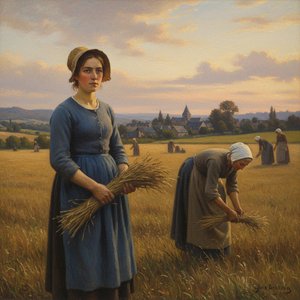
Jules Breton: Capturing the Poetic Soul of French Rural Life
Explore the captivating world of Jules Breton, master of French Realism. Discover his iconic paintings of rural life, learn about his artistic journey, and find high-quality reproductions to elevate your art collection at OriginalUniqueArt.

Echoes of Rural Life: Nostalgia, Labor & Identity in Art History
Explore the rich history of rural life in art! Discover how Realism captured labor & identity through masterpieces by Van Gogh, Millet & more. Expert analysis for collectors and enthusiasts.

Jean-François Millet: Realismo, Vita Rurale e la Poetica Rappresentazione del Lavoro
Esplora la vita e le opere di Jean-François Millet, maestro del realismo rurale. Approfondisci il suo contributo alla Scuola di Barbizon, l'iconografia del lavoro contadino e l'influenza sull'arte moderna. Analisi approfondite e contesto storico.

Léon Augustin L'Hermitte: Capturing the Soul of French Rural Life
Discover the captivating realist paintings of Léon Augustin L'Hermitte, masterfully depicting French rural life. Explore his technique, influences & legacy – a cornerstone of 19th-century art.