
 Anteprima in scala reale
 Invia
Invia Condividi
 Dettagli opera
 Guida
Guida

 Scarica
 Simili
 Radiografia
 Slideshow
 Domande e risposte
 Statistiche
Fakires

- 305.0 x 244.0 cm


 Espandi i dettagli
L'opera d'arte visualizzata in questa pagina è protetta dalle leggi sul diritto d'autore, il che significa che non possiamo legalmente creare o vendere una riproduzione identica. Tale protezione è garantita da accordi internazionali quali la Convenzione di Berna e dalle leggi nazionali, incluse quelle stabilite da Legge sul copyright degli Stati Uniti - Titolo 17. Tutti i diritti riservati. Le immagini presenti su questo sito sono protette da copyright e non possono essere riprodotte o utilizzate senza l'autorizzazione scritta di WahooArt.com o dei rispettivi proprietari del copyright.
Questo metodo è pienamente conforme alle normative sul diritto d'autore poiché non prevede la copia o la duplicazione dell'opera protetta. Si tratta invece di una rielaborazione creativa: un nuovo dipinto che trae ispirazione dall'originale, senza tuttavia esserne identico.
Giclée / Stampe d'arte
Stampa giclée o su tela di qualità museale, con produzione rapida e diverse opzioni di finitura. ( Acquista il dipinto realizzato a mano Passa all'immagine digitale)




P118B €10

P118H €10

P118W €10

P438Z €10

P508JH €12

P508YH €12

P805H €10

P805Z €10

P919BZ €10

P919G €10

P919XJ €10

P959ZH €10

P968JZ €12

W106C €8

W218G €10

W218JH €8

W218Y €10

W307PJ €10

W316G €10

W316PJ €8

W316Y €10

W398PJ €8

W4111J €10

W500HY €15

W500JH €15

W692G €12

W849H €8

W940BG €15

W953PJ €8




Scegli tra le nostre dimensioni predefinite, che rispettano le proporzioni originali dell'opera d'arte.

Inserisci la larghezza e l'altezza desiderate, per adattarle alla tua cornice o alla tua parete. Una stampa può essere solo ritagliata, mai resa più grande dell'immagine originale; pertanto, un formato con una forma differente comporterà la perdita di una parte dell'opera. Ti invieremo un mockup digitale da approvare prima di procedere con la stampa. L'immagine mostrata in questa pagina non rappresenta il ritaglio reale — solo il mockup lo mostra.
Consegna in tutto il mondo () in 2 settimane invece delle normali 4/5 settimane. (10 Novembre)

Spedizione espressa gratuita in tutto il mondo

Tela in lino di alta qualità

Assicurazione completa sulla spedizione

Garanzia di rimborso dei dazi doganali

Garanzia di fedeltà cromatica assoluta

Politica di reso entro 100 giorni (solo per difetti di fabbricazione)

Garanzia di rimborso al 100%

Offerta per acquisti multipli
 L'opzione vetro è disponibile solo per dimensioni inferiori a 110 cm

Fakires
Giclée / Stampe d'arte
Dimensioni riproduzione
-


Prezzo finale calcolato
€ 72
Julian Schnabel’s *Fakires*: A Monumental Exploration of Sacrifice and Spiritual Intensity
Julian Schnabel emerged from the vibrant, often chaotic New York art scene of the 1980s as a force of nature, challenging conventions and redefining the possibilities of painting. Born in Brooklyn in 1951, his early life took an unexpected turn when his family relocated to Brownsville, Texas, in 1965—a formative experience that instilled within him a sense of outsider status and a fascination with raw, untamed environments. This duality – the urban grit of New York versus the expansive landscapes of the Texan borderlands – would become a recurring theme throughout his artistic journey. He pursued formal training at the University of Houston, but it was his audacious application to the Whitney Museum’s Independent Study Program—delivered between two slices of bread—that truly signaled his iconoclastic spirit and willingness to disrupt established norms. This gesture wasn't mere provocation; it was a statement about breaking down barriers to creativity and embracing unconventional methods.- Subject Matter: Schnabel’s *Fakires* (1993) centers around the concept of “fakir,” referring to Hindu or Muslim mystics who practice extreme asceticism—a deliberate renunciation of worldly possessions and desires for spiritual enlightenment. The word itself carries connotations of profound humility, selflessness, and unwavering devotion.
- Style: This artwork firmly establishes Schnabel’s place within Neo-Expressionist painting, a movement that reacted against the dominance of Minimalism and Conceptual art by prioritizing emotive intensity and figurative representation. It embodies a visceral response to the human condition—a confrontation with vulnerability and suffering.
- Technique: Executed on a monumental cotton drop cloth measuring 305.6 x 244.5 cm, *Fakires* utilizes oil paint mixed with resin – a technique that lends considerable textural depth and luminosity to the surface. Schnabel’s signature approach involves layering materials—including cardboard—to create a complex interplay of textures and colors.
Historical Context: The Return to Painting After Minimalism
The early 1980s witnessed a significant backlash against the austere aesthetic principles championed by Minimalist artists like Donald Judd and Carl Andre. Schnabel’s work represents a deliberate rejection of this reductive style, advocating for a return to expressive painting—a medium capable of conveying profound emotional resonance. It coincided with a broader cultural shift toward confronting difficult themes and exploring the darker aspects of human experience.Symbolism: Sacrifice and Transcendence
The prominent word “fakires” emblazoned across the canvas serves as more than just a visual element; it embodies a core symbolic idea—the willingness to endure hardship for the sake of spiritual devotion. Schnabel’s deliberate use of color – predominantly reds and pinks – contributes to this sense of urgency and passion, mirroring the fervor associated with religious rituals and practices. The painting's overall composition communicates a feeling of unity and harmony between disparate materials, reflecting the artist’s belief that beauty can emerge from confronting uncomfortable truths.Emotional Impact: Confrontation and Revelation
Viewing *Fakires* is undeniably unsettling—a deliberate provocation designed to elicit contemplation about mortality, vulnerability, and the pursuit of spiritual transcendence. Schnabel's masterful manipulation of texture and color compels the viewer to engage emotionally with the artwork, prompting reflection on the complexities of human existence. As Kevin Power eloquently described it, “The word suggests Schnabel’s identification with all of those who suffer pain for us—the pain that is inevitably our companion in the world.” It's a painting that demands attention and rewards careful observation—a testament to Schnabel’s unwavering commitment to artistic innovation and emotional honesty.Further Research
WikiArt: https://www.wikiart.org/en/julian-schnabel/fakires-fakirrak-1993 Guggenheim Bilbao Museum: https://www.guggenheim-bilbao.eus/en/the-collection/works/fakires Julian Schnabel IMDb: https://imdb.com/name/julian-schnabel/Domande e risposte
Quanto è satura la tavolozza di "Fakires"?
"Fakires" di Julian Schnabel presenta una saturazione Muted.
Qual è la luminosità di "Fakires" di Julian Schnabel?
La luminanza rilevata per "Fakires" di Julian Schnabel è Bright Balance.
Dove e per quale uso è consigliata "Fakires"?
"Fakires" di Julian Schnabel è consigliato per Accent, idealmente in un Living Room. L'uso e lo spazio aiutano a individuare l'ambiente ideale per una riproduzione.
Biografia dell'artista
A Life Forged in Texture: The World of Julian Schnabel
Julian Schnabel emerged from the vibrant, often chaotic New York art scene of the 1980s as a force of nature, challenging conventions and redefining the possibilities of painting. Born in Brooklyn in 1951, his early life took an unexpected turn when his family relocated to Brownsville, Texas, in 1965—a formative experience that instilled within him a sense of outsider status and a fascination with raw, untamed environments. This duality – the urban grit of New York versus the expansive landscapes of the Texan borderlands – would become a recurring theme throughout his artistic journey. He pursued formal training at the University of Houston, but it was his audacious application to the Whitney Museum’s Independent Study Program—delivered between two slices of bread—that truly signaled his iconoclastic spirit and willingness to disrupt established norms. This gesture wasn't mere provocation; it was a statement about breaking down barriers and presenting art outside traditional frameworks.The Rise of Neo-Expressionism and the ‘Plate Paintings’
Schnabel’s breakthrough arrived with his groundbreaking “plate paintings.” These weren’t canvases adorned with imagery, but rather assemblages built upon shattered ceramic plates, layered with plaster, wax, and a diverse array of materials—velvet, antlers, photographs, even shards of wood. The sheer physicality of these works was revolutionary; they were not simply *seen*, but experienced as sculptural objects demanding attention through their weight, texture, and scale. Ornamental Despair, The Student of Prague, and Fakires exemplify this early period, showcasing a bold rejection of minimalist austerity in favor of maximalist expression. He wasn’t interested in pristine surfaces or intellectual detachment; he sought to convey emotion through tactile intensity and the visible evidence of creation—the cracks, fissures, and accumulated layers becoming integral to the artwork's narrative. This approach aligned him with the burgeoning Neo-Expressionist movement, a reaction against the conceptual rigor of the preceding decades, which prioritized subjective experience and emotional resonance. While his success was swift, it wasn’t without controversy; critics like Robert Hughes famously dismissed his work as bombastic and self-indulgent, comparing it unfavorably to physical displays of strength rather than artistic merit. Yet, Schnabel persevered, participating in pivotal exhibitions such as the Venice Biennale in 1980 and ‘A New Spirit in Painting’ at the Royal Academy of Arts in 1981, solidifying his position as a leading figure in the resurgence of painting. The deliberate fragmentation of porcelain—a technique borrowed from Surrealist artists like Kurt Schwitters—became Schnabel's signature style, symbolizing both destruction and rebirth.Beyond the Canvas: A Cinematic Exploration
Schnabel’s creative ambition extended beyond the confines of the art world, leading him to a remarkably successful career in filmmaking. His directorial debut, Basquiat (1996), was a poignant and visually arresting biopic of Jean-Michel Basquiat, capturing the energy and turmoil of the young artist’s life and work. This wasn't simply a biographical retelling; it was an immersive experience that conveyed the raw emotion and creative process behind Basquiat’s art. He followed this with Before Night Falls (2000), an adaptation of Reinaldo Arenas’ autobiography, which garnered critical acclaim and won the Grand Jury Prize at the Venice Film Festival. This film, based on Arenas' own harrowing account of persecution and exile, utilized innovative visual techniques—particularly slow motion—to heighten emotional impact and explore themes of identity and artistic struggle. Schnabel’s meticulous attention to detail mirrored his approach to painting, demonstrating a consistent vision across different mediums. Finally, The Diving Bell and the Butterfly (2007) cemented his reputation as a filmmaker capable of tackling complex subjects with empathy and artistry. Based on Jean-Dominique Bauby's autobiographical novel about surviving a stroke—a condition that left him unable to speak or move—the film employed groundbreaking CGI to reconstruct Bauby’s inner world, offering a profoundly moving portrayal of resilience and the transformative power of art.Influences and Legacy: A Continuing Dialogue
Schnabel doesn't explicitly cite specific influences, but echoes of artists like Robert Rauschenberg – with his embrace of collage and found objects – can be discerned in his work. Both artists challenged traditional notions of artistic materials and embraced the detritus of everyday life as sources of creative inspiration. Schnabel’s willingness to experiment with scale, texture, and unconventional surfaces has profoundly influenced a generation of artists, encouraging them to push boundaries and explore new possibilities within painting and sculpture. His works are now held in major museum collections worldwide, including the Metropolitan Museum of Art, MoMA, the Whitney Museum, Tate Modern, and the Centre Pompidou—a testament to his enduring impact on contemporary art. Today, Julian Schnabel continues to work prolifically as both a painter and filmmaker, remaining a vital and provocative voice in the global art landscape. He embodies an unwavering commitment to artistic freedom and a relentless pursuit of innovation, ensuring his legacy will continue to inspire and challenge audiences for years to come.- Born: 1951, Brooklyn, New York City
- Key Movement: Neo-Expressionism
- Notable Works: Plate Paintings, Basquiat (film), The Diving Bell and the Butterfly (film)

Julian Schnabel
1951 - , Stati Uniti d'America
Dettagli rapidi
- Artistic Movement Or Style: Neo-Expressionism
- Artists Who Influenced This Artist:
- Robert Rauschenberg
- Kurt Schwitters
- Date Of Birth: 1951
- Full Name: Julian Alden Schnabel
- Nationality: American
- Notable Artworks:
- Ornamental Despair
- The Student of Prague
- Fakires
- Untitled (Surfer)
- Basic Boating
- Place Of Birth: Brooklyn, USA
Articoli correlati
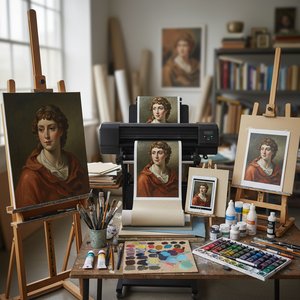
Riproduzioni d'Arte: Guida Comparativa tra Olio su Tela, Stampa su Cotone e Poster con Cornice
Scopri la guida completa alle riproduzioni d'arte: confronto tra olio su tela, stampa su cotone e poster. Scegli la qualità per arredare con stile!
Dallo Schizzo all'Eredità: Il Processo Completo della Riproduzione Pittorica ad Olio
Scopri l'arte della riproduzione pittorica ad olio di alta qualità! Artisti esperti creano copie fedeli e personalizzate dei tuoi capolavori preferiti. Consulenza gratuita e materiali pregiati per un risultato autentico e duraturo.

Dallo Scatto Istantaneo al Ritratto d'Atelier: La Rinascita della Tecnica ad Olio nell'Era Digitale
Scopri la rinascita della pittura ad olio! Riproduzioni di alta qualità realizzate da esperti artisti. Consulenza personalizzata e opere uniche per arredare con stile e valore.
L'Eredità Duratura della Pittura a Olio Fatta a Mano: Valore Estetico, Longevità e Risonanza Emotiva
Scopri la storia, le tecniche e il valore della pittura a olio fatta a mano. Guide per collezionisti esperti, servizi di restauro e personalizzazione artistica con OriginalUniqueArt.
Dai vita ai tuoi NFT trasformandoli in autentici capolavori d’olio museale – Investi, colleziona e realizza margini netti garantiti
Trasforma i tuoi NFT in autentici capolavori d’olio museale con OriginalUniqueArt: artigianato di livello mondiale, materiali premium e processo trasparente garantiscono un investimento sicuro e redditizio per collezionisti digitali. Scopri la differenza.
