

 Anteprima in scala reale
 Invia
Invia Condividi
 Dettagli opera

 Scarica immagine
 Simili
 Radiografia
 Slideshow
 Statistiche
Arab School


 Espandi i dettagli
Riproduzione a olio fatta a mano
Olio su tela dipinto a mano nelle tue dimensioni e con la tua cornice, realizzato su ordinazione dai nostri artisti. ( Passa a Stampe Passa all'immagine digitale)




P118B $10

P118H $10

P118W $10

P438Z $10

P508JH $12

P508YH $12

P805H $10

P805Z $10

P919BZ $10

P919G $10

P919XJ $10

P959ZH $10

P968JZ $12

W106C $8

W218G $10

W218JH $8

W218Y $10

W307PJ $10

W316G $10

W316PJ $8

W316Y $10

W398PJ $8

W4111J $10

W500HY $15

W500JH $15

W692G $12

W849H $8

W940BG $15

W953PJ $8




Scegli tra le nostre dimensioni predefinite, che rispettano le proporzioni originali dell'opera d'arte.

È possibile inserire dimensioni personalizzate per adattare l'opera a una cornice o a uno spazio specifico. Se la dimensione selezionata non corrisponde alle proporzioni dell'immagine originale, provvederemo a ritagliare l'opera o a estendere il dipinto con elementi aggiuntivi dipinti a mano. Un mockup digitale ti sarà inviato per approvazione prima dell'inizio della produzione.
Si prega di notare che l'anteprima a schermo non riflette il ritaglio o l'estensione effettivi. Solo il mockup mostrerà accuratamente la composizione finale.
Sebbene siano disponibili dimensioni personalizzate, consigliamo di selezionare una dimensione dall'elenco predefinito per preservare le proporzioni originali.
Dopo l'ordine, il team di OriginalUniqueArt.com contatterà il cliente via e-mail per le istruzioni e fornirà un'anteprima del mockup
Consegna in tutto il mondo () in 3/4 settimane anziché nelle normali 5 settimane. (10 Settembre). Nessun compromesso sulla qualità.

Spedizione espressa gratuita in tutto il mondo

Tela in lino di alta qualità

Assicurazione completa sulla spedizione

Garanzia di rimborso dei dazi doganali

Garanzia di fedeltà cromatica

Politica di reso entro 100 giorni (solo per difetti)

Garanzia di rimborso al 100%

Offerta per acquisti multipli
 L'opzione vetro è disponibile solo per dimensioni inferiori a 110 cm

Arab School
Tecnica di riproduzione
Dimensioni riproduzione
-


Prezzo totale calcolato
$ 300
A Window Into a World of Grace: John Frederick Lewis’s “Arab School”
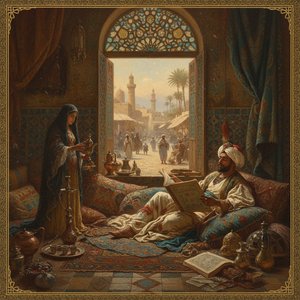
John Frederick Lewis's "Arab School," painted circa 1841-51, isn’t merely a depiction of a classroom; it’s a meticulously crafted portal into the heart of 19th-century Ottoman society. This watercolor and gouache masterpiece, now housed within the Metropolitan Museum of Art in New York City, offers a rare glimpse beyond the often sensationalized portrayals of the Middle East prevalent at the time, revealing instead a scene of quiet learning, dignified respect, and subtle social dynamics. Lewis, an English Orientalist painter who spent over a decade immersed in Cairo’s vibrant culture, possessed a remarkable ability to capture not just the outward appearance but also the underlying atmosphere of his subjects – a skill evident in every brushstroke of “Arab School.”
The painting immediately draws the eye toward the central figure: a man distinguished by his flowing white beard and traditional attire. He’s not a flamboyant scholar, nor is he presented as an exotic spectacle; rather, he embodies authority and wisdom – a respected teacher guiding a young student. His posture, upright and attentive, suggests a dedication to his role, while the boy's focused gaze speaks volumes about the value placed on education within this community. To his right, another individual, seated on the floor, demonstrates a profound respect for the teacher’s words, mirroring the reverence of the central figure. The composition isn’t static; it pulses with an unspoken conversation, a shared moment of intellectual engagement.
Orientalism and the Pursuit of Authenticity
Lewis's work firmly resides within the realm of Orientalist painting – a genre that flourished during the 19th century, fueled by European fascination with the East. However, unlike many of his contemporaries who often relied on stereotypes and romanticized depictions, Lewis sought to portray Middle Eastern life with a remarkable degree of accuracy and sensitivity. His extended sojourn in Cairo allowed him to observe local customs firsthand, master Arabic script, and adopt traditional dress – elements that profoundly influenced his artistic approach. He meticulously documented the architecture, furnishings, and clothing of the region, striving for an authentic representation that moved beyond superficial exoticism.
The inclusion of Arabic calligraphy on the walls of the schoolhouse is a crucial detail, underscoring the importance of literacy and religious learning within this setting. These intricate inscriptions aren’t merely decorative; they serve as a constant reminder of the cultural heritage being imparted to the students. The simple yet elegant design of the room – the worn wooden benches, the muted color palette, the single window framed by dark bars – speaks volumes about the practical realities of life in an Ottoman schoolhouse. It's a scene stripped of grandiosity, focusing instead on the quiet dignity of everyday learning.
Symbolism and Emotional Resonance
Beyond its realistic depiction of daily life, “Arab School” is rich with symbolic meaning. The window, framed by dark bars, subtly hints at the constraints imposed upon Ottoman society – a reminder of the political realities that shaped the lives of its inhabitants. Yet, within this seemingly restrictive environment, there’s an undeniable sense of hope and potential embodied in the faces of the students and teacher. The painting evokes a feeling of serenity and intellectual curiosity, suggesting a space where knowledge is valued and nurtured.
Lewis's masterful use of watercolor – its delicate washes, subtle gradations of color, and luminous effects – perfectly captures the atmosphere of the scene. The light filtering through the window creates a soft, diffused glow, illuminating the faces of the individuals within the room. This careful attention to detail, combined with Lewis’s profound understanding of his subject matter, results in a work that is both visually stunning and emotionally resonant. “Arab School” isn't just a painting; it’s a testament to the power of observation, empathy, and artistic skill – a timeless reminder of the enduring value of education and human connection.
Collecting a Legacy: Reproductions and Beyond
Reproductions of "Arab School" are available through various reputable art dealers and online platforms. When selecting a reproduction, consider the medium (canvas or print) and framing options to ensure it complements your interior design aesthetic. The original’s delicate watercolor technique is best replicated with high-quality archival materials that preserve color accuracy and prevent fading over time. Investing in a faithful reproduction allows you to bring this remarkable work of art into your home, celebrating Lewis's legacy and the rich cultural heritage he so beautifully captured.
Biografia dell'artista
John Frederick Lewis: Una Vita Pittorica Orientalista
Primi Anni di Vita e Formazione
John Frederick Lewis, un illustre pittore orientalista inglese, nacque il 14 luglio 1804 a Londra. Era figlio di Frederick Christian Lewis, incisore e pittore paesaggista. Questo background familiare artistico ha indubbiamente influenzato il suo sviluppo iniziale. La sua formazione formale iniziò sotto la guida di Sir Thomas Lawrence, dove affinò le sue abilità insieme ad altri artisti come Edwin Landseer. Questo periodo fondativo gli instillò una solida comprensione della tecnica e della composizione.
Carriera Artistica e Sviluppo
La carriera artistica di Lewis si è sviluppata attraverso diverse fasi distinte, ciascuna caratterizzata da stili in evoluzione e focus tematici:
- Periodo Orientalista: Lewis intraprese ampie viaggi nella regione mediterranea, catturando la sua essenza con dettagliate opere a acquarello e olio. Spesso rielaborava le composizioni, rendendole attraverso diversi mezzi.
- Influenze Spagnole e Marocchine (1832-1834): Un tour in Spagna e Marocco si è rivelato cruciale. Ha prodotto numerosi litografie successivamente pubblicate come “Sketches and Drawings of the Alhambra” (1835) e “Lewis’s Sketches of Spain and Spanish Character” (1836).
- Periodo Egiziano (1841-1851): Il suo soggiorno a Cairo è stato probabilmente il periodo più produttivo. Qui ha perfezionato il suo stile orientalista, creando opere dettagliate che mostrano sia scene di genere realistiche che rappresentazioni idealizzate degli interni egizi dell'alta borghesia.
Opere Notabili
Lewis creò un ampio corpo di lavoro celebrato per il suo meticoloso dettaglio e atmosfera evocativa. Alcune delle sue opere più riconosciute includono:
- A Bedouin (Yale Center for British Art, New Haven) – Un acquarello che esemplifica il suo stile orientalista.
- The Ramesseum at Thebes (Yale Center for British Art, New Haven) – Che mostra la sua notevole attenzione ai dettagli architettonici.
- A Young Turkish Woman (Yale Center for British Art, New Haven) – Un altro esempio sorprendente del suo lavoro orientalista.
- Harem Life in Constantinople - Un dipinto a olio dettagliato che rappresenta la vita domestica ottomana.
Influenze e Stile Artistico
Lo stile di Lewis è stato plasmato da diverse influenze, in particolare l'enfasi di Sir Thomas Lawrence sulla pittura a ritratto e composizione. Tuttavia, la sua osservazione diretta delle culture mediorientali gli ha permesso di sviluppare un'estetica unica caratterizzata da:
- Meticoloso Dettaglio: Un impegno per rappresentare accuratamente tessuti, motivi ed elementi architettonici.
- Ricca Gamma Cromatica: Impiego di tonalità vibranti ispirate ai paesaggi e agli abiti che ha incontrato.
- Scene di Genere & Viste Interne: Concentrazione sulla vita quotidiana e su ambientazioni domestiche intime.
Eredità e Significato Storico
Il contributo di Lewis al mondo dell'arte risiede nel suo ruolo significativo nello sviluppo della pittura orientalista. Le sue rappresentazioni meticolose dell'architettura islamica, dei mobili e degli abiti hanno stabilito nuovi standard di realismo all'interno del genere. Ha contribuito a diffondere una visione romantica ma dettagliata del Medio Oriente tra il pubblico occidentale. Dopo essere tornato in Inghilterra nel 1851, ha continuato a dipingere fino alla sua morte il 15 agosto 1876 a Walton-on-Thames.
La sua opera viene ancora studiata e ammirata per il suo valore artistico e la sua preziosa intuizione storica sulla percezione dell'Oriente del XIX secolo.

John Frederick Lewis
1804 - 1876 , United Kingdom
Dati rapidi
- Artistic Movement Or Style: Orientalismo
- Artists Who Influenced This Artist: ['Sir Thomas Lawrence']
- Country: Regno Unito
- Date Of Birth: 14 luglio 1804
- Full Name: John Frederick Lewis
- Nationality: Britannico
- Notable Artworks:
- A Bedouin
- Il Ramesseum a Tebe
- Una giovane donna turca
- Place Of Birth: Londra
Articoli correlati

I 10 Capolavori dell'Acquerello che Hanno Rivoluzionato l'Arte | OriginalUniqueArt
Esplora i 10 capolavori dell'acquerello che hanno cambiato la storia dell'arte! Da Turner a Monet, scopri le storie e le tecniche di questi artisti iconici. Trova riproduzioni di alta qualità e idee per decorare casa con OriginalUniqueArt.com.
John Frederick Lewis: Orientalismo, Dettaglio e Pittura di Genere nell'Arte Britannica del XIX Secolo
Esplora l'opera di John Frederick Lewis, maestro dell'Orientalismo vittoriano. Analisi dettagliata del suo stile unico, il realismo pittorico e l'influenza sulla pittura britannica del XIX secolo.

John Singer Sargent: I 25 Capolavori Immortali per Arredare con Stile
Esplora i 25 capolavori di John Singer Sargent, pittore americano simbolo dell'Impressionismo e del Gilded Age. Ritratti iconici, acquerelli luminosi e storie affascinanti. Trova la tua opera d'arte ideale su OriginalUniqueArt.com!

Ephemeral Visions: Exploring the Artistic Legacy & Contemporary Practice of Watercolor Painting
Explore the captivating world of watercolor painting! Discover its rich history, essential techniques, influential artists & collecting tips. A comprehensive guide for art enthusiasts from OriginalUniqueArt.

Ephemeral Visions: Exploring the History & Emotional Resonance of Watercolor Painting
Explore the captivating history of watercolor painting, from ancient techniques to modern masters like Kandinsky & Blake. Discover essential artists, collecting tips & the emotional power of this luminous medium. Expert insights for art enthusiasts.
