

 Anteprima in scala reale
 Condividi
 Condividi
 Dettagli
 Guida
Guida

 Scarica
 Articoli simili
 Radiografia
 Slideshow
 Statistiche
The Walking Tour


 Leggi tutto
Riproduzione a olio fatta a mano
Olio su tela dipinto a mano nelle tue dimensioni e con la tua cornice, realizzato su ordinazione dai nostri artisti. ( Passa alle stampe Passa all'immagine digitale)




P118B $10

P118H $10

P118W $10

P438Z $10

P508JH $12

P508YH $12

P805H $10

P805Z $10

P919BZ $10

P919G $10

P919XJ $10

P959ZH $10

P968JZ $12

W106C $8

W218G $10

W218JH $8

W218Y $10

W307PJ $10

W316G $10

W316PJ $8

W316Y $10

W398PJ $8

W4111J $10

W500HY $15

W500JH $15

W692G $12

W849H $8

W940BG $15

W953PJ $8




Scegli tra le nostre dimensioni predefinite, che rispettano le proporzioni originali dell'opera d'arte.

È possibile inserire dimensioni personalizzate per adattare l'opera a una cornice o a uno spazio specifico. Se la dimensione selezionata non corrisponde alle proporzioni dell'immagine originale, provvederemo a ritagliare l'opera o a estendere il dipinto con elementi aggiuntivi dipinti a mano. Un mockup digitale ti sarà inviato per approvazione prima dell'inizio della produzione.
Si prega di notare che l'anteprima a schermo non riflette il ritaglio o l'estensione effettivi. Solo il mockup mostrerà accuratamente la composizione finale.
Sebbene siano disponibili dimensioni personalizzate, consigliamo di selezionare una dimensione dall'elenco predefinito per preservare le proporzioni originali.
Dopo l'ordine, il team di OriginalUniqueArt.com contatterà il cliente via e-mail per ricevere le istruzioni e fornirà un'anteprima del mockup
Consegna in tutto il mondo () in 3/4 settimane anziché nelle normali 5 settimane. (21 Settembre). Nessun compromesso sulla qualità.

Spedizione espressa gratuita in tutto il mondo

Tela in lino di alta qualità

Assicurazione completa sulla spedizione

Garanzia di rimborso dei dazi doganali

Garanzia di perfetta fedeltà cromatica

Politica di reso entro 100 giorni (solo per difetti di fabbricazione)

Garanzia di rimborso al 100%

Sconto per acquisti multipli
 L'opzione vetro è disponibile solo per dimensioni inferiori a 110 cm

The Walking Tour
Tecnica di riproduzione
Dimensioni della riproduzione
-


Prezzo totale
$ 300
The Walking Tour – A Luminist Embrace of American Landscape
John Frederick Kensett’s “The Walking Tour,” painted in 1847, isn't merely a depiction of a picturesque landscape; it’s an invitation to contemplate the sublime beauty of nature and the quiet joy of exploration. This masterful work, now housed within the Metropolitan Museum of Art, exemplifies the Luminist movement – a distinctly American style that emerged in the mid-19th century, characterized by its emphasis on light, atmosphere, and serene observation. Kensett, a key figure in this artistic circle, eschewed dramatic narratives or heroic subjects, instead focusing on capturing the subtle nuances of the natural world with an almost meditative intensity.
The scene unfolds along a gently sloping path that winds through a vibrant, verdant valley. A meandering river, reflecting the soft hues of the sky, snakes its way through the foreground, drawing the viewer’s eye into the heart of the composition. Scattered amongst the trees and foliage are figures – likely members of a walking party – rendered with remarkable delicacy and suggesting an intimate connection to their surroundings. These aren't grand portraits; rather, they serve as anchors for our own imaginative journey, inviting us to share in the experience of quiet contemplation.
Kensett’s technique is remarkably understated yet profoundly effective. He employs a delicate layering of brushstrokes, creating an almost luminous effect – hence the term “Luminist.” The colors are muted and harmonious, dominated by shades of green, blue, and brown, all rendered with remarkable subtlety. Light plays a crucial role; it filters through the trees, dappling the landscape in shifting patterns, and bathing the scene in a soft, ethereal glow. This masterful manipulation of light isn’t about dramatic illumination but rather about capturing the subtle shifts in atmosphere that define a tranquil afternoon.
A Reflection of Transcendentalist Ideals
“The Walking Tour” is deeply rooted in the philosophical currents of its time – specifically, the Transcendentalist movement. Figures like Ralph Waldo Emerson and Henry David Thoreau were advocating for a closer connection with nature as a means of spiritual enlightenment. Kensett’s painting embodies this philosophy by presenting nature not as something to be conquered or exploited but as a source of profound beauty and inner peace. The figures in the scene aren't actively engaged in any particular activity; they are simply *present* within the landscape, absorbing its serenity and finding solace in its quiet grandeur.
The choice of subject matter – a leisurely walk through nature – is itself significant. It speaks to a growing appreciation for the outdoors during an era increasingly dominated by industrialization and urban life. The painting offers a respite from the hustle and bustle, inviting viewers to slow down, breathe deeply, and reconnect with the natural world.
Symbolism of Path and Perspective
The winding path that dominates the composition is more than just a physical element; it represents a journey – both literal and metaphorical. It symbolizes the exploration of nature, but also the exploration of one’s own inner landscape. The perspective subtly draws the viewer into the scene, creating a sense of immersion and inviting us to step into the painting ourselves.
The placement of the figures along the path suggests a shared experience – a collective appreciation for beauty and tranquility. They are not isolated individuals but rather participants in a larger narrative of connection with nature. The river, flowing towards the horizon, can be interpreted as a symbol of time and continuity, suggesting that this moment of serenity is part of an ongoing cycle.
Capturing American Identity
“The Walking Tour” is often considered a quintessential example of American landscape painting because it captures a uniquely American sensibility. Unlike European artists who frequently depicted grand historical scenes or mythological narratives, Kensett focused on the beauty and character of his native land. He sought to portray an idealized vision of America – one that was both beautiful and accessible, reflecting the nation’s burgeoning sense of identity.
Today, this painting continues to resonate with viewers who appreciate its quiet beauty, its subtle symbolism, and its profound connection to nature. It serves as a reminder of the importance of slowing down, appreciating the simple pleasures of life, and seeking solace in the natural world – values that remain remarkably relevant in our increasingly complex and fast-paced society.
Biografia dell'artista
Una vita dedicata alla cattura di paesaggi sereni
John Frederick Kensett, un artista e incisore americano, nacque il 22 marzo 1816 a Cheshire, nel Connecticut. Membro della seconda generazione della scuola del fiume Hudson, le opere distintive di Kensett sono caratterizzate da qualità serene e luminose, celebrando gli aspetti trascendentali della natura.Primi anni e formazione
Kensett frequentò la Cheshire Academy e studiò incisione con suo padre, Thomas Kensett. Successivamente lavorò come incisore a New Haven fino al 1838, per poi trasferirsi a New York City per lavorare alle incisioni di banconote. Nel 1840, Kensett viaggiò in Europa per studiare pittura, affinando il suo talento insieme a Benjamin Champney.Studio affermato e stile luminista
Dopo aver stabilito il suo studio a New York, Kensett viaggiò estesamente nel nord-est e nelle Montagne Rocciose del Colorado, catturando l'essenza di questi paesaggi. Il suo stile si evolse dalla tradizionale scuola del fiume Hudson verso un approccio più raffinato luminista, caratterizzato da pennellate non auto-consapevoli che trasmettono qualità della luce atmosferica.- Mount Washington from the Valley of Conway (1851), un dipinto iconico, fu acquistato dall'American Art Union e distribuito a 13.000 abbonati.
- Eaton's Neck, Long Island (1872), un esempio primario dello stile luminista di Kensett, si trova ora nella collezione del Metropolitan Museum of Art a New York.
Eredità e contributi
Kensett fu uno dei fondatori del Metropolitan Museum of Art e membro a pieno titolo della National Academy of Design. Il suo lavoro, ampiamente acclamato durante la sua vita, continua a influenzare la pittura di paesaggio. Opere chiave:- Sunset Sky (ca. 1870), Metropolitan Museum of Art, New York
- Three Mile Harbor (ca. 1860), Museum of Fine Arts, Tallahassee

John Frederick Kensett
1816 - 1872 , Stati Uniti d'America
Informazioni rapide
- Artistic Movement Or Style: Luminismo, Hudson River School
- Artists Who Influenced This Artist:
- Thomas Cole
- Benjamin Champney
- Date Of Birth: 22 marzo 1816
- Date Of Death: 1872
- Full Name: John Frederick Kensett
- Nationality: Americano
- Notable Artworks:
- Mount Washington from the Valley
- Eaton’s Neck, Long Island
- Sunset Sky
- Three Mile Harbor
- Place Of Birth: Cheshire, Stati Uniti
Articoli correlati

John Frederick Kensett: Luce, Paesaggio e l'Identità Americana nell'Età dell'Oro della Pittura
Esplora la vita e l'opera di John Frederick Kensett, maestro del Luminismo americano. Scopri i suoi paesaggi sereni, l'innovativa tecnica pittorica e il suo contributo all'arte del XIX secolo. Approfondimenti esclusivi su OriginalUniqueArt.
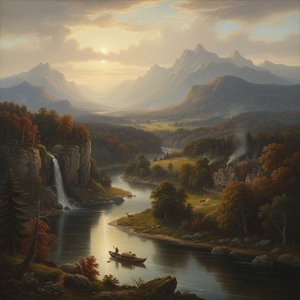
Capturing the American Spirit: A Journey Through Iconic Landscapes and the Legacy of the Hudson River School
Explore the profound beauty of American art history. From the Hudson River School to iconic landscapes, discover a curated journey through the masterpieces that defined a nation's spirit and the enduring legacy of American Romanticism.
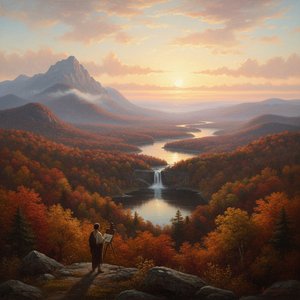
The Sublime Landscape: Exploring the Hudson River School Movement
Explore the captivating world of the Hudson River School! Discover the history, artists, and defining characteristics of this iconic American art movement. Learn about Romanticism's influence & find inspiration for your collection.

I 10 Capolavori della Scuola del Fiume Hudson: Arte, Storia e Decorazioni Raffinate
Esplora i 10 capolavori della Scuola del Fiume Hudson: Cole, Church e Bierstadt. Scopri la storia, le tecniche e l'emozione di questi iconici paesaggi americani. Trova riproduzioni artistiche di alta qualità su OriginalUniqueArt.com!
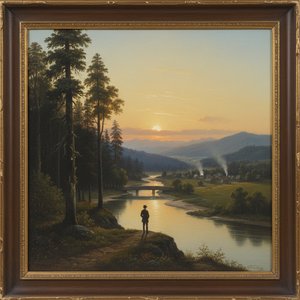
Robert Spencer: Luminism, Narrative & the American Landscape Tradition
Explore the captivating world of Luminism & the Hudson River School with our expert analysis. Discover the history, artists, and enduring beauty of 19th-century American landscape painting. Find museum-quality reproductions at OriginalUniqueArt.


