

 Anteprima in scala reale
 Condividi
 Condividi
 Dettagli
 Guida stampabile

 Scarica
 Articoli simili
 Radiografia
 Slideshow
 Statistiche
Shell cart
 Oil On Canvas
- WallArt
- Dutch Hague School
 1890
1890- 19th Century
 473.0 x 400.0 cm
 Kunstmuseum
 Leggi tutto
Giclée / Stampe d'arte
Stampa giclée o su tela di qualità museale, con produzione rapida e diverse opzioni di finitura. ( Ordina la riproduzione dipinta a mano Passa all'immagine digitale)




P118B €10

P118H €10

P118W €10

P438Z €10

P508JH €12

P508YH €12

P805H €10

P805Z €10

P919BZ €10

P919G €10

P919XJ €10

P959ZH €10

P968JZ €12

W106C €8

W218G €10

W218JH €8

W218Y €10

W307PJ €10

W316G €10

W316PJ €8

W316Y €10

W398PJ €8

W4111J €10

W500HY €15

W500JH €15

W692G €12

W849H €8

W940BG €15

W953PJ €8




Scegli tra le nostre dimensioni predefinite, che rispettano le proporzioni originali dell'opera d'arte.

È possibile inserire dimensioni personalizzate per adattare l'opera a una cornice o a uno spazio specifico. Se la dimensione selezionata non corrisponde alle proporzioni dell'immagine originale, procederemo al ritaglio dell'opera o all'estensione dell'immagine con un bordo specchiato o a tinta unita. Un mockup digitale ti verrà inviato per approvazione prima dell'inizio della produzione.
Si prega di notare che l'anteprima a schermo non riflette il ritaglio o l'estensione effettivi. Solo il mockup mostrerà accuratamente la composizione finale.
Sebbene siano disponibili dimensioni personalizzate, si raccomanda di selezionare una dimensione dall'elenco predefinito per preservare le proporzioni originali.
Consegna in tutto il mondo () in 2 settimane invece delle normali 4/5 settimane. (10 Ottobre)

Spedizione espressa gratuita in tutto il mondo

Tela in lino di alta qualità

Assicurazione completa sulla spedizione

Garanzia di rimborso dei dazi doganali

Garanzia di perfetta fedeltà cromatica

Politica di reso entro 100 giorni (solo per difetti di fabbricazione)

Garanzia di rimborso al 100%

Sconto per acquisti multipli
 L'opzione vetro è disponibile solo per dimensioni inferiori a 110 cm

Shell cart
Giclée / Stampe d'arte
Dimensioni della riproduzione
-


Prezzo totale
€ 69
A Moment Frozen in Time: Exploring Johan Hendrik Weissenbruch’s “Shell Cart”
The painting "Shell Cart," executed by Johan Hendrik Weissenbruch in 1890, stands as a testament to the artist's masterful command of late Impressionist technique and his unwavering dedication to capturing the essence of natural beauty. More than just a depiction of a seaside scene—a horse-drawn carriage traversing the sandy shore—it embodies a profound exploration of light, texture, and mood, reflecting the artistic sensibilities of its time and resonating with viewers today.The Painter's Vision: Impressionistic Brilliance
Weissenbruch’s artistic journey began amidst an environment rich in artistic influence. His father’s passion for painting exposed him to luminaries like Schelfhout and van Hove, artists who championed atmospheric landscapes—a stylistic approach that would indelibly shape Weissenbruch’s own vision. Johannes Low recognized his innate talent and provided crucial training at the Hague Academy of Art, fostering a connection with fellow artists committed to pushing the boundaries of artistic expression. This formative period instilled in him an appreciation for capturing fleeting moments of visual experience, prioritizing tonal variations and brushwork over precise representation.Technique and Texture: A Symphony of Brushstrokes
The painting’s remarkable quality lies primarily in its execution—a deliberate embrace of Impressionist principles. Weissenbruch skillfully employed a technique characterized by loose, expressive brushstrokes that prioritize texture and luminosity. Long strokes evoke the diffused glow of late afternoon sunlight bathing the beach, while shorter, overlapping strokes mimic the undulating movement of crashing waves. Dabs of brown and grey tones subtly convey the muted hues of the setting sun reflecting off the sand surface—a meticulous attention to detail that elevates the artwork beyond mere visual observation. The artist’s deliberate manipulation of paint surface contributes significantly to the painting's emotive power, inviting contemplation on the passage of time and the serenity of nature.Historical Context: Symbolism Within Landscape
Painted during a period marked by burgeoning interest in plein air painting—the practice of working outdoors directly from observation—"Shell Cart" aligns itself with broader artistic trends of its era. The Impressionists sought to depict reality as perceived by the senses, prioritizing subjective experience over academic conventions. Landscapes held particular significance for artists like Weissenbruch, serving not only as subjects for visual delight but also as vehicles for conveying deeper philosophical ideas about beauty and contemplation. The carriage itself—a symbol of movement and progress—contrasts subtly with the stillness of the beach, prompting reflection on humanity’s relationship to the natural world.Emotional Resonance: Capturing Tranquility
Ultimately, “Shell Cart” succeeds in transporting viewers to a moment of idyllic repose. The calm atmosphere conveyed by Weissenbruch's masterful brushwork and tonal palette evokes feelings of peace and contentment—a testament to his ability to translate visual impressions into emotionally resonant art. It’s a painting that invites us to savor the beauty of simplicity, reminding us of the restorative power of nature and the enduring fascination with capturing fleeting moments of sublime experience. Its legacy continues to inspire artists and collectors alike who appreciate the profound artistry embedded within this timeless landscape masterpiece.Domande e risposte
In che anno è stata realizzata "Shell cart"?
"Shell cart" di Jan Hendrik Weissenbruch è stata creata nel 1890.
Come è stata realizzata "Shell cart" e quali sono le sue dimensioni?
"Shell cart" è stata realizzata in Oil On Canvas e misura 473 x 400 cm nella sua forma originale.
Cosa rappresenta "Shell cart" di Jan Hendrik Weissenbruch, e quale atmosfera trasmette?
"Shell cart" di Jan Hendrik Weissenbruch unisce landscape, beach, carriage, horses, twilight, atmosphere, painting style con un'atmosfera Serene.
Chi ha creato "Shell cart" e in quale anno?
L'autore di "Shell cart" è Jan Hendrik Weissenbruch e l'opera risale al 1890.
A quale artista è attribuito "Shell cart"?
L'artista che ha creato "Shell cart" è Jan Hendrik Weissenbruch. L'opera è catalogata sotto il nome di Jan Hendrik Weissenbruch.
Dove e per quale scopo è consigliata "Shell cart"?
L'uso (Accent) e lo spazio (Living Room) sono le due raccomandazioni indicate per "Shell cart" di Jan Hendrik Weissenbruch.
A che età Jan Hendrik Weissenbruch ha realizzato "Shell cart"?
Jan Hendrik Weissenbruch aveva 66 anni quando ha creato "Shell cart" nel 1890. L'età è calcolata sulla base dell'anno di nascita dell'artista, 1824.
Biografia dell'artista
Primi Anni e Formazione
Jan Hendrik Weissenbruch, nato il 19 giugno 1824 all'Aia, nei Paesi Bassi, discendeva da una famiglia profondamente immersa nella tradizione artistica. Suo padre, Johannes Weissenbruch, era uno chef e ristoratore che nutriva una grande passione per la pittura, un hobby che trasmise al giovane Jan Hendrik un precoce apprezzamento per l'arte visiva. Tra la collezione del padre figuravano opere notevoli di Andreas Schelfhout e Bartholomäus van Hove, artisti i cui paesaggi atmosferici influenzarono profondamente gli anni formativi di Weissenbruch. Questa esposizione a pittori celebri plasmò le sue sensibilità artistiche fin dall'inizio. Johannes Low, un rispettato maestro del disegno, riconobbe il talento di Jan Hendrik e gli fornì una preziosa formazione nel 1843. Contemporaneamente, egli si iscrisca ai corsi serali tenuti da Bartholomäus van Hove presso l'Accademia d'Arte dell'Aia, approfondendo la sua educazione artistica all'interno di un vivace contesto creativo.Stile Artistico e Influenze
Lo stile artistico iniziale di Weissenbruch rispecchiava l'estetica della Scuola Romantica, in particolare l'attenzione meticolosa al dettaglio tipica di Schelfhout. I suoi paesaggi catturavano la grandezza dei cieli olandesi con una precisione straordinaria, riflettendo l'ammirazione di Schelfhout per Jacob van Ruisdael, che l'artista incontrò in giovane età durante una visita al Mauritshuis dell'Aia. Questo incontro consolidò la fascinazione di Weissenbruch per la pittura di paesaggio del XVII secolo e le sue qualità espressive. Man mano che la sua visione artistica maturava, Weissenbruch adottò gradualmente pennellate più libere e tavolozze cromatiche più ampie, tecniche che infuse nelle sue opere un'atmosfera eterea, capace di evocare le monumentali tele di Ruisdael. Egli seppe fondere con maestria l'idealismo romantico con l'osservazione impressionista, creando uno stile distintivo che risuonò profondamente all'interno del movimento della Scuola dell'Aia.Opere Notevoli
L'opera di Weissenbruch comprende una vasta gamma di paesaggi e scene di genere — principalmente acquerelli — che esemplificano la sua maestria nel catturare la bellezza della campagna olandese. Tra i suoi dipinti più celebri si annoverano “Strada vicino al canale”, che ritrae un tranquillo corso d'acqua bordato da una lussureggiante vegetazione; “Paesaggio con mulino vicino a Schiedam”, che mostra un pittoresco mulino a vento tra colline ondulate; e “Veduta del bosco vicino a Barbizon”, un omaggio alle tecniche impressioniste applicate ai paesaggi francesi. Queste opere dimostrano la capacità di Weissenbruch di trasmettere umore e atmosfera con una sottigliezza straordinaria, tratto distintivo del suo approccio artistico. La sua meticolosa osservazione della luce e del colore, unita a una pennellata espressiva, cementò la sua reputazione come uno dei massimi esponenti della Scuola dell'Aia.Eredità
Jan Hendrik Weissenbruch si staglia come una figura cruciale nella storia dell'arte olandese, un pilastro della Scuola dell'Aia, fiorita tra il 1860 e il 1900. I suoi acquerelli sono caratterizzati da pennellate delicate e da una profonda sensibilità alla luce naturale, qualità che continuano a ispirare gli artisti odierni. Fu riconosciuto come uno dei pittori più importanti del suo tempo, ottenendo prestigio sia in patria che all'estero. L'influenza di Weissenbruch andò oltre la sua produzione artistica personale; egli fu mentore di artisti eminenti come Anton Mauve e Victor Bauffe, plasmando la traiettoria della pittura di paesaggio olandese per i decenni a venire. La sua eredità risiede non solo nelle sue splendide creazioni visive, ma anche nel suo contributo alla promozione di una tradizione artistica distintiva, che privilegia l'osservazione, l'emozione e la ritrazione evocativa della grandezza della natura. Le opere di Weissenbruch sono conservate in musei di tutta Europa, tra cui il Rijksmuseum di Amsterdam e il Mauritshuis, garantendo che la sua visione artistica perduri attraverso le generazioni.
Jan Hendrik Weissenbruch
1824 - 1903 , Paesi Bassi
Informazioni rapide
- Artistic Movement Or Style: Hague School
- Artists Who Influenced This Artist:
- Andreas Schelfhout
- Jacob van Ruisdael
- Date Of Birth: 1824
- Full Name: Jan Hendrik Weissenbruch
- Nationality: Dutch
- Notable Artworks:
- Road near the canal
- Landscape with mill near schiedam
- Forest view near barbizon
- Place Of Birth: The Hague, Netherlands
Articoli correlati
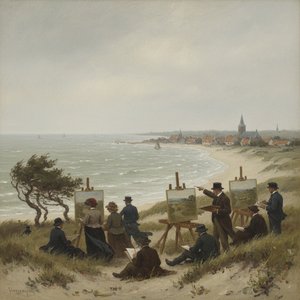
Capturing the Grey Light: A Masterclass in the Atmospheric Hague School Art Movement
Explore the ethereal beauty of the Hague School art movement. Discover how masters like Jan Weissenbruch captured the atmospheric grey light of the Dutch landscape through unparalleled technique and emotive, misty compositions.
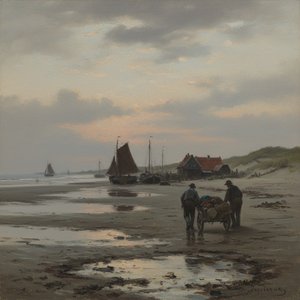
Jan Hendrik Weissenbruch: A Master of Dutch Realism & Atmospheric Light
Explore the captivating world of Jan Hendrik Weissenbruch, a master of Dutch Realism. Discover his atmospheric landscapes, influences, and legacy within the Hague School. Learn about this 19th-century artist's unique style & enduring impact.
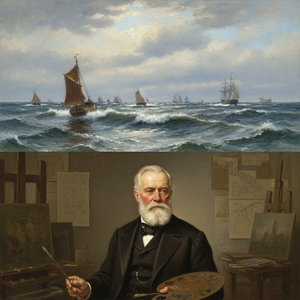
Hendrik Willem Mesdag: Pioneering Impressionism & the Dutch Maritime Tradition
Explore the life & work of Hendrik Willem Mesdag, a pioneer of Dutch Impressionism and leading figure of the Hague School. Discover his captivating seascapes and the immersive Panorama Mesdag – a true masterpiece.

The Hague School: Realism, Atmosphere & the Dawn of Dutch Impressionism
Explore the Hague School's pivotal role in Dutch art history. Discover realism, atmospheric landscapes & its influence on Impressionism. Learn about key artists like Mauve & Maris with OriginalUniqueArt.
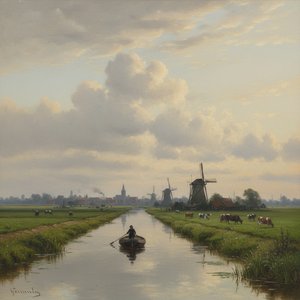
Johan Hendrik Weissenbruch: Capturing Dutch Light & Atmosphere – A Master of Realism
Discover Johan Hendrik Weissenbruch (1824-1903), a leading Dutch Hague School painter renowned for his atmospheric watercolours & oil landscapes. Explore his beautiful depictions of the Dutch countryside and skies – a master of light & detail.

