
 Anteprima in scala reale
 Condividi
 Condividi
 Dettagli

 Scarica
 Articoli simili
 Radiografia
 Slideshow
 Statistiche
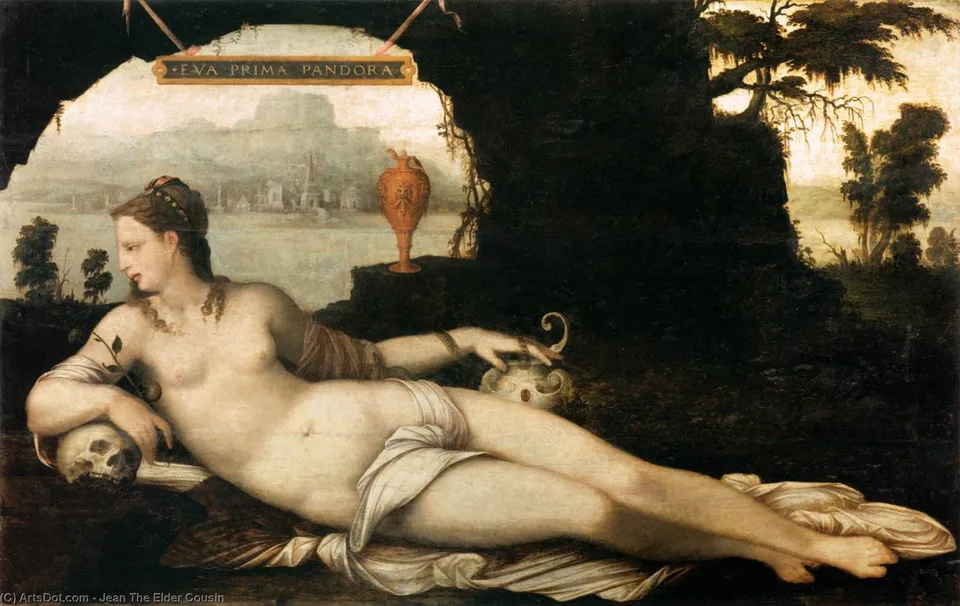
Eva Prima Pandora
 Oil On Canvas
- WallArt
- Renaissance
 1550
1550- Renaissance
 97.0 x 150.0 cm
 Musée du Louvre
 Leggi tutto
Giclée / Stampe d'arte
Stampa giclée o su tela di qualità museale, con produzione rapida e diverse opzioni di finitura. ( Ordina la riproduzione dipinta a mano Passa all'immagine digitale)




P118B $10

P118H $10

P118W $10

P438Z $10

P508JH $12

P508YH $12

P805H $10

P805Z $10

P919BZ $10

P919G $10

P919XJ $10

P959ZH $10

P968JZ $12

W106C $8

W218G $10

W218JH $8

W218Y $10

W307PJ $10

W316G $10

W316PJ $8

W316Y $10

W398PJ $8

W4111J $10

W500HY $15

W500JH $15

W692G $12

W849H $8

W940BG $15

W953PJ $8




Scegli tra le nostre dimensioni predefinite, che rispettano le proporzioni originali dell'opera d'arte.

È possibile inserire dimensioni personalizzate per adattare l'opera a una cornice o a uno spazio specifico. Se la dimensione selezionata non corrisponde alle proporzioni dell'immagine originale, procederemo al ritaglio dell'opera o all'estensione dell'immagine con un bordo specchiato o a tinta unita. Un mockup digitale ti verrà inviato per approvazione prima dell'inizio della produzione.
Si prega di notare che l'anteprima a schermo non riflette il ritaglio o l'estensione effettivi. Solo il mockup mostrerà accuratamente la composizione finale.
Sebbene siano disponibili dimensioni personalizzate, si raccomanda di selezionare una dimensione dall'elenco predefinito per preservare le proporzioni originali.
Consegna in tutto il mondo () in 2 settimane invece delle normali 4/5 settimane. (16 Settembre)

Spedizione espressa gratuita in tutto il mondo

Tela in lino di alta qualità

Assicurazione completa sulla spedizione

Garanzia di rimborso dei dazi doganali

Garanzia di perfetta fedeltà cromatica

Politica di reso entro 100 giorni (solo per difetti di fabbricazione)

Garanzia di rimborso al 100%

Sconto per acquisti multipli
 L'opzione vetro è disponibile solo per dimensioni inferiori a 110 cm

Eva Prima Pandora
Giclée / Stampe d'arte
Dimensioni della riproduzione
-


Prezzo totale
$ 80
A Vision of Renaissance Intimacy: Eva Prima Pandora
To gaze upon Eva Prima Pandora is to step directly into the richly textured atmosphere of the French Renaissance. This captivating portrait, executed around 1550 by Jean Cousin the Elder’s circle, transcends a mere depiction of figures; it offers an intimate tableau vivant steeped in classical allegory and human vulnerability. The composition immediately draws the eye to the central grouping: a woman reclined with her head gently supported upon another person's lap. Her apparent nudity speaks not merely of undress, but perhaps of a state of profound contemplation or nascent awakening, themes that resonated deeply within Renaissance humanist thought.
Mastery in Form and Allegory
Jean Cousin the Elder, known for his rigorous study of anatomy and perspective, imbues this work with an undeniable technical brilliance. Observe the delicate rendering of flesh against the implied textures of drapery and skin; it speaks to a mastery of oil paint that allows light to seem almost palpable. Beyond the figures themselves, the surrounding elements elevate the piece from portraiture to complex narrative art. The inclusion of a bird perched delicately upon a vase near the upper register adds a touch of naturalistic grace, while the subtle placement of a skull in the lower left corner serves as a potent memento mori—a timeless reminder of life's fleeting nature juxtaposed against the enduring beauty captured on canvas.
Symbolism and Emotional Resonance
The interplay between these elements suggests a dialogue spanning life, death, knowledge, and repose. The reclining figure, perhaps embodying Pandora herself or an allegorical representation of nascent humanity, rests within a moment suspended between worlds. The presence of the skull anchors the piece in the contemplation of mortality, urging the viewer to consider the preciousness of the present moment. This emotional depth—this quiet confluence of beauty and inevitable decay—is what gives Eva Prima Pandora its enduring power. It invites the collector or decorator not just to admire skill, but to meditate upon existence itself.
A Touch of Renaissance Grandeur for Your Space
For those seeking an artwork that anchors a room with intellectual weight and unparalleled artistic pedigree, this reproduction offers a tangible connection to the golden age of European painting. Its scale (97 x 150 cm) allows it to command attention in a grand salon or library setting, while its subject matter—the beautiful tension between life's bloom and time's decay—provides endless conversation starters. Owning this piece is acquiring not just paint on canvas, but a carefully preserved echo of Renaissance contemplation.
Biografia dell'artista
Jean Cousin the Elder: A Renaissance Master of Anatomy and Perspective
Jean Cousin the Elder (ca. 1490–ca. 1560) stands as a pivotal figure in French Renaissance art, largely overshadowed by his son Jean Cousin the Younger but nonetheless recognized for his profound contribution to humanist ideals and artistic innovation. Born in Sens, France, he emerged from a family steeped in artistic tradition—his father, Jean Cousin the Elder, was himself a celebrated sculptor and painter who established a lasting connection with Albrecht Dürer, marking him as one of the foremost artists of his time. This familial legacy instilled within Jean Cousin the Younger an unwavering dedication to mastering both disegno (drawing) and geometria (mathematics), disciplines considered essential for achieving artistic excellence during the Renaissance.- Early Life & Training: Cousin’s formative years were spent honing his skills in Sens Cathedral, where he meticulously crafted stained-glass windows embodying biblical narratives—a testament to the burgeoning influence of humanist scholarship and theological contemplation. Simultaneously, he pursued rigorous mathematical studies, preparing for a career as a surveyor and demonstrating an intellectual curiosity that would permeate his artistic endeavors.
- Sens Cathedral Windows: The Sainte-Chapelle windows in Sens represent Cousin’s earliest masterpiece, showcasing his mastery of color and composition while adhering to the principles of linear perspective—a technique championed by Dürer and rapidly disseminated throughout Europe. These works exemplify the humanist impulse to depict religious subjects with anatomical accuracy and emotional depth.
Parisian Career & Patronage
Around 1530, Cousin relocated to Paris, securing commissions from influential patrons – including Henry II – furthering his artistic reputation and establishing himself as a prominent figure in the Parisian art scene. He continued his work as a glass painter, creating stunning windows for Vincennes Cathedral, blending classical influences with Northern European traditions. His patronage enabled him to undertake ambitious projects that solidified his position at the forefront of Renaissance artistic innovation.- Notable Commissions: Cousin’s commissions included monumental sculptures for royal palaces and elaborate decorative panels—demonstrating his versatility as an artist and his ability to adapt to diverse stylistic trends.
The Last Judgment & Anatomical Illustration
Jean Cousin the Elder achieved renown primarily through two monumental achievements: “The Last Judgement” (Paris, Louvre) and “Livre de Pourtraicture” (1571). The Last Judgement is considered one of the first French paintings to employ perspective with remarkable sophistication, capturing a dramatic scene with meticulous detail—a testament to Cousin’s unwavering commitment to anatomical realism. His Livre de Pourtraicture stands as a seminal contribution to the burgeoning field of anatomical illustration, documenting human musculature with unprecedented accuracy and anticipating developments in scientific observation.- Technical Innovation: Cousin's mastery of perspective and his meticulous anatomical drawings established him as a pioneer—inspiring subsequent artists and shaping the visual language of Renaissance art.
Legacy & Influence
Jean Cousin’s influence extended far beyond his immediate contemporaries, shaping the trajectory of French Renaissance art and establishing him as a cornerstone of humanist artistic thought. His legacy continues to inspire artists today, reminding us that true artistic excellence resides in a profound understanding of both form and substance—a testament to his enduring contribution to European art history.- Continuing Tradition: Jean Cousin the Younger carried on his father’s workshop and style into the second half of the sixteenth century, maintaining stylistic continuity that captivated contemporaries.

jean the elder cousin
1522 - 1595 , Francia
Informazioni rapide
- Artistic Movement Or Style: Renaissance Mannerismo
- Artists Or Movements Influenced By This Artist: ['Renaissance Sculpture']
- Artists Who Influenced This Artist: ['Albrecht Dürer']
- Date Of Birth: ca. 1490
- Date Of Death: ca. 1560
- Full Name: Jean Cousin the Elder
- Nationality: Francese
- Notable Artworks:
- La Giudicatura Ultima
- Biblia
- Place Of Birth: Sens, Francia
Articoli correlati

L'Eredità Duratura della Pittura a Olio: Tecnica, Storia e Pratica Contemporanea
Esplora la storia affascinante e le tecniche della pittura a olio. Scopri come i maestri hanno creato capolavori senza tempo e come questa arte vive oggi. : riproduzioni di alta qualità e consulenza esperta.

The Enduring Legacy of Oil on Canvas: Technique, History & Aesthetic Impact
Explore the rich history & techniques of oil painting – from Renaissance masters to Impressionism. Discover pigments, layering methods, and why this timeless medium endures. Expert insights for artists & art enthusiasts.
The Soul of Impressionism: Why Oil on Canvas Captures Eternal Light and Timeless Emotion
Discover the enchanting alchemy of Impressionism. Explore how the mastery of oil on canvas, through glazing and impasto, captures eternal light and emotion. Perfect for lovers of Monet and Van Gogh seeking the profound depth of hand-painted fine art.

Oil on Canvas: A Historical & Technical Exploration of a Timeless Artistic Medium
Explore the rich history & enduring techniques of oil painting on canvas. Discover the science behind its longevity, conservation practices, and contemporary relevance. Expert insights for art enthusiasts.
I 10 Capolavori a Olio su Tela che Hanno Rivoluzionato la Storia dell'Arte
Scopri i 10 capolavori a olio che hanno segnato la storia dell'arte! Da Leonardo a Van Gogh, esplora le storie e le tecniche dei più grandi maestri. Trova stampe su tela di alta qualità e idee per decorare casa con .
