

 Anteprima in scala reale
 Condividi
 Condividi
 Dettagli
 Guida
Guida

 Scarica
 Articoli simili
 Radiografia
 Slideshow
 Statistiche
The Lost Game


 Leggi tutto
Riproduzione a olio fatta a mano
Olio su tela dipinto a mano nelle tue dimensioni e con la tua cornice, realizzato su ordinazione dai nostri artisti. ( Passa alle stampe Passa all'immagine digitale)




P118B $10

P118H $10

P118W $10

P438Z $10

P508JH $12

P508YH $12

P805H $10

P805Z $10

P919BZ $10

P919G $10

P919XJ $10

P959ZH $10

P968JZ $12

W106C $8

W218G $10

W218JH $8

W218Y $10

W307PJ $10

W316G $10

W316PJ $8

W316Y $10

W398PJ $8

W4111J $10

W500HY $15

W500JH $15

W692G $12

W849H $8

W940BG $15

W953PJ $8




Scegli tra le nostre dimensioni predefinite, che rispettano le proporzioni originali dell'opera d'arte.

È possibile inserire dimensioni personalizzate per adattare l'opera a una cornice o a uno spazio specifico. Se la dimensione selezionata non corrisponde alle proporzioni dell'immagine originale, provvederemo a ritagliare l'opera o a estendere il dipinto con elementi aggiuntivi dipinti a mano. Un mockup digitale ti sarà inviato per approvazione prima dell'inizio della produzione.
Si prega di notare che l'anteprima a schermo non riflette il ritaglio o l'estensione effettivi. Solo il mockup mostrerà accuratamente la composizione finale.
Sebbene siano disponibili dimensioni personalizzate, consigliamo di selezionare una dimensione dall'elenco predefinito per preservare le proporzioni originali.
Dopo l'ordine, il team di OriginalUniqueArt.com contatterà il cliente via e-mail per ricevere le istruzioni e fornirà un'anteprima del mockup
Consegna in tutto il mondo () in 3/4 settimane anziché nelle normali 5 settimane. (21 Settembre). Nessun compromesso sulla qualità.

Spedizione espressa gratuita in tutto il mondo

Tela in lino di alta qualità

Assicurazione completa sulla spedizione

Garanzia di rimborso dei dazi doganali

Garanzia di perfetta fedeltà cromatica

Politica di reso entro 100 giorni (solo per difetti di fabbricazione)

Garanzia di rimborso al 100%

Sconto per acquisti multipli
 L'opzione vetro è disponibile solo per dimensioni inferiori a 110 cm

The Lost Game
Tecnica di riproduzione
Dimensioni della riproduzione
-


Prezzo totale
$ 300
Jean-Louis Ernest Meissonier’s “The Lost Game”: A Microscopic Masterpiece of Victorian Leisure
“The Lost Game,” painted in 1858 by the celebrated French artist Jean-Louis Ernest Meissonier, is more than just a depiction of gentlemen engaged in a card game; it's a meticulously crafted window into the social fabric and psychological nuances of mid-19th century France. Meissonier, renowned for his extraordinary ability to capture fleeting moments of everyday life with astonishing detail – earning him the moniker “the French Metsu” – here presents a scene brimming with quiet observation and subtle tension. The painting’s power lies not in grand gestures or dramatic action, but in its intimate portrayal of a seemingly trivial pastime elevated to an almost ritualistic performance.
The composition is deceptively simple: nine men are seated around a mahogany table, bathed in the warm glow of lamplight. Each figure is rendered with painstaking accuracy – from the meticulously embroidered waistcoat and cravat to the carefully positioned fingers holding playing cards. Meissonier’s signature technique—microscopic painting—is on full display here. He doesn't merely paint figures; he dissects them, revealing every wrinkle, every bead of perspiration, every subtle shift in posture. This level of detail wasn’t simply a technical exercise; it was a deliberate attempt to immerse the viewer in the scene, creating an illusion of proximity and intimacy. The use of chiaroscuro – dramatic contrasts between light and shadow – further enhances this effect, drawing attention to key elements while simultaneously obscuring others, adding layers of mystery and intrigue.
A Glimpse into Victorian Social Life
“The Lost Game” offers a fascinating glimpse into the leisure activities of the French upper class during the Second Empire. The scene unfolds within a richly furnished room – a testament to the opulence and material prosperity of the era. The two dining tables, the comfortable chairs, and the carefully chosen accessories all speak to a life of comfort and refinement. However, beneath this veneer of affluence lies a subtle undercurrent of competition and social maneuvering. The men are not simply playing cards; they’re engaged in a complex dance of status, reputation, and perhaps even veiled rivalry. The game itself – likely piquet, a popular card game of the time – served as a focal point for social interaction, providing an opportunity to display wit, skill, and social grace.
Meissonier’s choice of subject matter is particularly noteworthy. He wasn't interested in depicting heroic battles or historical events; instead, he focused on the mundane details of everyday life – a deliberate departure from the prevailing artistic trends of his time. This focus on domesticity and social interaction reflected a broader shift in French art during the Second Empire, as artists increasingly sought to capture the realities of bourgeois society. The painting’s popularity at the time underscored this trend, demonstrating a public appetite for images that offered a window into the lives of their peers.
Symbolism and the Enigmatic “Game”
The title itself – "The Lost Game" – is laden with symbolic weight. While the literal meaning refers to the card game being played, it also alludes to the broader concept of a mental game—a phenomenon that would later gain widespread notoriety in the 21st century. Some scholars believe Meissonier was consciously referencing this emerging psychological phenomenon, using the painting as a visual metaphor for the elusive nature of human consciousness and the challenges of self-control. The very act of playing the game becomes a performance, a subtle display of intellect and social acumen.
Furthermore, the scene’s quiet intensity—the focused expressions on the men's faces, the careful positioning of their hands—suggests that there is more at stake than mere entertainment. The painting invites us to speculate about the unspoken rules and hidden agendas that govern this seemingly innocent pastime. Is it a friendly competition? A test of skill? Or perhaps a carefully orchestrated display of social dominance?
A Timeless Reproduction
Reproduced with exceptional fidelity, “The Lost Game” retains its captivating charm and historical significance. OriginalUniqueArt’s hand-painted reproductions capture the artist's meticulous detail and evocative atmosphere, offering a stunning addition to any collection or interior space. The painting’s intimate scale—measuring just 21 x 27 cm—makes it ideal for smaller rooms or private studies, while its rich colors and intricate details command attention wherever it is displayed. This remarkable work serves as a poignant reminder of the enduring appeal of Meissonier's artistic vision and his ability to transform the ordinary into the extraordinary.
Biografia dell'artista
Le Origini e la Formazione
Jean-Louis Ernest Meissonier, pittore e scultore francese di grande fama, nacque il 21 febbraio 1815 a Lione, in Francia. Suo padre, Charles, desiderava che seguisse le sue orme nel mondo degli affari, ma la passione di Meissonier per la pittura prevalse. All'età di diciassette anni, ottenne il permesso dai genitori di dedicarsi alla carriera artistica. La sua formazione iniziale comprendeva lo studio sotto Léon Cogniet e l’influenza dei maestri olandesi al Louvre. Questa base gettò le fondamenta per il suo stile distintivo.L'Ascesa alla Fama
La svolta nella carriera di Meissonier avvenne con la sua pittura "Les Bourgeois Flamands" (I Borghesi Fiamminghi), conosciuta anche come "La Visita al Burgomastro", esposta al Salon del 1831. Quest'opera, ora parte della collezione di Sir Richard Wallace presso Hertford House a Londra, segnò l'inizio del suo successo con la pittura in miniatura ad olio. Meissonier si distinse per la sua capacità di creare scene dettagliatissime in formati ridotti.- Tra le sue opere successive che consolidarono la sua reputazione vi sono "Il Gioco degli Scacchi" (1841), "Il Giovane che Suona il Violoncello" (1842) e "Pittore nel suo Studio" (1843).
- Il matrimonio con Emma Steinhel, una donna protestante proveniente da Strasburgo, nel 1838, rappresentò un importante traguardo personale.
- Il coinvolgimento di Meissonier nella Guardia Nazionale durante i giorni di giugno del 1848 dimostrò il suo impegno verso il governo repubblicano.
Stile e Opere Significative
Meissonier è spesso definito "il Metsu francese", in riferimento al pittore olandese Gabriel Metsu, noto per le sue scene borghesi domestiche in miniatura. Le opere di Meissonier si caratterizzano per la loro meticolosa attenzione ai dettagli e una resa impeccabile dei costumi e degli ambienti del XIX secolo.- "Halte à l'auberge" (Sosta all’osteria), di proprietà del duca de Morny.
- "La Bagarre" (La Rissa), di proprietà della regina Vittoria.
- "Les Joueurs et la Querelle" (I Giocatori e la Lizza), presentata alla corte inglese da Napoleone III.
Eredità e Influenza
Jean-Louis Ernest Meissonier lasciò un segno indelebile nel mondo dell’arte con le sue opere meticolose e dettagliate. La sua abilità tecnica e la sua capacità di catturare l'atmosfera della vita borghese del XIX secolo lo resero uno degli artisti più apprezzati del suo tempo. Le sue opere sono oggi esposte in numerosi musei, tra cui il Musée d’Orsay a Parigi. Il suo stile influenzò molti artisti successivi, contribuendo alla diffusione dell'arte accademica e della pittura di genere. La sua eredità continua ad ispirare artisti e appassionati d'arte, offrendo uno sguardo affascinante sul patrimonio culturale francese del XIX secolo.
Jean-Louis Ernest Meissonier
1815 - 1891 , Francia
Informazioni rapide
- Artistic Movement Or Style: Classicismo francese
- Artists Who Influenced This Artist:
- Gabriel Metsu
- Léon Cogniet
- Date Of Birth: 21 febbraio 1815
- Date Of Death: 1891
- Full Name: Jean-Louis Ernest Meissonier
- Nationality: Francese
- Notable Artworks:
- Les bourgeois flamands
- Il gioco degli scacchi
- L'imperatore a Solferino
- Place Of Birth (City And Country): Lione, Francia
Articoli correlati

Pixel di Prestigio: Esplorando Scarsità, Valore e Impatto Culturale nella Pittura da Videogioco a Edizione Limitata
Esplora il mondo della pixel art da videogioco a edizione limitata. Analisi di valore, scarsità digitale e tecnologie blockchain per collezionisti esperti e appassionati d'arte.
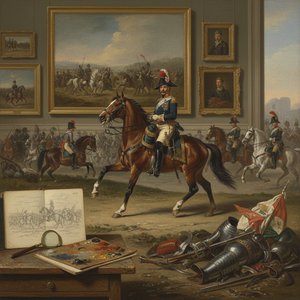
Jean-Louis Ernest Meissonier: Realismo, Narrazione Storica e Perfezione Artistica
Esplora la vita e l'opera di Jean-Louis Ernest Meissonier, maestro del realismo ottocentesco. Scopri le sue iconiche scene napoleoniche, la precisione dei dettagli e l'influenza sulla storia dell'arte.

Pennellate e Scontri Epici: Il Viaggio Artistico nella Creazione Manuale di Mondi Videoludici
Esplora l'arte dietro i videogiochi! Scopri come la pittura digitale e le tecniche manuali creano mondi virtuali immersivi. Guide esperte, storia dell'arte e tendenze future.
Oltre i Pixel e il Gioco: Significato Estetico e Identitario dell'Arte Videoludica per il Collezionista Moderno
Esplora il mondo dell'arte videoludica con la nostra guida esperta. Scopri l'evoluzione estetica, il collezionismo e come trasformare i tuoi giochi preferiti in opere d'arte uniche.

I 10 Capolavori del Realismo Romantico che hanno Incantato la Storia dell'Arte
Esplora l'emozione del Realismo Romantico attraverso 10 capolavori senza tempo. Scopri la storia di maestri come Constable e Friedrich e lasciati ispirare da opere iconiche per il tuo arredamento. Trova riproduzioni d'arte di qualità museale su OriginalUniqueArt.com.


